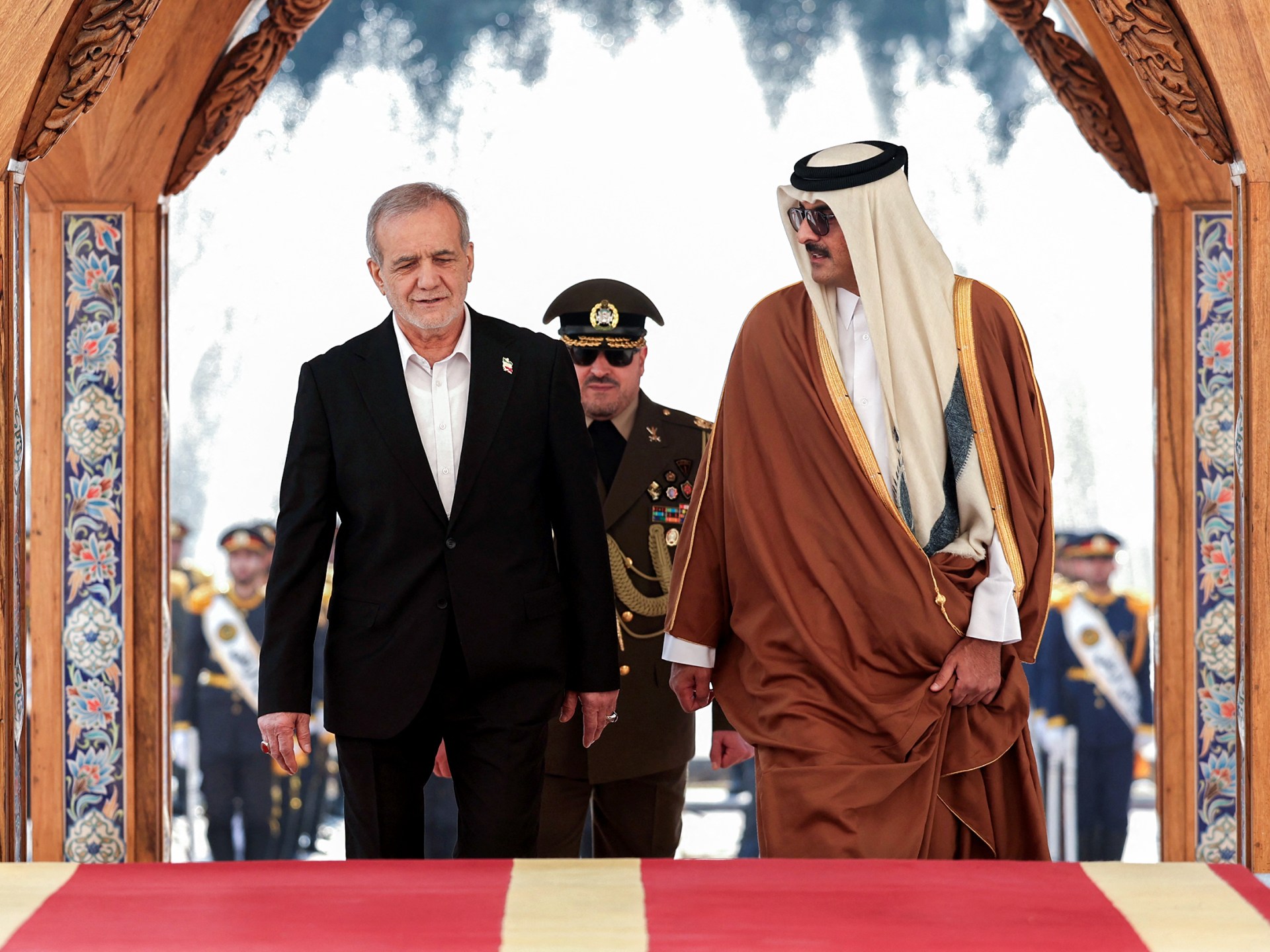
Direct military strikes, heightened rhetoric, and the persistent erosion of long-standing restraints have made the conflict between the United States and Iran more volatile. The risk of escalation has become more real than it has been since Iranian nuclear facilities were attacked, and Tehran has planned retaliations throughout the region. Any US-Iran conflict has immediate effects for Gulf states, whose security and economic stability are directly affected by it. Qatar’s diplomacy with Tehran should be understood as a calculated effort to reduce risks that an increase in escalation would only increase in. Not as neutrality for its own sake.
Beyond Washington and Tehran, there have long been consequences of heightened tension between the United States and Iran. Tehran and Washington’s rhetoric has sharpened in response to a wave of protests inside Iran that, according to varying estimates, led to the deaths of several thousand people. This included President Trump’s threat to intervene in support of the protesters, which made diplomacy in the Gulf even more urgent. Even a brief confrontation could have a negative impact on regional stability because of its geography, concentrated energy infrastructure, and interlinked security environment. In light of this, Qatar’s policy toward Tehran and Washington consistently prioritizes de-escalation, mediation, and maintaining political channels when they appeared to be getting more fragile.
In times of high tension between the United States and Iran, Qatar has emerged as a reliable and capable mediator, providing effective strategies to stop crises from escalating further. Doha has maintained discrete and reliable channels that allow both sides to communicate when direct contact becomes politically constrained due to its ongoing relations with Tehran and its strategic partnership with Washington. Qatar’s position as a mediator, which creates political space for restraint rather than confrontation, has been strengthened by this positioning, which has made it possible for de-escalation to occur that has saved both parties’ faces.
In September 2023, Qatar’s leadership was most clearly demonstrated when Qatar assisted in the release of frozen Iranian funds for humanitarian purposes in addition to facilitating a prisoner exchange between Iran and the United States. On both sides, months of in-depth analysis, meticulous planning, and political reassurance were required. The agreement did not suggest a wider rift, but it made a crucial point: diplomatic diplomacy is still possible even when there is intense hostility.
Doha sees this mediation as a means of achieving nothing. It reflects a more firmly held view that coercion alone cannot solve the US-Iran tensions and the Iranian nuclear issue in particular. Qatar has consistently endorsed the idea that avoiding escalation and limiting risks is only possible through dialogue rather than military action. This position is consistent with an assessment of costs, uncertainty, and unintended consequences for regional security, not indifference to Iranian regional behavior or proliferation concerns. In response to US attacks on Iranian nuclear facilities, Qatar, which had launched a calibrated missile strike on the Qatari military base in June 2025 as a response, Doha intervened swiftly to contain the crisis and engage both sides. Qatar’s efforts to support a fragile ceasefire have generally held thanks to urgent outreach and established communication channels, underscoring both its ability to effectively manage conflict and the trust placed in Qatari diplomacy.
The Iranian regime’s repression would almost certainly have an impact if the military conflict went off course. In a large and extremely complex society, such a scenario runs the risk of a state collapse, the fragmentation of authority, and the re-politicization of ethnic and sectarian identities. The spillover effects could include significant disruptions to maritime security and energy markets as well as significant refugee movements toward neighboring states, including across the Gulf. These outcomes, combined, would present immediate challenges for Gulf states whose stability is closely linked to regional tranquility.
The strategic balance has already been altered by recent events in the area. Iran’s network of allies’ non-state actors has been subject to significant pressure since the October 7 attacks and subsequent regional upheavals. Tehran’s ability to exert influence in particular theaters has been diminished due to several militarily and politically weakened elements of the “axis of resistance.” The US attacks on Iran in June 2025 have also dispelled any lingering doubts about Washington’s willingness to directly target Iran and degrade its nuclear enrichment capacity.
However, adding more escalation results in lessening returns from the Gulf perspective. If regional stability is lost as a result of a weakening of Iran’s regional influence, especially if it is pursued through strategies that could lead to state collapse. The priority for Gulf states is not the dramatic reconstruction of Iran’s political system, but the avoiding of unplanned, expensive, and difficult-to-contain. Doha is not the only place this assessment is made. Qatar’s position has progressively converged with those of Saudi Arabia and Oman, both of whom have engaged in dialogue and building confidence-building measures to lessen tensions with Tehran. A broader regional mood, one that favors containment and engagement over confrontation, was reflected in their efforts to inform the Trump administration about the risks of military escalation. Given the political tensions that have historically divided Gulf cities, this convergence is notable.
At a time when escalation is increasingly bringing down the costs, Qatar’s mediation efforts provide a path to regional chaos. Doha aims to lessen the likelihood of miscalculation by keeping channels open, facilitating limited agreements, and preventing maximalist strategies. These initiatives are frequently intentionally invisible, and they rarely lead to significant breakthroughs. Their absence, however, would likely increase the likelihood of an escalation rather than decrease it.
The value of de-escalation is easily overlooked in a regionally divided, increasingly polarized environment. It lacks the euphoria and deterrence of military action. As Qatar’s engagement with Washington and Tehran shows, diplomacy, however incremental and imperfect, is still one of the few tools that stops crises from erupting into larger conflicts. That contribution should not be taken lightly in a region where the costs of war are distributed far beyond the battlefield.
Source: Aljazeera

Leave a Reply