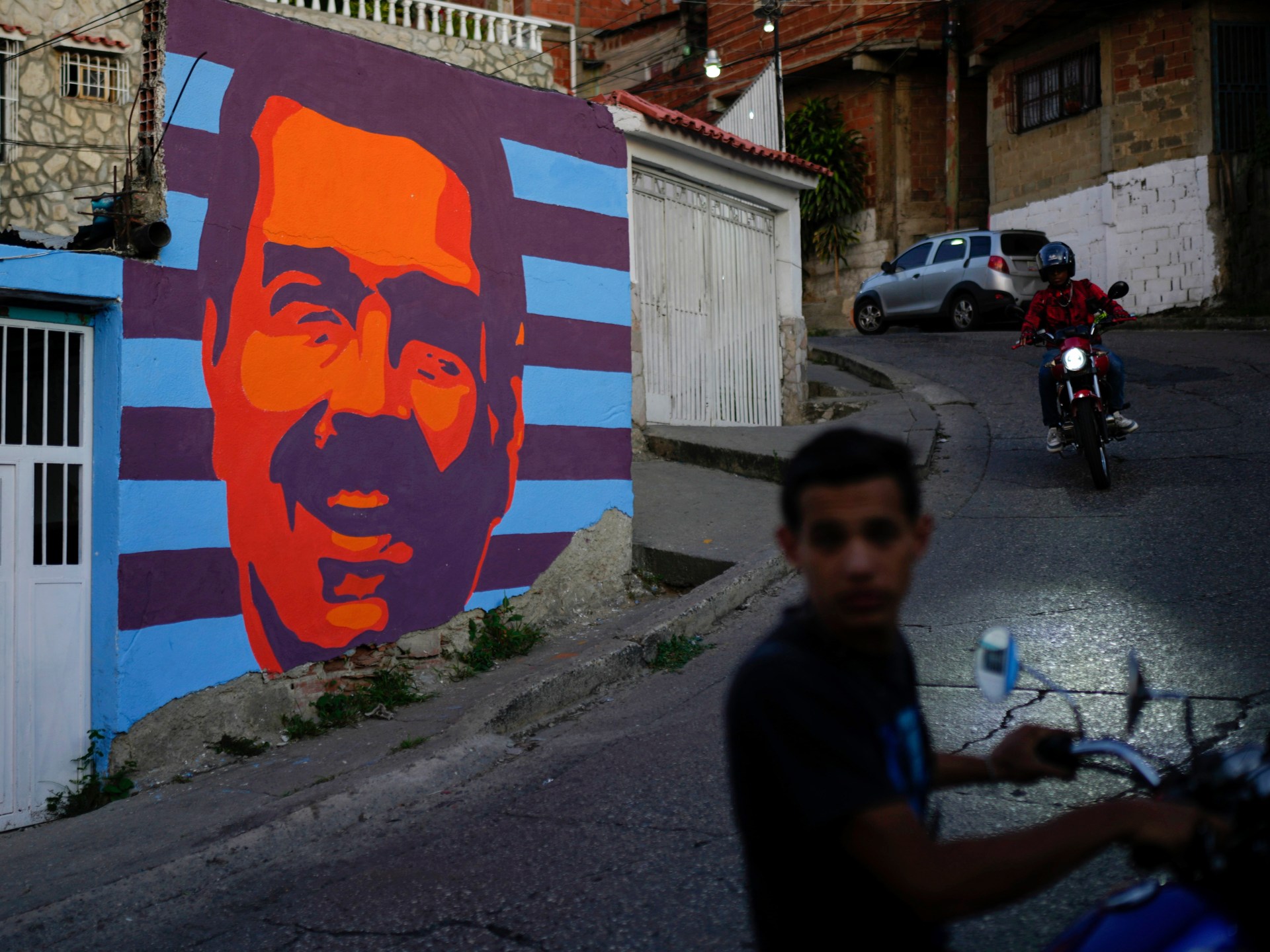
The abduction of Venezuela’s Nicolas Maduro was an attack by the United States that skirted not only international law but also US political limits, an analyst says.
It is part of the US’s “new imperialistic era” centred on oil and strategic interests and risks normalising similar actions by other powers, Sultan Barakat, senior professor at the College of Public Policy at Qatar’s Hamad Bin Khalifa University, told Al Jazeera.
Recommended Stories
list of 4 itemsend of list
US President Donald Trump is “bypassing … international law. He’s bypassing Venezuelan law, … and he doesn’t seem to give a damn about what the people of Venezuela really think or want”, Barakat said.
Trump-era policies and rhetoric have “mutated” US politics as nationalism has intensified and Christianity has become more entwined with governance – trends that will distort the existing international order, he added.
The US bombed Venezuela on Saturday, abducting Maduro and his wife, Cilia Flores, and taking them to New York to face drug-trafficking charges.
Trump said the US will “run” Venezuela and tap its oil wealth, the clear reason behind the attack, couched in flimsy law enforcement rhetoric, according to Barakat.
The illegality of Trump’s action
International law is clear on what the US did, Barakat said: It’s illegal.
A state cannot seize or remove the leader of another sovereign state unless the United Nations Security Council authorises the use of force under Chapter VII of the UN Charter.
The 2011 intervention in Libya when the country’s former leader Muammar Gaddafi was deposed had Security Council authorisation.
“But even then, it should not]have been] at all about regime change. It]can only be] in defence of a prosecuted people … to prevent genocide, to prevent crimes against humanity”, Barakat said.
In Iraq, a US-led coalition invoked what turned out to be unfounded allegations of weapons of mass destruction as justification to invade the country and topple President Saddam Hussein without initial UN authorisation.
Yet “when they captured]Hussein], they did not attempt to extract him from Iraq. They tried him inside Iraq”, he said.
Post‑9/11, Barakat said, international law has allowed cross‑border actions against “terrorist groups” when such actions are used to prevent “terrorist operations” in the acting state’s territory.
When Israeli Prime Minister Benjamin Netanyahu visited Trump for New Year’s Eve, there were discussions between the pair attempting to link Maduro to Iran, Hezbollah and Palestinian groups in the hopes he could be labelled under the US Terrorism Act, which Barakat called tenuous attempts to “borrow” legitimacy from existing counterterrorism mechanisms.
Jurisdictional hook
According to Barakat, international law declares that a military strike on the territory of another state without its consent a violation of that nation’s sovereignty.
Interventional states have justified their actions in some conflicts by obtaining the consent of a sovereign state, such as in Syria, where he claimed operations against ISIL (ISIS) were portrayed as taking place with the consent of the Syrian government.
Instead of relying on a US domestic court in Venezuela, Maduro is being charged with drug trafficking as a fugitive in Venezuela.
However, Barakat said it is problematic to use a US indictment to justify removing a foreign head of state from his nation. A suspect is typically detained in the state that has international agreements or is extradited through Interpol.
The US president is now citing ICC proceedings against Maduro, Barakat said, despite Trump’s “total disregard” for international law and supporting Netanyahu, who is facing an arrest warrant from the International Criminal Court (ICC).
At the UN Security Council on Monday, Washington is unlikely to face significant criticism from its allies, who oppose Maduro.
The US has been accused of breaking international law by Russia, China, and other Venezuelan allies. Without blatantly mentioning Washington, European states have called for the protection of international law.
evaluating international standards’ restrictions
Israel has abducted people abroad (such as Nazi war criminals in Argentina) and tried them in Israel, according to Barakat, and the Venezuela operation has a particular impact in the Middle East, where it has for decades.
The analyst claimed that Israel and the US can learn from one another, with one’s impunity strengthening the other’s capacity to justify similarly repressive actions.
Netanyahu cited US and British actions in Iraq and Afghanistan as examples of using force against people he dubbed “terrorists” during Israel’s genocidal war against Gaza, according to Barakat.
He said, “I believe they will probably use the Israeli precedent to justify what they’ve done in Venezuela right now,” adding that he believes.
According to this logic, other nations might attempt to apprehend Israeli leaders for breaking international law. Despite the fact that several ICC member states have pledged to detain Netanyahu in their own countries, Barakat claimed that they lack the “guts” to carry out a cross-border extraction in the manner of the US.
The analyst claimed that in addition, the US’s decision to seize control of Venezuela could give Russia and China a justification for similar extraterritorial seizures.
“If I were]Russian President Vladimir Putin, I would be thinking, “How can I get Zelensky?” Barakat cited China’s potential attempt to do something similar with Taiwan, he said.
Barakat emphasized that the current international order is fundamentally undermined by the precedent set in Venezuela.
A truly new world order, possibly bipolar and more confrontational, could emerge if China, an emerging global power, responds to global crises militarily rather than through economic influence as it has been, the professor said.
Source: Aljazeera

Leave a Reply