The National Defense Authorisation Act (NDAA) was approved in a 77-20 vote on Wednesday with senators adopting legislation passed by the House of Representatives last month. It now goes to Trump for his signature.
Recommended Stories
list of 4 itemsend of list
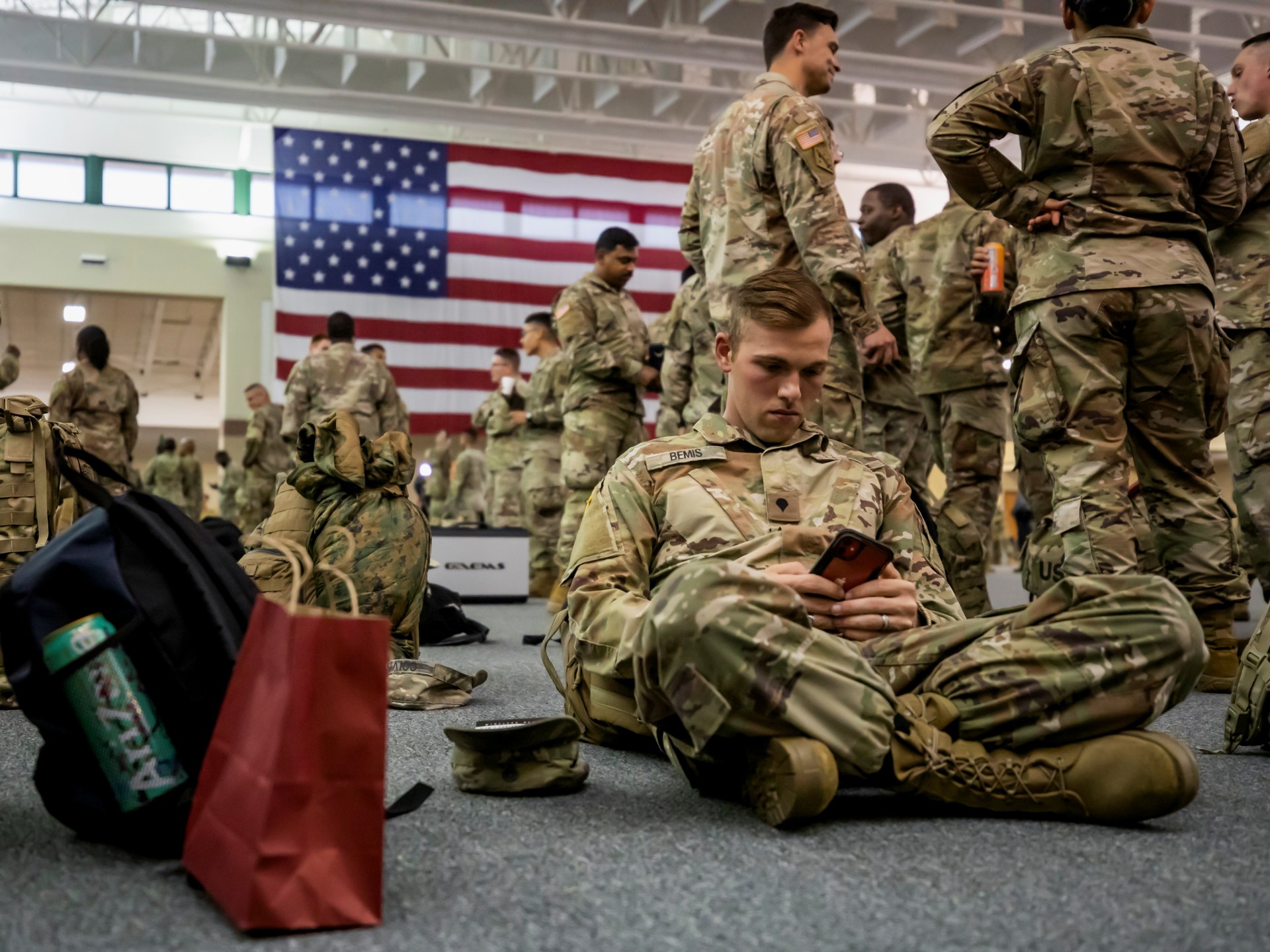
Several provisions in the bill reflect efforts by Democratic lawmakers, supported by some Republicans, to constrain how quickly the Trump administration may scale back US military commitments in Europe.
The bill requires the Pentagon to maintain at least 76, 000 US soldiers in Europe unless NATO allies are consulted and the administration determines that a reduction would be in the US national interest. The US typically stations 80, 000 to 100, 000 soldiers across the continent. A similar measure prevents reductions in US troop levels in South Korea below 28, 500 soldiers.
Congress also reinforced its backing for Ukraine, authorising $800m under the Ukraine Security Assistance Initiative with $400m allocated for each of the next two years. A further $400m per year was approved to manufacture weapons for Ukraine, signalling continued congressional support for Kyiv and cementing Washington’s commitment to Europe’s defence.
Asia Pacific focus, congressional oversight
The bill also reflects priorities aligned with the Trump administration’s national security strategy, which places the Asia Pacific at the centre of US foreign policy and describes the region as a key economic and geopolitical battleground.
In line with that approach, the NDAA provides $1bn for the Taiwan Security Cooperation Initiative, aimed at strengthening defence cooperation as the US seeks to counter China’s growing military influence.
The legislation authorises $600m in security assistance for Israel, including funding for joint missile defence programmes, such as the Iron Dome, a measure that has long drawn broad bipartisan support in Congress.
The NDAA increases reporting requirements on US military activity, an area in which Democrats in particular have sought greater oversight.
It directs the Department of Defense to provide Congress with additional information on strikes targeting suspected smuggling and trafficking operations in the Caribbean and the eastern Pacific, adding pressure on Defense Secretary Pete Hegseth to provide lawmakers with video footage of US strikes on alleged drug-smuggling boats operating in international waters near Venezuela.
Lawmakers moved to strengthen oversight after a September strike killed two people who had survived an earlier attack on their boat.
Some Democratic lawmakers said they were not briefed in advance on elements of the campaign, prompting calls for clearer reporting requirements.
America First, Sanctions
The Iraq invasion authorization from 2003 and the Gulf War authorization from 1991 are both repealed by the legislation. Supporters from both parties claimed that the repeals lower the possibility of unauthorized military action in the future.
Following the Trump administration’s earlier decision to temporarily ease restrictions, the bill also permanently lifts US sanctions against Syria that were imposed during the country’s regime. Supporters claim that the move will help with al-Assad’s reconstruction of Syria following his ouster a year ago.
Other rules are more in line with Trump and Republican lawmakers’ priorities set forth in the administration’s America First agenda.
The Department of Defense’s diversity, equity, and inclusion offices and training programs are all eliminated by the NDAA, including the chief diversity officer. According to the House Armed Services Committee, the proposed changes would generate about $40 million in savings.
Source: Aljazeera

Leave a Reply