Washington has portrayed the recent US strikes on suspected ISIL (ISIS) targets as a potent counterterror response. The unprecedented operation signaled Donald Trump’s administration’s renewed resolve to combat terrorism, according to the administration’s supporters. Additionally, it fulfills Trump’s commitment to stop what he claims is a “Christian genocide” in Nigeria.
But a somber truth lurks beneath the spectacle of military action: bombing campaigns of this kind are unlikely to improve Nigeria’s security or stabilize the country. In contrast, the strikes run the risk of detracting from the deeper structural crisis that is causing violence and misleading the conflict.
The strikes lack strategic logic, which is their first flaw. Northwest Nigeria’s Sokoto, a region that has experienced intense unrest for the past ten years, was the location of the initial strikes. No known ISIL-linked organizations are active in the area, and this violence is not primarily being caused by an ideological insurgency that is affiliated with ISIL. Instead, security concerns in this area are caused by banditry, rural economic collapse, and land-grabbing competition. These armoured groups are dispersed and largely motivated by profit.
Despite the fact that Lakurawa’s profile and any connections to ISIL are still under investigation, the Christmas Day strikes appear to have focused on a relatively new ideological armed group.
Boko Haram and the West Africa Province (ISIL) affiliate are the ideological armed groups with the biggest presence in northern Nigeria. In Borno, Yobe, and Adamawa, in northeastern Nigeria, where insurgency has a long history, these groups still operate hundreds of kilometers from Sokoto, in the state of Borno, Yobe, and Adamawa. Why strike the northwest first, I wonder? The explanation is unclear.
The uncertainty surrounding casualties is equally alarming. No reliable figures are currently available. Some social media accounts claim that no casualties were caused by the bombs, which suggests they were dropped on empty targets. According to a private source with knowledge of the US operation against the Islamic State in Nigeria, several strikes were launched, but the actual damage done is largely unknown, according to security analyst Brant Philip’s social media platform X:  .
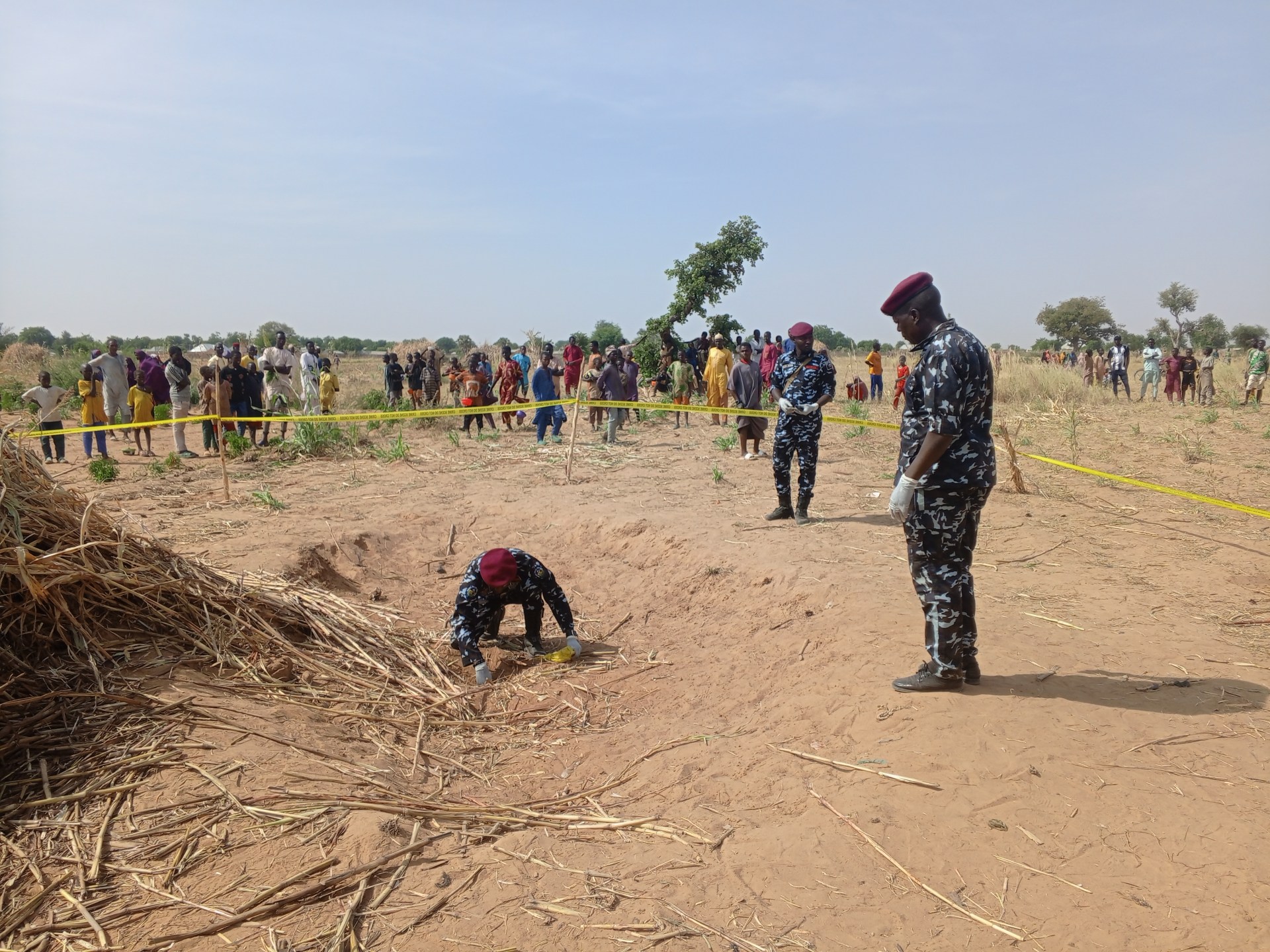
Locals confirmed the incident caused widespread panic, according to Arise TV’s reporting on X. At least one of the attacks occurred in a district that had not previously experienced violence. Additionally, they noted that it is not yet known whether the attack had a full range of effects, including whether there were any casualties among civilians.
Although these claims are unstated, other social media accounts have published images that claim to be civilian casualties. Rumor often moves more quickly than facts in a world where information warfare and armed conflict occur simultaneously. The US government’s lack of accurate data on casualties could cause more distrust in communities already reluctant to accept involvement from other countries.
Additionally, symbolism is important. The incident occurred on Christmas Day, which has emotional and political significance. The timing runs the risk of being seen as an attempt to support a larger narrative of a Western “crusade” against the Muslim community for many in northern Nigeria.
The strike site, Sokoto, is even more sensitive. It was the Sokoto Caliphate’s spiritual home throughout the 19th century, a place where Nigerian Muslims revered their religious authority and expansion. Bombing a symbolic center like this could stoke anti-US sentiment, raise religious suspicion, and give hardline propagandists a platform to use. The strikes could unintentionally bolster recruitment and amplify grievance narratives, thereby weakening alleged ISIL influence.
What else can Nigeria do if air strikes are unable to solve its security crisis?
Foreign military intervention is not the answer. The lack of the state in rural communities, weak security, and corruption are just some of the signs of deeper governance failures in Nigeria. Residents of the northwest frequently negotiate with armed groups because the state is largely absent and provide them with basic services and security. Years of government neglect, heavy-handed security tactics, and economic exclusion provided fertile ground for insurgency in the northeast where Boko Haram first emerged.
Therefore, a multi-layered response to security must be the most sustainable. It calls for dialogue, community-based policing, and deradicalization pathways. It demands a state-sponsored presence that neither defends nor defends. It also includes putting the highest priority on obtaining intelligence, strengthening local authorities, and restoring trust between citizens and government institutions.
The US strikes may make headlines and win over a domestic audience, but they run the risk of empowering only hardline sentiment and provoking even greater resentment there.
Nigerians do not require the US to bomb their nation for stability and security. They require autochthonous reform: localized long-term support to resurrect trust, resurrect livelihoods, and strengthen state institutions. Anything less distracts you.
Source: Aljazeera

Leave a Reply