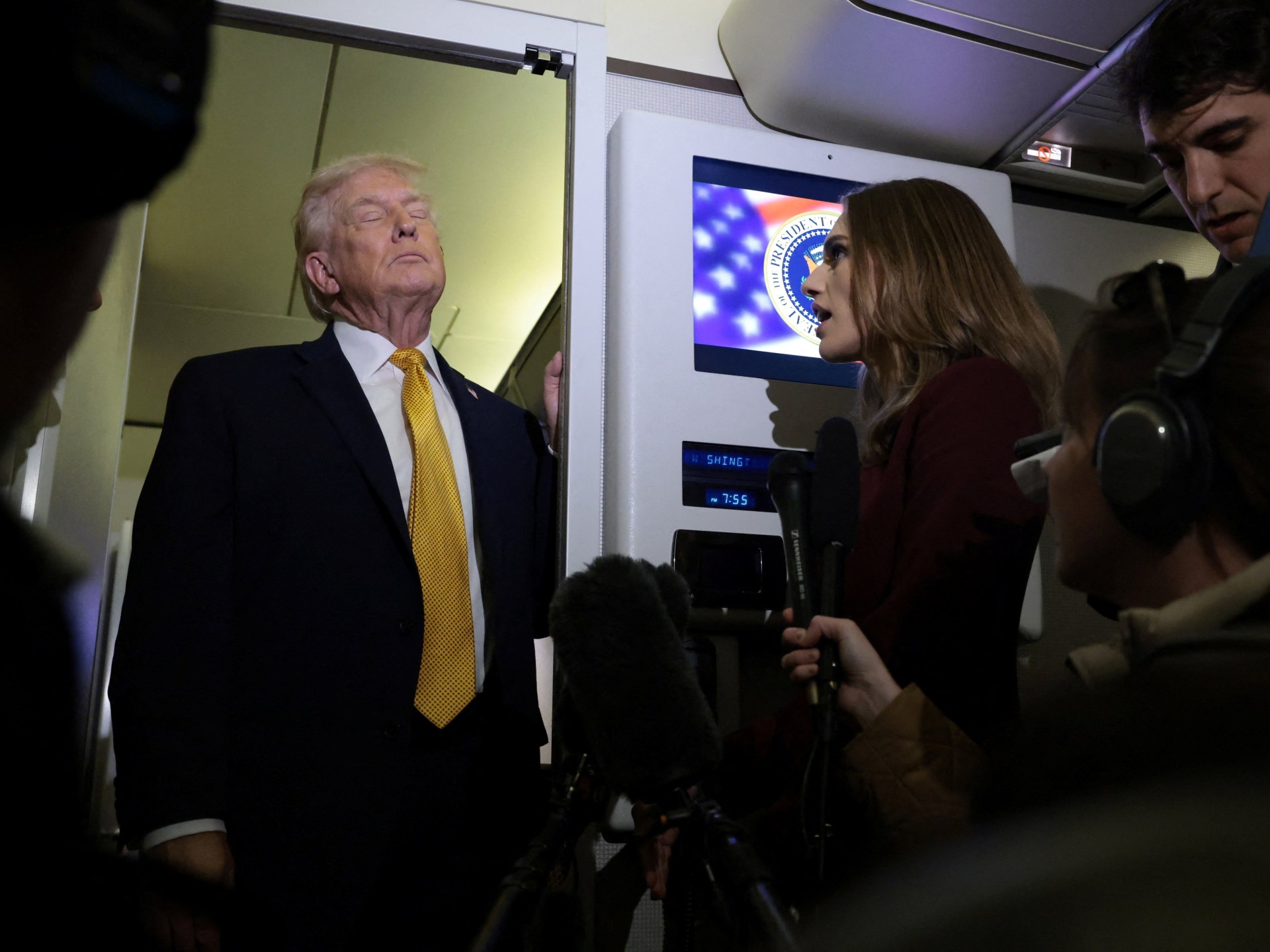
Donald Trump publicly criticised the George W. Bush administration for starting the Iraq war for many years before becoming president. And yet, in his second term as president, he finds himself presiding on a military blunder that resembles Bush’s somewhat.
Trump’s military intervention was based on a flawed defense of national security and the desire to get rid of a hostile foreign leader with the intention of obtaining their oil. In both cases, we observe a naive belief that regime change will enable the United States to accomplish its objectives. Venezuela’s US intervention recalls the same hubris that dominated the Iraq invasion ten years ago.
However, there should be other significant factors in mind. Lack of a comprehensive vision is the most distinguishing quality of the operation in Venezuela. It was unclear what the plan was for Venezuela going forward or if there was even one after Trump wrapped up an hour-long press conference with his defense and state secretaries. No clarity was provided by his threats to launch additional attacks in the coming days.
The current US commander-in-chief’s ideological visions are reflected in examples of US-led regime change. The Western Hemisphere was declared a colonial hotspot by President James Monroe in 1823. The Monroe Doctrine would support a variety of interventions in Latin America and the Caribbean as the United States consolidated its sphere of influence throughout the Americas during the 20th century. The United States’ ability to overthrow leftist governments and establish friendly governments was strengthened by the Cold War.
As the Cold War came to an end, President George H. W. Bush vowed to take over the “new world order” under the auspices of the US. In accordance with the definition of “humanitarian intervention,” Bush sent troops to Somalia in 1992 and his successor Bill Clinton retaliated in Haiti in 1994. The post-9/11 “war on terror” was the framework for George W. Bush’s decision to invade Iraq. In 2011, President Barack Obama was guided by the “responsibility to protect” doctrine regarding civilians in danger when he stepped up his assault on Libya’s forces.
There is no ideological justification for the US attack on Venezuela, though. Trump and his team have intentionally used anti-terror, humanitarianism, and other jargon to support the attack. The Monroe Doctrine was even brought up by the president. He made fun of the idea just as it appeared as though he was assimilating a larger ideology, even one borrowed from two centuries ago.
Trump remarked on Saturday, “The Monroe Doctrine is a big deal.” However, we have significantly outperformed it. It is now known as the “Donroe Doctrine.” Trump’s threat to annex Canada, Greenland, and the Panama Canal was used by the New York Post a year ago to describe his aggressive foreign policy, but Trump did not make up this pun.
The president’s choice to embrace the tongue-in-cheek term highlights a perplexing aspect of his foreign policy: to think that he is advocating an ideological vision is absurd.
In his second term, Trump has discovered he can get away with it by pursuing an increasingly militaristic and aggressive foreign policy, not because he wants to impose a grand vision.
ISIL (ISIS) affiliates in Nigeria, who are “persecuting” Christians and “narcoterrorists” in Latin America, make appeals to Trump’s base, striking a number of foreign “bad guys” who have little capacity to stand up.
He went on a minute-long tangent to boast about his military interventions in US cities after making reference to the Venezuelan gang Tren de Aragua at the news conference on Saturday. While the president’s inability to stay on topic may cause some concern for those who are concerned about his mental and physical health, at least in his case: His increasingly militarized war on drugs and crime abroad justifies an increasingly militarized war on drugs and crime at home.
Former US presidents have pursued a variety of ideologies and principles using their positions. Trump’s rhetoric seems to be merely a rehash of old ideologies that support the use of US power. The “good” intentions of previous presidents frequently opened the door to hellish outcomes for those who found themselves facing US intervention. However, those intentions at least provided some predictability and consistency for the various US administrations’ foreign policies.
Trump, in contrast, appears to be driven solely by political concerns and potential success in the near future. The ephemeral nature of interventions carried out without an overarching vision may be the only thing that can prevent such an unprincipled foreign policy from having a saving grace. The ideological commitment that has influenced other presidents to carry out long-term interventions like the Iraq occupation is not a result of an unprincipled approach to military intervention.
That means that Trump might be able to use military force to resolve any international dispute or pursue an ostensibly lucrative goal, such as assuming Danish control of Greenland.
He started imposing tariffs almost indiscriminately on allies and adversaries as a means of securing his interests last year. Trump may now start to use force more haphazardly now that he has grown comfortable with using the US military to achieve a range of objectives, including profit, gunboat diplomacy, domestic scandal dissention, etc.
Both the US and the rest of the world are in for a bad omen from that perspective. The world’s needs are last, a trigger-happy superpower without a clear strategy or day-after plan, at a time when climate, conflict, and impoverishment are all intertwined.
Source: Aljazeera

Leave a Reply