Craig Guildford, the chief constable of West Midlands Police in the United Kingdom, retired on Friday, according to a press release. His decision to step down was prompted by what he termed the “political and media frenzy” surrounding the Israeli fans’ ban from attending the team’s game against Aston Villa in Birmingham.
It was the first time a home secretary has publicly stated in two decades that she had “lost confidence” in Guildford’s leadership following sustained political and media pressure. The ban was viewed by ministers and the majority of the media as a national disgrace, not just a moral outrage.
Risk assessment was needed to assess the risks involved in this scandal, not one involving corruption, brutality, or police cover-ups. The internal guidance that underpined the decision to ban Maccabi Tel Aviv supporters from Villa Park in November was dissected by the British media and public officials. The British state did so by opposing its own police in a way that resembles the supporters of an Israeli football team.
Later, West Midlands Police made errors known. Those errors should be corrected, but they should be balanced. They are not sufficient evidence of prejudice, conspiracy, or bad faith. No evidence was found by an independent review, which the public outrage machine has largely drowned out, making it clear that officers were not influenced by anti-Semitism or malicious intent.
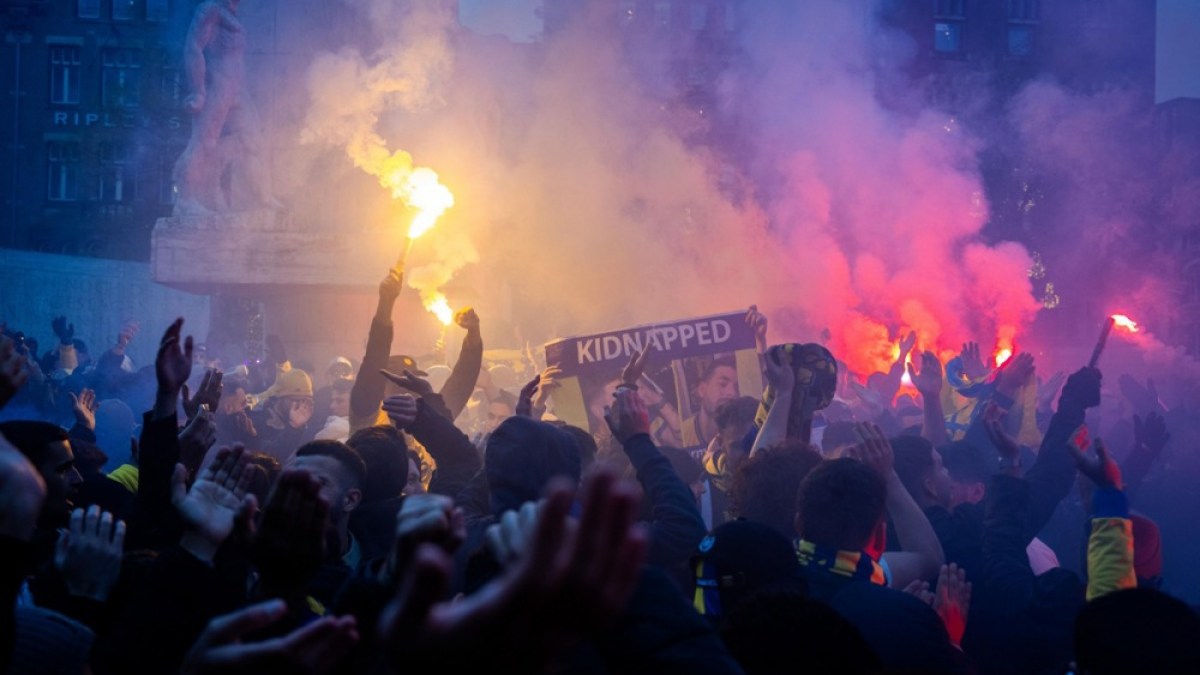
Context has also been consistently left out of media coverage. A fan base of Maccabi Tel Aviv has a long, well-known history of violent and racist behavior, including explicitly anti-Palestinian chants. This invention is neither recent nor a marginal claim. It has been acknowledged for decades, even within Israel itself.
Violence that occurred at a Maccabi Tel Aviv game in Amsterdam in 2024, which led to the police risk assessment, racist chants that praised the Israeli military, and Palestinian symbols that were used as targets, were heard, and there was violence that affected the police risk assessment. Israel’s genocide in Gaza occurred in the midst of intense international outcry over its systematic killings, displacement, and starvation. In light of all of this, it was neither shocking nor sinister to choose caution. It involved policing.
Anti-Semitism is a real problem that needs to be seriously addressed, and it is becoming more prevalent globally. However, denying any suspicion of an Israeli football team’s fan base and imposing its support on its supporters does nothing to combat anti-Semitism. Instead, it uses it to bolster its position by eroding trust in public institutions and raising suspicion over Muslim communities.
Football supporters being prohibited on safety grounds is not a common practice in the UK, which makes the political response to this case even more revealing. Due to their reputations for violence and disorder, British fans have been frequently prohibited from watching matches abroad or at home.
These preventive, collective actions have long been accepted as routine public order policing. No ministers have expressed discrimination. No arrests have been made against police chiefs. There hasn’t been a national crisis declared.
Not in terms of principle, but rather. It is political, indeed.
This incident fits a more extensive and painfully well-known pattern for Palestinians. In Gaza, Israel has carried out a genocide for more than two years, with tens of thousands of people killed, the majority of the population displaced, homes, hospitals, schools, and universities destroyed, and starvation imposed as a means of warfare. War crimes and crimes against humanity have been the subject of international legal experts and human rights organizations’ warnings. The British government has responded with three constant responses: equivocation, protection, and delay.
No arms embargo has been lifted. No restrictions. No meaningful Israel-related accountability.
The pattern that shapes Britain’s response to Gaza is the same one that was revealed in Birmingham. The state mobilizes when Israeli interests are threatened. It urges restraint when Palestinians are killed. People in Britain are prosecuted when they attempt to obstruct genocide’s supply chains. Some are currently incarcerated. Some people are demonstrating hunger.
Today, Palestine Action activists are confronted with this reality. And that is why it is impossible to ignore the fundamental theme of this narrative.
Israel will never be confronted by the British government over a mass murder if it can’t tolerate a police decision that causes an Israeli football team. If it is willing to defy its own institutions in order to demonstrate loyalty, it won’t be able to defend impunity against whom it has been accused.
The controversy relates to power workings, not the events at a stadium in Birmingham. It demonstrates who’s fears are treated as valid, who’s suffering calls for action, and who’s lives can be explained away.
The message is clear to Palestinians. In these circumstances, justice is not delayed. It is denied.
Source: Aljazeera

Leave a Reply