It seemed like a distant dream when rumors about a ceasefire started to surface in October. Even though we feared believing it, we clung to any thread of hope. We had grown to know about “ceasefires” that never existed for two years.
The streets erupted with cheers and ululations when the announcement was finally made. Yet, I began to worry that this tranquility might just serve as a pause before yet another attack.
My fears were justified. More than 400 people have been killed by Israel’s army so far, and daily deadly attacks have continued. Numerous others have died as a result of Israel’s destruction of the Strip.
Yet, the attention span of the world was starting to wane. I noticed that, starting in November, other Palestinian journalists and writers started to lose interest in what I wrote about in terms of social media and media outlets. Because the general public was quickly persuaded that the war had ended, the world’s interest decreased.
The real purpose of the ceasefire was not to stop the violence or deaths, nor to stop the bloodshed and genocide. The real goal was to stop people from discussing Gaza, the crimes committed there, and the daily suffering of people there.
As other “hot spots” in the world media spotlight have come to dominate, Gaza has now become largely invisible.
Mass murder continues in the interim.
On October 28, the Israeli army launched a massive bombing campaign, killing 104 people, less than two weeks after the ceasefire was declared. My loved ones and I were both deeply concerned about the future.
Israel moved my heart more than it did on November 20. The Abu Shawish family’s home was attacked by the Israeli army in the central Gaza refugee camp. She lost her entire family, along with her sisters Habiba, 11, Tima, 16, and brothers Youssef, 14, and Mohammed, 18, along with her mother Sahar, 43, and Rami, 50, as well as her parents Rami, 50. Despite the fact that the family was all civilians, they were all political prisoners, and were massacred, they were all civilians. Batoul must now face the genocide alone.
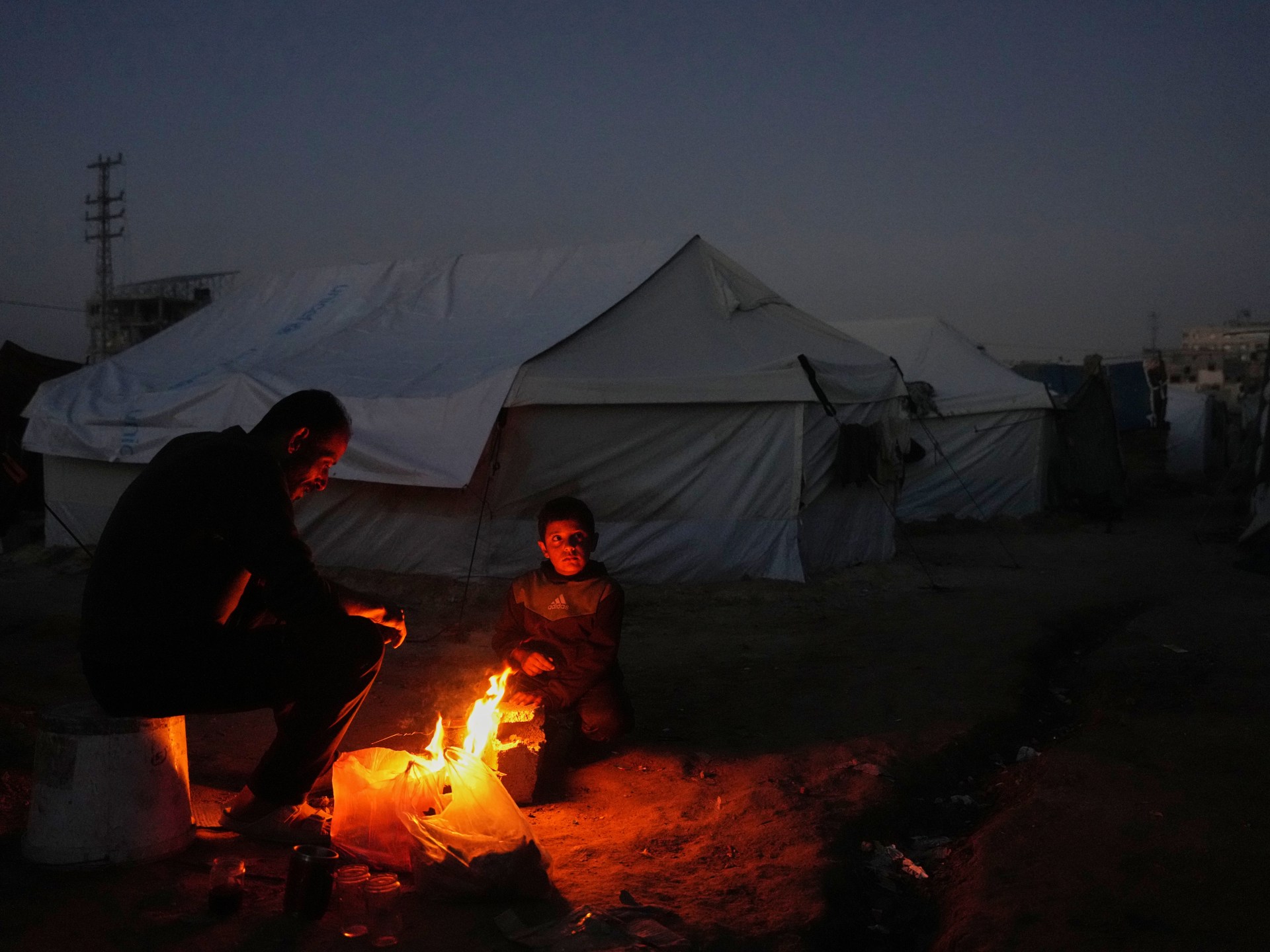
The Israeli genocidal strategy was used to create mass death through collapsed buildings, unexploded bombs, floods, hypothermia, starvation, and illness, all of which are continuing. Without adequate food, heating, electricity, or potable water, we continue to struggle.
People are dying from the winter because of it.
Just another storm hit us. Tents were completely blown off. Alaa Juha, age 30, was killed when a wall slammed against her in the rain. Arkan Musleh, a baby who was two months old, passed away from hypothermia. This month’s cold has left 15 people dead overall. When you can’t find a way out of the freezing cold and the flood, it’s difficult to describe the sense of helplessness that permeates your home.
Israel continues to violate the ceasefire through its attacks as well as its refusal to meet its commitment to allow for the agreed-upon number of aid trucks, a complete supply of tents and medicines, shelter materials, and mobile homes.
Israel is also limiting access to international organizations that work to alleviate Gaza’s suffering. NGOs with a size as large as Save the Children are now unable to register under new laws. This stifles international efforts to bring some relief, along with Israel’s ongoing refusal to grant humanitarian requests by NGOs.
Palestinian organizations that are attempting to alleviate our suffering are currently receiving insufficient funding. After the ceasefire was declared, the Samir Project, a donations-based initiative that provides material support to poor families and students, has lost a sizable number of donors and supporters. The project’s director, Dr. Ezzedine al-Lulu, confirmed to me that the decrease in donations has hindered their ability to provide essential assistance.
Israel is also preventing crossing the Rafah border. If you pay exorbitant amounts of money to Israeli-linked war profiteers and agree to never return, you are denied the right to travel outside. More than 1, 000 people have died while awaiting medical clearance from Israel, and over 16, 000 have been prevented from leaving.
Low-grade mass killing in Gaza has reached a new stage of genocide, which is less controversial than carpet bombing campaigns. The end result, however, is the Palestinians’ extermination in Gaza. Politicians in Israel continue to discuss colonizing our land, which is no wonder. They still believe that a Palestinian-free Gaza is a very real possibility that is within reach.
Source: Aljazeera

Leave a Reply