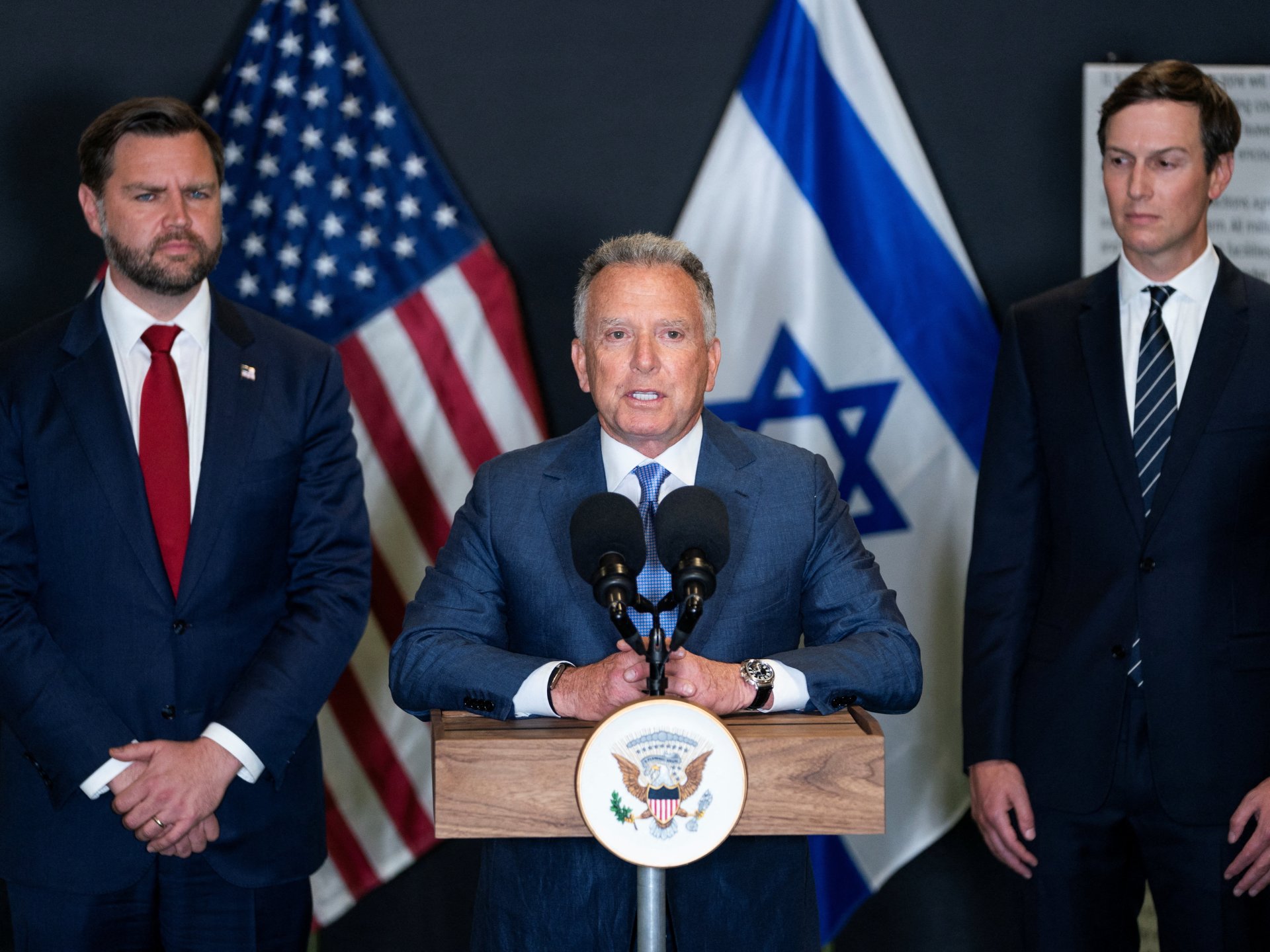
American presidential envoy Steven Witkoff announced on social media last week that the “ceasefire” is in its second phase as Israel’s bombardment of the Gaza Strip increased. The composition of a foreign executive committee and peace board that will oversee the Palestinian technocrats’ interim government of Gaza was revealed by US President Donald Trump in the days following.
Israeli Prime Minister Benjamin Netanyahu stated in his plan that neither Hamas nor the Palestinian Authority (PA) would be involved in Gaza’s future. The latter is mentioned in Trump’s “peace plan,” but it is supposed to have to implement a number of unnamed reforms before being allowed to play any part in Gaza.
In reality, this implies that Fatah can also be easily prevented from regaining control of the Gaza Strip under the pretext that these ambiguous reforms are in place.
The current arrangement and Israel’s call for “no Hamas, no Fatah” are both deeply ignorant of Palestinian society’s foundation, its politics, and its history. It is unrealistic to assume that an independent Palestinian political organization could be established and fully integrated into the occupation to oversee Palestinian affairs.
There have been numerous national movements and revolutions in Palestine that have all been united by a single criterion: the end of Israeli colonial rule. No Palestinian collective has ever publicly agreed to be included in the Israeli colonial project, regardless of its form.
The formation of political parties and the formation of public opinion were all influenced by the resistance movement.
Although the methods and tools used by various political parties and groups in Palestine may differ, all of them have a shared commitment to the Palestinian cause and Palestinian rights.
The two most important political actors in Palestinian society are still Hamas and Fatah. Hamas has continued to support resistance since its inception while Fatah emerged as the country’s dominant liberation movement before the Oslo Accords changed its political direction. The Palestinian social fabric naturally rejects any leadership or organization that doesn’t adhere to the principles of national independence or accepts foreign guardianship in addition to these two currents and other smaller factions.
Israel has chosen to ignore this deeply ingrained reality and instead tries to ignore it by imposing artificial facts on the ground. In response, it has remained on the lookout for “local alternatives” to governance in Gaza.
Israel made an effort throughout the conflict to empower and provide weapons to specific groups and individuals in an effort to aid their postwar efforts. Many of them had extensive criminal histories, and many of them were socially excluded before the war. Yasser Abu Shabab, a member of the Tarabin tribe, is one such example. He was held in prison for many years for drug-related charges and received significant Israeli support to form his own militia during the war.
He looted humanitarian aid and supported the occupation in Rafah, including obtaining Israeli troops’ passage. His own tribe issued a statement denouncing him after he was killed on December 4 and there were celebrations in Gaza. Israeli efforts to empower and engage with other clans have also failed.
Celebrity clans and families have repeatedly condemned individual members’ actions in public statements as having chosen to work with Israel. While confirming that Palestinian clans continue to be firmly committed to the Palestinian national struggle, they have removed protection and outdone the collaborators.
This rejection is attributable to Israeli policy’s failure to implement any local extensions that are compatible with the project. Despite genocide, starvation, and displacement, it confirms Israel’s inability to erase Palestinian national memory or sabotage the general consensus.
In the West Bank, things are similar. The Fatah-dominated PA has collaborated there on security and the occupation for three decades. In consequence, it is extremely unlikely to be legitimate today. In contrast, Mahmoud Abbas, the PA’s president, has a 16% approval rating while its president, a recent poll, has a 23% approval rating in the West Bank.
Despite the PA’s close security ties to the occupation, it has failed to halt Palestinian resistance in the West Bank. The West Bank witnessed the rise of armed formations that were independent of the traditional Fatah and Hamas, such as Areen al-Usud (Lions’ Den) in Nablus and the Jenin Brigades.
These initiatives were carried out by youth and received a lot of popular support. Their resistance campaigns reflected the Palestinian people’s support for the armed struggle approach that has continued despite outdated structures.
Legitimacy matters in the Palestinian context, which Israel and its Western allies are trying to understand. Foreign councils or militias funded by Israel cannot create it. Because of the ties between national history and identity, resistance gives Palestine its legitimacy.
Any attempt to get around this reality is a failure because it will only lead to internal conflict, complete security collapse, and permanent chaos in Gaza. Additionally, it would sever Trump’s role as a broker and make the current arrangement appear to be nothing more than a political spectacle to cover up an Israeli-executed genocide.
The only thing that can guarantee stability is the Palestinian people’s total and unwavering support for a free and independent Palestinian state, which will be based solely on their wishes regardless of their differences and political affiliations.
Source: Aljazeera

Leave a Reply