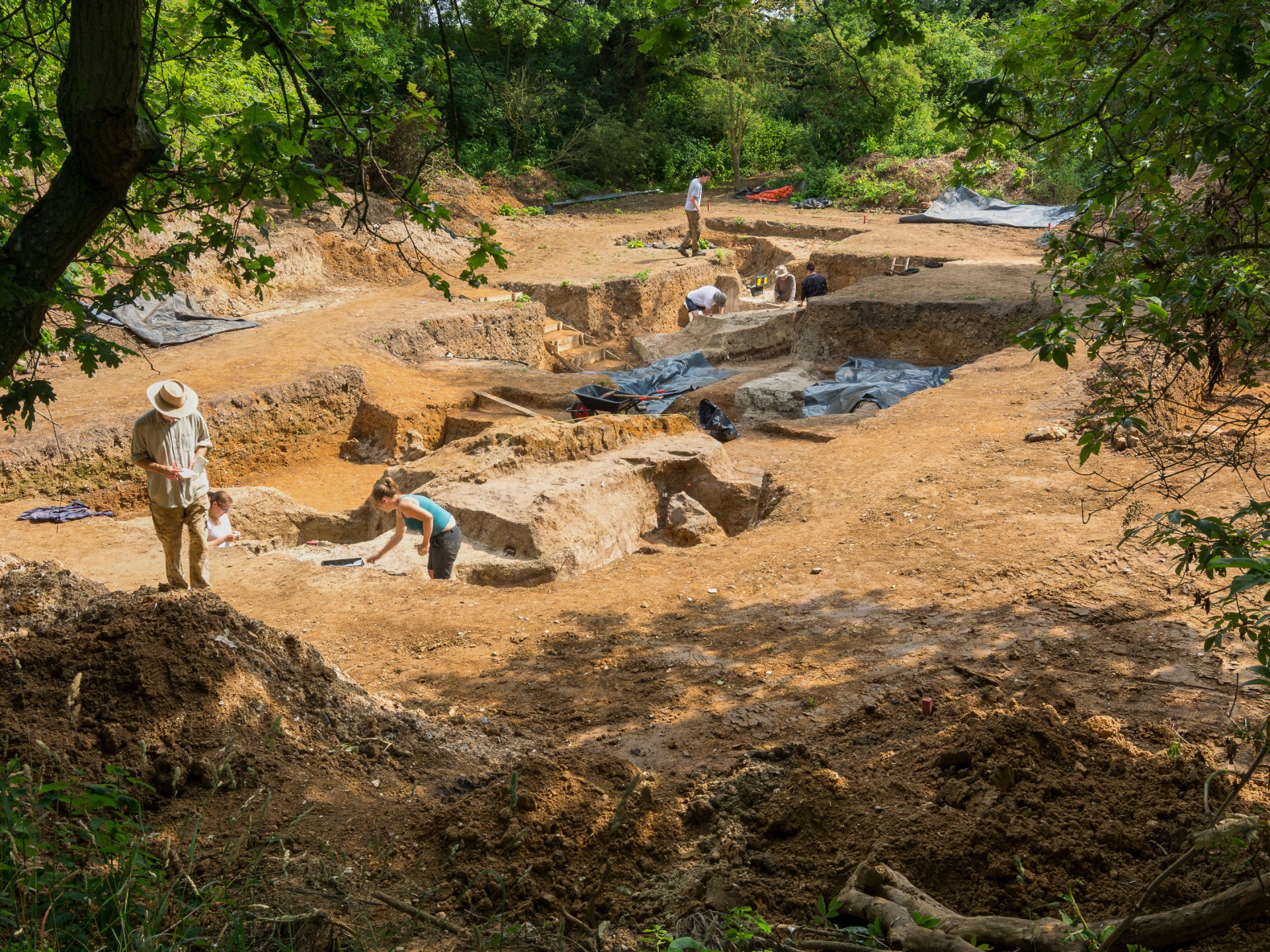
Scientists have uncovered the oldest-known evidence of deliberate fire-making by prehistoric humans in Suffolk, Britain – revealing it happened some 350,000 years earlier than experts previously believed.
The site, a former clay pit near the village of Barnham, contains a hearth made by Neanderthals about 415,000 years ago.
Recommended Stories
list of 4 itemsend of list
Until now, the earliest known evidence of humans making fire dated to around 50,000 years ago at a site in northern France, also linked to Neanderthals.
Researchers identified the remains of a repeatedly used campfire, including heated clay, flint tools shattered by intense heat and two pieces of iron pyrite – a mineral that sparks when struck against flint to ignite tinder.
“We think humans brought pyrite to the site with the intention of making fire. And this has huge implications, pushing back the earliest fire-making,” said archaeologist Nick Ashton, curator of Palaeolithic Collections at the British Museum in London.
While there are even older signs of humans using naturally occurring wildfires in Africa, this is the earliest proof that people knew how to start their own fires.
Fire was a crucial turning point in human evolution. Controlled flames allowed ancient hunter-gatherers to live in colder environments, cook food, and protect themselves from predators. Cooking also helped our ancestors get more energy from meat, roots and tubers, fuelling the growth of larger brains and enabling communities to support more people.
Scientists say fire likely transformed social life as well. It brought people together at night to share warmth, food and conversation, possibly encouraging storytelling, language and cultural beliefs.
“The campfire becomes a social hub,” British Museum archaeologist and study co-author Rob Davis said. “We’re a species who have used fire to really shape the world around us – and now we know this is something Neanderthals were doing far earlier than we thought, just like us.”
The evidence at Barnham suggests repeated fire use at temperatures above 700 degrees Celsius (1,292 degrees Fahrenheit), pointing to deliberate fire-starting rather than reliance on natural flames. The team spent four years testing the materials to confirm the hearth’s age and human origin.
Source: Aljazeera

Leave a Reply