News

Why is ADL, the Jewish advocacy group, receiving blowback from MAGA?

The Anti-Defamation League (ADL) has become the target of a sustained right-wing backlash after the US-based Jewish advocacy group included an organisation founded by slain right-wing figure Charlie Kirk in its online database on extremism.

The blowback escalated sharply on Wednesday after FBI Director Kash Patel announced that the bureau would sever ties with the ADL, accusing the prominent advocacy group of spying on Americans.

Tech billionaire Elon Musk’s post calling the ADL a “hate group” set off a firestorm of criticism online, forcing the group to scrap the “Glossary of Extremism and Hate”, which contained more than a thousand entries on groups and movements with connections to hateful ideologies.

But that has not subdued the backlash from conservatives – the base of the governing Republican Party.

So, what’s ADL’s online database, and why has it triggered MAGA (Make America Great Again) rage? And how has the nonprofit, which backed the crackdown on pro-Palestine campus protests by the administration of US President Donald Trump, ended up ruffling feathers across the political spectrum?

What is ADL?

The ADL is one of the oldest and most influential Jewish advocacy groups in the United States. It was founded in 1913 by members of the B’nai B’rith – Hebrew for “Sons of the Covenant”, a Jewish fraternal organisation – to counter anti-Semitism and prejudice against Jews.

The group, which calls itself “a global leader in combating antisemitism”, started with its original mission, “to stop the defamation of the Jewish people and to secure justice and fair treatment to all”.

Over time, the ADL grew into a national force with branches spread across the country. It works closely with law enforcement agencies to train officers on identifying bias-motivated violence. It also develops programmes and resources on anti-Semitism and the Holocaust, partnering with schools, universities and communities.

Its monitoring of right-wing racist and anti-LGBTQ+ extremism also allowed it space within the US’s liberal Jewish community.

Since its inception, the ADL has argued that anti-Zionism could lead to anti-Semitism. But in the past couple of decades, the nonprofit has been pushing to adopt the International Holocaust Remembrance Alliance (IHRA) definition of anti-Semitism, which conflates some criticism of Israel with anti-Semitism. The ADL has also backed a controversial resolution passed by the US Congress that defined anti-Zionism as anti-Semitism.

The ADL is a well-resourced civil society group, with around $163m in revenue last year alone.

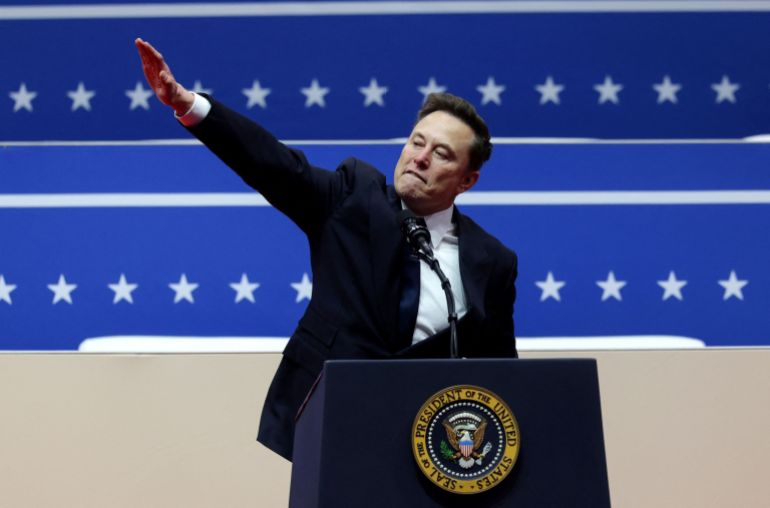
Elon Musk gestures at the podium inside the Capital One Arena during the second inauguration of US President Donald Trump, in Washington, DC, the United States, January 20, 2025 [Mike Segar/Reuters]

What caused the backlash against ADL?

The recent backlash was triggered after several influential right-wing social media accounts began posting screenshots of the ADL’s entry on Kirk’s organisation, Turning Point USA, in its “Glossary of Extremism”.

Kirk, who is credited with galvanising young voters for Trump, was assassinated last month.

Though Turning Point USA was not listed as an “extremist organization”, the nonprofit had documented incidents where its leadership and affiliated members had made “racist or bigoted comments”.

ADL’s entry on “Christian Identity” – which the nonprofit identified as an extremist theology that promotes white supremacy – also drew widespread criticism from right-wing influencers.

The ADL has long positioned itself as a nonpartisan watchdog. But conservatives have increasingly argued that it has become politically aligned with progressive causes, including the group’s partnerships with social media companies in moderating hate-speech policies.

Jonathan Greenblatt, the ADL’s CEO, has been accused of “weaponising anti-Semitism” to attack critics of liberal policies and of conflating right-wing populism with hate speech in the past.

In the weeks following Kirk’s assassination, the US has seen a wave of right-wing backlash against public figures who criticised him, with several commentators and journalists facing professional repercussions – including the brief suspension of a television show by comedian Jimmy Kimmel and the firing of Washington Post columnist Karen Attiah.

What was in ADL’s online database?

The ADL “Glossary of Extremism and Hate” was an online, searchable database launched in March 2022 by the organisation’s Center on Extremism. After the backlash from right-wing influencers, mostly from the MAGA camp, the ADL quietly moved to retire its database from the public.

The database contained more than 1,000 entries providing overviews and definitions of terms, symbols, slogans, tactics, publications, groups, and individuals associated with various extremist ideologies, hate movements, and related activities.

The resource covered a broad spectrum, including white supremacism, anti-Semitism, anti-Muslim bigotry, and extremism on the far right and far left. The glossary reportedly included groups like the Proud Boys, the Nation of Islam, the Oath Keepers, and others.

The ADL, in its statement, argued that “an increasing number of entries in the Glossary were outdated”, and “a number of entries [were] intentionally misrepresented and misused”.

The organisation further said that it wanted to focus on exploring “new strategies and creative approaches to deliver our data and present our research more effectively”.

The list is no longer publicly available on ADL’s site, and the original URL now redirects to the organisation’s home page.

US President Donald Trump and Elon Musk
Tech billionaire Elon Musk’s post calling the ADL a ‘hate group’ set off a firestorm of criticism online. Musk, who helped with Donald Trump’s campaign, has since fallen out with the US president [File: Nathan Howard/Reuters]

How did Musk get into this?

The online smear campaign gained traction on Sunday night after billionaire Elon Musk started interacting with posts targeting the ADL.

Musk, who has more than 227 million followers on X, said, “The ADL hates Christians, therefore it is is [sic] a hate group.”

The ADL’s operations encourage murder, Musk said in another reply to a post on X, formerly Twitter, which he bought in 2022 after paying $44bn.

Musk’s attacks on the ADL still came as a shock to some. ADL’s Greenblatt has, in fact, praised Musk several times, including in 2023 for saying that X would block use of the pro-Palestinian slogan “from the river to the sea”.

That applause reportedly led to the resignation of a top ADL executive, Yael Eisenstat, who headed the nonprofit’s Center for Technology and Society, and the group lost several donors.

The ADL has also criticised Musk, saying X’s Grok chatbot promoted pro-Nazi ideology. The chatbot has praised Adolf Hitler, and called itself “MechaHitler”.

Former and current ADL employees have told Jewish Currents, a US-based progressive publication, that Greenblatt has repeatedly given a pass to Musk’s white nationalist sympathies if they help the ADL fight anti-Zionism – a pattern that reportedly escalated after the October 7, 2023 Hamas attack on Israel, followed by Israel’s now two-year-long war on Palestine, which has been dubbed genocide by an United Nations inquiry panel.

Then again, earlier this year, Greenblatt came to Musk’s defence after several Jewish lawmakers and civil society groups condemned Musk’s fascist-style salutes on stage during a speech after Trump’s re-election.

The ADL had posted: “It seems that Elon Musk made an awkward gesture in a moment of enthusiasm, not a Nazi salute.”

Why did the FBI snap ties with ADL?

The FBI’s decision to cut ties with the ADL also marks a sharp rupture in a partnership that had lasted for decades, at least since the 1940s, rooted in joint efforts to train law enforcement officers and monitor extremist threats across the US.

The move was announced by FBI chief Patel just 24 hours after Musk joined the online campaign, accusing the ADL of having “become a political front masquerading as a watchdog”.

Patel also targeted James Comey, an American lawyer who served as the director of the FBI from 2013 to 2017, during the era of US President Barack Obama.

“James Comey wrote ‘love letters’ to the ADL and embedded FBI agents with them – a group that ran disgraceful ops spying on Americans,” Kash said in a post on X, without offering any more clarity on this.

“That era is OVER. This FBI won’t partner with political fronts masquerading as watchdogs,” he concluded.

Kash Patel, U.S. President Donald Trump's nominee to be director of the FBI
Kash Patel, the FBI chief, has accused the ADL of spying on Americans [File: Evelyn Hockstein/Reuters]

Why is ADL accused of pro-Israel bias and of suppressing pro-Palestinian activism?

The ADL has also faced criticism from left-wing activists for exhibiting a pro-Israel bias and suppressing pro-Palestinian activism, particularly in the wake of widespread protests across US campuses over the Gaza war that has killed more than 67,000 Palestinians and turned the Palestinian enclave into ruins.

The advocacy group has dubbed grassroots protests against Israel’s genocidal campaign in Gaza as “pro-Hamas activism”, while its CEO Greenblatt has described the Jewish groups calling for a ceasefire as “the ugly core of anti-Zionism”.

The ADL also publicly campaigned against campus protests last year, describing some demonstrations as “antisemitic hate rallies”. The group urged university administrators and government officials to take action against protest organisers, and pressured institutions to censor or discipline dissenting voices.

ADL’s Greenblatt praised Trump for withholding $400m in grants to Columbia University after campus protests and complimented the arrest of Columbia pro-Palestinian activist Mahmoud Khalil.

“We appreciate the Trump Administration’s broad, bold set of efforts to counter campus antisemitism – and this action further illustrates that resolve by holding alleged perpetrators responsible for their actions,” the ADL posted above a tweet about Khalil’s arrest.

The ADL’s collaboration with the US administration has dented its credibility, and several staff have resigned, citing the organisation’s overt emphasis on pro-Israel advocacy.

Daryz pips Minnie Hauk to Arc win in photo finish

Images courtesy of Getty

In a photo finish, Daryz triumphed over Minnie Hauk in the Prix de l’Arc de Triomphe at Longchamp with a pulsating late run.

Before the Francis-Henri Graffard-trained three-year-old started the 1.5 mile trek for the first time, the three-year-old had only made six starts.

However, with a score of 12-1, jockey Mickael Barzalona perfectly timed the course to win the most lucrative Group One race in Europe.

Minnie Hauk, ridden by Christophe Soumillon, was heavily backed at 9-4, and the winner of the Oaks and Irish Oaks made light of a difficult draw in stall one to take the lead of the 17-strong field from two furlongs away.

Sosie, the top-seeded trainer, came home in third place with 16-1, while 40-1 shot Giavellotto came in fourth, while Andre Fabre, who was aiming for a record-extending ninth win, was in the lead.

Daryz finished last overall at the Judmonte International in York in August, and his remarkable transformation comes to an end with victory in the Arc.

Graffard, who won the race for the first time in the style of the late Aga Khan, said, “I think the defeat at York helped us win today.”

“This race has an amazing reputation, and it’s true that winning it is very special. Although there have been some notable successes, this is especially noteworthy this year.

When the Frenchman, 34, won the Derby on Pour Moi in 2011, the Frenchman said it was a happy moment to join the group of jockeys who also won the Arc.

It’s a great privilege to enter the circle of people who have won this race, especially in these colors, he said, adding that this kind of race you have been watching since you were very young.

related subjects

  • Horseback riding

Moldova’s vote is one more sign of Russia’s weakness in its ‘near abroad’

In the general election, Moldova’s pro-European Party of Action and Solidarity (PAS) won the election on September 28. It also established a new geopolitical trend and defeated the Patriotic Electoral Bloc (PEB), which is favored by Russia.

Russia is losing ground in post-Soviet Eurasia as a result of Russian aggression against Ukraine. In paradoxical circumstances, Moscow launched a massive invasion of its neighbor in 2022 to assert its authority over what it refers to as its “near abroad.” More than three years later, the failure of the strategy is painfully obvious.

Russia is being relegated by various nations and leaders, whether they are old-school autocrats or Democrats.

The impressive PAS performance in Moldova defied all expectations for a close race. Pro-Russian organizations under the leadership of PEB appeared to be gaining steam in the weeks leading up to the elections. Moldova’s society was evenly divided, and the country was burdened by uncertainty regarding the economy. However, with renewed tensions between the parties within the PEB, things turned around in the late summer.

The coordinated Russian efforts to influence the elections through information ops on social media, which used PAS as a Western puppet to sway the nation’s conflict with Russia and profit from Romania’s fears of an economic downturn and annexation, backfired.

Two blatantly pro-Russian parties were forced to withdraw from the Central Electoral Commission because of allegations of illegal funding. Additionally, the government obtained the extradition of fugitive oligarch Vladimir Plahotniuc, who is accused of being a key player in the $1 billion bank theft from Greece.

The West, a strong supporter of the European Union, found renewed by the drama to the Moldovan diaspora. In consequence, only the Gagauz region of northern Moldova and Transnistria, where the opposition parties are concentrated, did well. Despite receiving nearly 3 percent of its votes in comparison to 2021, PAS still won with 50.2 percent, compared to PEB, who received 24.4%.

Moscow-friendly forces likely had had a better chance of challenging PAS if Russia had stopped ingratiating. The opposition squandered a chance to influence how well-governed the elections are. PAS had a competitive advantage when it came to the EU versus Russia debate.

The party could take credit for bringing Moldova closer to membership, which led to the start of the 2024 accession talks, which had become a favored choice. Given its prominence as the country’s main export exporting destination and top trading partner, almost two-thirds of Moldovans are in favor of joining the EU, which is surprising. The populace’s pro-EU attitude is irreversible, and even if PEB gains control, it’s unlikely to significantly alter its course.

The South Caucasus can be seen too. Armenia, which was historically heavily reliant on Russian strategic and economic aid, has turned its head west. As Azerbaijan regained complete control of the disputed Nagorno-Karabakh region in 2022, Moscow abysmally failed to support its allies.

Nikol Pashinyan, the president of Armenia, had a chance to talk to both Azerbaijan and Turkiye in person. A peace agreement between Baku and Yerevan is currently being considered because Donald Trump, the president of the United States, wants to see it through the finish line to claim credit.

Armenia’s membership in the Collective Security Treaty Organization, which was dominated by Russia, was suspended in February 2024. Additionally, France’s cooperation in security and defense increased.

Azerbaijan has also experienced increased tensions with Russia twice in recent years, once in 2024 over a crashed passenger jet over the Caspian Sea and once this summer over the arrests of Azerbaijanis in Yekaterinburg, which led to a major crisis.

Russia served as Armenia’s and Azerbaijan’s arbitrator in the past and has regional influence. While Turkiye and the US have stepped in to fill the void, it has now managed to alienate both nations.

Only Georgia appears to lean toward Moscow in the South Caucasus. The governing Georgian Dream party and its informal leader, billionaire Bidzina Ivanishvili, have argued with the EU over their propensity for authoritarianism, largely due to this. Georgia has just rejected its democratic demands, which have, in any case, declined under Trump’s control. Tbilisi is attempting to balance between Europe, the US, and, of course, China rather than firmly ties itself to Russia.

In Central Asia, “multivectoring” has long been a common practice. Governments there have also been made aware of Russian ingrainement and given them an additional motivator to turn to China as a counterweight as a result of the conflict in Ukraine.

Beijing has been expanding its economic footprint in the area. It is the largest investor in Central Asia, and it is now the fifth-largest country in the group, accounting for 34% of the total trade of the five Central Asian nations, up from 17.7% in 2020 to 24.1 percent in 2024. Turkmenistan and Kyrgyzstan are ahead of the rest.

China’s diplomatic efforts have also increased: In May 2023, China held its first China-Central Asia summit in Xi’an. A treaty on “permanent good-neighbourliness, friendship, and cooperation” was signed in Astana in June of this year.

Beijing also emphasized the importance of playing a greater part in transnational crime, border security, and antiterrorism, which are traditionally reserved for Russia. This partnership may be beneficial in overcoming domestic difficulties from the perspective of the regional states. The adage that China must provide the cash and Russia must be accurate no longer.

Given that Russia is reliant on China, which has grown exponentially as a result of the war in Ukraine and the Western sanctions that came with it, it is undoubtedly unhappy. Putin’s participation in the military parade in Beijing on September 3 to honor the victory of World War II and bolster China’s involvement in the conflict is yet another illustration of how erratic the relationship has become. The leaders of Belarus and the five Central Asian nations were also present.

That doesn’t mean China is currently entirely in charge of Central Asians. There is a lot of local agency involved, as regional political researchers have pointed out when criticizing the new “Great Game”‘s perceived impact. Local players are playing against the big boys to assert their independence and profit from these arrangements.

Europe also plays a role in this tale. About 23 percent of Central Asia’s total trade comes from the EU. Some of the turnover is clearly explained by the imports of European-made goods, but not all of it. The pace of EU diplomacy is also increasing. In order to discuss cooperation on civilian nuclear power, French President Emmanuel Macron traveled to Kazakhstan in 2024 for a widely publicized visit. Ursula von der Leyen, president of the European Commission, and Antonio Costa, head of the EU-Central Asia summit, took place in Samarkand, Uzbekistan, in April.

Russia’s decision to invade Ukraine has long-lasting effects on both Europe and China, as well as Russia itself. The strong Russian influence over its “near abroad” might be overthrown. There is no denying that Russia’s influence is severely declining in Moldova, the South Caucasus, and Central Asia.

Jenny Eclair brutally snubbed twice as Great British Bake Off presenter

https://i2-prod.mirror.co.uk/tv/tv-news/article36000249.ece/ALTERNATES/s615/0_screencapture-channel4-now-C4-2025-09-02-20_21_49.jpg

TV icon Jenny Eclair says she was passed up twice as the presenter of the Great British Bake Off, despite getting to the final two candidates back in 2020, missing out to Matt Lucas.

When Alison Hammond joined The Great British Bake Off in 2023, most thought she was a natural choice, but comedian Jenny Eclair was hoping it would be her who got the call.

“I’d have loved to present Bake Off! I was second to Matt, you know,” Jenny tells Mirror, referencing when, in 2020, fellow comedian Matt Lucas took over from Sandi Toksvig, in presenting the Channel 4 show.

“I was in that audition process, and it came down to me and Matt. I would have loved that gig. I’d still be there now if I got it! But I auditioned and then I got a big bouquet of flowers the day before they announced Matt, with a little note saying ‘next time’.”

READ MORE: Georgia Toffolo’s UGG ballet flats keep your feet warm and stylish this autumn

However, in 2023, it was This Morning star Alison that got the call to take over from Matt. “I don’t know what happened to next time!” laughs Jenny.

Alison hosts the show alongside Noel Fielding, while Paul Hollywood and Prue Leith serve as judges. And while Jenny never quite made the presenting line-up, she has been inside the famous tent, appearing on Stand Up To Cancer’s Celebrity version of the show in 2020.

Losing out to her former I’m A Celebrity… Get Me Out Of Here! campmate Alison wasn’t so bad, though, says Jenny. who is now a big fan of the This Morning star. Jenny and Alison appeared in the jungle back in 2010, alongside the likes of Shaun Ryder, Gillian McKeith and eventual winner, Stacey Solomon.

“I always knew Stacey would do well, it was obvious she was going to win [I’m A Celeb] from the beginning. But Alison, I think her career has been just as much a surprise for her as it has for anyone. She’s found a really great niche and is a regular in people’s sitting rooms, I really do love watching her on Bake Off,” says Jenny.

With a second All Stars series of I’m A Celeb on the horizon, would Jenny be up for facing some critters again?

“Oh, the money would have to be really good for me to consider that. As in, a life-changing amount of money. And I don’t work Tuesdays, do I? I would need to commute from South Africa or take Arlo with me,” she laughs, explaining that Tuesday is “Nana day”, when she looks after two-year-old grandson Arlo.

For now, she’ll stick to being a little closer to home, and it sounds like she’s got a pretty jam-packed schedule as it is. Heading off to continue her stand-up tour, Jokes, Jokes, Jokes Live! the day after our interview, Jenny still has plenty of important prep to do. “I need to get my car sweets for the journey. And biscuits, I always bring biscuits for the front row audience.”

The show is based on her 2024 memoir, which delved into Jenny’s family life, her upbringing and the changing face of women in comedy – as hilarious, insightful and disrespectful as you’d imagine it to be.

“It’s a lot lighter than the book, it’s all jokes and punchlines,” says Jenny of the tour, which runs until late November. “It becomes less personal to me and more general to the audience, as most people have experienced some kind of parent loss, siblings, school, first love, having babies…

“So, it should strike a chord with everyone. It’s a mix of a professional look-back with personal bits and some gossip from I’m A Celeb thrown in.”

And as one tour comes to an end, another begins, as Jenny will be back on stage in the lead-up to Christmas for a string of shows for her hit podcast Older And Wider , which she co-hosts with writer friend Judith Holder, as they natter about life.

For tickets to Jenny Eclair’s stand-up show Jokes, Jokes, Jokes Live! visit Jennyeclair.com. Tickets for the Older And Wider Live podcast shows in London this Christmas are available now from leicestersquaretheatre.com/show/older-wider-live-at-christmas.

Article continues below

The Nolans reveal emotional reason for special gig and future after Linda’s death

https://i2-prod.mirror.co.uk/tv/tv-news/article36016407.ece/ALTERNATES/s615/1_Simply-The-Best-23.jpg

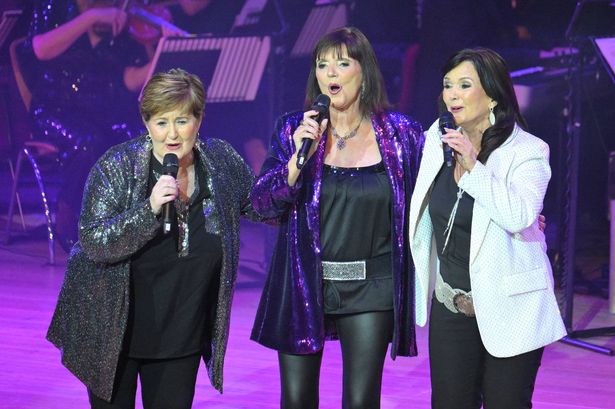
Over the weekend, Maureen, Denise, and Anne took to the stage to pay homage to their late sisters, Bernie and Linda, both of whom passed away from cancer.

Three members of The Nolans reunited on stage this weekend to perform a special one-off gig to help raise money for cancer following the loss of two of their sisters to the illness in recent years.

On Saturday night, Anne, 74, Denise, 73, and Maureen, 71, performed at Sheffield’s City Hall in support of the Weston Park Cancer Charity.

Sadly youngest sister, Loose Women star Coleen Nolan, 60, was unable to join her older siblings due to work commitments and was said to be “absolutely gutted” as they were “doing it in honour of Bernie and Linda.”

Tragically, Bernie, the sister of Bernie, passed away from breast cancer in 2013 at the age of just 52, making the family’s situation worse.

After two decades of incurable secondary breast cancer spreading to her brain, Linda passed away in January of this year from pneumonia at the age of 65.

READ MORE: Coleen Nolan opens up on new romance with candid five-word confession

Their 70-year-old brother, Brian, was just diagnosed with prostate cancer, and their sister Anne, who passed away before taking the stage, has also had cancer twice.

Simply The Best, the first time this line-up of Anglo-Irish sisters had performed together since 1978, was the title of the show.

One of the best-selling girl bands ever, they have sold 30 million records and have a particular strong following in Japan, making them one of the best.

The band’s most popular song is “In the Mood For Dancing,” but Denise first gave it a performance before it was released in 1979.

Sharing their reasons for doing the special show, Denise told the BBC they were determined “to do their sisters proud” and said: “Everything is difficult when someone goes, everything is a memory.

“But I believe that professionalism overtakes.” When Linda passed away, I gave her eulogy, and of course, you can’t wait until you think, “Am I going to break down?”

However, once you get there, it feels like you’re speaking to someone else, you’re doing your job, and you’re aware of your desire to make someone proud.

The trio also set a Guinness World Record for Tell Me It’s Not True from Blood Brothers.

At the fundraising event, celebrities like Dr. Ranj Singh, Layton Williams, Janette Manrara, and Darren Day joined them.

Continue reading the article.

READ MORE: Michelle Keegan and Rita Ora-loved brand slashes 71% off ‘salon-quality’ hair set