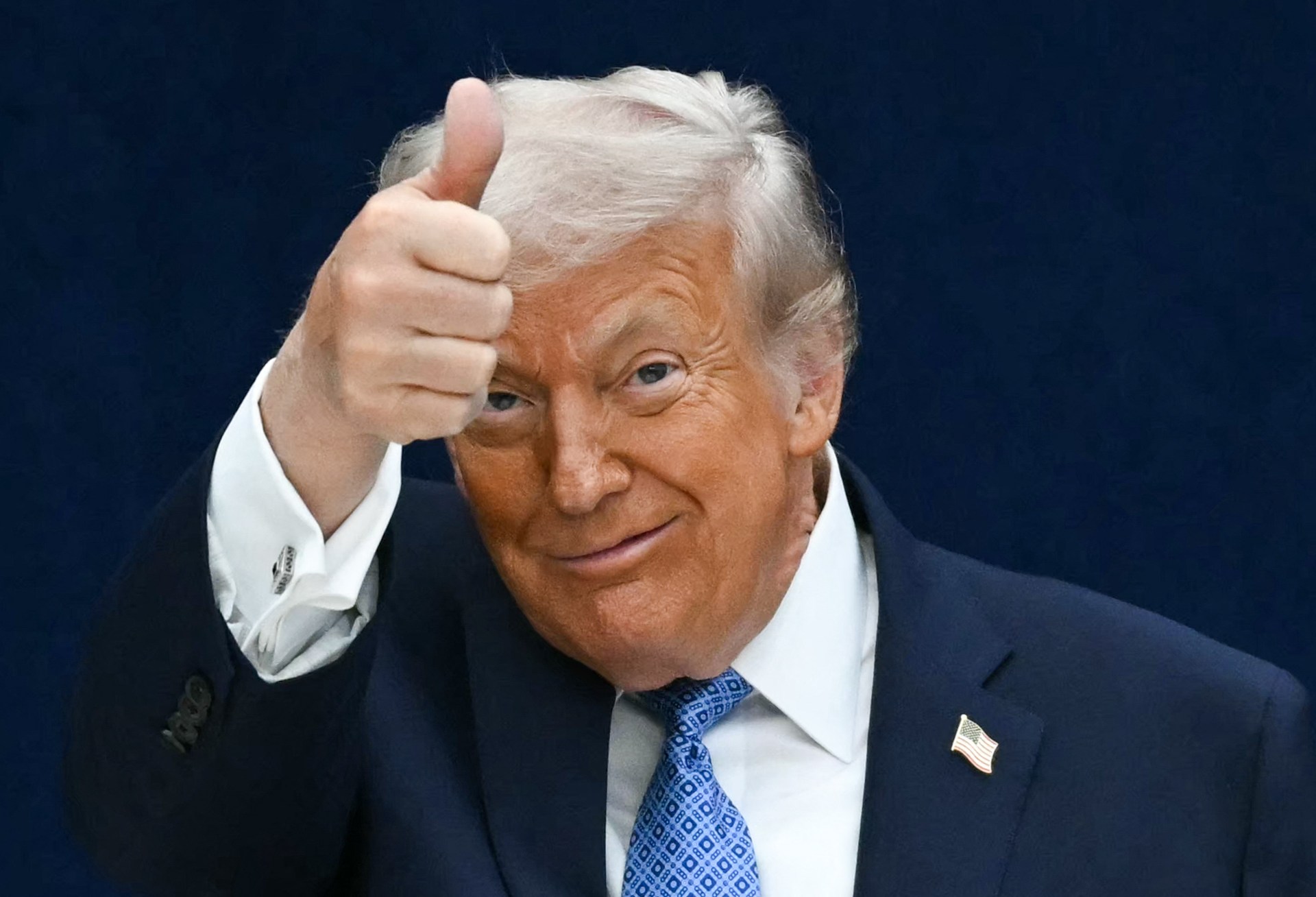
Deadly fighting has erupted between Thailand and Cambodia, weeks after the two sides signed a ceasefire deal in Malaysia presided over by United States President Donald Trump.
Now the Trump-brokered peace agreement is on the brink of collapse after soldiers from the two Southeast Asian neighbours clashed again on Monday. At least 12 people have been killed and thousands displaced from both sides as clashes continued for the second day.
Recommended Stories
list of 4 itemsend of list
Nearly 50 people were killed and 300,000 displaced during the five-day fighting in July before Trump intervened to broker a ceasefire.
Trump has claimed to have stopped at least eight wars since he took office in January. But several of the conflicts he claimed to have resolved continue to fester.
Since the multi-phase Gaza ceasefire deal was announced by the US president in October, Israel has killed more than 400 Palestinians in violation of the deal. He mediated a deal between the Democratic Republic of the Congo and Rwanda in October, but that has not ended the fighting.
What was the Kuala Lumpur joint agreement for peace?
The latest clashes have threatened to shatter Cambodia and Thailand’s delicate truce, which was first agreed in July before an expanded version was signed in October in a meeting attended by President Trump.
“I am pleased to announce that, after the involvement of President Donald J Trump, both Countries have reached a CEASEFIRE and PEACE,” Trump had posted in July. “Congratulations to all! By ending this War, we have saved thousands of lives.”
Below are the main points about the ceasefire:
- In the deal brokered by Malaysia and the US, both countries agreed to military de-escalation, including removing heavy weaponry and landmines from the border under ASEAN supervision.
- They also agreed to stop engaging in online information warfare, spurring the conflict.
- Since October, however, several rounds of renewed clashes and mutual accusations have threatened the ceasefire.
- Last month, Thailand said it would suspend its implementation of the deal after one of its soldiers was wounded in a landmine explosion.
An analyst told Al Jazeera that the fragile ceasefire was “forced” under threat of Trump tariffs.
“For all of us who are keen observers, the ceasefire was forced by the Trump administration and Trump’s involvement,” Virak Ou, the founder of Cambodian think tank Future Forum, told Al Jazeera.
When Trump got involved, Ou said, the Thai military – a powerful player in Thailand’s political landscape – was “not happy”. He added that ASEAN monitoring observation teams have not been empowered with enough resources to enforce the truce, while rising nationalism in both countries has also fanned the flames of the conflict. The Association of Southeast Asian Nations (ASEAN) is a group of 11 regional nations.
“What I fear is that we’re now going to see, potentially, much longer, much deeper fighting – and that could last longer and have far deeper consequences,” Ou said.
Which wars has Trump claimed to have stopped? Have some of the truce deals survived?
The US president has claimed to have played a role in stopping or resolving wars or conflicts as follows:
• Thai-Cambodia border clashes
• Armenia and Azerbaijan deal
• Rwanda and the Democratic Republic of the Congo agreement
• Israel and Iran ceasefire
• Israel’s genocidal war on Gaza
• India and Pakistan truce
• Egypt and Ethiopia tensions
• Serbia and Kosovo conflict.
Some of the wars Trump claims to have ended are ones he participated in himself. His role in some other ceasefires is disputed. Still, there are other conflicts where the involved parties do credit him with playing a key role as mediator.
Trump said he deserved to win the Nobel Peace Prize for ending the wars.
While US weapons and the country’s ironclad diplomatic support for Israel have been critical in Israel’s genocidal war on Gaza, Trump is also widely believed to have pressured Israeli Prime Minister Benjamin Netanyahu more than his predecessor, Joe Biden, to end the Gaza war.
The war between Iran and Israel in June ended with a ceasefire brokered by Trump. But the bout of fighting, which started with Israel striking Iranian nuclear facilities, killing scientists and bombing residential neighbourhoods, also included the US as an active participant.
Trump took part in it by ordering his military to strike three Iranian nuclear sites. Iran struck back by hitting the largest US military base in the Middle East, in Qatar, before the ceasefire was announced.
In May, India and Pakistan waged an aerial war, bombing each other’s military bases. India said it also hit “terrorist” bases in Pakistan and Pakistan-administered Kashmir, while Pakistan claimed India killed dozens of civilians.
Ultimately, Trump announced a ceasefire after four days of fighting. But while Pakistan credits the US president for helping halt the fighting, India insists he had no role.
The hostilities between Cambodia and Thailand ended after phone calls from not only Trump, but also mediation from Malaysian Prime Minister Anwar Ibrahim and a delegation of Chinese negotiators. So far, only Cambodia has thanked Trump for his role.
Relations between Serbia and Kosovo have been tense since the early 2000s. The European Union and NATO have always been key mediators in this region. Kosovo and Serbia signed a deal in 2020 under Trump during his first term. While relations remain tense, the two have not been involved in a full-blown war since Trump’s return to power.
Trump says he ended a war between Egypt and Ethiopia. But while the two nations have had tense relations, especially over a hydroelectric dam which opened on a tributary of the Nile River, they have not been in any war.
Rwanda and the DRC signed a peace deal in June, brokered by Trump. The ceasefire is fragile and tensions between the two countries remain high. DRC on Tuesday accused Rwanda of violating the peace deal.
Source: Aljazeera

Leave a Reply