A hawkish pro-Ukraine sentiment has sprung up in the wake of the US military’s abduction of Venezuelan President Nicolas Maduro and subsequent threats by Washington to intervene in Iran during recent upheaval. The simple logic goes that if Russia’s allies are weak, Russia also becomes weaker.
US President Donald Trump is recently infected with the regime change fever that his Democratic predecessors spread, despite his earlier criticism of US interventionism.
One of its most vivid references is Leon Trotsky’s father’s Red Army’s export of revolution, a short-lived policy of Soviet Russia. In Hungary, Bavaria, and Latvia, there were several pro-Bolshevik governments that emerged throughout Europe. None of them endured for very long.
The Persian Soviet Socialist Republic, which existed in Iran’s Gilan province on the Caspian Sea between 1920 and 1920, was one of the Bolsheviks’ lesser-known revolutionary initiatives. The Red Army eventually had to retreat, and its local allies were quickly overthrown, so the idea was to try to spread the proletarian revolution all the way to India.
Iran once more appears to be a hub for revolutionary exports after a century, but this time with American and Israeli hawks trying to influence something akin to Maidan in Ukraine. The constant threat of US and Israeli intervention appears to be its strongest pillar and the source of immunity from domestic unrest, despite Iran’s theocratic regime’s reputation as hardly palatable and organic resistance to it. Iranians should avoid risking that their nation will become another Syria or Libya.
Iran has always faced oppression from outside powers, including Russia and the USSR, throughout the 20th century. In addition, Iran was the site of frequent convergence between Soviet and Western interests, such as the 1953 coup d’etat against Prime Minister Mohammed Mossadegh, their shared opposition to the 1979 Iranian Revolution, and their support for the Iraqi side during the Iran-Iraq War.
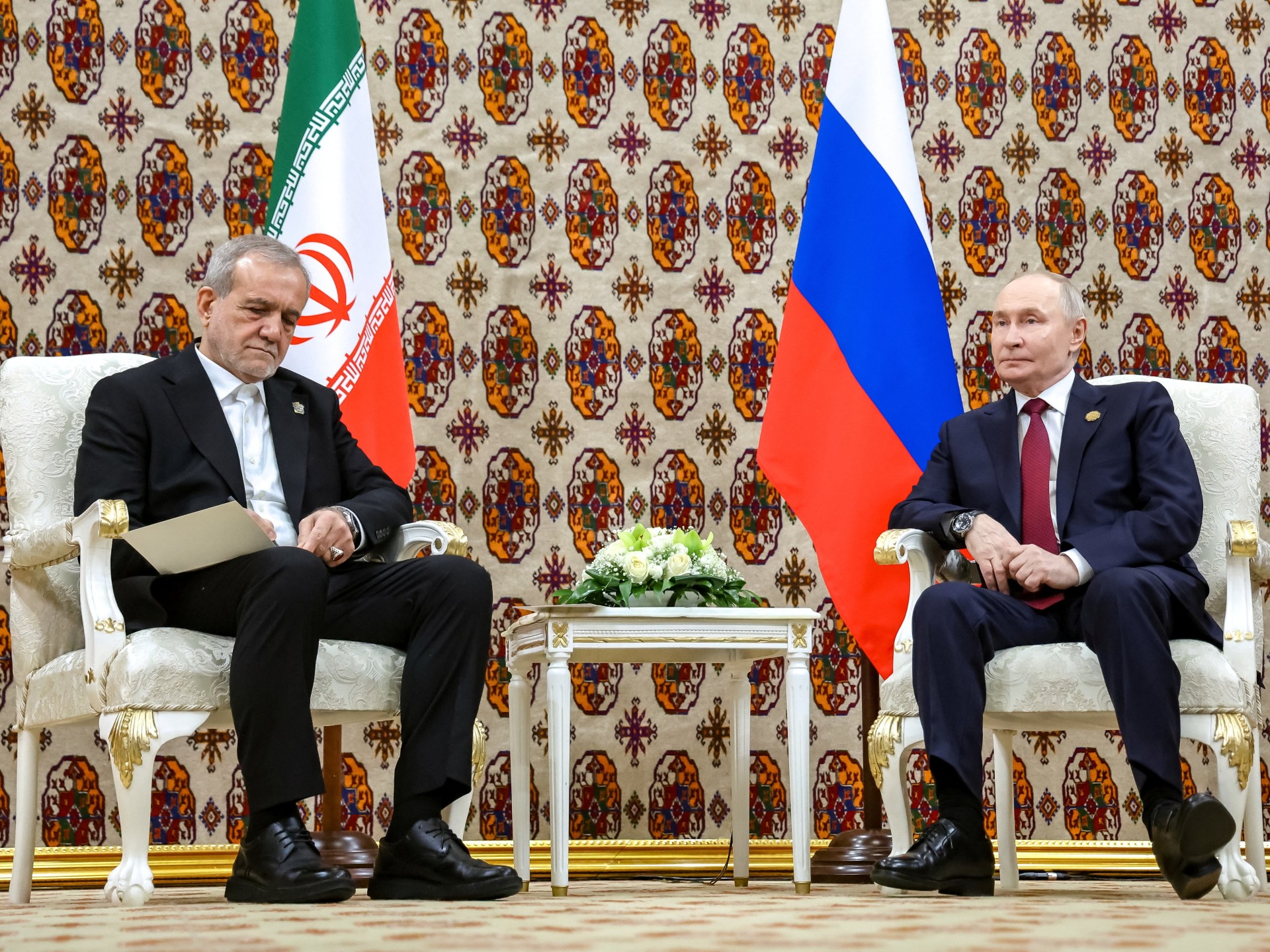
Tehran and Moscow only forged a tentative alliance in the later years of Russian President Vladimir Putin’s rule, which grew even more energizing when Iran provided crucial drone technology to Russia at the start of the Russian all-out invasion of Ukraine.
The historical trajectories of Iran, Russia, and China all share important similarities. At various points in history, Western powers attempted to colonize these three states, but they were unsuccessful. The need to mobilize against the Western threat is just one of the three authoritarian instincts.
Given that it was one of those European powers that attempted to colonize parts of both Iran and China, Russia’s role in this triad is the most ambiguous.
That explains why Moscow is so adamant about Iran’s current predicament. The government of Putin is solely focused on winning the Ukrainian war, which it views as a proxy conflict with the West, for one reason or another. Putin only cares about Russian military engagements in the Middle East and Africa because they give the Kremlin additional leverage and options as they stretch the West’s resources. In the same category does Russia have a situational alliance with regimes in Venezuela, North Korea, and Iran.
The army and the navy are the only two allies that Russia has, according to Regime ideologues in Moscow, which frequently repeats Tsar Aleksandr III’s apocryphal maxim. In this worldview, the client regimes and allies of Russia are merely pointless chess pieces in the world game of nuclear superpowers.
As a result of the 2014 war in Ukraine, Putin’s military operations outside the former Soviet Union began as a response to the support of the Ukrainian government, which he describes as a “coup” installed by a “coup” in the Maidan revolution.
Russia later expanded its area of influence in Central and Western Africa, primarily at the expense of the French, by intervening in Syria and Libya.
Was Russia’s establishment of a global neo-empire supported by it? No, a few initial successes were frequently followed by setbacks, most notably when Bashar al-Assad, Moscow’s Syrian ally, fell in 2024. However, the point is never to create a global empire. The point is that Putin is very close to bringing an end to the conflict in Ukraine, and his efforts elsewhere helped to achieve what the majority of Russians will consider to be a total victory over the West’s formidable war machine.
Russia’s brutally inhumane airstrikes against Ukraine’s energy infrastructure are gradually making large urban centers, like Kyiv, uninhabitable in the middle of winter. The EU’s allies in Europe appear to be powerless to alter that situation.
Trump is playing a simultaneous match with a number of players, oddly including the US’s traditional European NATO allies, while Putin is solely focused on one chessboard.
The Trump administration’s desire to change the world’s regime in Iran, Venezuela, and especially in Greenland does not diminish Putin; it is a blessing. Moscow would be ideal in the situation where the US is attempting to play a quasi-neutral peacemaker in the Russo-Ukrainian conflict while getting bogged down in a number absurd and dangerous geopolitical projects.
Despite appearing absurd, Trump’s actions may have a logic behind them. It is a result of human nature’s tendency to choose a more comfortable path. Trump’s unselfish chess match with Putin is infinitely more difficult and risky of embarrassing defeat. Iran and Venezuela are both easier targets.
However, the most recent events indicate that even in these nations, the current US leader might find it difficult to implement a proper regime change. Trump only wants to get a quick, cost-free PR boost, so he needs the softest targets to do that. Who could be the next Maduro, if he proved to be one?
Cuba is less risky than any intervention from Iran or Greenland. However, Volodymyr Zelenskyy, the president of Ukraine, has another leader who irritates Trump to no end, can be removed without military intervention, and stands in the way of the US president’s vision of being the world’s greatest peacekeeper.
No wonder Trump abruptly attacked Ukraine on Wednesday, claiming that Putin’s leader was the main barrier to peace, but Trump did it again.
Zelenskyy appears to be the softest of his potential targets, the very opposite of his archrival Putin, who is embroiled in a massive corruption scandal and stuck between politics and militarism. The US president’s political instincts can be easily predicted.
Source: Aljazeera

Leave a Reply