Published On 25 Dec 2025
The strikes on Wednesday “neutralized a number of arms and drug traffickers who conduct weapons and narcotics smuggling operations along the Kingdom’s northern border,” according to Petra, the Jordan News Agency.
Recommended Stories
list of 4 itemsend of list
According to Petra, Jordan’s armed forces destroyed “factories and workshops” used by the trafficking organizations, adding that the attacks were carried out with regional partners and with “precise intelligence” in mind.
The Jordanian military did not name the participating nations, but Petra reaffirmed that it would “continue to counter any threats with force at the appropriate time and place.”
The Jordanian army carried out air strikes on locations in the southern and eastern regions of Syria’s Suwayda governorate, according to a report from the state broadcaster Al-Ikhbariah TV’s Telegram channel.
The bombardment was “extremely intense and targeted farms and smuggling routes,” according to a resident of Syria’s Suwayda border region, and it was reportedly carried out by the UK-based Syrian Observatory for Human Rights, which reported the presence of jets and helicopters during the raid.
According to the observatory, photos taken at the site of the attacks showed destruction at a former al-Assad regime military barracks in Suwayda.
No official response from Damascus authorities or initial reports of casualties from the Jordanian attacks.
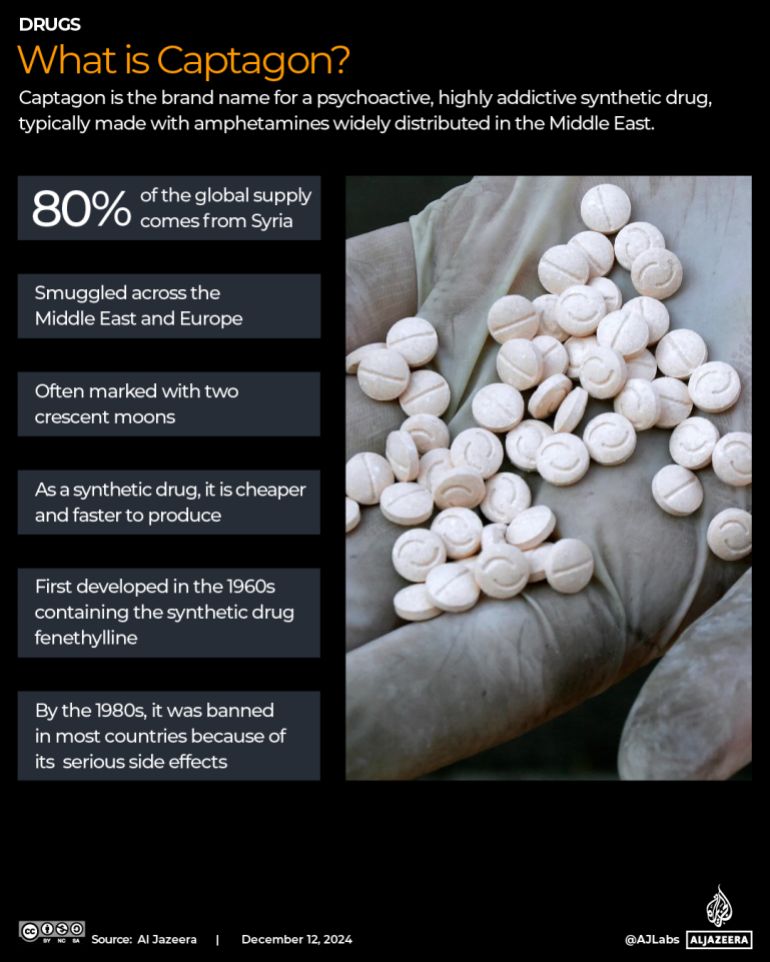
According to the Zaman Al Wasl online news site, a farm that is thought to have been used for drug storage was one of the targets. Similar Jordanian attacks have previously been carried out to stop the flow of captagon, an amphetamine-type stimulant, in the past.
Captagon had grown to be the regime’s biggest export and main funding source before Bashar al-Assad’s removal in December 2024.
The synthetic drug, which was produced in large quantities in Syria, flooded the region, particularly the Gulf states, causing neighboring nations to announce seizures and demand that Lebanon and Damascus intensify efforts to combat the trade.
Analysts believe that al-Assad, his associates, and allies’ efforts to find an economic lifeline during the civil war, which occurred between 2011 and the regime’s toppling last year, were fueled by production and smuggling of captagon, despite Damascus’ claims that it had no involvement in the drug trade.
Source: Aljazeera

Leave a Reply