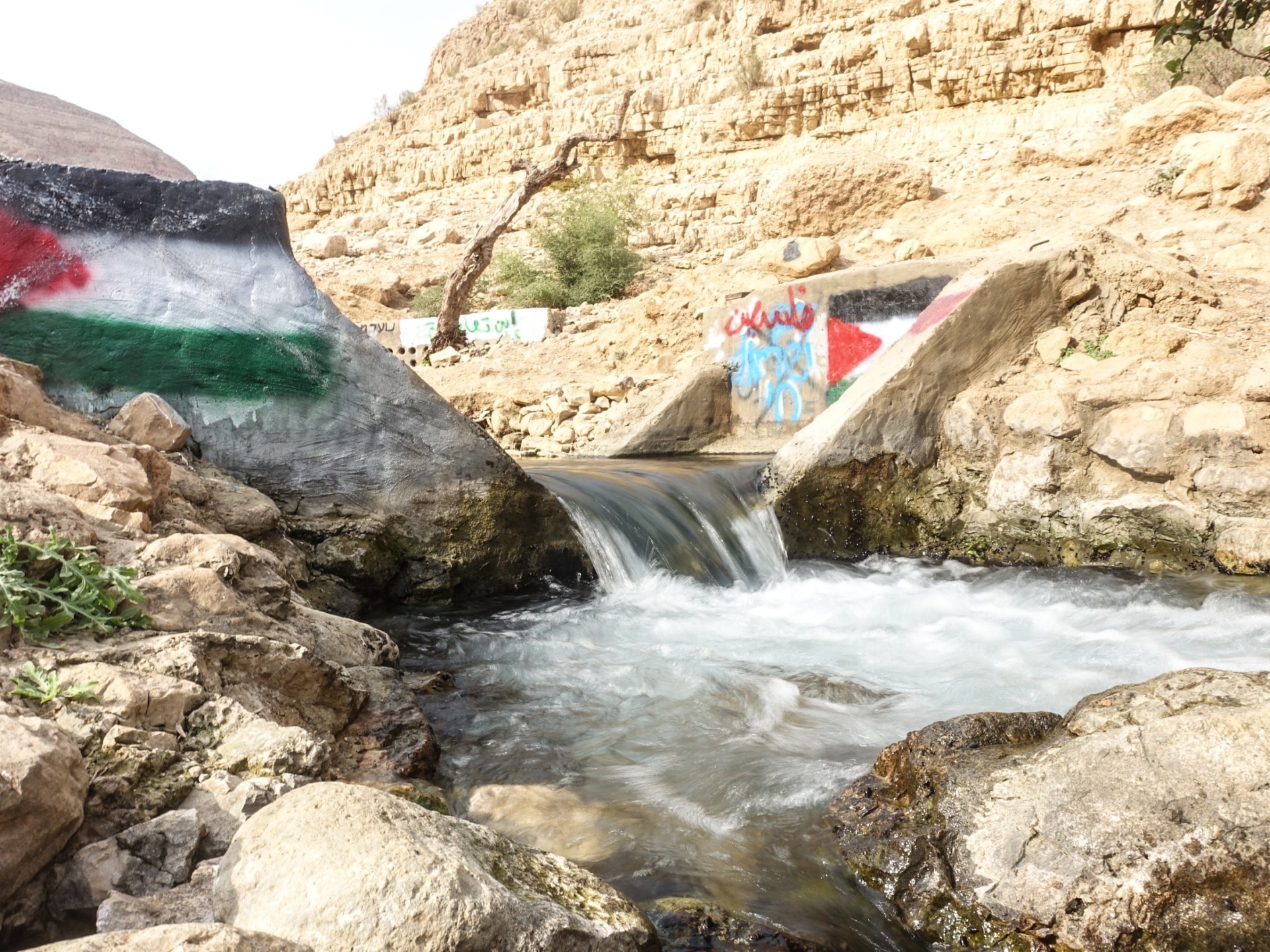
The al-Auja spring, one of Palestine’s largest and oldest water basins, has been flowing in the eastern occupied West Bank for centuries.
However, Palestinian families who have rely on it for generations claim that Israeli settlers are effectively stealing the water, creating a “water apartheid” crisis.
Between al-Auja’s villagers’ water sources and an Israeli settlement outpost, an outpost now exists. Palestinian pipes are left dry because settlers have fenced off the area and installed pumps that direct water from the aquifer, according to residents.
The Kaabneh clan’s mukhtar (chief), Salama Kaabneh, told Al Jazeera Arabic’s Givara Budeiri, “The settlers banned us.” The same basin is being drained by a motor, which is 800 meters [625 feet] deeper than the spring’s opening.
A systemic imbalance
Jad Isaac, the Applied Research Institute-Jerusalem (ARIJ), revealed the startling level of inequality brought on by Israeli military dominance of water resources in an interview with Al Jazeera.
According to Isaac, “the Israeli settler uses about seven times as much water as a Palestinian citizen does.”
According to him, “the Palestinian individual’s share does not exceed 80 litres [21 gallons] per day,” noting that this volume is “far below the global minimum recommendation of 100 litres per day” in some marginalized communities.
The sky reveals this disparity. Palestinian withered, brown greenhouses that are close to lush, green settlement agriculture that thrives on the seized water are revealed in drone footage obtained by the Reuters news agency.
The “Oslo trap”
Palestinians have fallen into what Isaac calls a “trap” set by the Oslo Accords because their natural springs have been seized or blocked.
Palestinians were forced to submit their needs to the Israeli side, which then sold them, according to Isaac, saying that Israel “refused to negotiate on Palestinian water rights.”
He noted that the Palestinian Authority is now required to pay market value for more than 100 million cubic meters (26 billion gallons) of water annually from Israeli businesses, effectively repurchasing their own natural resources.
According to Isaac, Israel has “full control” of water sources under military orders, citing recent initiatives to “crmson wall” the northern Jordan Valley to further isolate Palestinian communities from their agricultural lands.
“Slow displacement”
Rights groups accuse this engineered thirst of being a plot to obstruct Palestinians to leave their homes.
More than 56 water springs in the West Bank have been the subject of numerous settler takeovers or attacks, according to information from ARIJ to Al Jazeera.
The seizure of springs, Isaac remarked, “is a clear shift from merely controlling resources to using water as a direct pressure tool on the population.”
Because of the slow displacement of rural Palestinian communities, many families are forced into internal or external migration.
We’ve retreated to the wells, they say.
The Israeli government appears to be backing the seizure of water resources.
Israeli Finance Minister Bezalel Smotrich praised settlers for establishing physical rule over the springs in a video that is widely circulated online.
“I can tell you how well your wonderful work has turned out. In the viral clip, Smotrich is reportedly quoted as saying, “We have returned to the water wells and regained control over all these areas.” “To tour here is a pleasure. Keep up your work, heroes.
The minister yells while the infrastructure in Palestine is being destroyed.
Source: Aljazeera

Leave a Reply