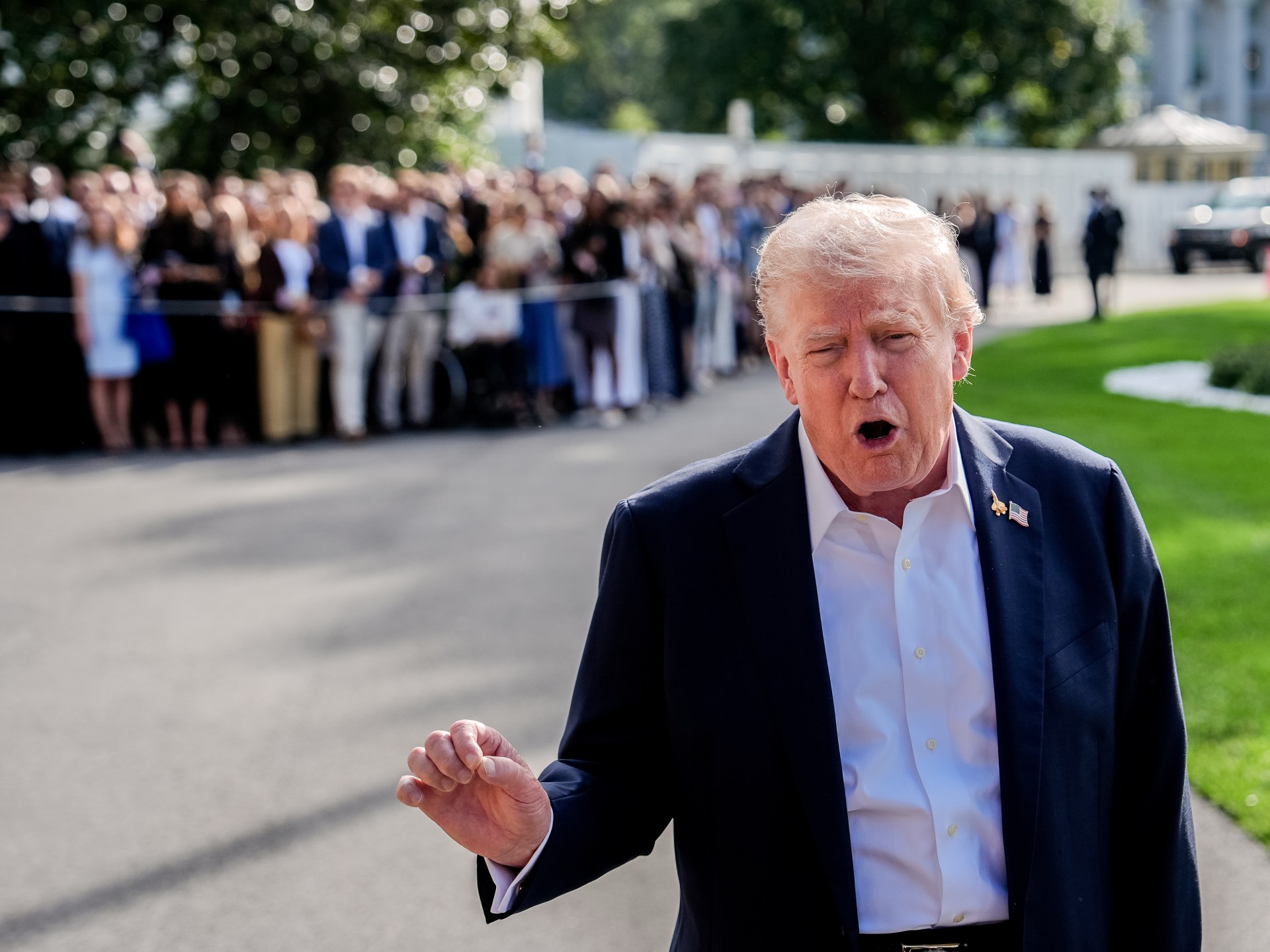
After President Donald Trump’s unilateral decision to use the United States military to capture Venezuelan leader Nicolas Maduro, some lawmakers criticised him for ordering it without any authorisation from Congress.
Trump, in a January 8 Truth Social post, said he has the power to do that and questioned the constitutionality of a related law.
Recommended Stories
list of 3 itemsend of list
“The War Powers Act is Unconstitutional, totally violating Article II of the Constitution, as all Presidents, and their Departments of Justice, have determined before me,” Trump wrote.
But Trump went too far by calling the 1973 War Powers Resolution unconstitutional. Courts have repeatedly declined to rule on its constitutionality.
Within days of the Venezuela operation, the US Senate advanced a resolution to limit further military operations in the Latin American country without congressional backing, with five Republicans joining Democrats in supporting it. But this measure has little chance of being enacted, since it would need Trump’s signature if the Republican-controlled House passes it, which is uncertain.
For decades, presidents and Congress have battled over who has the institutional power to declare war.
The US Constitution assigns Congress the right to declare war. The last time Congress did that was at the beginning of World War II.
Since then, presidents have generally initiated military action using their constitutionally granted powers as commander-in-chief without an official declaration of war.
In August 1964, President Lyndon B Johnson asked Congress to back his effort to widen the US role in Vietnam. He received approval with the enactment of the Tonkin Gulf Resolution, which easily passed both chambers of Congress.
As public sentiment turned against the Vietnam War, lawmakers became increasingly frustrated about their secondary role in sending US troops abroad. So, in 1973, Congress passed the War Powers Resolution, which was enacted over President Richard Nixon’s veto.
The resolution required the president to report to Congress within 48 hours of introducing armed forces into hostilities and to terminate the use of US armed forces within 60 days unless Congress approves. If approval is not granted and the president deems it an emergency, an additional 30 days are allowed to end operations.
Presidents have often, but not always, followed the act’s requirements, usually framing any entreaties to Congress as a voluntary bid to secure “support” for military action rather than “permission”. This has sometimes taken the form of an “authorisation for the use of military force” – legislation that amounts to a modern version of a declaration of war.
Trump has a point that presidents from both political parties have sought to assert power and limit lawmakers’ interference, including in court. But these arguments were never backed by court rulings.
Source: Aljazeera

Leave a Reply