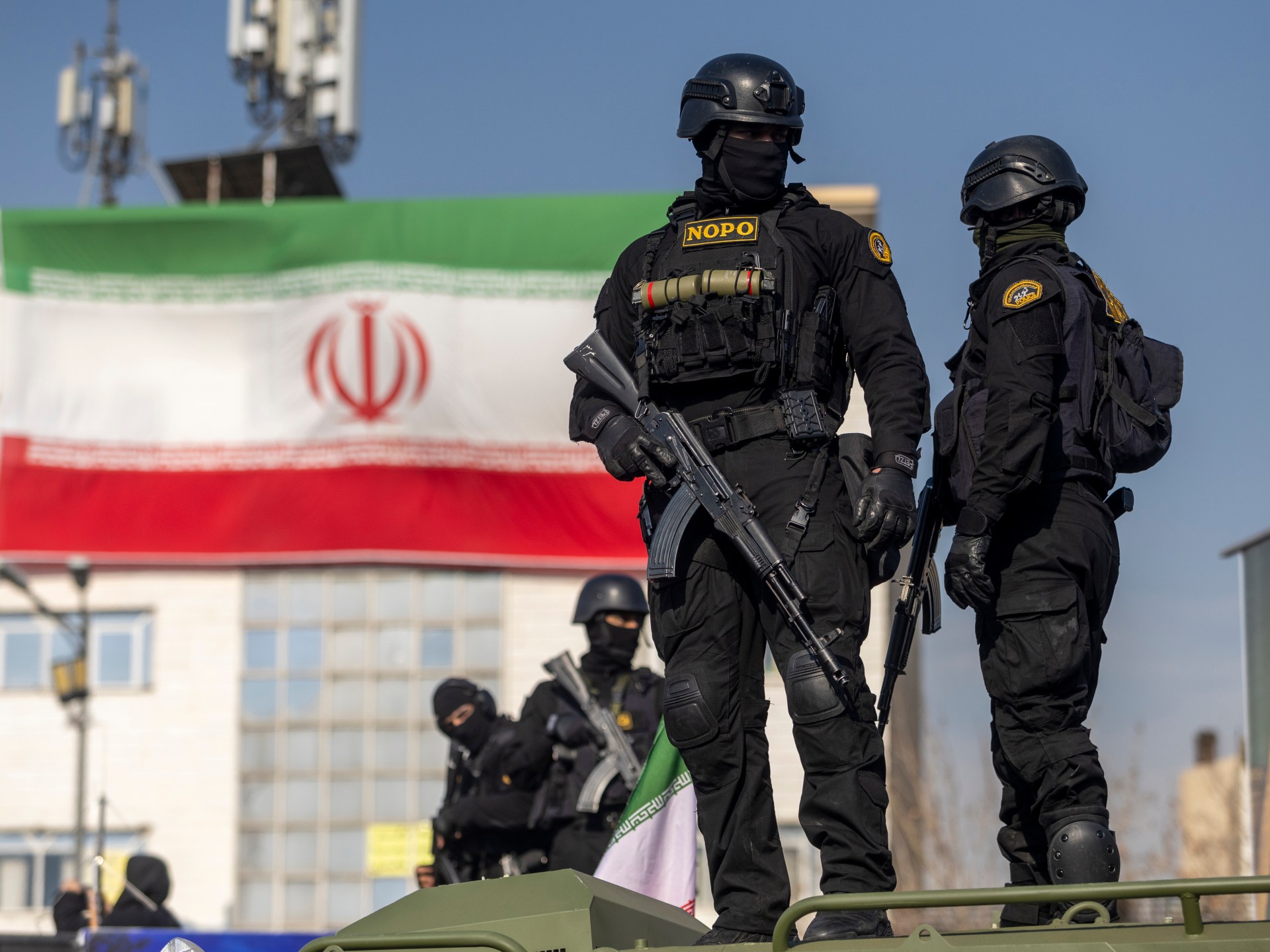
Iran’s judiciary chief has pledged to fast-track trials for those arrested over a wave of protests that the authorities have dismissed as “riots” as rights groups warn the judiciary will make extensive use of capital punishment.
Supreme Court Chief Justice Gholam-Hossein Mohseni-Ejei told state television on Wednesday that those “who beheaded people or burned people in the streets” should be “tried and punished as soon as possible”.
Recommended Stories
list of 4 itemsend of list
Iranian news agencies also quoted him as saying he had spent five hours in a prison in Tehran to examine the cases and the trials should be held “in public”.
Tehran prosecutors said they would press capital charges of “moharebeh”, or “waging war against God”, against “rioters and saboteurs” arrested over the deadly demonstrations.
Iran has released no official death toll, but authorities said more than 100 members of the security forces have been killed. Opposition activists said the toll is much higher and includes more than 1,000 protesters.
The US-based Human Rights Activists News Agency said the number of dead climbed to at least 2,571.
Al Jazeera cannot independently verify any of those figures.
On Wednesday, Iranian state TV said mass funerals were taking place in Tehran that would include 300 bodies of security force members and civilians.
Al Jazeera’s Tohid Asadi, reporting from the capital, said the state was trying to draw a line between protesters and “rioters”, or as Supreme Leader Ali Khamenei called them, “saboteurs”.
“The judicial system says it will rapidly conduct trials for those who killed people, carried weapons or destabilised the country,” Asadi said. “When it comes to peaceful protesters, there is no such statement from Iranian officials.”
Hengaw, an Iranian Kurdish rights group, has reported that a 26-year-old man, Erfan Soltani, arrested in connection with protests in the city of Karaj, was to be executed on Wednesday.
Amnesty International has called on Iran to immediately halt all executions, including Soltani’s.
The protests, which began on December 28 in response to soaring inflation and the plummeting rial currency, have spiralled into one of the biggest challenges to Iran’s clerical establishment since the 1979 Islamic Revolution.
President Masoud Pezeshkian conceded that the economic grievances of Iranians who have taken to the streets were real.
“Before we hear the voice of merchants, bazaaris and different strata of society on the streets, we must be following up on their demands and concerns so as to find solutions for them,” he said.
Authorities have also blamed “foreign elements” for instigating attacks on security officers.
Foreign Minister Abbas Araghchi described the unrest as the result of “incitement” backed by Israel and the United States.
Source: Aljazeera

Leave a Reply