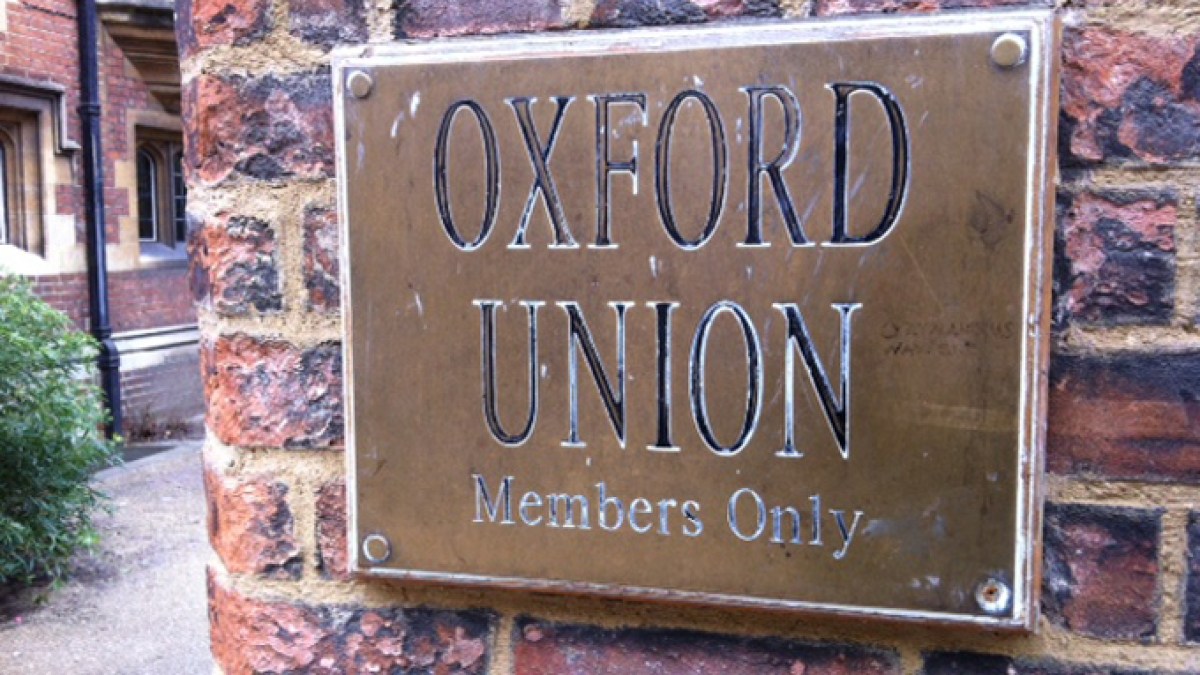
I was elected president of the renowned debating organization Oxford Union in December 2025. I became the first Palestinian to serve this position in the institution’s 203-year history.
In a vote that saw turnout far exceed recent contests, I won the presidency by a sizable margin. I was open about my history as a Palestinian from Gaza throughout my campaign and how my understanding of the value of debate and representation has changed as a result. However, that candor quickly grew to be used to refute my constant claims.
Early press reports questioned my suitability for office solely on the basis of who I am rather than engaging with my stated platform or record. The goal was simple: to portray me as a radical, extremist, and inherently suspect.
These reports did not simply emerge. I was cast as an extremist and security concern during a wider smear campaign that came with my presidential campaign. Within that frame, false rumors started to spread that students who supported my campaign could face consequences, including visa suspension, placement on security watchlists, or formal investigations. None of this was ever proven to be true.
I’ve always anticipated a certain hostility in student politics. I was shocked by how frequently supposedly trustworthy outlets adopted these stories without doing basic due diligence, and occasionally even went as far as to claim that I was unfit for office.
A month after I had already been covered by the Jerusalem Post, I received an email from the Jewish Chronicle asking for my opinion on a pending article. In reality, the email contained a number of claims and insinuations that were presented as evidence of extremism, albeit in a “right of reply” context. A rumored family connection to a Hamas member was the most obvious of these.
Mohammed Al-Rayis, a man who was killed in a drone attack by Israel in Beirut in January 2024, was the subject of the claim. He and I are not related. One of the most prevalent first names in the Arab world and a Palestinian family name that was widely accepted were the guiding factors in the formulation of the suggestion. Mohammed Elrayess, my father, is a scientist at Qatar University and still lives.
Other issues that were raised in the same email included reframed, questionable descriptions of my speech and activities, rather than allegations of any kind of wrongdoing.
One of the posts, which I shared on social media, expressed my sadness over the death of Palestinian journalist Saleh Aljafarawi, who was killed in Gaza in October 2025, shortly after the announcement of the most recent “ceasefire.” Aljafarawi was described as a “Hamas propagandist” by the Jewish Chronicle journalist in the email.
The Israeli assault on Gaza has been the most deadly conflict for journalists ever. In my post, I defended the right to press freedom and paid tribute to a journalist who was killed while serving.
Another concern was my involvement in a documentary I helped to produce called Heart of a Protest, which followed pro-Palestine demonstrations in the UK. Protesters were able to explain why they continued to mobilize and the challenges they faced in doing so in a budget-friendly movie. Families in Gaza received the majority of the proceeds.
Another area of attack was made on a speech I delivered at the Oxford Union in November 2024, which declared, “This house believes that Israel is an apartheid state responsible for genocide.” The substance of my statement was not important to me. My participation itself was the object.
I’m proud that I spoke during the debate to refute the claims that the Gaza genocide was justified or supported. I’m pleased that I was able to address my relative, Maisara Al-Rayis, who was killed in an Israeli airstrike on his home with his family. I’ll accept it without a second thought if that’s an allegation.
These attack patterns don’t reflect strength in my opinion. They show weakness. There would be no need to redefine legitimate political expression as evidence of extremism or to imply guilt through invented family associations if the concerns raised about me were genuine and if I really posed a threat to the institution I currently lead.
These discrediting attempts are part of a wider campaign to silence Palestinians in public space and completely deter Palestinian participation. They are intended to avert us.
They won’t, either.
Let there be a thousand articles written to defame or mischaracterize us. We are far past the point where silence can be stoked by this. In fact, it makes speaking even more urgent.
Source: Aljazeera

Leave a Reply