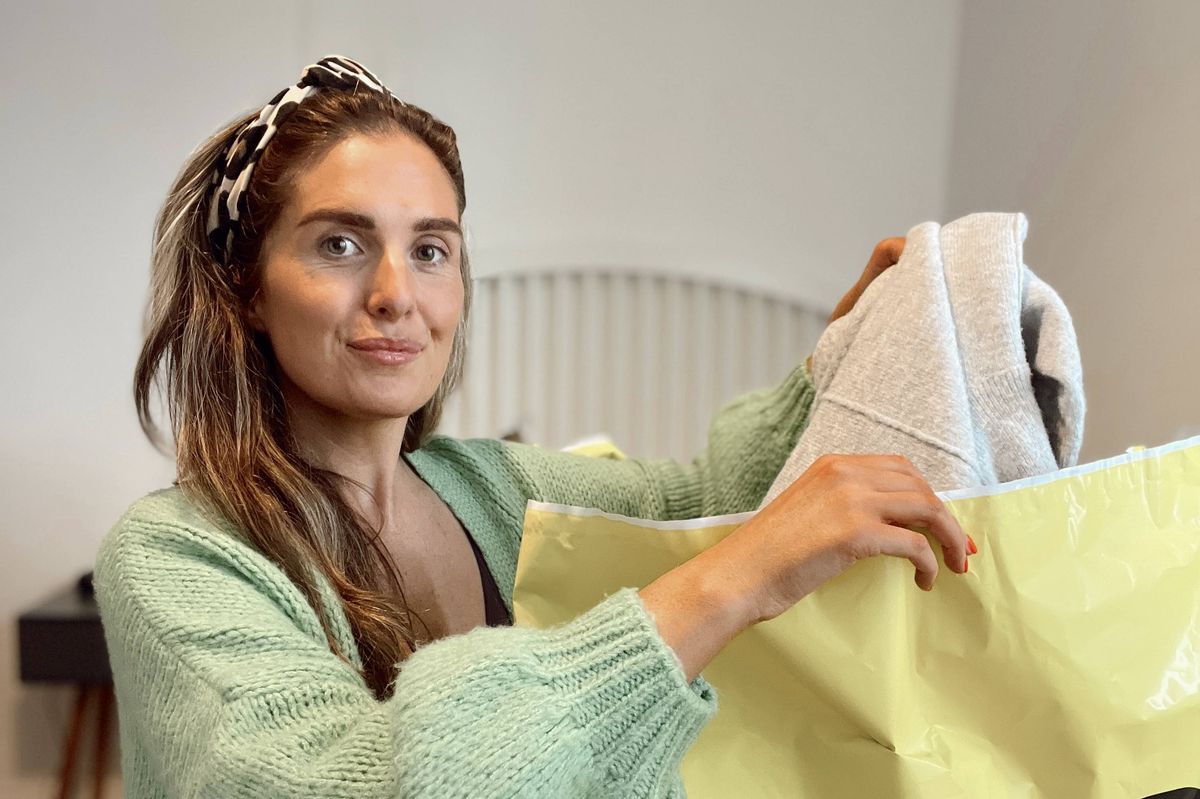
Marketing manager Georgina Shannon used the money to buy a cottage in Cornwall
For Georgina Shannon, it was the small purchases on Vinted, the odd new outfit and the frequent trips to Superdrug that proved problematic. While she was not a compulsive shopper, she eventually recognised she had accumulated far too many possessions for the space available.
She was also concerned about how much of her shopping was destined for landfill. That is why in 2022, she made a commitment to stop buying anything for an entire year.
Apart from food and cleaning supplies, she banned herself from purchasing new books, clothes, jewellery, beauty items, gadgets or household goods. She even ruled out second-hand purchases.
“I am a bit of a hoarder and I was finding the clutter a bit overwhelming and depressing,” says Georgie, 35, a marketing manager. “And I can be a reactive shopper in that I will see someone wearing a skirt and I will buy it. I realised I was buying things based on how they look on other people and not me.
“So I was constantly putting stuff I didn’t need anymore on Vinted, doing clothes sales and sorting through piles. And I’d had enough.”
She then established clear guidelines for herself: no clothes, shoes or accessories to be purchased new unless something breaks, no new or pre-owned homeware, and no extra beauty, skincare or hygiene products, given she already had cupboards full in her bathroom. Beyond her ambition to purchase a property, she was equally troubled by environmental impact.
“We are inundated with messages on TikTok and social media to just buy, buy, buy. I was buying a lot of second hand but I was working with the Cornish Seal Sanctuary at the time and I was doing a lot of beach cleaning and seeing what is happening to our oceans because of consumerism, and I didn’t want to be adding to that,” she explains.
She discovered the experiment to be remarkably straightforward, and with such a defined target ahead, resisted any urge to splash out. The outcome was extraordinary.
READ MORE: ‘I thought appetite loss was stress – true diagnosis was horrific’READ MORE: Doctor’s warns of ‘very significant blood sugar spikes’ from popular breakfast
Within a year, she and boyfriend Fred accumulated £20,000, sufficient for a deposit on a delightful Cornish cottage they now call home.
Once the twelve months concluded, she’d amassed such wealth that reverting to previous spending patterns felt unthinkable. Her living space felt more organised, her mind more peaceful and her finances considerably stronger.
“It completely changed my life. And I didn’t run out of clothing, even though I was decluttering at the same time. I still have socks from 10 years ago which are fine.
“It just taught me to appreciate what I have and it felt like I was taking my power back as a consumer”, Georgie, who shares on Instagram as @georgies_corner, says. The initiative proved so triumphant that she’s launching another no-buy year in 2026, aiming to fund home improvements and finance some adventures abroad.
“There will be temptations as I know I will want to get new clothes for my trip to Italy. But I will try not to. We all get swept up with this aspirational lifestyle of wanting the new shoes and the new bag, but you can’t throw stuff away that you don’t need. There is no away. There’s just not enough room on the planet for all the stuff we have,” she adds.
Georgie’s tips for no-buy living
1. Delete the apps!
If you are making purchases on TikTok shop or Vinted, just take away the lure. Get the apps off your phone and you wont be tempted. 2. Tell everyone you do not want any gifts
And that way, they might say the same to you and everyone will consume and spend less. I did buy a few presents in 2022, but only for close friends and family. You will probably find most people will be happy to be part of your no-buy project.
3. Don’t see shopping as a hobby
Either online or in real life. Avoid town. There’s no need to go into the shops if you don’t need anything. And see if you can distract yourself with a new hobby – like arts and crafts. Or even better, running or swimming – hobbies that don’t require you to buy more stuff. 4. Take your credit card details off the computer and Amazon account
You get a dopamine hit every time you buy something online which will have disappeared by the time it arrives. If you put a barrier between you and those online purchases, they will be harder to make. 5. Shop your own wardrobe
If you have an event to go to, like a party, festival or wedding, take everything out of your wardrobe and see what you already have before heading to the shops. The likelihood is that you already have something that will work that you had forgotten about. 6. Do not be hard on yourself.
If you slip up sometimes, that’s fine. You’re doing this for yourself, nobody else. If no-buy seems too much to you, even reducing the amount of shopping you do can help. Some people do a month of no-buy at a time. Whatever works can make a difference to your savings. 7. When you do shop, make sure it’s mindful shopping
Source: Mirror

Leave a Reply