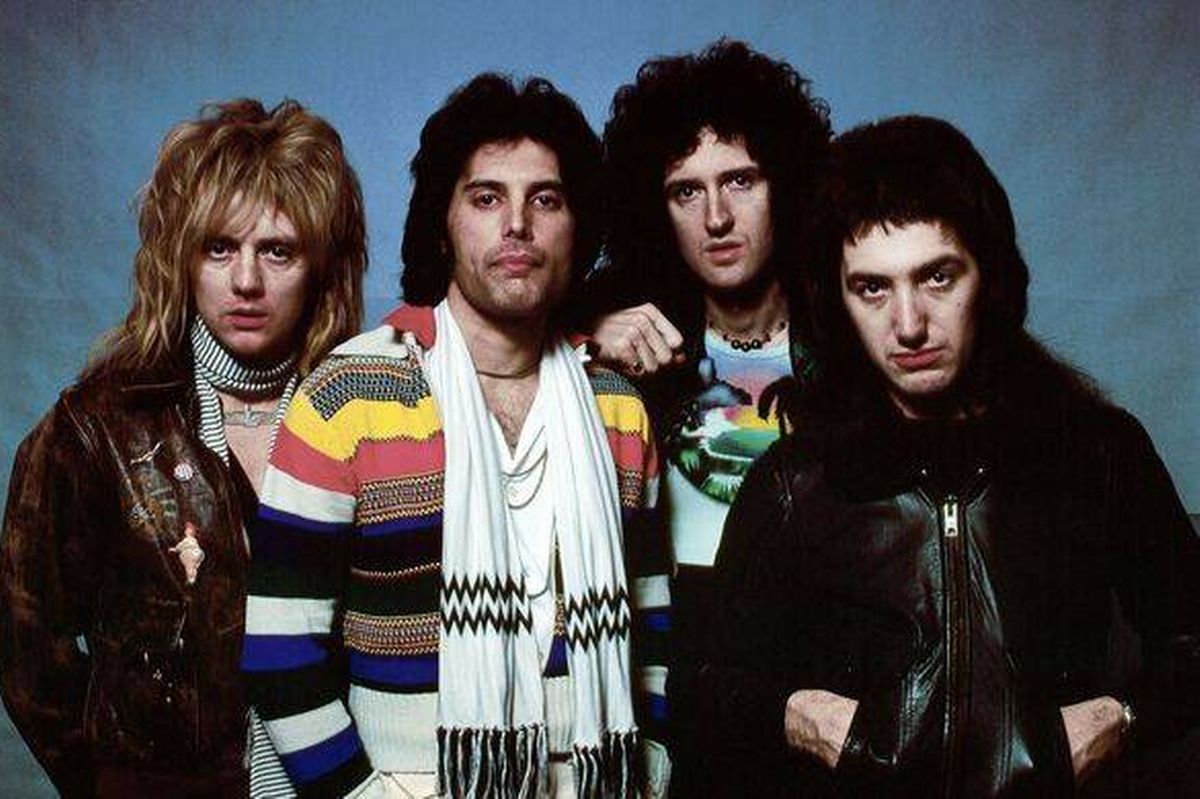
After their bitter split, Norman Sheffield helped resurrect Queen, but the former manager claimed the band’s song Death On Two Legs from A Night at the Opera was brutal retribution.
Queen’s smash hit Bohemian Rhapsody reached its 50th anniversary over Christmas and 1975 also marked another turning point for the iconic British rock band.
When Queen released their acclaimed 1975 album A Night at the Opera, one of the biggest bands in the UK, they were already one of the biggest. That album’s success, however, served as the catalyst for the band’s entry into rock’s elite elite.
Numerous critics praised A Night at the Opera as the album’s best work of the year, and it received rave reviews. However, not everyone enjoyed the song’s incredibly varied music.
The band’s former manager, Norman Sheffield, was hurt by A Night at the Opera’s opening song, Death On Two Legs, which had lyrics.
The song’s target, described as “a sewer-rat decaying in a cesspool of pride,” was the subject of Freddie Mercury’s savage lyrics, which were clearly directed at the man who had secured Queen’s recording deal with EMI two years earlier.
In his autobiography, Life On Two Legs: Set The Record Straight, Sheffield remarked, “It was some kind of nasty hate mail from Freddie to me.”
In November 1972, Queen and Trident Audio Productions, Sheffield’s company, made a deal. After months of graft, Queen secured their EMI contract at the start of April, working with the band to perfect their sound during late-night sessions when Trident’s studio wasn’t being used by paying clients.
But relations between the band and their manager turned sour over the following months. According to Sheffield, some members of the group – particularly flamboyant frontman Freddie Mercury – had been reluctant or unable to grasp that recording royalties can take months or even years to filter through the industry pipeline.
According to Sheffield, “Freddie demanded a grand piano.” He slammed his fist against my desk when I turned him down. He remarked, “I need to get a grand piano.”
I wasn’t being cruel, I said. We were aware of the enormous sum of money that Queen’s success would bring in. I explained that some of it was already in transit, but that the majority hadn’t.
Freddie lamented that the band was flogging millions of records, but he was still confined to the same place he’d lived when they first started out.
Sheffield remarked, “The amount of money we put into the band was enormous.” We had invested money in them for four years and had already already made advances in their salaries and equipment.
The band’s claim that Trident owed close to £200, 000 (currently, for £1.1 million) “did not seem to have any bearing on Freddie,” the band claimed.
However, EMI executives sided with Queen and referred them to Jim Beach, a lawyer who had successfully evicted them from their Trident contract by August 1975. The band then had to find new management and produce their album, which they would later release.
According to Sheffield, “by the late 1970s, I was hearing that they were making various disparaging remarks about Trident.” Then I came across Death On Two Legs, a song from A Night at the Opera.
The opening lines, “You suck my blood like a leech/you break the law and you breach,” and “Do you feel like suicide?,” were continued. “I think that you should,” it continued.
He continued, “Freddie sent me some kind of nasty hate mail.”
After hearing the song for the first time, Sheffield sued Queen and EMI for defamation, despite never being directly mentioned in Death On Two Legs. He settled out of court.
Bohemian Rhapsody, the lead single from A Night at the Opera, soared to the top of the UK charts for nine weeks before becoming the city’s Christmas No. One in the year. Sheffield acknowledged that it was a “bittersweet moment.”
Source: Mirror

Leave a Reply