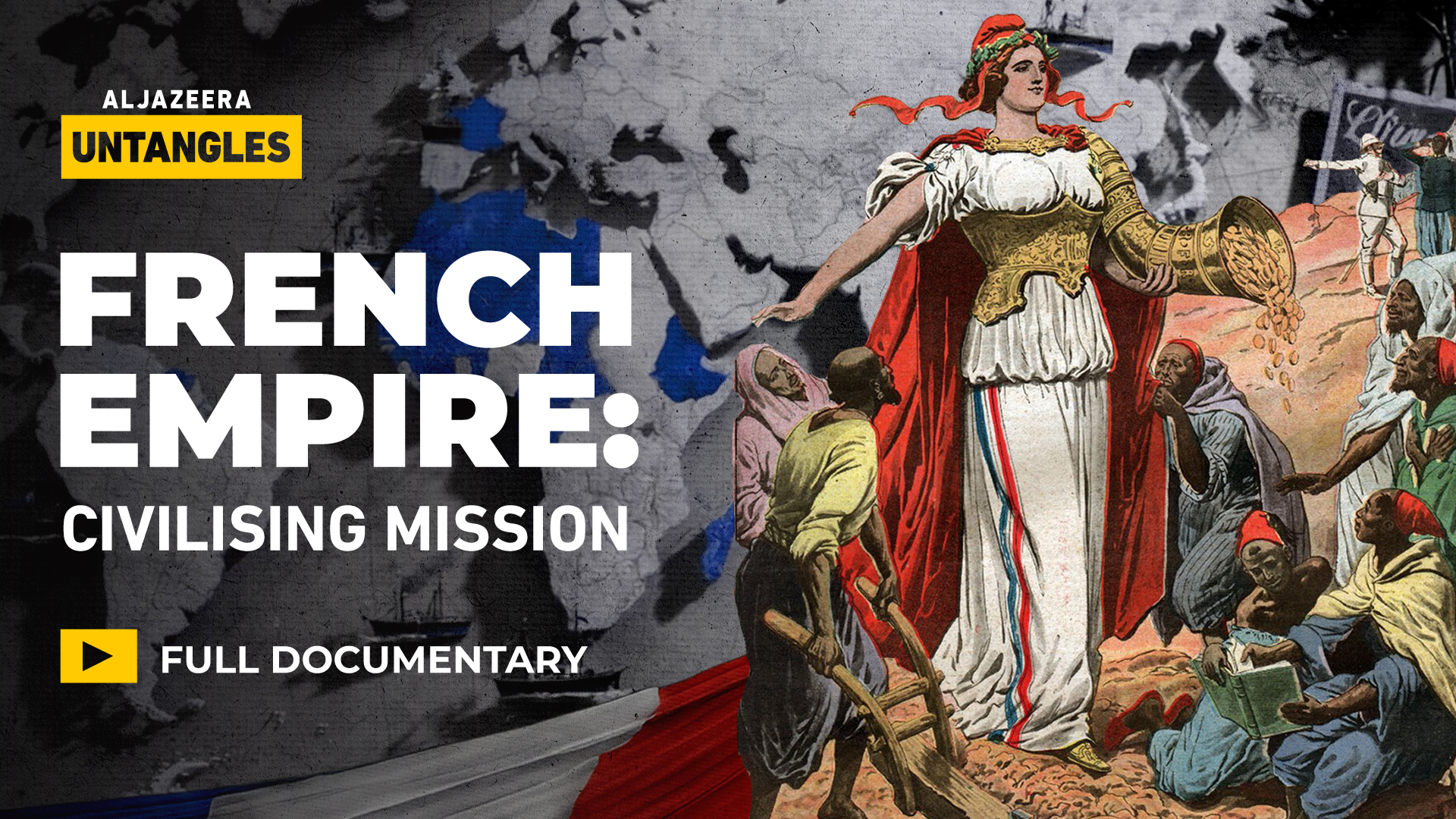
What does the French Empire’s strategy for assimilation today mean and how it was achieved through language, education, and cultural assimilation.
France’s empire was built through language, education, and cultural influence, not just armies and violence. This movie explores how assimilation evolved from being a form of rule and resistance.
The mission “civilisatrice,” a philosophy that promoted colonial societies through education, administration, and the French language, was at the heart of French colonial rule. In reality, this system sought to reshape the identities, loyalties, and cultures of colonized people while maintaining strict political and economic control. As powerful as armies, the courts, bureaucracies, and legal systems evolved into empire tools.
The documentary demonstrates how colonial governments operated on the ground through case studies in Algeria, Indochina, and West Africa. The war broke out in Algeria as a result of colonial colonialism and widespread oppression. Education and bureaucracy coexisted with exploitation and nationalist resistance in Indochina. In West Africa, indirect rule and language policy transformed social hierarchies and governance.
This episode examines how resistance movements forced France to confront the contradictions at the heart of its empire, challenging the promise of civilization. French politics, culture, and identity were reshaped by anticolonial struggles, intellectual movements, and armed uprisings that not only weakened imperial rule but also changed.
French colonial strategies are also positioned in a more contemporary context in the documentary. The United States projects influence more through soft power in the modern world than through a formal empire. American values, lifestyles, and narratives are widely circulated through Hollywood films, television shows, and digital platforms, influencing cultural perceptions in ways that evoke earlier imperial projects. While simultaneously, US dominance in higher education, academic publishing, and institutional standards helps define how knowledge is valued, taught, and legitimized worldwide.
Additionally, it makes explicit connections between contemporary and French colonialism. The colonial systems used to classify, discipline, and extract have a deep foundation in contemporary debates over language, immigration, secularism, and inequality. Many contemporary state institutions, educational trends, and economic relationships are resembling those created before the empire.
Published On 24 Dec 2025
Source: Aljazeera

Leave a Reply