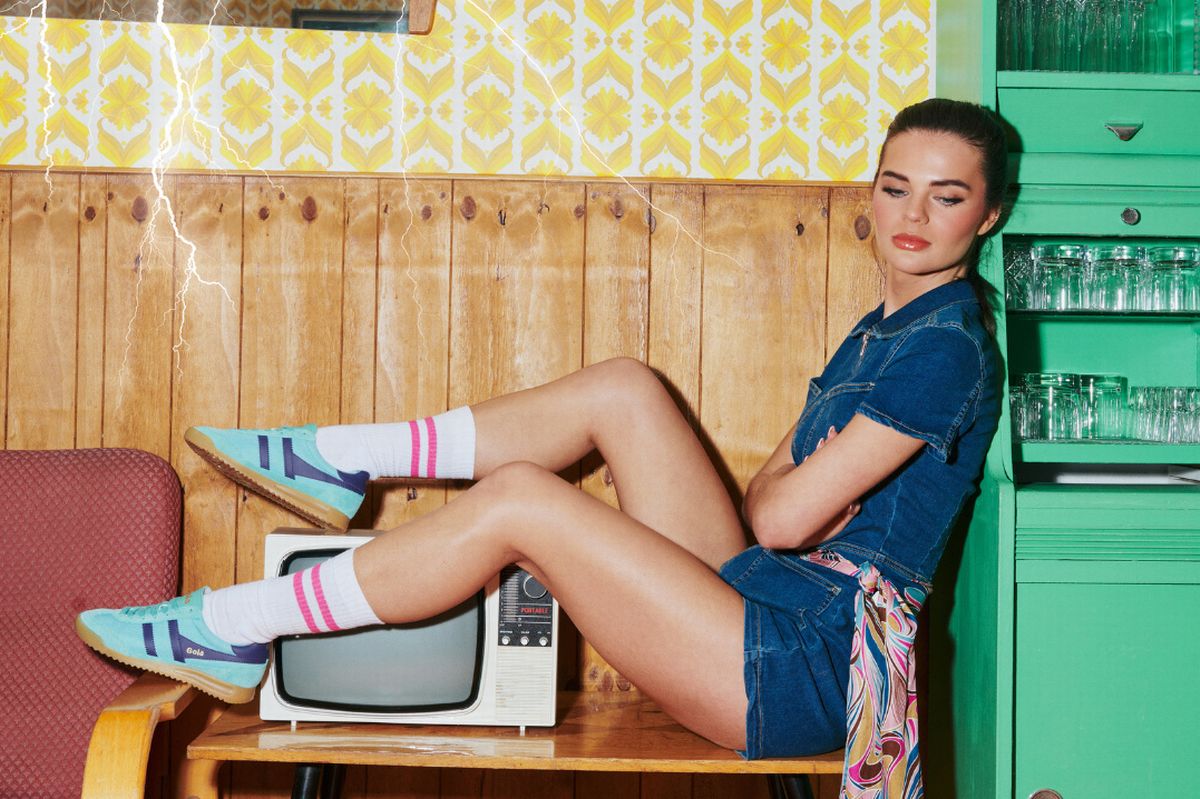
Gola’s sale to Japanese conglomerate Marubeni Corporation marks the end of 120 years of proud British ownership
In the 1970s football legends from Emlyn Hughes to Sir Alf Ramsay, Bill Shankly and Stan Bowles, thought anything made by British brand Gola was a winner – game, set and match. Later becoming the preferred footwear of rockers, including the Gallagher brothers and Paul Weller of The Jam, in 2024, style bible Vogue hailed Gola trainers one of “fashion’s most wanted shoes.”
Even Superman star Christopher Reeve wore a Gola sweatshirt for the much maligned 1987 It’s a Royal Knockout show, filmed at Staffordshire’s Alton Towers theme park. But this week, 120 years of proud British ownership came to an end when Gola was sold by its third generation family owner to Japanese conglomerate, Marubeni Corporation.
READ MORE: Britney’s denim disaster to Kylie Jenner’s Timothée Chalamet ‘abomination’ – celeb matching outfits in pictures
Dr Naomi Braithwaite, an associate professor in fashion and material culture at Nottingham School of Art and Design, tells The Mirror: “Gola’s strength for so long is that it is British through and through. Undoubtedly this will feel like a loss. Gola has such a wonderful, rich history and 120 years in business is no mean feat, in this hugely competitive global footwear market.”
Founded in 1905 in Leicester as Joseph Leeson & Sons, Gola started as a British sporting brand, best known for handmade leather football boots. But its Harrier shoes – launched in the 1960s and now available as a trainer in more than 500 different colour combinations – really earned the brand kudos and put it on the map. And the launch of Gola bags in the 1970s – which remain popular today – caused a virtual stampede.
Sprinter Anita Neal, now retired, was the first Black British woman Olympian at the 1968 Summer Olympics and appeared on the cover of Athletics Weekly in 1972, kitted out in Gola. Two years later, in MArch 1974, English footballer Phil Parkes, a goalkeeper for Queens Park Rangers, was photographed learning how to ride a horse, wearing a Gola T-shirt and a battered hat.
Boxer Vernon Sollas and footballer Steve Perryman were pictured doing press-ups wearing the brand. And in 1987, Superman himself showed himself to be a fan of Gola, as actor Christopher Reeve was pictured at a Royal Knockout Charity fundraising event, held at Alton Towers Resort in Staffordshire that June.
In 1978, flyweight boxing champ Charlie Magri posed lying on his stomach wearing a Gola top. Gola footwear even featured in the Harry Potter films – worn by heroine Hermione Granger, played by actress Emma Watson. Meanwhile, today Gola trainers are popular with everyone from Hollywood actors like Ethan Hawke to models like Suki Waterhouse and musicians Tom Fletcher, of McFly and Sam Rouke, of Circa Waves.
Dr Braithwaite, who worked in the British footwear industry in the 1990s, says of Gola: “It was always renowned for its strong British – in particular Lancashire – heritage. “I remember seeing the brand at various trade fairs across the world and being struck by how cool it seemed, and the huge queue of footwear buyers who were desperate to place orders.
“Lancashire had a thriving footwear manufacturing industry, which sadly started its demise in the 1980s as manufacturing moved abroad, which created too much competition. This, of course, was not unique to Lancashire. The footwear industry in Leicester also took a massive hit from the 1980s, as offshore manufacturing took the market with competitive pricing.”
Fortunately, there are no planned redundancies or moves to relocate any Gola manufacturing from Britain.
A spokesperson for the Jacobson Group – which reported revenues of £36.4 million and pre-tax profits of £3.94 million in its most recent financial year – said the company would continue to be led by its existing leadership team with “no job losses” and that “all processes would remain in the UK”.
Dr Braithwaite continues: “Given the demise of footwear manufacture in the UK, discounting Northampton which thankfully still flies the flag for British made men’s shoes, Gola’s continuation as a true British brand is remarkable. It is, of course, pleasing to read that the new owners intend to make no huge changes, which includes jobs. However, I am sure the new owners will see opportunities for Gola within their own markets and globally which may push a change.
“And while there’s hope in the promise that Gola’s new owners will stay true to their word and keep the business in Britain, can a brand really still be considered British if it’s no longer in British hands? Only time will tell, but let’s hope this iconic trainer brand manages to stay true to its roots.”
As well as Gola, the Jacobson Group sale will include brands like Ravel and Lotus shoes and the Jacobson spokesperson said the sale would “accelerate growth across key international markets”. Dr Braithwaite says: “This change in ownership is unsettling to what remains of the British fashion and footwear industry, as it brings uncertainty to what lies ahead.
“Being hopeful, perhaps this investment will spell more opportunity for an effectively British brand to continue and grow in a complex industry. But Gola has always had a very specific customer, one who is often inclined towards subcultural style. This move may lead to a targeting of a new consumer group, which can sometimes cause a change in direction and styling, which may shift the core identity that has been invested in Gola.
“Sadly, the case of Gola further demonstrates how challenging it can be to continue independently in such a volatile and uncertain economy. However, taking the positive road Conglomerates like Marubeni give hope and opportunity for continuation and growth.”
READ MORE: The five women who clubbed together to save their local pub – and locals are overjoyed
Source: Mirror

Leave a Reply