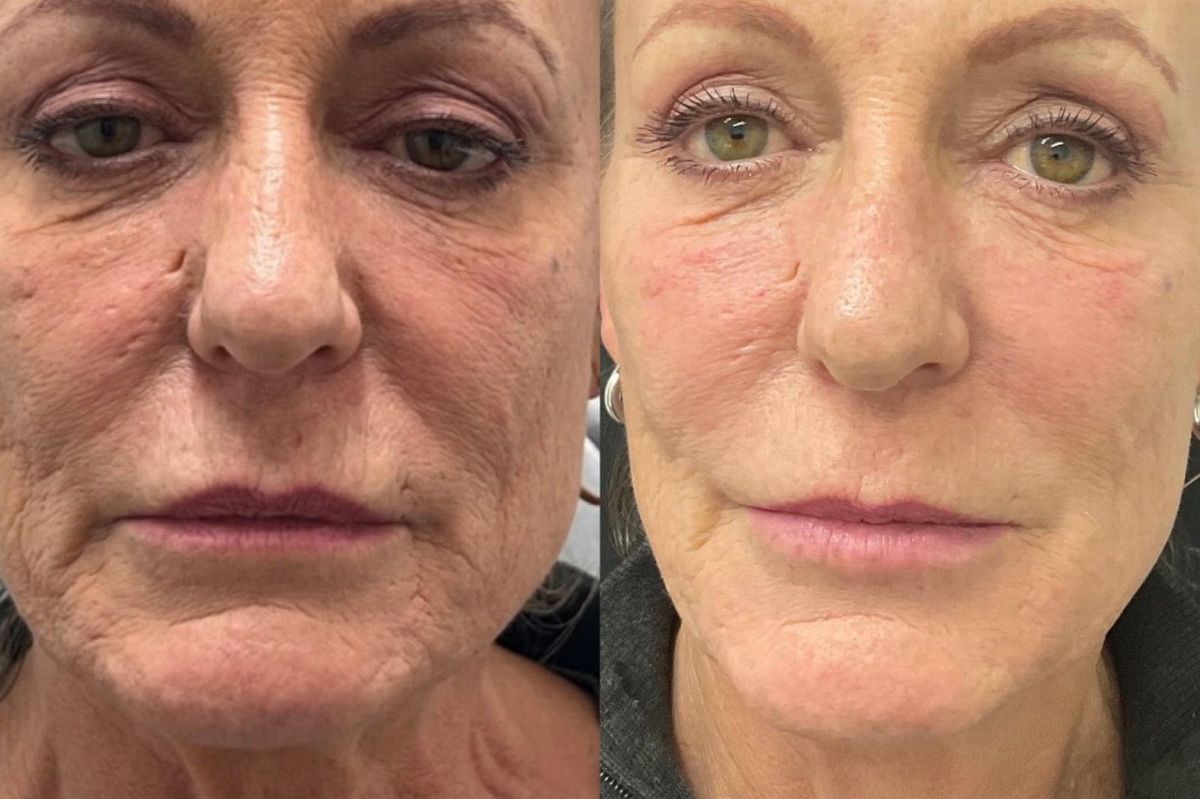
Weight-loss injections have sparked rapid transformations among the famous, but experts warn that the after-effects are becoming harder to ignore
The rise of celebrity weight-loss injections shows no sign of slowing – but the after-effects are becoming harder to ignore. From Hollywood red carpets to UK TV studios, rapid weight loss has become the defining body trend of the decade, with famous faces leading the way. Serena Williams has spoken openly about using weight-loss injections, while a growing list of stars have sparked speculation with dramatic transformations in a matter of months.
But now, as the pounds continue to drop, experts warn that the impact on the face is catching up – and some celebrities are starting to sound the alarm. Singer Robbie Williams recently admitted he experienced serious health concerns after using weight-loss jabs, while fans have expressed worry over the increasingly gaunt appearances of stars, including Meghan Trainor, who has discussed her dramatic weight loss publicly.
Other celebrities have been widely reported or rumoured to have used injections following rapid slimming, though many have never confirmed it themselves.
READ MORE: ‘No wrinkles’ says Medik8 fan after snapping up ‘instant glow’ skincare set
And according to one of Britain’s most in-demand aesthetic specialists, the trend is leaving a visible mark. Roy Cowley – the man behind the faces and bodies of some of the UK’s best-known stars — says he is seeing a sharp rise in what’s become known as ‘Ozempic face’, a term used to describe the hollowed, sagging look linked to rapid weight loss.
Roy, founder of 3D Aesthetics, has worked with celebrities including Christine McGuinness, Amy Childs, Olivia Bowen and Danielle Lloyd, and says the problem has surged alongside the popularity of weight-loss injections.
“Robbie Williams is quite a famous one at the moment — and Meghan Trainor too,” Roy told us. “Really, anyone you see who’s had very rapid weight loss, generally it’s down to these Ozempic-type fat-loss jabs.”
He says the look is instantly recognisable. “It’s the gaunt appearance — sunken cheeks, hollow eyes, sagging skin and more prominent wrinkles. That’s really what defines it. The key thing to understand is that it’s caused by rapid weight loss. Any form of fast weight loss can create the same effect.”
According to Roy, celebrities were the first to set the trend — and the first to experience the consequences. “Everyone rushed to celebrate the weight-loss revolution,” he said. “But nobody stopped to think about the aftermath. Skin doesn’t always bounce back, especially when weight drops quickly.”
Weight-loss injections were originally developed to help people manage diabetes, and are now increasingly used off-label for weight loss. NHS guidance recommends losing around 1–2lbs a week, warning that faster weight loss increases the risk of muscle loss and loose skin.
“When weight comes off too fast, you don’t just lose fat,” Roy explained. “You lose muscle and volume in the face. That’s why people can reach their dream weight but feel older, tired and unrecognisable.”
He added that the emotional toll is significant. “I’ve had clients in tears. They’re slimmer than they’ve ever been, but they don’t like what they see in the mirror. That can be devastating.”
Roy says the aesthetics industry has undergone a dramatic shift. “Two or three years ago, fat-loss treatments were huge. Then everything flipped to injections. Now clinics are flooded with people asking how to fix loose skin, sagging faces and what’s being called Ozempic face.”
Having worked in the industry since 1989, Roy says he spotted the problem long before it hit the mainstream. I saw the skin-laxity crisis coming about a year before it peaked,” he said. “So I started building a solution before people even realised they’d need one.”
The result is 3D ReFIRM, a non-invasive treatment designed to tackle the visible effects of rapid weight loss by combining radiofrequency skin tightening with electromagnetic muscle stimulation. “It’s like a pillow and a pillowcase,” Roy explained. “You shrink the pillow, but the case stays the same. You have to treat both.”
Roy says clinical trials show improvements of up to 80 per cent in skin firmness, with significant increases in collagen and elastin production over six months. Treatments typically involve several monthly sessions and start from £1,000, depending on the protocol. “This isn’t about chasing a quick fix,” he said. “There’s no single miracle cure. It has to be a combined approach — muscle, skin, nutrition and lifestyle.”
Roy, who has previously collaborated with Lord Sugar-backed clinics and worked with high-profile celebrity clients over decades, says demand has shifted dramatically. “In our clinics, fat-loss treatments used to make up around 60 per cent of bookings. Now it’s skin-tightening procedures. That tells you everything.”
He believes awareness is still lagging behind reality. “There’s a gap between people losing the weight and realising there is a solution for the loose skin that follows,” he said. “A lot of people only start looking for help once the damage is already done.”
Roy stresses that prevention matters just as much as treatment. “Gradual weight loss, balanced nutrition, enough protein, hydration and exercise all help reduce the risk,” he said. “Aesthetic treatments can support the process, but they work best alongside healthy habits — not as a last resort.”
As celebrities continue to drive beauty and body trends, Roy believes the conversation needs to be more honest. “The injections did what they were supposed to do,” he said. “But people deserve to feel confident at the end of their journey, not disappointed by what they see.”
And in true showbiz fashion, he had one final message. “If Robbie Williams is reading this — I’m here to help,” Roy joked. “Let me entertain you.”
Source: Mirror

Leave a Reply