
- 162 Comments
There seems to be an ongoing debate about how good the Premier League is now, and if it is better than 10 or 20 years ago.
The discussion about that in the media or from fans is usually about the quality of football or how exciting it is compared to even a decade ago.
What do YOU think has changed?
Before I start, I want to spell out that I am writing as a former manager, giving my opinion on the game we all love. I would be fascinated to find out what your views are about it.
What do you think about your team’s performances? Are you watching a more cultured, possession-based style now than you did 10 or 20 years ago – or are you watching your team play without the drive and commitment of years gone by?
My opinion is not only based on performance or style, but also how much has changed off the pitch.
Walk into most grounds today, as a supporter, manager or player, and you can’t help but be impressed. Our stadiums and facilities are the equal or even the envy of any country in world football.
Exactly the same could be said about our training grounds, with state-of-the-art fitness and medical centres of the highest calibre, and the pitches are like bowling greens – absolute perfect surfaces, to play and train on.
Owners – ‘that special relationship is only a dream for some’
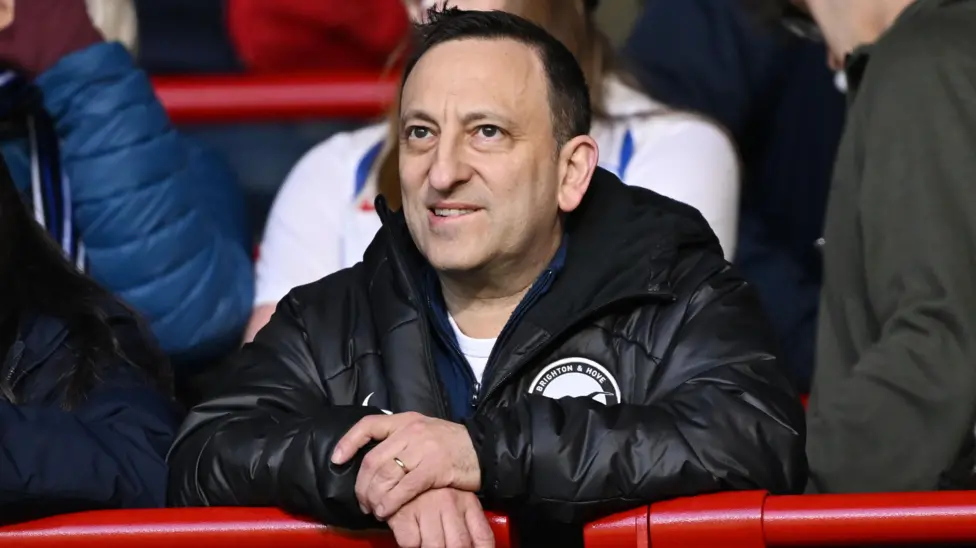
I managed 10 clubs and had eight chairmen who were local owners. They were almost as one with the supporters, and understood the value of the club to the community.
My relationship with some of them was very strong and I still have great respect for those individuals.
For me, understanding the identities of the clubs and towns where I worked without doubt gave me more of a connection with the supporters.
Working closely together with my chairman, building a bond between us and having a mutual understanding with them, was always vital for me, especially in difficult moments – and there were lots of them!
It enabled me to speak openly with them, often over dinner, and discuss the club’s development from my point of view as well as theirs.
In my view, it was and still is, the most important relationship at any club, but it is only a dream for the majority of managers today.
Most Premier League clubs, and many in the Championship, have owners and investors who are based abroad.
For these individuals or groups, football is a business and making profits counts as much as gaining points. It’s not an option for the manager to sit down with them over a glass of wine to discuss footballing matters.
With these changes, more and more different job titles are brought in, from sporting director to director of football and more, that decrease or ultimately prevent any contact personally between the coach or manager and owner.
If I was still a manager today, I know which set-up I’d prefer.
Academies – ‘Have they just become cash cows?’

I often hear “he’s one of our own” proudly shouted by fans, and I love it. It’s a symbolic way of showing how much supporters love watching home-grown talent break into their club’s first team.
The academy system in this country has an enormous pull on young players. Now pre-academy players can join a club when as young as six, and can end up spending more time at the academy than at school.
These boys are often local lads who, during their journey, build a strong relationship with the club and their coaches.
I’m old enough to remember the three West Ham players who helped England win their only World Cup, in 1966 at Wembley, and I am sure everyone reading this can relate to the home-grown talent in your team, and how special the feeling is to know “he’s one of our own”.
Unfortunately, today’s academy players seem to be viewed differently, from a business perspective.
Clubs have realised they can make pure profit from selling academy players and, to balance their finances, top talent is being sacrificed to meet profit and sustainability rules (PSR).
This is something that maybe has only just started too. Now, clubs are spending enormous amounts of cash to fill academies with good young foreign talent.
Playing styles – everyone follows fashion

It is nine years since Pep Guardiola arrived at Manchester City and brought with him a style of play that was to be followed – and copied – by coaches up and down the country, from the highest professional level to the amateur and youth game.
As I talked about in a previous column about the value of defending properly, Pep’s style of play did not just become ‘the right way’ to play, it also became ‘the only way’.
At the time, without question, City had the strongest squad of players, technically, in the Premier League, but it felt like many other managers and coaches put style over substance and, irrespective of their strengths, many teams were encouraged to play possession-based football.
I always played to my own squad’s strengths, and have never changed my views on that principle, but you still have to admire the complete revolution that Pep and City created.
Possession football, with passes through the pitch and end products to finish off the phases of play, is fantastic to watch.
But possession football, where the goalkeeper and centre-backs play square passes back and forth, is not fantastic to watch!
In my younger days, we were coached to have our first touch forward, and then to play forward to the best technical players we had on the pitch, who usually were the wide players and centre-forwards.
Football is not, and should not be conditional – where you play a certain way regardless of the type of players you have got.
Still, fashions keep on changing. Set-plays have come into fashion with almost every team now trying long throws and in-swinging corners. Teams who were being pressed by opposition forwards at goal-kicks are now playing long, to beat it.
A certain change of wind direction is taking place, and maybe it has turned back a notch. Even my old assistant, David Kemp, has been in his wardrobe to bring out his old bell-bottom jeans – for those of you reading who are too young to remember, they used to be in fashion in the 1970s.
As a manager, I always saw my job was to get results. Maybe substance over style is the direction the Premier League is heading in now?
Related topics
- Premier League
- Football
Source: BBC

Leave a Reply