Colombia is preparing for a potential refugee crisis as a result of US strikes in Venezuela and President Nicolas Maduro’s slaying on Saturday.
In order to protect security, the nation has taken emergency measures, including sending 30, 000 soldiers to Venezuela’s border, and Defense Minister Pedro Sanchez announced on Sunday that he is taking them to bolster security.
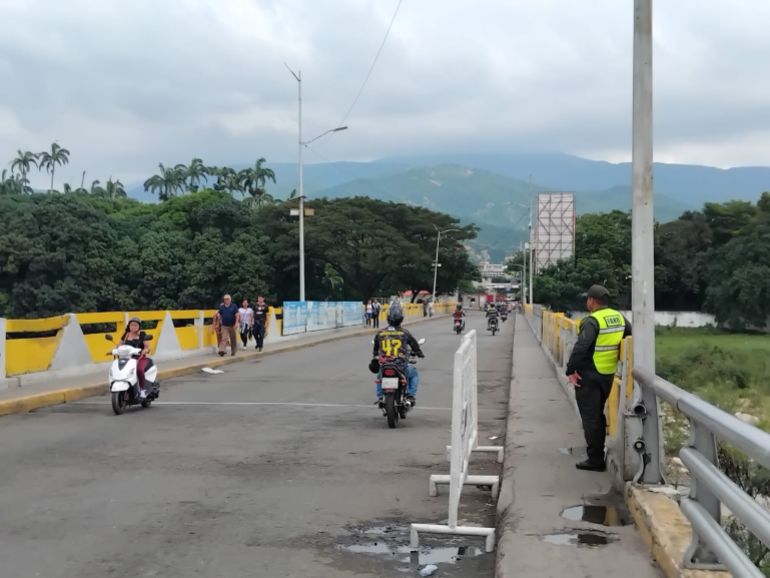
Vehicle and foot traffic flowed normally on Monday at the Simon Bolivar International Bridge, which spans the Tachira River, which separates Colombia from Venezuela and is near Cucuta’s border city, despite a larger military presence, which included three parked Colombian M1117 armored security vehicles.
Colombia is now settling into the worst possible situation as US President Donald Trump threatens more attacks if interim leader Delcy Rodriguez does not “behave.”
Sanchez claimed that security forces had been “activated” to stop armed groups that have been operating in Venezuela for years, including the National Liberation Army (ELN) and Segunda Marquetalia, or Second Marquetalia, a dissident faction of the leftist group FARC.
Colombia’s armed groups have historically sought refuge from the Colombian army at its 1, 367-mile (2, 200km) border to traffic drugs and shelter. Colombian intelligence has warned that armed group leaders may return as their security in Venezuela could be threatened as a result of Maduro’s ouster.
In order to deal with the anticipated rise in refugees following the US attacks on Venezuela, Colombia’s government has established five emergency command posts in cities close to the border.
With direct state presence in the most troubled areas, Sanchez said, “These command posts allow us to permanently coordinate humanitarian, security, and territorial control operations.”
Juan Carlos Florian, the president’s minister of equality and equity, traveled to Cucuta to address refugees’ humanitarian concerns.
In an interview on Monday in Cucuta, Florian said, “We’ve implemented something that we call a “border plan.” In “the event of a potential migratory crisis brought on by the US military intervention in our brother country, Venezuela,” the plan coordinates various government components.
The minister claimed to have met local officials to examine the refugee resources, including food and medical supplies, to better understand the areas where officials lack reserves.
The minister said the government is also activating 17 centers in the nation that provide food and refugee refugees with access to education, training, employment, violence prevention, and other services with support from the United Nations International Organization for Migration.
The Colombian government anticipates that up to 1.7 million people will enter the country, despite the minister’s claim that there hasn’t been an increase in border crossings yet. Three million Venezuelan refugees are already living in Colombia, making up the majority of the eight million who have left the nation.
Additionally, humanitarian organizations are getting ready for a potential refugee influx.
The Colombian Red Cross in Northern Santander, which has Cucuta as its capital, has an emergency response plan in place in response to a potential refugee crisis, according to Juan Carlos Torres, the director of disaster risk management for the organization.
The UN’s Central Emergency Response Fund (CERF) initial 88, 000 Swiss francs (roughly $111, 000) are being used to increase its immediate capacity to provide basic humanitarian aid to refugees living close to the border.

According to Torres, “We were yesterday at the]Simon Bolivar Bridge] taking preventative measures, ambulance services, transportation, protection, and other necessities,” Things may change, he said, “Right now the situation is “normal,” but over the course of a few days.
Refugees might be willing to return to Venezuela if things stabilize, he said. More people may want to leave Venezuela, according to Torres, but if not, Torres said.
On Monday afternoon, 50-year-old Mary Esperaza crossed the Simon Bolivar Bridge with a friend and crossed the Simon Bolivar Bridge to Colombia. Rodriguez, who is from Cucuta but who resides in Venezuela across the river, expressed concern that a new migration crisis might arise soon.
Source: Aljazeera

Leave a Reply