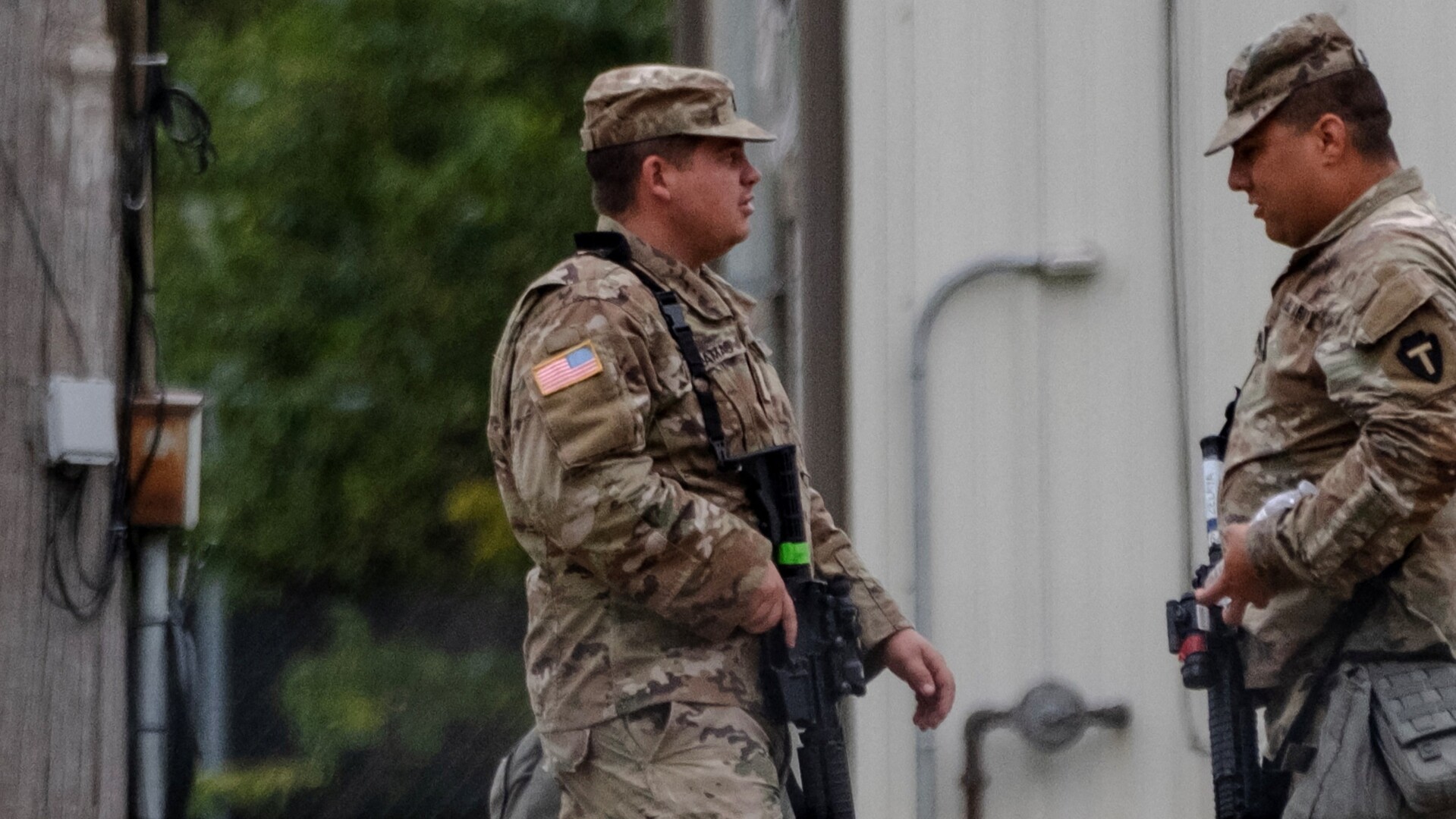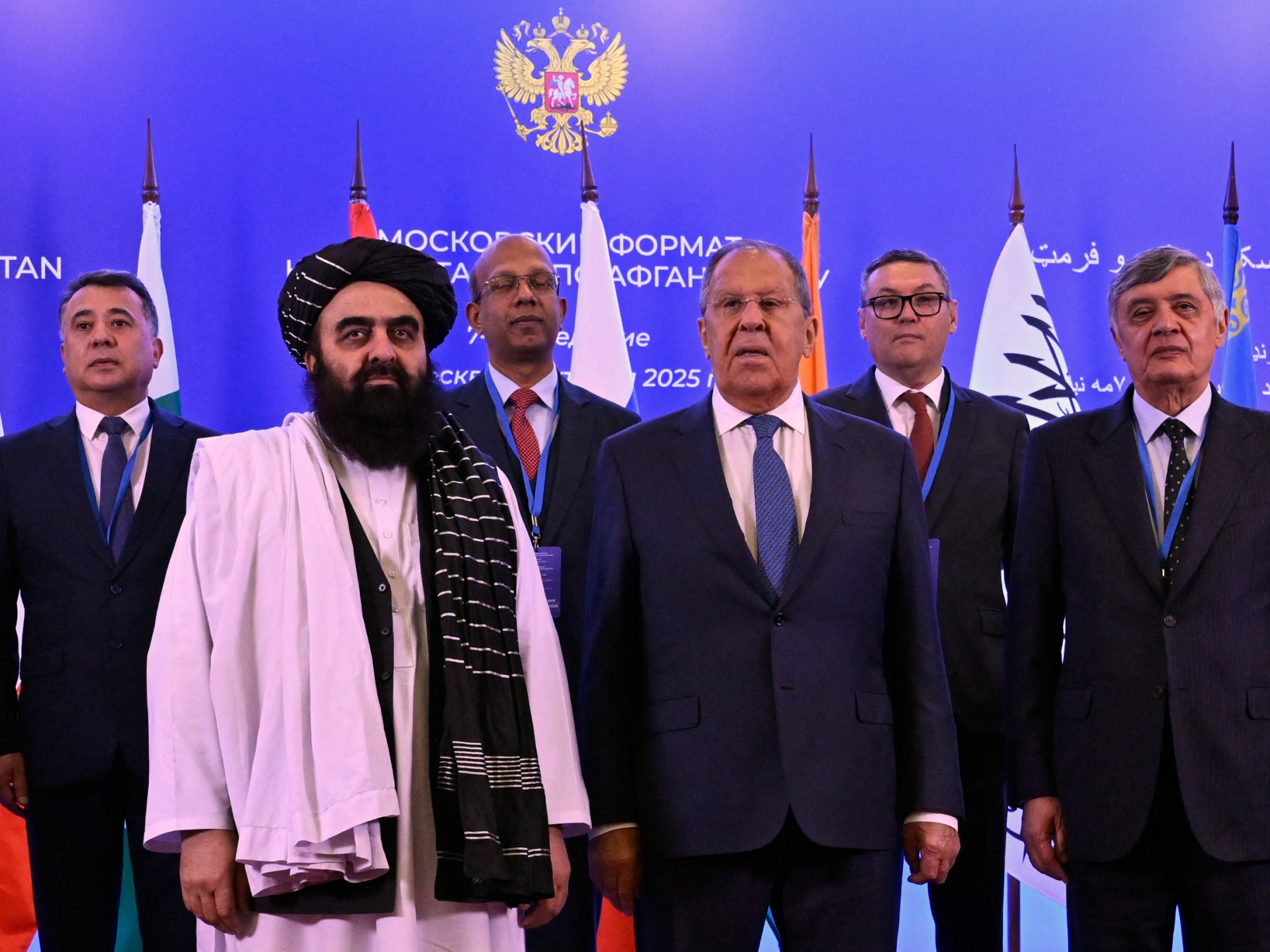
Ukraine knocks out Russian refineries as Russia kills dozens in Kyiv

In the past week, Russia’s refineries were hit severely by Ukraine, worsening its gasoline shortages and causing Moscow to impose a ban on petroleum products exports.

Russia launched a deadly attack on Kyiv in response, and Ukraine’s situation looked desperate as it awaited its turn to surrender.

Vladimir Putin, the president of Russia, suggested that Russian energy exports to China and India were on the rise during his speech at the Shanghai Cooperation Organization (SCO) summit, but reports suggested that Moscow is holding onto its crude oil for a while.

In order to broker a ceasefire, Ukraine’s European and regional allies are holding a meeting on Thursday to discuss finalizing security arrangements, and they are also urging US President Donald Trump to use sanctions to pressure Putin into direct talks with Kyiv.

Russian offensive operations

On September 1, Russia redeployed elite units, including marines and paratroopers, from Ukraine’s northern Sumy region to Donetsk, suggesting that it may be reviving its efforts to defend the city of Pokrovsk, which Ukraine has identified as a crucial strategic goal for Russia since August 2024.

After fierce Ukrainian resistance, Russia gave up on an offensive for Dobropillia, a town whose capture would have encircled Pokrovsk from the north.

Last week, Dobropillia and Pokrovsk, along with Lyman, a city further north, were confirmed by the commander-in-chief of the Ukrainian Armed Forces, Oleksandr Syrskii.

The so-called “fortress belt” of cities, which includes Sloviansk, Kramatorsk, Druzhivka, and Konstiantynivka, is located between Lyman and Pokrovsk, which is considered to be one of Ukraine’s most heavily fortified regions of the front, suggesting that Russia may be planning to encircle the area rather than launch a direct assault.

Russian Chief of the General Staff Valery Gerasimov stated on Saturday that the Russian “unstoppable offensive” had taken over 3,500 square kilometers (1,350 square miles) and 149 settlements since March and that Putin would travel to Tianjin, China, on Sunday to attend the SCO summit.

The Institute for the Study of War, a think tank based in Washington, concluded that since March, Russian gains have totaled 2, 346 square kilometers and 130 settlements, according to the Institute for the Study of War.

Russian Defense Minister Andrei Belousov claimed on Friday that “we were liberating 300 to 400 square kilometers monthly, and this figure has increased to 600 to 700 square kilometers.” The ISW disagreed. According to The ISW, Russia had taken 445 square kilometers in July and about 500 square kilometers in August.

Andriy Kovalenko, the head of the Center for Countering Disinformation in Ukraine, disagreed with Gerasimov’s claim that the north had taken up all of Kupiansk.

On the Telegram messaging service, he wrote, “All the fantasies of Russian war correspondents about control over half of Kupiansk up to the center do not correspond to reality.” “Propagandists do their job first, then runners with flags run around while a drone records them, and then propagandists film them.”

For the first time since 2022, Russia enjoyed operational success in the western Black Sea, losing both control of Zmiinyi Island and its flagship guided missile cruiser Moskva.

In a drone strike at the Danube river’s mouth on August 28, the Russian Ministry of Defense announced the sinking of the Ukrainian reconnaissance ship Simferopol. A ship matched the Simferopol, and separate footage captured an explosion. Surface kamikaze drone footage depicts an approach.

In the western Black Sea, Ukraine was the first to successfully sink Russian ships using naval drones. This may be the first time that Russia has successfully applied the same strategy to waters off the coast of the European Union.

Russia launched its largest aerial assault on Kyiv on the same day, aiming 598 drones and 31 missiles there.

After two missiles destroyed a residential building in the Darnytskyi neighbourhood, the death toll eventually reached 26, including four children. The following day, Volodymyr Zelenskyy, the president of Ukraine, deposited flowers there.

Russia launched 2, 189 drones, and 108 missiles at Ukraine’s front-line cities between August 28 and September 3. 88 percent of the drones and 79 percent of the missiles were intercepted by Ukraine.

INTERACTIVE-WHO CONTROLS WHAT IN EASTERN UKRAINE copy-1756904540

Russian refineries targeted by Ukrainians

On August 28, Ukraine returned to the Black Sea when its military intelligence struck the ship with two drones, making it inoperable.

But it made primarily efforts in Russia.

Ukrainian drones also targeted the Kuibyshev refinery in the Samara region of Russia, which is located 1, 000 kilometers east of Ukraine. Afipsky refinery in Krasnodar Krai, located 400 kilometers outside of Ukraine, was also struck by them.

According to Ukrainian officials, the two refineries are essential to the Russian war machine because they process more than 13 million tonnes of oil annually, accounting for just under 5% of the country’s total.

According to industry sources, Kuibyshev’s two main refining units had been hit and had stopped all oil processing. Following a Ukrainian strike on August 2, processing had only resumed a week prior.

The Krasnodar and Syrzan refineries, both of which have previously been struck, were hit by drones on Friday, according to Kovalenko. Officials from Krasnodar acknowledged a fire at their facility after the footage obtained revealed the Syrzan hit.

According to Reuters, Ukraine reportedly accounted for 17% of Russian refining capacity in August alone.

The figure was 21%, according to Robert “Magyar” Brovdi, the head of Ukraine’s Unmanned Systems Forces.

Russia extended its export ban on refined petroleum products by a month until October 31 in an effort to maintain “a stable environment in the domestic fuel market.” Since March 1, the ban has been in effect.

Russian authorities have documented occupied territory rationing in Russia. Because it couldn’t process the crude oil itself, Russia announced it would try to increase its daily exports by 200, 000 barrels.

Even so, crude oil is sold for less than refined goods, but reports last week suggested that Russia was actively discounting its crude oil in an effort to attract customers. Indian refiners were offered a $4 per barrel discount from the previous week’s $2.5 and $1.7, respectively, in accordance with Bloomberg’s report.

Russia’s exports, which provide money for its war economy, have also been restricted by Ukraine.

Due to Ukrainian drone damage to the pipeline, officials at the Ust-Luga export terminal near St. Petersburg announced last week that the terminal would be operating at half of its capacity.

Without using Western weapons, Ukraine has been developing its own long-distance kill vehicles, which are frequently used only to attack deep inside Russia.

Jamaican PM Holness wins third term in fractious election

According to preliminary results from Jamaica’s contentious parliamentary election, prime minister Andrew Holness has won a third term in office.

In the early hours of Thursday, Holness’ Jamaica Labour Party’s results revealed that the party had won at least 34 seats in the previous day’s vote. 29 of the 63 seats in parliament were occupied by the ruling party’s main rival, the People’s National Party.

In an election marred by allegations of corruption and low voter turnout, the opposition party’s leader Mark Golding conceded defeat.

Make no mistake about it, Holness told supporters shortly after declaring victory, according to the Jamaica Observer.

He stated in a post on X that his “historic third term” was “a win for you, the people” as opposed to just a win for his party.

Golding addressed the situation briefly, acknowledging the success of his rival and saying he was disappointed by the outcome.

Despite having a vibrant democratic tradition, polls have decreased in Jamaica recently.

Only 38.8% of voters turned out for the 2020 elections, which took place during the pandemic, on Wednesday.

On the island’s 2. 8 million residents, there were more than 2 million registered voters who could cast their ballots.

The president of Jamaica has the authority to appoint 13 of the country’s top senators to the upper chamber of parliament. The remaining will be decided by the opposition.

With his administration increasing firearm seizures and security presence on the Caribbean island, Holness’ country has seen a 43 percent decrease in killings this year, which is the most significant decline in decades.

The Jamaica Labour Party promoted its position as the government that saved the island from widespread hostilities by leveraging this success.

In addition, it urged voters to avoid risking reversed progress, emphasized fiscal responsibility, low unemployment, and the importance of continuity.

Holness also pledged to double the required $100 per 40-hour workweek for his party.

The opposition had waged a campaign by proposing measures to address socioeconomic issues, such as lowering Jamaica’s current income tax threshold from $11,200 to $ 21,800, and giving more working-class Jamaicans more money to use as a buffer against rising prices.

Additionally, it questioned the prime minister’s statutory declarations of income, assets, and liabilities and accused the ruling party of mismanagement.

How to stop Israel from starving Gaza

Through direct mass murders and the physical destruction of Gaza’s infrastructure, Israel is complicit in the United States’ involvement in the genocide in the country. Israel performs the dirty work. Through its veto power at the UN, the US government funds it and provides diplomatic support. Through Lavender, Palantir creates the artificial intelligence needed for effective mass murder. The Israeli army receives core tech infrastructure from Microsoft through the Nimbus&nbsp initiative, Google and Amazon, and Azure cloud services.

As a public-private partnership between Israel and the US, this commemorates war crimes in the twenty-first century. The UN, Amnesty International, the Red Cross, Save the Children, and many others have all confirmed Israel’s widespread starvation of Gaza’s residents. The Norwegian Refugee Council and 100 other organizations have been calling for the Israeli government to end its use of food aid. For the first time in the Middle East, mass starvation has been confirmed.

The hunger is devastating in scope. More than two million people are routinely denied food by Israel. At least 132, 000 children under the age of five are at risk of dying from acute malnutrition, and more than half a million Palestinians are suffering from catastrophic hunger. In a recent article titled “Starvation is Everywhere,” Haaretz enthralled readers and covered the scale of the horror. The Israeli army frequently fires at those who have access to food distribution centers.

The intention to starve Israel has always existed, as a former US ambassador to Israel recently pointed out. There is no one who feeds its enemies, according to Israel’s Heritage Minister Amichai Eliyahu. Whoever doesn’t evacuate, don’t let them, according to minister Bezalel Smotrich, who just recently said. They can either surrender or die without water or electricity. We want this, exactly.

However, US representatives at the UN continue to deny the facts and provide cover for Israel’s war crimes despite these glaring declarations of genocide. In 2024, the US vetoed Palestine’s membership in the UN. Another violation of international law is now denied to Palestinian leaders who want to travel to the UN in September.

The US has used its veto of Israel’s genocide against the Palestinians and to thwart even the most basic humanitarian measures with its veto of its own in the UN Security Council (UNSC). Before the Israel-US murder machine, the world is horrified but appears paralyzed. Even in the face of US indolence, the world still has the ability to act. The US will be completely silent about its illegal cooperation with Israel.

Let’s be clear. The Palestinian people’s majority is supported by humanity. 172 nations, representing more than 90% of the world’s population, voted in favor of Palestine’s right to self-determination in December. In terms of opposition, Israel and the US were essentially at odds with one another. Similar sentiments are frequently expressed in opposition to Israel’s actions and in support of Palestine.

Israel’s protracted government now relies solely on US support, but that may not last. Despite Trump’s intransigence and the US government’s attempts to silence pro-Palestinian voices, only 33% of Americans support the UN’s recognition of Palestine. Additionally, 60% of Americans oppose Israel’s actions in Gaza.

What are some start-up actions that the world can take.

First, Turkiye has set the right course by removing all ties to Israel in terms of trade, shipping, and air travel. A State of Palestine is admitted to the UN as the 194th member, with borders on June 4, 1967, and Turkiye is right to treat it as such until Israel’s mass starvation ends. Following Turkiye’s example, other states should follow right away.

Second, all UN member states that have not yet recognized Palestine should do so. 147 nations have so far endorsed Palestine. Even despite the US’s vehement objections, hundreds more should attend the UN summit on Palestine on September 22.

Third, the Arab countries that signed the Abraham Accords, Bahrain, Morocco, Sudan, and the United Arab Emirates, should suspend diplomatic ties with Israel until the State of Palestine is admitted to the UN and the Gaza siege is over.

Fourth, the UN General Assembly (UNGA) should remove Israel from the UNGA until its murderous siege of Gaza, using the precedent of suspending South Africa under its apartheid regime, by a vote of two-thirds of the members present and voting. The UNGA does not grant the US a veto.

Fifth, UN member states should halt exporting all technology services that support the conflict until the UNSC approves Palestine’s membership. Consumers around the world should be angry with companies like Amazon and Microsoft that continue to support the Israeli military in a genocide.

In addition, the UNGA should send a UN Protection Force to occupied West Bank and Gaza. The UNSC typically authorizes a protection force, but in this instance, the US will veto the council’s veto. Another approach is available.

When the UNSC is in a deadlock, the UNGA has the authority to act under the “Uniting for Peace” mechanism. The UNGA would be able to address the issue in its resumpted 10th emergency special session on the Israel-Palestine conflict following a UNSC session and the almost unavoidable US veto. In that case, the UNGA can authorize a protection force in response to a State of Palestine’s urgent request by a two-thirds majority, which is unrestricted by the US veto. The UN Emergency Force (UNEF) was given the UNGA’s permission to enter Egypt in 1956 to protect it from the United Kingdom, France, and Israel’s ongoing invasion.

The protection force would enter Gaza to obtain emergency humanitarian aid for the country’s famined population at Palestine’s invitation. The UN protection force would be authorized to defend itself and the Palestinians in Gaza if Israel launched an attack. It’s unknown whether Israel and the US would dare to join a UNGA-mandated force in a fight to save the ailing Palestinians.

Israel has crossed the clear line between starving people to death and shooting them as they wait in line for food. There is neither time to lose nor a new line to cross. As it hasn’t in decades, the family of nations is being tested and called into action.

All French female boxers out of world championships over genetic test row

French female boxers have been barred from competing at the inaugural World Boxing Championships in Liverpool after failing to meet a deadline for a genetic sex test that the French Boxing Federation (FFBoxe) said was incompatible with French law.

World Boxing, which issued a list of competitors for Thursday’s opening rounds with no French entrants included, said it would not comment on individual cases but added that it had warned all federations about its policy.

FFBoxe said it was informed on July 21 that all female athletes needed to provide results of a “femininity test” during registration for the competition, which started on Thursday.

French law prohibits the federation from conducting the tests domestically or abroad without a medical prescription, FFBoxe said, prompting it to turn to a laboratory in Leeds upon World Boxing’s recommendation. Despite assurances that results would be delivered within 24 hours, they were delayed.

“With, as a consequence, the exclusion of our athletes as well as other female boxers from foreign delegations who also found themselves trapped,” FFBoxe said in a Thursday statement.

“This is a profound injustice,” it added. “Our athletes are being punished for a bureaucratic failure and a policy that was communicated far too late.”

World Boxing argues that all federations had been warned on August 21.

“Receiving results for sex-testing can take 48 hours. Any tests completed later than 1 September would jeopardise your athlete’s entry into the Official Draw and Competition. Please consider your arrival time to the UK if you require sex-testing in the UK,” the governing body said in a statement.

“World Boxing and its partners have been working with multiple National Federations over the last three weeks to facilitate access to testing facilities at several locations in Great Britain and many boxers that are competing at the competition have been tested via this process.”

World Boxing, which will oversee boxing at the 2028 Los Angeles Olympics, introduced mandatory genetic testing in May for female athletes above 18 years of age to confirm eligibility for competition.

Its president, Boris van der Vorst, reiterated on Wednesday that it had introduced the tests to ensure safety and fairness.

An FFBoxe spokesperson told the Reuters news agency on Thursday it had still not received the test results from the laboratory, which he did not name, and was looking into the possibility of an appeal.

French boxer Maelys Richol said on Instagram that a whole year of work had been wasted due to poor management.

“It is extremely hard to take. We are frustrated, angry, and deeply disappointed,” she said.

The controversy reignited debates surrounding gender verification in sport.

Algerian boxer Imane Khelif, who won gold in the women’s welterweight division at the Paris Games last year, has appealed to the Court of Arbitration for Sport (CAS) over World Boxing’s decision to bar her from future events unless she undergoes genetic sex testing. Sport’s highest court, CAS, dismissed her request to suspend the ruling while her case is heard.

Khelif was previously disqualified from the 2023 World Championships by the International Boxing Association following sex chromosome tests. However, she competed in Paris after the International Olympic Committee stripped the IBA of its governing status and organised boxing events independently.

Van der Vorst later apologised for naming Khelif publicly in the announcement about mandatory testing, acknowledging that her privacy should have been respected.

Ukraine allies push security guarantees amid US and Russian uncertainties

In Paris, Western leaders have spoken with Ukrainian President Volodymyr Zelenskyy about the possibility of providing security guarantees in the event of a peace agreement with Russia.

Leaders from Europe, Australia, Japan, and Canada as well as Zelenskyy and Steve Witkoff, the United States envoy, will attend the summit in Paris on Thursday. The attempt to agree security guarantees for Kyiv is still tense even as ceasefire negotiations stall.

To ensure that any agreement between Russia and Ukraine would be reached, the summit is expected to discuss how many troops those nations included in the “coalition of the willing” could commit.

However, the discussions are heavily influenced by President Donald Trump’s persistent reluctance to deploy troops and Russia’s opposition to sending foreign troops to Ukraine.

The “coalition” nations’ leaders, led by France and the United Kingdom, are attempting to convince Trump to support their efforts and fulfill their pledge to provide US military support.

According to a report from the Reuters news agency, Witkoff met with senior European officials before the meeting, quoting two diplomats.

On Thursday, NATO’s Mark Rutte asserted that Russia is not involved in any Ukrainian troop deployment.

Why do we care what Russia thinks about Ukrainian troops? It is a self-governing nation. They are not in charge of making their own decisions, he said.

It is up to the security guarantee forces in Ukraine to support a peace deal, they say. Rutte said during a trip to Prague that no one else could make a decision.

The coalition leaders endorsed plans for security guarantees drafted by their militaries the day before, according to French President Emmanuel Macron, who was speaking alongside Zelenskyy in Paris.

According to Macron, “We are ready, Europarcians, to provide security guarantees to Ukraine until a signed peace is reached,” adding that it was now necessary to assess Russia’s sincerity in regards to putting an end to the conflict.

Without going into specifics, European officials informed news agencies that the “technical” plans are complete.

According to an outline sent to attendees, British and French army chiefs were scheduled to give the leaders a Thursday briefing, according to Reuters.

However, European leaders have made it clear that any troop withdrawal agreement will only be possible with US support.

Thailand set for vote on new PM amid power vacuum

Following royal officials’ opposition to the ruling Pheu Thai Party’s request to dissolve the parliament, the Thai parliament will vote on a new prime minister.

Pheu Thai’s request was turned down by the Office of the Privy Council, according to caretaker premier Phumtham Wechayachai, who stated on Thursday that it was inappropriate to present the draft of the Royal Decree to His Majesty at this time.

On Wednesday, the party of former prime minister Paetongtarn Shinawatra, who is still in charge of the palace, requested that the legislature be disbanded.

There are “controversited legal issues” regarding a caretaker premier’s authority to dissolve parliament, according to the office.

In the wake of the Constitutional Court’s firing of Paetongtarn on Friday due to an ethics violation, the parliament has the option to choose a new leader.

A clear path

The main opposition party, the conservative populist Bhumjaithai Party, announced it would support another opposition force to form the next government, prompting the decision to dissolve parliament.

MPs can now choose a new prime minister after the royal refusal.

Anutin Charnvirakul, the leader of Bhumjaithai, is expected to win the vote on Friday at around 10:00 am (03:00 GMT), according to the opposition coalition.

Former Attorney General Chaikasem Nitisiri, 77, will be nominated for the presidency by Pheu Thai. In the event that Chaikasem wins, the party has also stated that it will hold a snap election.

Acting Prime Minister Phumtham told reporters, “We will immediately dissolve parliament to allow the democratic system to continue.”

Pheu Thai appears to be trying to undermine the People’s Party’s pact, which stipulates that the latter, the largest party in parliament, would support Anutin in exchange for a pledge to put the house in four months.

Sirikanya Tansakun, the People’s Party deputy leader, resolutely backed the agreement, though.

dominant forces

Anutin, 58, was previously in charge of the cannabis industry as deputy prime minister, interior minister, and health minister. He is perhaps most well known for honoring a 2022 promise to legalize marijuana.

Pheu Thai has dominated Thai politics for 20 years, fostering a populist identity that has tamed with the pro-monarchy, pro-military establishment.

The Shinawatra dynasty, which is increasingly bedeviled by legal and political disarray, received yet another devastating blow from Paetongtarn’s dismissal.