Eurovision to vote on Israeli participation in November

Eurovision Song Contest members will vote on Israel’s participation in the 2026 competition in November.

The European Broadcasting Union (EBU), which oversees the event, confirmed the plan on Friday. International demands for Israel to be excluded from the contest due to the country’s actions in Gaza have been growing.

Recommended Stories

list of 3 itemsend of list

The board of the EBU, an umbrella organisation for public broadcasters that runs the event, has sent a letter to members indicating that the vote will take place at an extraordinary general meeting held online in early November, a spokesperson said.

The vote will be on whether Kan, the Israeli public broadcaster and member of the EBU, will participate, the spokesperson said. An “absolute majority” would be required for an exclusion to pass, he said.

Countries including Ireland, the Netherlands, Slovenia and Spain have demanded that the EBU exclude Israel, citing as a precedent its decision to remove Russia from the show following its invasion of Ukraine in 2022.

During the past two editions of the competition, the event has been drawn into the controversy over Israel’s devastating war in Gaza, which has now killed more than 65,000 people.

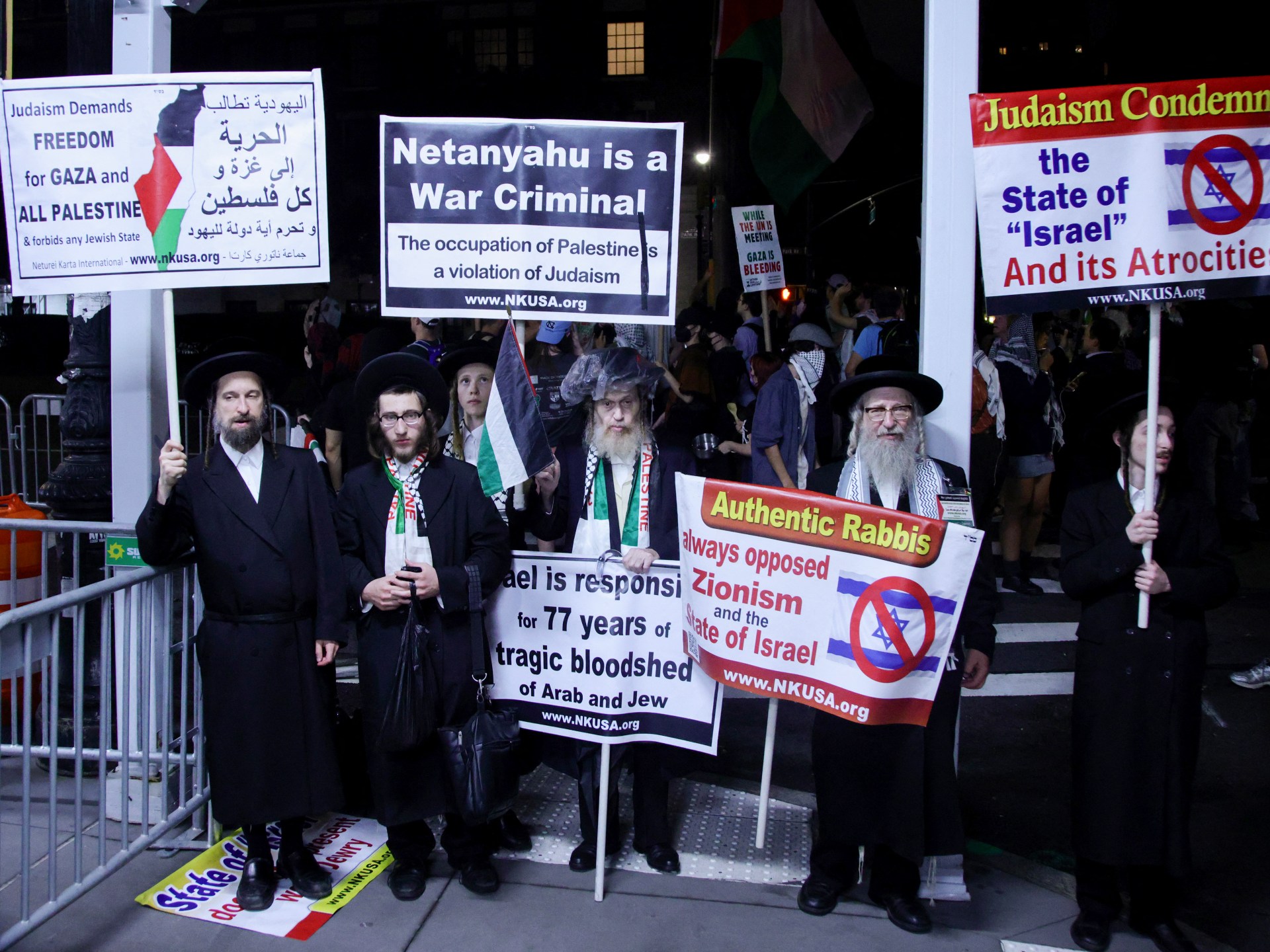
Pro-Palestinian activists protested in Malmo, Sweden, in 2024 and in Basel, Switzerland in May over Israel’s participation in the contest.

In September, a United Nations Commission of Inquiry concluded that Israel has committed genocide in Gaza.

Last week, Spain threatened to boycott the competition – the world’s largest live televised music event that takes place in May – if Israel takes part. Ireland, Slovenia, Iceland and the Netherlands have made similar threats.

Germany and Austria have backed Israel’s participation.

Other countries, such as Belgium, Sweden, and Finland, are also considering a boycott and have until December to decide.

Aside from Russia, the EBU previously booted former Yugoslavia from the competition due to UN sanctions over the Balkan wars in the 1990s, and Belarus in 2021 over its crackdown on media freedoms.

Pakistan must ‘focus on cricket’ not India in Asia Cup final

After the sides’ previous two meetings heightened tensions, Pakistan’s head coach Mike Hesson instructed his players to concentrate on cricket when they face India in the Asia Cup final on Sunday.

Following a close-fought 11-run victory over Bangladesh in a Super Four match on Thursday in Dubai, Pakistan and India will meet in the Asia Cup final.

Recommended Stories

list of 4 itemsend of list

In this edition of the Asia Cup, Headsson downplayed the bitterness that had previously weighed on the two previous meetings between India and Pakistan, which were held in their first meetings since the two nations’ military conflict in May.

Look, I tell the players to “focus on cricket,” which we will definitely be doing. There has always been passion for high-pressure games in terms of gestures, according to New Zealander Hesson.

After the first game, India and Pakistan did not shake hands, and neither did the other.

Suryakumar Yadav, the Indian captain, was accused of making a political statement following the first match, while Sahibzada Farhan, the opener for Pakistan, and Haris Rauf, the second, both made obscene gestures.

In their previous matches, India defeated Pakistan by seven wickets in Group A and by six wickets in Super Four, respectively.

That resulted in three one-day international matches and four T20Is, extending India’s unbeaten run against Pakistan to seven international matches that date back to 2022.

Hesson argued that if his team wants to reach the final, they must be relentless against world champion India.

There is a reason why India is ranked as the best side in the world, he said, so we must be good enough to put them under pressure for longer.

We must put pressure on them, and that will be challenging. ”

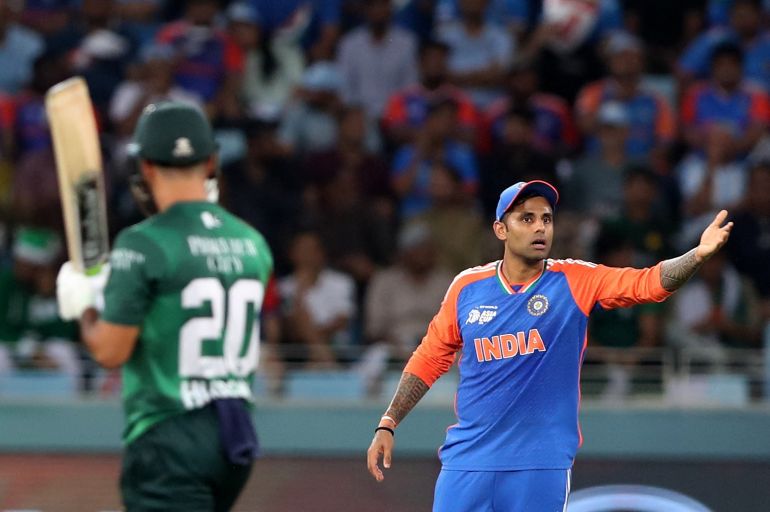
Suryakumar Yadav of India issues instructions on the field during their second match of the 2025 Asia Cup against Pakistan [Satish Kumar/Reuters].

India chased down a paltry 127-9 in the opening match, which Pakistan managed with just three wickets.

Pakistan lost by six wickets in the second match, but they did much better in the third one.

Former New Zealand coach Hesson praised the way the team played against India in the final game as a significant improvement over the first one.

The first game was a little passive, I must say. We gave India complete control over the game.

The last time we faced that game was the scruff of the neck for a long period of time, and Abhishek Sharma’s exceptional innings gave us the win. ”

India fought back from a 172-run target with a match-winning 39-ball 74.

Hesson continued, “We have deserved this opportunity, so it’s up to us now to make the most of it.”

UNSC to vote on proposal to delay looming Iran sanctions

A vote on the UNSC (UNSC) vote is expected, which could lead to Iran’s resumed nuclear-related sanctions.

On Friday, the UNSC will vote on a resolution that China and Russia have proposed putting a stop to the punishments’ reimposition. After the United Kingdom, France, and Germany accused Tehran of breaking a 2015 agreement that would stop it from developing nuclear weapons, UN “snapback” sanctions are scheduled to be triggered at 00:00 GMT on Saturday.

Recommended Stories

list of 3 itemsend of list

The resolution will allow the international community to reimpose an arms embargo against Tehran and a punishing global asset freeze if the council declines to approve it. The resolution seeks a six-month delay to allow for further discussions.

Additionally, Iran’s citizens and entities are prohibited from selling materials that could be used in uranium enrichment and reprocessing, as well as for the development of ballistic missiles and travel.

The UNSC’s recommendation to pass the Russian/Chinese resolution is backed up by diplomats.

Hostile behaviors

After Israel and the United States bombed the sites in June, the UN’s nuclear watchdog, the International Atomic Energy Agency (IAEA), had been attempting to rebuild cooperation with Tehran and resume inspections of its nuclear facilities.

Iran has threatened to retaliate by ending its cooperation with the IAEA in the event of sanctions being imposed prior to the vote.

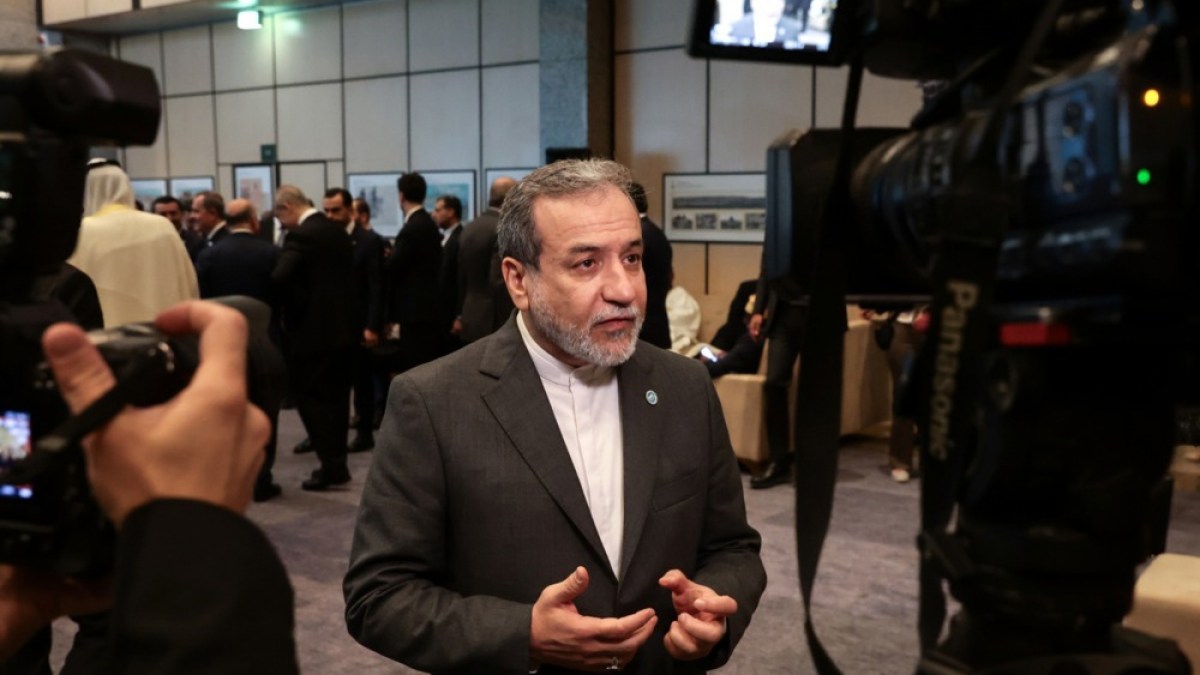
Foreign Minister Abbas Aragchi stated in a Telegram post that no hostile actions against Iran would be possible without the IAEA’s earlier statement that the country’s nuclear cooperation would remain in effect.

Otherwise, he continued, “The Islamic Republic of Iran will consider its practical commitments terminated.”

He also criticized the “European Troika,” which consists of France, Germany, and the UK, for pushing for the reimposition of sanctions, according to an article from the Iranian Students’ News Agency.

UN nuclear inspectors have been pressing Iran to grant them full access to its nuclear sites.

Araghchi met with Yvette Cooper on Thursday to talk about the disagreement, which he “strongly criticized the position of the three European countries as unjustified, illegal, and irresponsible,” according to the Iranian Ministry of Foreign Affairs.

The resolution that would postpone the lifting of sanctions until April 18th, 2014, is expected to be presented to the UNSC later on Friday.

The draft resolution would direct “immediate resume negotiations” for all the initial parties to the deal, including the US.

The UNSC’s 15 members did not anticipate giving the resolution the nine votes needed to pass, diplomats told the AFP news agency.

Iranian President Masoud Pezeshkian reiterated his statement at a meeting with Bolivian President Luis Arce Catacora on Thursday, saying Tehran is “fully prepared for any scenario” in the event that the UN General Assembly is reinstated.

Pezeshkian reiterated in his first UN address on Wednesday that Tehran will “never attempt to build a nuclear bomb.”

Iran has long argued that it is not seeking nuclear weapons, citing Supreme Leader Ayatollah Ali Khamenei’s edict, and that US intelligence has not determined whether Iran has chosen to develop nuclear weapons.