US envoy arrives in Venezuela to reopen mission after seven years

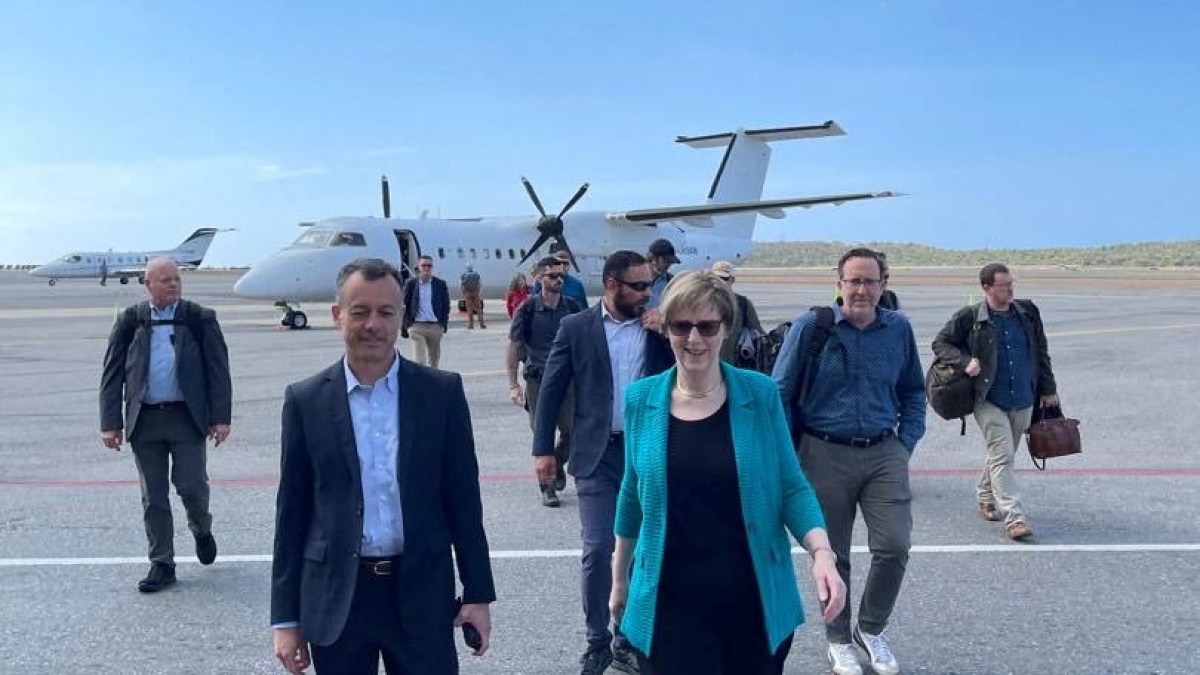
The top United States envoy for Venezuela has arrived in Caracas to reopen a US diplomatic mission seven years after ties were severed.

Laura Dogu announced her arrival in a post on X on Saturday, saying, “My team and I are ready to work.”

Recommended Stories

list of 4 itemsend of list

The move comes almost one month after US forces abducted Venezuela’s then-president, Nicolas Maduro, from the presidential palace in Caracas, on the orders of US President Donald Trump.

Maduro was then taken to a prison in New York, and is facing drug trafficking and narcoterrorism conspiracy charges.

The move has been widely criticised as a violation of international law.

Venezuelan Minister of Foreign Affairs Yvan Gil wrote on Telegram that he had received Dogu, and that talks would centre on creating a “roadmap on matters of bilateral interest” as well as “addressing and resolving existing differences through diplomatic dialogue and on the basis of mutual respect and international law”.

Dogu, who previously served as US ambassador to Honduras and Nicaragua, was appointed to the role of charge d’affaires to the Venezuela Affairs Unit, based out of the US Embassy in Bogota, Colombia.

Venezuela and the US broke off diplomatic relations in February 2019, in a decision by Maduro after Trump gave public support to Venezuelan lawmaker Juan Guaido, who claimed to be the nation’s interim president in January that year.

Minister of the Popular Power for Interior Diosdado Cabello, one of Venezuela’s most powerful politicians and a Maduro loyalist, said earlier in January that reopening the US embassy in Caracas would give the Venezuelan government a way to oversee the treatment of the deposed president.

Although the Trump administration has claimed that Maduro’s abduction was necessary for security reasons, officials have also repeatedly framed their interests in Venezuela around controlling its vast oil reserves, which are the largest in the world.

Since the abduction, Trump has pressured Interim President Delcy Rodriguez to open the country’s nationalised oil sector to US firms.

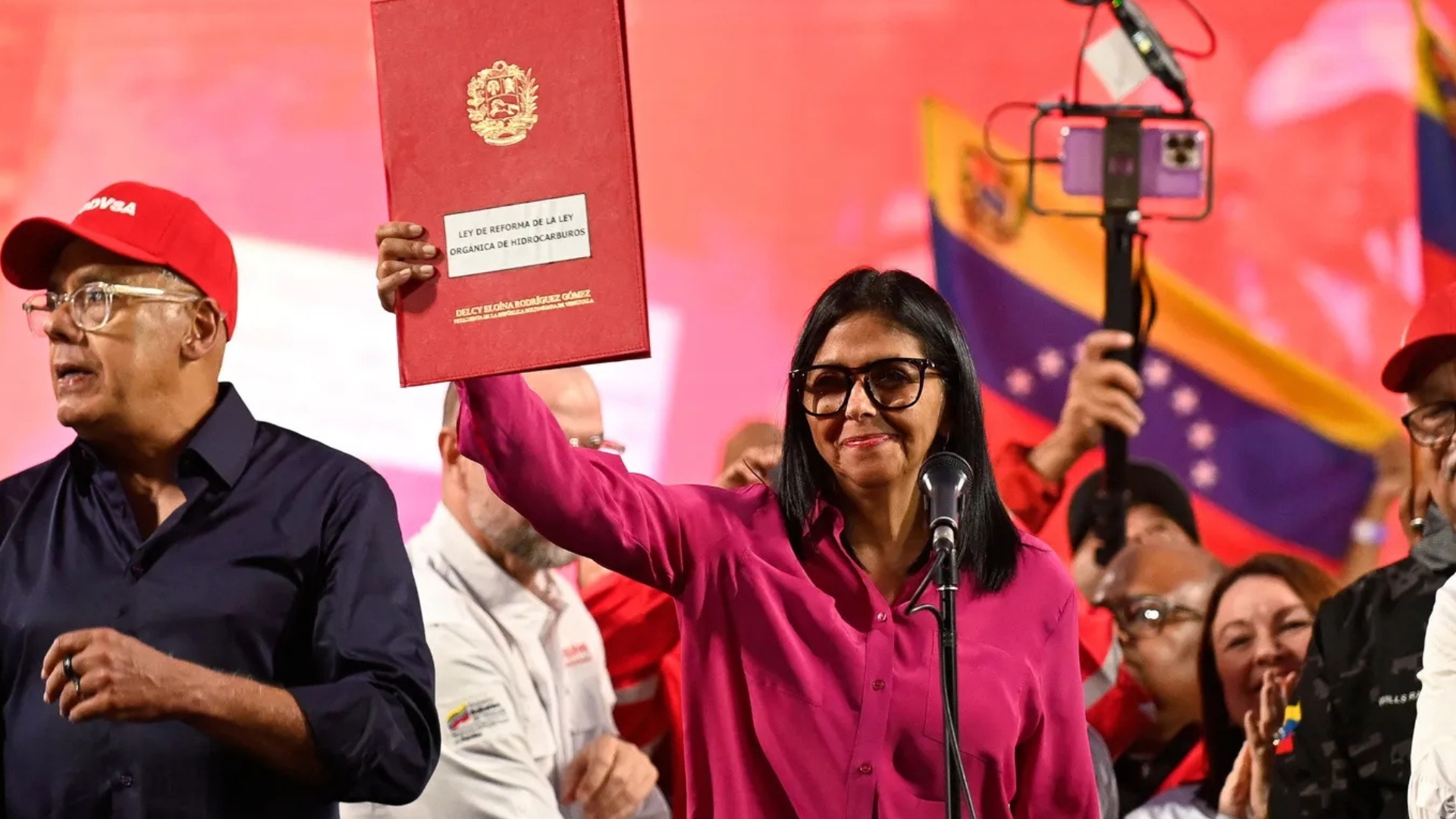
The two countries have reached ‌a deal to export up ⁠to $2bn worth of Venezuelan crude to the US, and on Thursday, Rodriguez signed into law a reform bill that will pave the way for increased privatisation.

The legislation gives private firms control over the sale and production of Venezuelan oil, and requires legal disputes to be resolved outside of Venezuelan courts, a change long sought by foreign companies, which argue that the judicial system in the country is dominated by the governing socialist party.

The bill would also cap royalties collected by the government at 30 percent.

The Trump administration said on the same day that it would loosen some sanctions on Venezuela’s oil sector, and allow limited transactions by the country’s government and the state oil company PDVSA that were necessary for a laundry list of export-related activities involving an “established US entity”.

Trump has announced that he ordered the reopening of Venezuela’s commercial airspace and “informed” Rodriguez that US oil companies would soon arrive to explore potential projects in the country.

On Friday, Rodriguez announced an amnesty bill aimed at releasing hundreds of prisoners in the country, and said she would shut down El Helicoide, an infamous secret service prison in Caracas, to be replaced with a sports and cultural centre.

US judge orders release of five-year-old and father from ICE detention

A federal judge in the United States has ordered the release of a five-year-old boy and his father from a facility in Texas amid an outcry over their detention during an immigration raid in Minnesota.

In a decision on Saturday, US District Judge Fred Biery ruled Liam Conejo Ramos’s detention as illegal, while also condemning “the perfidious lust for unbridled power” and “the imposition of cruelty” by “some among us”.

Recommended Stories

list of 4 itemsend of list

The scathing opinion came as photos of the boy – clad in a blue bunny hat and Spider-Man backpack as Immigration and Customs Enforcement (ICE) officers took him away in a suburb of the city of Minneapolis – became a symbol of the immigration crackdown launched by President Donald Trump’s administration.

“The case has its genesis in the ill-conceived and incompetently-implemented government pursuit of daily deportation quotas, apparently even if it requires traumatizing children,” Biery wrote in his ruling.

“Ultimately, Petitioners may, because of ‌the arcane United States immigration system, return to their home country, involuntarily or by self-deportation. But that result should occur through a more orderly ‌and humane policy than currently in place.”

The judge did not specify the deportation quota he was referring to, but Stephen Miller, the White House chief of staff for policy, has previously said there was a target of 3,000 immigration arrests a day.

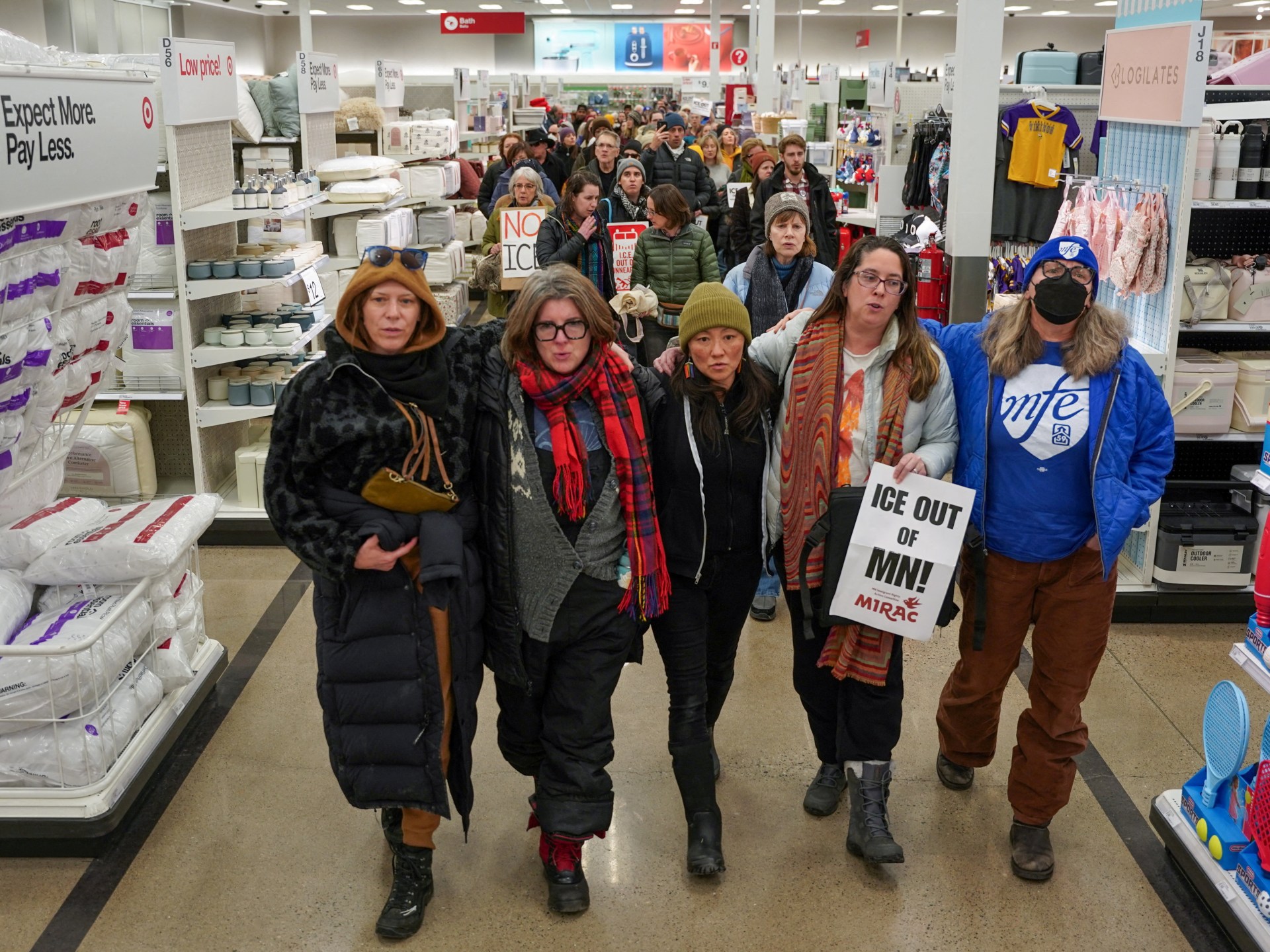
The ongoing crackdown in the state of Minnesota is the largest federal immigration enforcement operation ever carried out, according to federal officials, with some 3,000 agents deployed. The surge has prompted daily clashes between activists and immigration officers, and led to the killings of two American citizens by federal agents.

The deadly operation has sparked nationwide protests as well as mass mobilisation efforts and demonstrations in Minnesota.

According to the Columbia Heights Public School District in Minneapolis, Liam was one of at least four students detained by immigration officials in the suburb this month.

Columbia Heights Public Schools Superintendent Zena Stenvik said ICE agents took the child from a running car in the family’s driveway on January 20, and told him to knock on the door of his home, a tactic that she said amounted to using him as “bait” for other family members.

The government has denied that account, with Department of Homeland Security (DHS) spokesperson Tricia McLaughlin claiming that an ICE officer remained with Liam “for the child’s safety” while other officers apprehended his father.

Vice President JD Vance, who has vigorously defended ICE’s tactics in Minnesota, told a news conference that although such arrests were “traumatic” for children, “just because you’re a parent, doesn’t mean that you get complete immunity from law enforcement”.

The Trump administration has said that Conejo Arias arrived in the US illegally in December 2024 from Ecuador, but the family’s lawyer says they have an active asylum claim that allows them to remain in the country legally.

Following their detention, the boy and his father were sent to a facility in Dilley in Texas, where advocacy groups and politicians have reported deplorable conditions, including illnesses, malnourishment and a fast-growing number of detained children.

Texas Representatives Joaquin Castro and Jasmine Crockett visited the site earlier this week. Liam slept throughout the 30-minute visit, Castro said, and his father reported that he was “depressed and sad”.

Biery’s ruling on Saturday included a photo of the boy, as well as several Bible quotes: “Jesus said, ‘Let the little children come to me, and do not hinder them, for the kingdom of heaven belongs to such as these’,” and “Jesus wept”.

The episode, Biery wrote, made apparent “the government’s ignorance of an American historical document called the Declaration of Independence”. Biery drew a comparison between Trump’s administration and the wrongdoings that then-author, future President Thomas Jefferson, mounted against England’s King George, including sending “Swarms of Officers to harass our People” and creating “domestic Insurrection”.

There was no immediate comment from the Department of Justice and DHS.

The Law Firm of Jennifer Scarborough, which is representing Liam and his father, Adrian Conejo Arias, said in a statement that the pair will soon be able to reunite with the rest of their family.

“We are pleased that the family will now be able to focus on being together and finding some peace after this traumatic ordeal,” the statement said.

Minnesota officials have been calling on the Trump administration to end its immigration ‍crackdown in the state. But a federal judge on Saturday denied a request from Minnesota Attorney General Keith Ellison and other officials to issue a preliminary injunction that would have halted the federal operation.

Russia-Ukraine war: List of key events, day 1,438

Here is where things stand on Sunday, February 1:

Fighting

  • Russian attacks on Ukraine killed one person and wounded seven others in the Dnipropetrovsk region, according to the country’s emergency service. High-rise buildings, homes, shops and cafes were also damaged.
  • Another person was wounded by shelling in the Zaporizhia region, the service said, with a blast also destroying three residential buildings and 12 homes.
  • In the Donetsk region, at least two people were killed, and five more were wounded, in 13 separate Russian attacks across multiple districts, according to Governor Vadym Filashkin.
  • A total of 172 people, including 35 children, were evacuated from the front line, Filashkin said.
  • Russian strikes hit state railway infrastructure in the Zaporizhia and Dnipro regions, a tactic Ukrainian President Volodymyr Zelenskyy said was intended to “cut our cities off from one another”.
  • In total, 303 combat clashes took place throughout Saturday, Ukraine’s General Staff wrote on Telegram, tallying 38 air strikes, 119 guided bombs, 2,510 kamikaze drones and 2,437 attacks on settlements and troops.
  • The Russian Ministry of Defence said on Saturday that its troops captured ⁠the villages ​of Petrivka, ‍in Ukraine’s southeastern ‍Zaporizhzhia region, and ⁠Toretske, in the eastern ​Donetsk ‌region. Al Jazeera could not verify the claim.
  • Russia’s TASS state news agency also claimed that Russian forces had taken control of at least 24 Ukrainian settlements since the start of the year, the majority of which were in the Zaporizhia region.
  • Two people were wounded in a Ukrainian drone attack on a car in Russia’s Belgorod region, TASS reported.

Energy

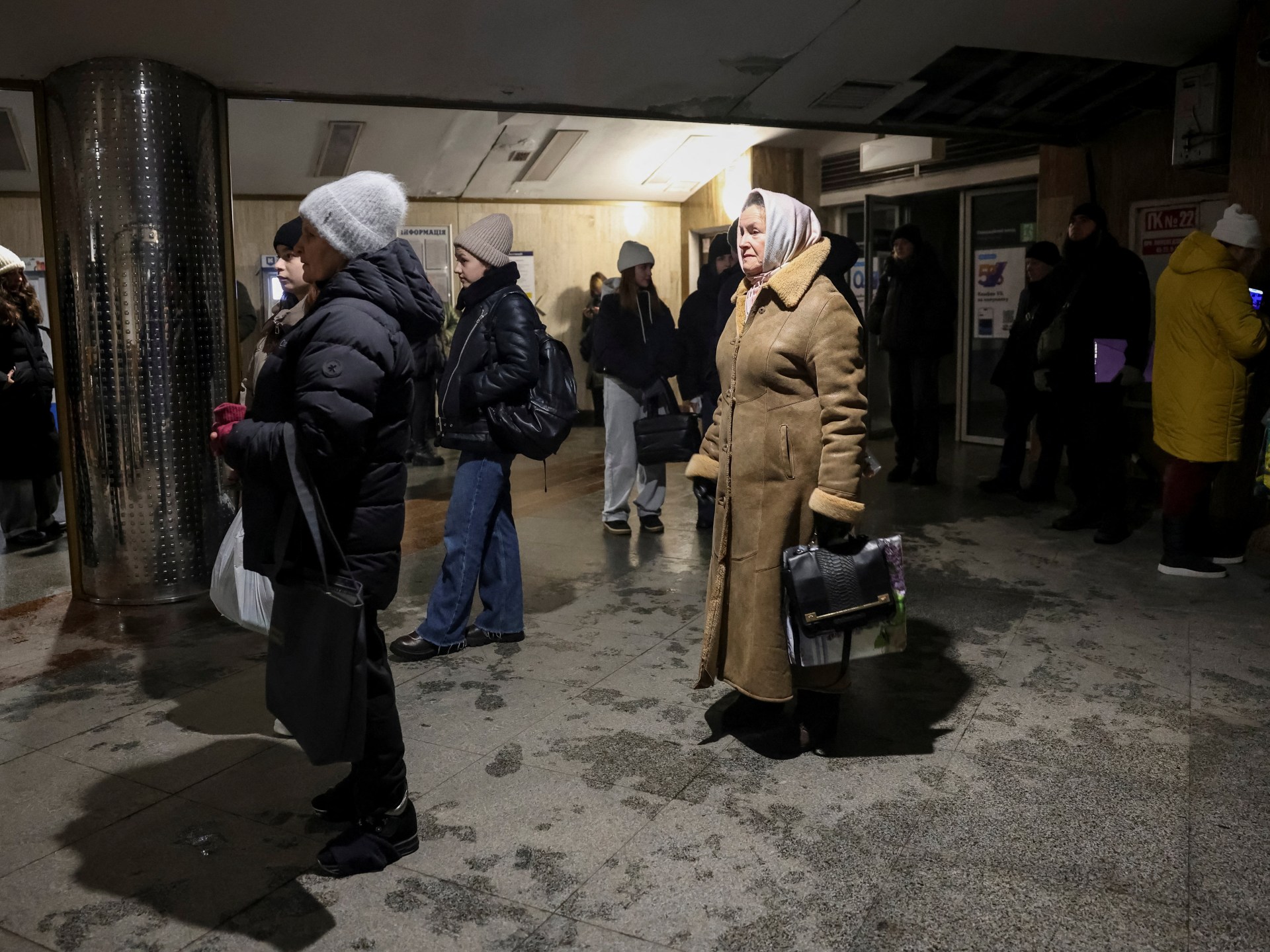
  • Parts of Ukraine, including at least 3,500 buildings in Kyiv, faced a blackout throughout Saturday after a failure on interconnection lines with Moldova, officials reported.
  • The Kyiv metro closed down, forcing the evacuation of hundreds of people, along with the capital’s water and electricity supplies, Mayor Vitali Klitschko wrote on Telegram.
  • Although the capital’s water supplies had returned by around 10:30pm local time (20:30 GMT), energy workers were continuing to restore heat to roughly 2,600 houses, Klitschko said.
  • Ukraine is investigating the stoppage, but “as of now, there is no confirmation of external interference or a cyberattack”, the president said. “Most indications point to weather: ice buildup on the lines and automatic shutdowns.”
  • At the request of the Ukrainian Ministry of Defence, SpaceX has temporarily restricted operations of its Starlink systems in Ukraine to prevent Russian drone attacks, Serhii Beskrestnov, technology adviser to the defence minister, announced on Facebook.
  • “I apologise once again to those who have been temporarily affected by the measures taken, but for the security of the country, these are now very important and necessary actions,” Beskrestnov wrote.

Politics and diplomacy

  • United States special envoy Steve Witkoff said that he had “productive and constructive meetings” with Russian special envoy Kirill Dmitriev in Florida.
  • “We are encouraged by this meeting that Russia is working toward securing peace in Ukraine,” Witkoff said, adding that he was “grateful” for US President Donald Trump’s “critical leadership in seeking a durable and lasting peace”.
  • US Secretary of the Treasury Scott Bessent, Trump’s son-in-law, Jared Kushner, and White House senior adviser Josh Gruenbaum also attended the talks.
  • In his nightly address, Zelenskyy said Ukraine is “in regular contact with the US side” and is “waiting for them to provide specifics on further meetings”, expected to take place next week.
  • “Ukraine is ready to work in all effective formats,” he added. “What matters is the results, and that meetings happen.”
  • Ukrainian Minister of Foreign Affairs Andrii Sybiha spoke with Deputy Prime Minister of Liechtenstein Sabine Monauni, discussing “developments in the peace negotiations and urgent needs of Ukraine’s energy system”, Sybiha wrote on X.
  • “We also paid special attention to further sanctions pressure on Russia and joint international efforts to hold it to account,” Sybiha said.

Trump orders federal agents to stay away from protests in Democrat cities

‍United States President Donald Trump has ordered the ‍Department of Homeland ⁠Security (DHS) to avoid getting involved ​in protests in Democrat-run cities unless they ask for federal help.

The announcement on Saturday followed weeks of protests sparked by a large deployment of Border Patrol and US Immigration and Customs Enforcement (ICE) agents ​to the city of Minneapolis, and the killing of two US citizens by federal agents there.

Recommended Stories

list of 4 itemsend of list

Trump, a Republican, said on his Truth Social platform that he has instructed DHS Secretary Kristi Noem that “under no circumstances are we going to participate” in Democrat-run cities with regard to protests “unless, and until, they ask us for help”.

But ICE and Border Patrol will act aggressively to protect federal buildings, he wrote.

“There will be no spitting in the faces of our Officers, there will be no punching or kicking the headlights of our cars, and there will be no rock or brick throwing at our vehicles, or at our Patriot Warriors. If there is, those people will suffer an equal, or more, consequence,” he said.

“We will not allow our Courthouses, Federal Buildings, or anything else under our protection, to be damaged in any way, shape, or form,” he added.

There was no immediate comment from the DHS or the office of Minnesota Mayor Jacob Frey.

Trump launched the immigration crackdowns last year, targeting Democrat-led states and cities, including Chicago, Los Angeles and Portland, saying the militarised operations were necessary to remove criminals from the US.

The crackdown in Minneapolis, the biggest city in the state of Minnesota, is the largest federal immigration enforcement operation ever carried out, according to federal officials, with some 3,000 agents deployed. The operation began in November, with officials tying it in part to allegations of fraud involving residents of Somali origin.

The surge has pitted city and state officials against the federal government, prompted daily clashes between activists and immigration officers, and led to the killings of Alex Pretti on January 14 and Renee Good on January 7 by federal agents, who said they were reacting to threats. Bystander videos and witness accounts contradict those claims, however.

Thousands of people took to the streets of Minneapolis and other US cities on Friday to demand the withdrawal of federal immigration agents from Minnesota.

Minnesota Attorney General Keith Ellison and others also challenged the immigration enforcement surge in the state, arguing that DHS is violating constitutional protections.

But a federal judge has said she will not halt enforcement operations as the lawsuit proceeds. Department of Justice lawyers have called the lawsuit “legally frivolous”.

Al Jazeera’s Manuel Rapalo, reporting from Minnesota, said Trump’s latest announcement signals a softer tone from the White House on the immigration crackdown.

He noted that it followed the Trump administration’s decision to replace the senior Border Patrol commander, Greg Bovino, who had been leading the crackdown in Minneapolis, with border tsar Tom Homan.

The top official said on Thursday that federal agents would focus on targeted operations in Minneapolis, shifting away from broad street sweeps that have drawn outrage, and that he would reduce the number of agents deployed to the city if he received “cooperation” from state and local leaders.

“All of this signals more cooperation between local authorities and federal officials, which has created a little bit of a sense of optimism here in the city that tensions may be beginning to calm down,” said Rapalo.

How much control will the US have over Venezuela’s oil?

Caracas says it is opening up the sector to private players.

It all started with a direct US attack on Venezuela earlier this month.

Back then, US President Donald Trump made it clear that he was only interested in the country’s substantial oil reserves.

On Thursday, the government in Caracas announced a massive overhaul of the petroleum sector.

Venezuela’s interim president has signed a law easing state control and opening the door for private firms to invest in the country.

For many, it paves the way for US oil giants to return to Venezuela with significant investments.

But who will stand to gain from the changes, Venezuela or the United States? Or both?

Presenter: Adrian Finighan

Guests

Elias Ferrer – founder and director of Orinoco Research

Andrew Lipow – president of Lipow Oil Associates

Iranian official says progress made on talks as US-Iran tensions persist

Iran’s top security official has said progress is being made towards negotiations with the United States, even as the Iranian foreign minister again accused Washington of raising tensions between the two countries.

Ali Larijani, the head of Iran’s Supreme National Security Council, said in a social media post on Saturday that, “unlike the artificial media war atmosphere, the formation of a structure for negotiations is progressing”.

Recommended Stories

list of 3 itemsend of list

Larijani’s post did not provide further details about the purported framework for talks.

Tensions have been rising between Iran and the US for weeks amid US President Donald Trump’s repeated threats to attack the country over a crackdown on recent antigovernment protests, and his push to curtail the Iranian nuclear programme.

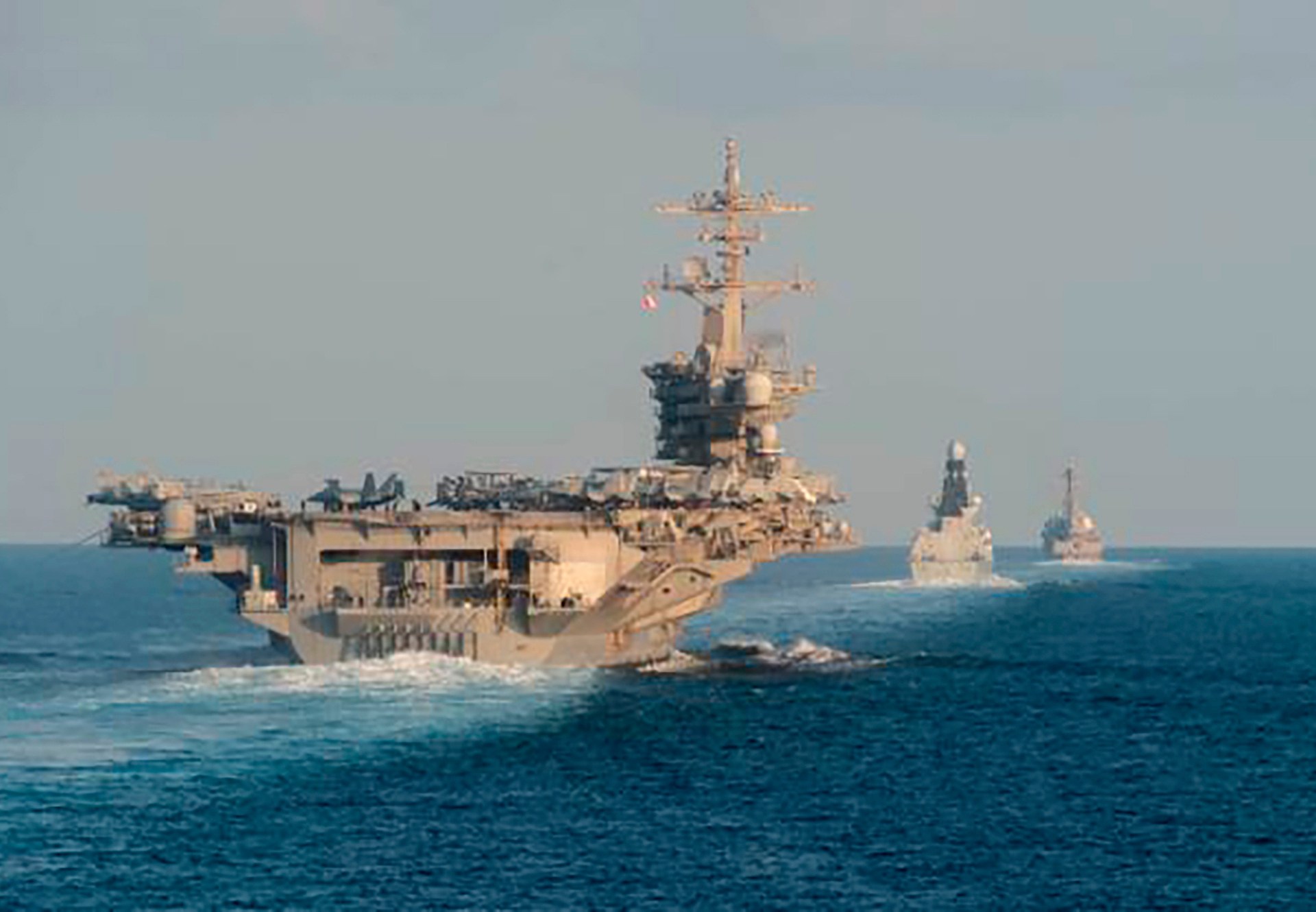
The Trump administration has also deployed a naval “armada” to Iran, led by the USS Abraham Lincoln aircraft carrier, escalating fears of a possible military confrontation.

Senior Iranian leaders have said they are open to negotiations with Washington, but only once Trump stops threatening to attack the country.

Earlier this week, Trump said the US vessels being sent to Iran were ready to use “violence, if necessary” if Iran refused to sit down for talks on its nuclear programme.

US Central Command (CENTCOM) also warned Iran’s Islamic Revolutionary Guard Corps (IRGC) on Friday over its plans to hold a two-day naval exercise in the Strait of Hormuz, a Gulf maritime passage that is critical to global trade.

“Any unsafe and unprofessional behavior near US forces, regional partners or commercial vessels increases risks of collision, escalation, and destabilization,” CENTCOM said in a statement.

Iranian Minister of Foreign Affairs Abbas Araghchi hit back on Saturday, saying in a social media post that the US military, operating off Iran’s shores, “is now attempting to dictate how our Powerful Armed Forces should conduct target practice on their own turf”.

“CENTCOM is also requesting ‘professionalism’ from a national military the U.S. Government has listed as a ‘terrorist organization’, all while recognizing the right of that same ‘terrorist organization’ to conduct military drills!” Araghchi wrote.

The US designated the IRGC, an elite branch of the Iranian military, as a “terrorist” organisation in 2019, during Trump’s first term in office.

Araghchi added, “The presence of outside forces in our region has always caused the exact opposite of what is declared: promoting escalation instead of de-escalation”.

Reporting from the Iranian capital, Tehran, Al Jazeera’s Tohid Asadi said the situation remains “quite fragile and delicate” amid the US military buildup in the region.

Still, he said that Saturday’s statement by Larijani, the Iranian security official, about progress being made on efforts to hold negotiations was a “positive” sign.

“Diplomatic [efforts] are [on]going,” Asadi said, noting that senior Iranian officials have held talks with allies in recent days amid a push to prevent a confrontation between Washington and Tehran.

The Qatari Ministry of Foreign Affairs said Prime Minister Sheikh Mohammed bin Abdulrahman bin Jassim Al Thani met with Larajani in Tehran on Saturday to discuss “efforts to de-escalate tensions in the region”.

Sheikh Mohammed reiterated Qatar’s “support for all efforts aimed at reducing tensions and achieving peaceful solutions that enhance security and stability in the region”, the ministry said of the talks in a statement.