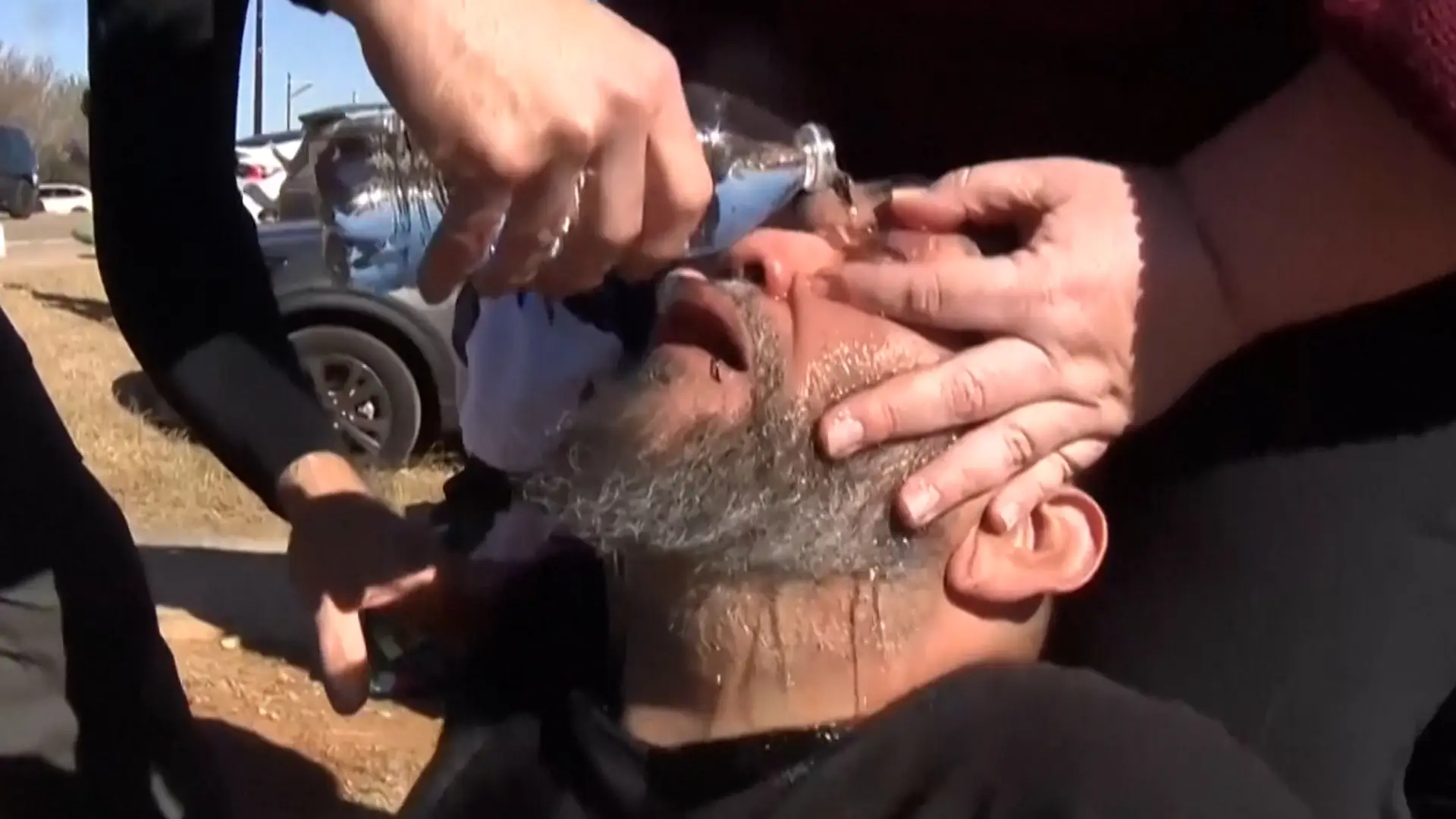
Anti-ICE protesters tear-gassed outside Texas detention centre
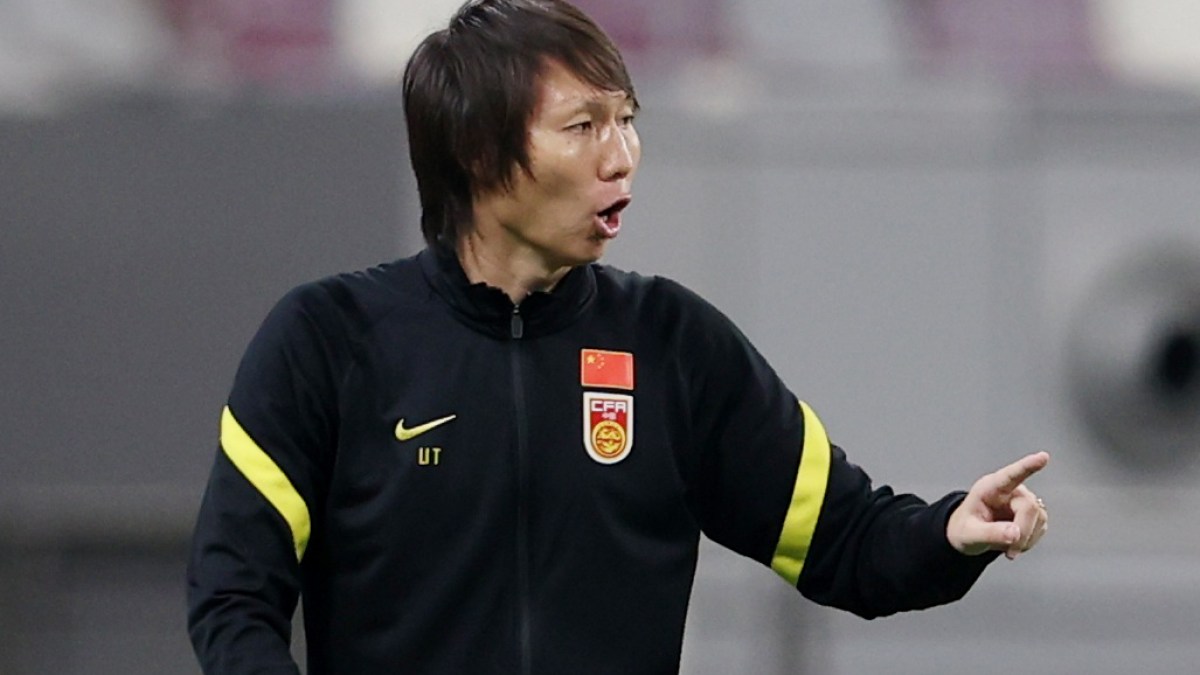
China’s football association has issued lifetime bans to 73 people, including former national team head coach Li Tie, and punished 13 top professional clubs for match-fixing and corruption.
Under President Xi Jinping, an anticorruption crackdown has swept through Chinese football in recent years, exposing the rotten state of the professional game.
list of 4 itemsend of list
Several top officials in the Chinese Football Association (CFA) have been brought down, while dozens of players have been banned for match-fixing and gambling.
A statement on Thursday evening did not specify when the most recently announced match-fixing took place, or how it worked.
The punishments were made after a “systematic review” and were needed “to enforce industry discipline, purify the football environment, and maintain fair competition”, the CFA wrote on its official social media account on Thursday.
Li, a former Everton player who led the national team from 2019 to 2021, is already serving a 20-year prison sentence for bribery, after being sentenced in December 2024.
He is now banned from all football activities for life, alongside 72 others, the CFA statement said.
Among them is Chen Xuyuan, former chairman of the CFA, who is already serving life in prison for accepting bribes worth $11m.
The football clubs that will be punished are similarly high-profile.
Of the 16 clubs that competed in the 2025 season in the country’s top Chinese Super League (CSL), 11 will have points docked and be fined.
After relegations, this means that when the 2026 CSL season starts in March, nine teams will start with negative points totals.
Tianjin Jinmen Tiger and last season’s runners-up Shanghai Shenhua face the stiffest sanctions, with 10-point reductions and one-million-yuan ($144,000) fines.
Shanghai Port, champions for the last three seasons, will face a five-point reduction and a 400,000-yuan fine, the same punishment given to Beijing Guoan.
The CFA did not detail the club’s specific infractions, saying only that they related to “match-fixing, gambling, and bribery”, with their punishments “based on the amount, circumstances, nature, and social impact of the improper transactions involved”.
“We will always maintain a zero-tolerance deterrent and high-pressure punitive force, and investigate and deal with any violation of discipline or regulations in football as soon as they are discovered, without any leniency or tolerance,” the CFA said.
Many of China’s professional teams are already in financial trouble.
Guangzhou FC, the most successful club in the CSL’s history, folded in 2025 after it failed to settle its debts in time for the new season.
President Xi is a football fan who has said he dreams of China hosting and winning the World Cup one day.
China didn’t qualify for the World Cup in Canada, Mexico and the United States this summer.
When Deuce Bigalow: Male Gigolo was released in 1999, the renowned film critic Roger Ebert wrote, “It’s the kind of picture those View n’ Brew theaters were made for, as long as you don’t view.” When the sequel Deuce Bigalow: European Gigolo came out in 2005, Ebert was harsher still, describing it as “aggressively bad, as if it wants to cause suffering to the audience.”
Playing the title role of a tropical fish tank-cleaner-turned-gigolo was Rob Schneider. For the sequel, Schneider won the Golden Raspberry Award for “Worst Actor”, and in 2010, he was nominated for “Worst Actor of the Decade”.
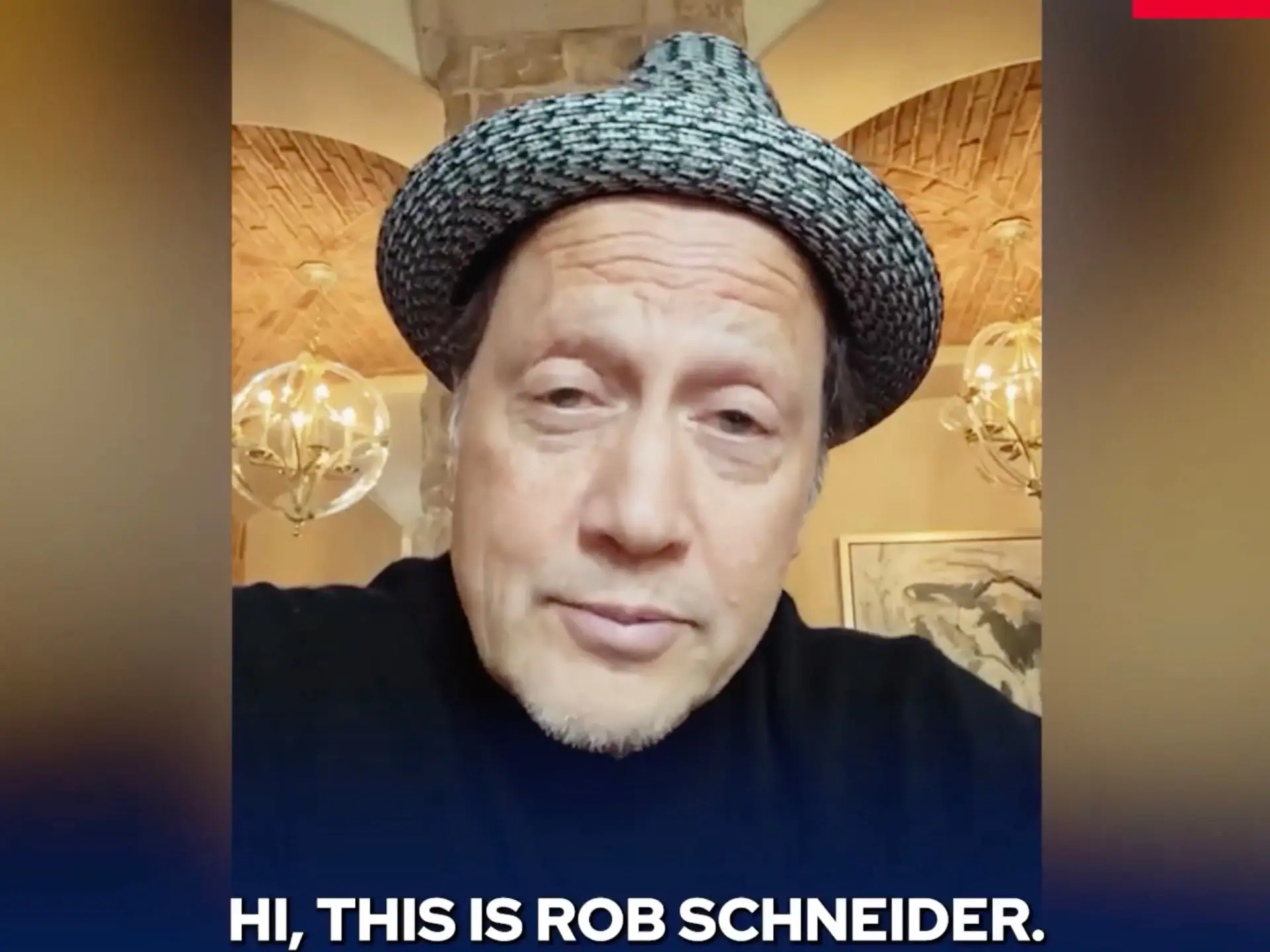
Some 15 years later, Schneider might have been expected to resurface in an even worse third instalment of the Bigalow franchise, or in another lowbrow Hollywood comedy. Instead, he appeared in a far more unlikely setting: a campaign video endorsing Hungary’s far-right Prime Minister, Viktor Orban.
Schneider’s entry into local politics may have surprised Hungarian fans of Deuce Bigalow, but it did not come out of nowhere.
Over the past few years, Schneider has worked to establish himself as a leading conservative voice, railing against Hollywood’s supposed liberal bias. A frequent guest on Fox News, he has spoken publicly against diversity, equity, and inclusion policies and is vocally anti-trans and anti-vaccine. In a recent opinion piece, he claimed, “Since the rise of the ‘woke’ movement, and its total domination of the creative industries, anyone with a conservative point of view has been punished and even blacklisted.”
The video also includes endorsements from other right-wing figures, including Italian Prime Minister Giorgia Meloni, Israeli Prime Minister Benjamin Netanyahu, former Polish Prime Minister Mateusz Morawiecki, Argentinian President Javier Milei, Jean-Marie Le Pen of France’s National Rally, Italian Deputy Prime Minister and Lega leader Matteo Salvini, and German parliamentarian and Alternative for Germany leader Alice Weidel.
Why would this global cohort of far-right figures care about the political future of Hungary? The answer lies in the central role Hungary has played as an incubator for the global rise of the far right.
I saw the rise of the far right in the central European country unfold firsthand. Within a week of moving to Budapest in 2008 to pursue my graduate studies at Central European University (CEU), I was attacked by neo-Nazis. In the months that followed, amid a severe economic crisis, I encountered several neo-Nazi rallies and gatherings.
There was a sharp increase in violence targeting the country’s Roma population. In February 2009, a Roma man and his five-year-old son were shot dead in a village outside Budapest while fleeing their home, which had been set on fire in an arson attack. In September of that year, a Roma woman and her 13-year-old daughter were fired upon by armed men who had broken into their house in a village near the Ukrainian border. The mother was killed, while her daughter was admitted to the intensive care unit.
Hungary also saw a rise in anti-Semitism. In June 2009, vandals desecrated a Holocaust memorial with pigs’ feet. The memorial commemorates Jewish victims who were stripped, shot, and then thrown into the Danube River by the fascist militia Arrow Cross Party during the second world war.
Against this backdrop of rising racist violence and far-right mobilisation, Viktor Orban, having previously been in office between 1998 and 2002, returned as prime minister in 2010. He was then re-elected in 2014, 2018, and 2022, consolidating his hold on power. He used his electoral mandate to systematically take control of state institutions and suppress opposition.
Under Orban, press freedom has witnessed a significant downturn. According to Reporters Without Borders, oligarchs close to Orban’s Fidesz party have bought out media outlets and turned them into government mouthpieces. Currently, an estimated 80 percent of Hungary’s media is concentrated in the hands of Orban-friendly figures. Regulatory bodies have been weaponised to shut down independent media outlets. The government and pro-government media regularly accuse critical outlets of spreading disinformation and being financed by Hungarian-born American financier George Soros, the founder of the Open Society Foundation.
The institutions and laws of the state have also been weaponised to clamp down on educational bodies, civil society groups, and cultural institutions that Orban views as a hindrance to the country’s authoritarian far-right tilt. In 2018, the Soros-affiliated CEU, seen by Orban as a liberal bulwark, was forced to shut down most of its operations in Budapest and relocate to Vienna after the Orban government refused to sign an agreement that would allow it to operate as a degree-awarding university in Hungary.
In 2019, the Hungarian parliament passed a bill that allowed the Orban government to take control of the 200-year-old Hungarian Academy of Sciences. This was the first step towards 15 scientific institutes being incorporated into the Eotvos Lorand Research Network (ELKH), which is led by a board appointed by Orban. While the formal justification for this move was to “boost the funding and efficiency of Hungary’s underperforming research and development sector”, critics have maintained that this was yet another way for the government to suppress opposition.
According to civil society groups, artistic freedom and cultural institutions have also been under attack. Orban has used his “cultural approach” to advance his anti-democratic agenda, well aware that cultural and artistic spaces can play a “role in advancing pluralistic political discourse”. This has involved centralised control over the National Culture Fund and the National Cultural Council, as well as the appointment of Fidesz-friendly administrators at the helm of the Petofi Museum of Literature and the National Theatre. Notably, before his dismissal, the artistic director of the National Theatre was publicly rebuked by the Orban government “for his political views and his homosexuality”.
More recently, the Orban government established the “Sovereignty Protection Office” (SPO) to investigate critical journalists and civil society groups, under the pretext of combating threats to national sovereignty. Justifying the establishment of the SPO, Fidesz parliamentary group leader Mate Kocsis said, “We want to nettle left-wing journalists, fake civilians, and dollar politicians.”
As the Orban government’s efforts to consolidate right-wing control continue at home, elsewhere around the world, its tactics are being replicated. Its successes in Hungary have served as an inspiration for other far-right autocrats who see Orban as a first mover in establishing a conservative utopia, with far-right hegemony over all aspects of political, social, cultural, and economic life.
The Orban leadership takes this role as an inspiration and far-right instigator for others seriously. Well-funded Hungarian think tanks like the Mathias Corvinus Collegium (MCC) are making moves in Brussels to bring the Orban-brand of xenophobia, transphobia, and climate scepticism to the political mainstream in the European Union. MCC claims that it is building an alternative conservative agenda and political culture that challenges the “centrist outlook on public life”.
This agenda is particularly evident in a conference organised by MCC Brussels titled “Battle for the Soul of Europe.” The event brought together right-wing politicians, academics, public intellectuals, literary figures, and journalists from across Europe, alongside prominent American conservative thinkers and commentators.
Hungary also eagerly plays host to conservatives from around the world as a way of “spreading the knowledge”. Through visiting fellowships, book talks, and public panel discussions, institutions like MCC, the Hungary Foundation, and the Danube Institute in Budapest are nurturing a globally connected intelligentsia working towards crafting a conservative future.
Indeed, today, Hungary has become an important pit stop for world-touring conservative figures, from Nigel Biggar to the likes of Jordan Peterson and Tucker Carlson. In 2026, the Conservative Political Action Conference (CPAC) will return to Hungary for a fifth time.
The announcement of the 2026 edition of CPAC Hungary declares proudly, “We were Trump before Trump after all, and at CPAC Hungary, the key phrase: ‘No migration! No gender! No war!’ was first spoken. This has become official policy in the United States.”
As the authors of World of the Right: Radical Conservatism and Global Order argue, the global nature of the far right is well established. Nonetheless, within this interconnected movement, Orban’s Hungary has played a defining role. Recent polls show that, for the first time since 2010, Orban will face a tough challenge from the opposition. Orban’s right-wing friends around the world know this, and they are coming to the rescue of the first mover in this global tilt to the right.
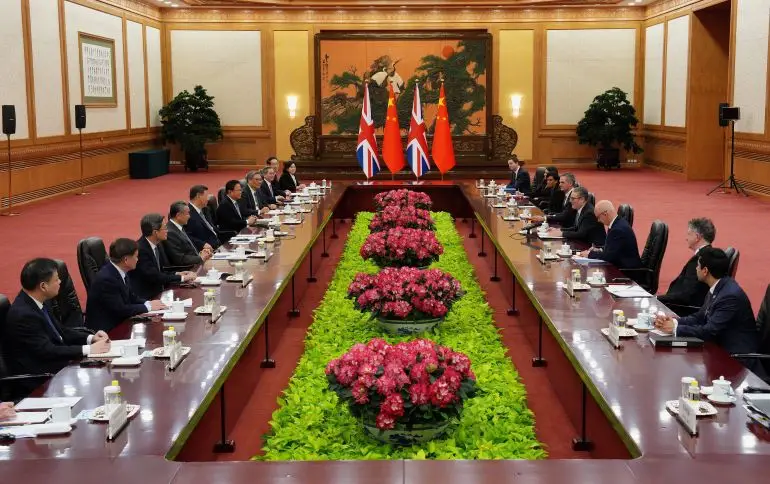
United Kingdom Prime Minister Keir Starmer is on a three-day state visit to China as he seeks to deepen economic and security ties with the world’s second-largest economy after years of acrimonious relations.
This is the first trip by a UK prime minister to China since Theresa May met Chinese President Xi Jinping in 2018.
list of 4 itemsend of list
Here’s what you need to know about the trip aimed at mending ties at a time of global uncertainties:
The UK PM met Xi and Chinese Premier Li Qiang in Beijing on Thursday. He will next head to Shanghai to meet British and Chinese business leaders, according to his official itinerary.
After their meeting on Thursday, Starmer and Xi called for a “comprehensive strategic partnership” between the two nations.
“China-UK relations experienced setbacks in previous years, which were not in the interests of either country,” Xi said. “In the current complex and ever-changing international situation … China and the UK need to strengthen dialogue and cooperation to maintain world peace and stability.”
In his opening remarks, Starmer told Xi the two nations should “work together on issues like climate change, global stability during challenging times”.
The prime minister is accompanied by a delegation of nearly 60 representatives of businesses and cultural organisations, including banking conglomerate HSBC, pharmaceutical giant GSK, carmaker Jaguar Land Rover and the UK’s National Theatre.
Starmer told Bloomberg there will be “significant opportunities” for UK businesses in China in an interview this week in the run-up to his trip.
His trip is also expected to mark a reset in UK-China relations, which have been strained in recent years. Starmer underlined his intentions during his meeting with Xi on Thursday.
“China is a vital player on the global stage, and it’s vital that we build a more sophisticated relationship where we can identify opportunities to collaborate, but of course, also allow a meaningful dialogue on areas where we disagree,” Starmer told Xi, according to the Reuters news agency.

Starmer has framed his trip to China as a pragmatic move despite ongoing concerns back home about Beijing’s human rights record and potential national security threat.
“Like it or not, China matters for the UK,” Starmer said in advance of his trip to Beijing.
“As one of the world’s biggest economic players, a strategic and consistent relationship with them is firmly in our national interest. That does not mean turning a blind eye to the challenges they pose – but engaging even where we disagree,” he said.
China has rejected the allegations of human rights violations in parts of the country.
While few details have been released yet, Jing Gu, a political economist research fellow at the UK’s Institute of Development Studies, said reviving economic ties would require expanded “market access, predictable regulation and fair treatment of UK firms” alongside clear “guardrails”.
“This is not a question of being ‘pro-China’ or ‘anti-China’,” she said in a statement.
China offers a potential economic lifeline to the UK, whose economy has struggled in the decade since it embarked on its departure from the European Union in 2016.
A report by the nonpartisan National Bureau of Economic Research (NBER) in the United States estimated last year that Brexit reduced UK gross domestic product (GDP) by 6 to 8 percent, with the impact accumulating gradually over time. Investment is also down 12 to 18 percent, according to NBER estimates, and employment is down 3 to 4 percent.
The UK’s GDP is estimated to grow 1.4 percent in 2026, according to Goldman Sachs, as it faces new economic challenges from US President Donald Trump’s decisions and announcements.
The UK was not exempt from Trump’s tariff war despite its decades-long “special relationship” with the US. As a NATO member, the UK has also watched with alarm as Trump recently threatened to annex Greenland and impose up to 25 percent tariffs on any country that opposed him.
Starmer is not the only US ally looking to diversify economic ties. His trip to China follows in the footsteps of French President Emmanuel Macron, Australian Prime Minister Anthony Albanese, South Korean President Lee Jae Myung, Finnish Prime Minister Petteri Orpo and Canadian Prime Minister Mark Carney.
The UK has longstanding concerns with China’s human rights record, but its relationship with Beijing took a turn for the worse after mass antigovernment protests swept Hong Kong, a former British colony, in 2019.
The UK was alarmed by the political crackdown that followed the 2019 protests and Beijing’s decision to impose legislation in 2020 that criminalised “secession, subversion, terrorist activities, and collusion with a foreign country or with external elements to endanger national security”.
In the aftermath, the UK opened a special immigration scheme for the citizens of Hong Kong born before the city’s 1997 return to Chinese sovereignty. British officials have continued to criticise Hong Kong’s national security trials, including the prosecution of pro-democracy businessman Jimmy Lai, who is a UK citizen.
Allegations of Chinese spying in the UK and China’s support for Russia in the Ukraine war have also frayed the ties.
Steve Tsang, director of the SOAS China Institute in London, told Al Jazeera that he did not expect any concessions in this area during Starmer’s visit. “Beijing will work to support Starmer to present the visit as a success, but it will not make any concession in areas that matter to China, such as human rights,” he said.
Concerns about Chinese spying have been a front-page issue in the UK over the past year, with the head of the domestic intelligence agency MI5 recently saying “Chinese state actors” pose a national security threat “every day”.
Despite these worries, Starmer’s government this month approved Beijing’s plan to open a “mega embassy” in London that critics say could become a hub for espionage in Europe.
The embassy’s approval also follows the collapse of a legal case against two British men charged with spying for China. The decision by prosecutors to withdraw charges at the eleventh hour remains highly controversial in the UK.
China has denied the spying claims, with its Ministry of Foreign Affairs calling them “unfounded” accusations.
Starmer’s trip, however, emphasised areas of potential security cooperation between China and the UK.
Following his meeting with Xi, the Prime Minister’s Office announced that law enforcement would cooperate with Chinese authorities to stem the flow of synthetic opioids into the UK and cut off the supply of small boat engines to criminal gangs.
Engine-powered boats are used to smuggle people across the English Channel, according to Starmer’s office.
The agreement will include “intelligence sharing to identify smugglers’ supply routes and direct engagement with Chinese manufacturers to prevent legitimate businesses being exploited by organised crime”, his office said.
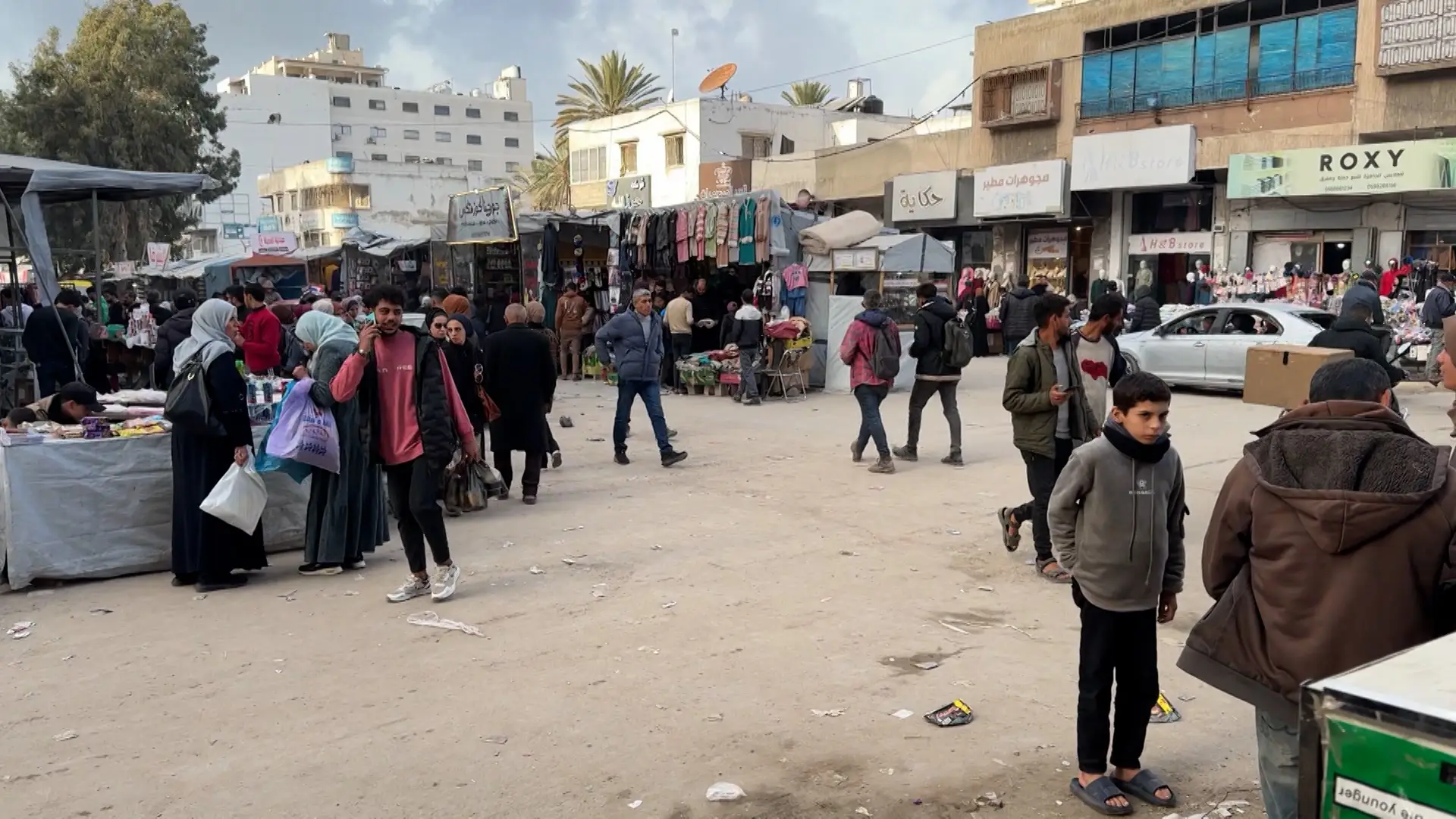
Palestinians in Gaza are waiting with uncertainty for the partial Israeli reopening of Gaza’s Rafah border crossing, a vital link between the Strip and the outside world. Al Jazeera’s Hani Mahmoud has been speaking to those hoping to be reunited with family members after two years of genocide.

Israeli forces have detained dozens of people after storming several areas across the occupied West Bank, including the home of a Palestinian man who was shot and killed by Israeli forces in Bethlehem.
The latest raids early on Thursday come as Israeli settlers stormed Joseph’s Tomb in Nablus, a gravesite believed to be the burial place of Joseph, the father of Jesus, according to Al Jazeera Arabic.
list of 3 itemsend of list
At about dawn, the Israeli army deployed several military vehicles and soldiers as they targeted the towns of Attil and Deir al-Ghusun north of Tulkarem, the Palestinian news agency Wafa reported, quoting residents from the area.
In ad-Dhahiriya village on the outskirts of Hebron on Wednesday, residents buried a Palestinian youth, who was killed the previous night in a raid by the Israeli security forces.
Israel’s military crackdown across the occupied West Bank has escalated to the highest levels in decades since October 2023, as the army and settlers have intensified their attacks on Palestinians, with Israel expanding its settlements in the territory, which are illegal under international law.
Settlers have been emboldened by the far-right government and have been rampaging across Palestinian lands with impunity, often with the military’s backing, killing and injuring civilians and destroying their property. The United Nations says attacks against Palestinians and their property in the occupied West Bank have reached unprecedented levels.
Meanwhile, some Israeli troops were deployed to Nablus to secure the Christian holy site, Joseph’s Tomb, after it was reportedly stormed by Israeli settlers.
According to Al Jazeera Arabic, members of the Knesset and settler leaders were among those involved in the storming of the burial ground until early on Thursday.
In recent days, Israeli settlers were also accused of arson in three villages in Masafer Yatta.
In one of the latest raids on Thursday, several young men were detained for interrogation as Israeli forces searched dozens of homes in both towns of Attil and Deir al-Ghusun, Palestinian sources told Wafa.
Among those detained in Attil was a young man who was previously injured by Israeli gunfire near the Tulkarem refugee camp last December.
The Tulkarem governorate, including the Tulkarem and Nur Shams refugee camps, has been subjected to Israeli military operations for the last 368 days, according to Wafa.
Also in Nablus, Mohammad Azem, head of Sebastia municipality, told Wafa that Israeli forces demolished a Palestinian-owned factory.
Earlier in the night, the towns of Sa’ir and ash-Shuyukh, northeast of Hebron, were also raided by Israeli forces.
In Sa’ir, the raiding forces targeted the home of Qusay Halaika, who was shot and killed by Israeli forces on Wednesday at Al-Anfaq checkpoint between Jerusalem and Bethlehem. Wafa reported that two of Halaika’s brothers were arrested during the raid.
Sources told Wafa that Halaika was left bleeding on the ground after Israeli authorities shot him multiple times.
Israeli media quoted authorities as saying that Halaika was shot after an attempted stabbing attack.
A short video clip posted on X showed Halaika apparently fending off someone and then running away before he was shot.
Meanwhile, in the Jabal Johar area of the city of Hebron, Israeli forces seized a five-storey residential building belonging to the Rajbi family, forcing residents to leave their property, according to Wafa.
Elsewhere in the occupied territory, Israeli forces withdrew on Wednesday night from the town of Hizma after a two-day siege.
According to witnesses, Israeli forces interrogated more than 100 people and detained at least 13, including a pregnant woman and her husband, before leaving.
Hizma Mayor Nawfan Salah al-Din told Wafa that the Israeli soldiers also seized at least 35 vehicles and motorcycles.