Jose Manuel Albares on Trump’s strategy, NATO, Ukraine, and Spain’s plan for a viable Palestinian state.
Spain’s Foreign Minister Jose Manuel Albares discusses Trump’s new national security strategy and what it means for Europe’s security, NATO and the war in Ukraine.
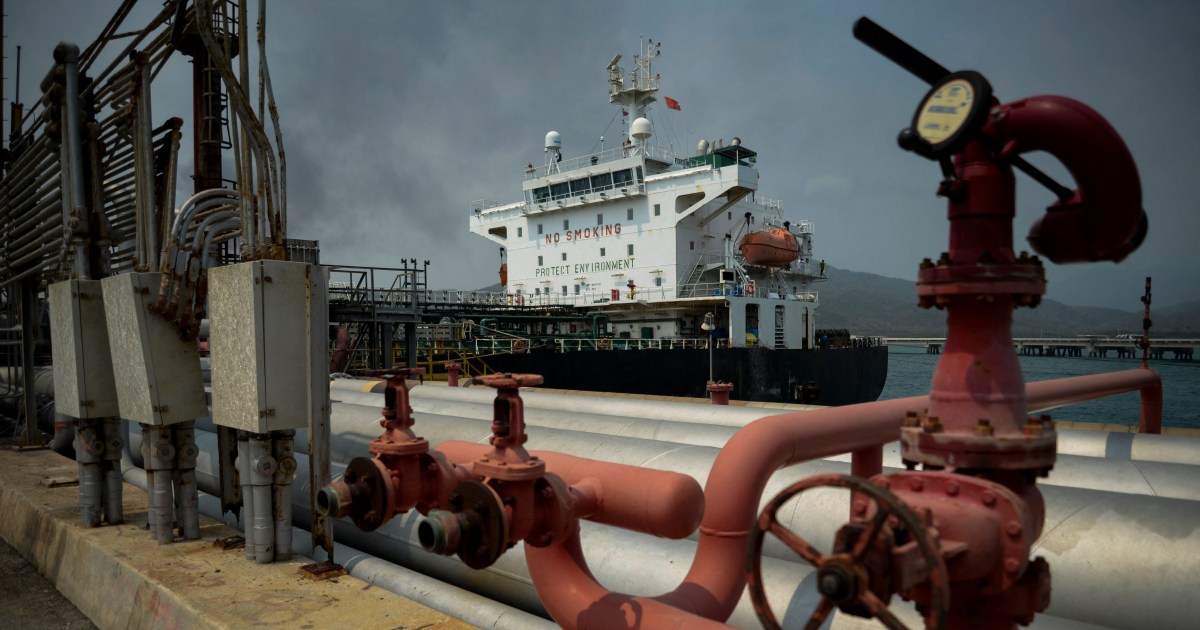
Venezuela’s oil exports have plummeted since the United States seized an oil tanker off the country’s coast this week and imposed new sanctions on shipping companies doing business with the embattled Latin American country.
Oil tanker movements into and out of Venezuelan waters have almost come to a standstill, the Reuters news agency reported on Friday, after the US announced that it would seize more vessels as part of its military pressure on Venezuela’s President Nicolas Maduro.
Recommended Stories
list of 4 itemsend of list
The seizure on Wednesday of the Skipper tanker marked the first US capture of Venezuelan oil cargo since Washington imposed sanctions on Caracas in 2019. It also comes amid a US military build-up in the Caribbean, which appears designed to remove Maduro from power.
Threats of more seizures have now left tankers – loaded with about 11 million barrels of oil and fuel – stuck in Venezuelan waters and fearing to venture further, according to data and documents reviewed by Reuters.
Only tankers chartered by US oil giant Chevron have left ports and sailed into international waters carrying Venezuelan crude since the seizure of the Skipper, according to Reuters. Chevron has US government authorisation to operate in Venezuela through joint ventures with state-run oil company PDVSA and can export its oil to the US.
Chevron confirmed this week that it was operating in Venezuela “without disruption and in full compliance with laws and regulations applicable”, according to Reuters, and had exported two cargoes of Venezuelan heavy crude to the US since the seizure of the Skipper.
As the Skipper was taken to Houston, Texas, on Friday for the unloading of its confiscated fuel cargo, Trump reiterated that the US military will start carrying out strikes on land against drug trafficking targets in Latin America.
Speaking at the White House, Trump said that US forces – which have been attacking vessels in the Caribbean Sea and Pacific Ocean for weeks, killing some 90 people – had stopped 96 percent of drugs trafficked to the US by water.
The US also claims it is attacking drug trafficking vessels but has provided no evidence, while international law experts say the attacks amount to extrajudicial killings by Washington in international waters.
Trump says Maduro’s ‘days are numbered’
The Agencia Venezuela News site reported on Friday that Venezuela’s Executive Vice President, Delcy Rodriguez, filed a formal complaint with the International Maritime Organization (IMO) denouncing Washington’s “violation of freedom of navigation in the Caribbean”.
Rodriguez told the IMO of the “vulgar robbery” of Venezuelan oil by the US, which was an “internationally illegal act”, the news agency said. “The Vice President also reiterated that Washington’s threatening actions are not related to a supposed fight against drug trafficking,” it added.
On Monday, Trump said in an interview that Maduro’s “days are numbered” while also declining to rule out a ground invasion of Venezuela by US forces.
Washington has offered a $50m reward for Maduro’s capture, accusing the Venezuelan president of leading the alleged “Cartel of the Suns”, which the US has branded a “narco-terrorist” organisation.
On Thursday, the US Treasury announced sanctions on three relatives of Maduro and six shipping companies and six vessels involved in transporting Venezuelan oil, a move that could imperil his leadership.
“If there are no oil exports, it will affect the foreign exchange market, the country’s imports… There could be an economic crisis,” Elias Ferrer of Orinoco Research, a Venezuelan advisory firm, told the AFP news agency.
“Not just a recession, but also shortages of food and medicine, because we wouldn’t be able to import,” Ferrer said.
Russian forces have attacked two Ukrainian ports, damaging three Turkish-owned vessels, including a ship carrying food supplies, according to Ukrainian officials and a shipowner.
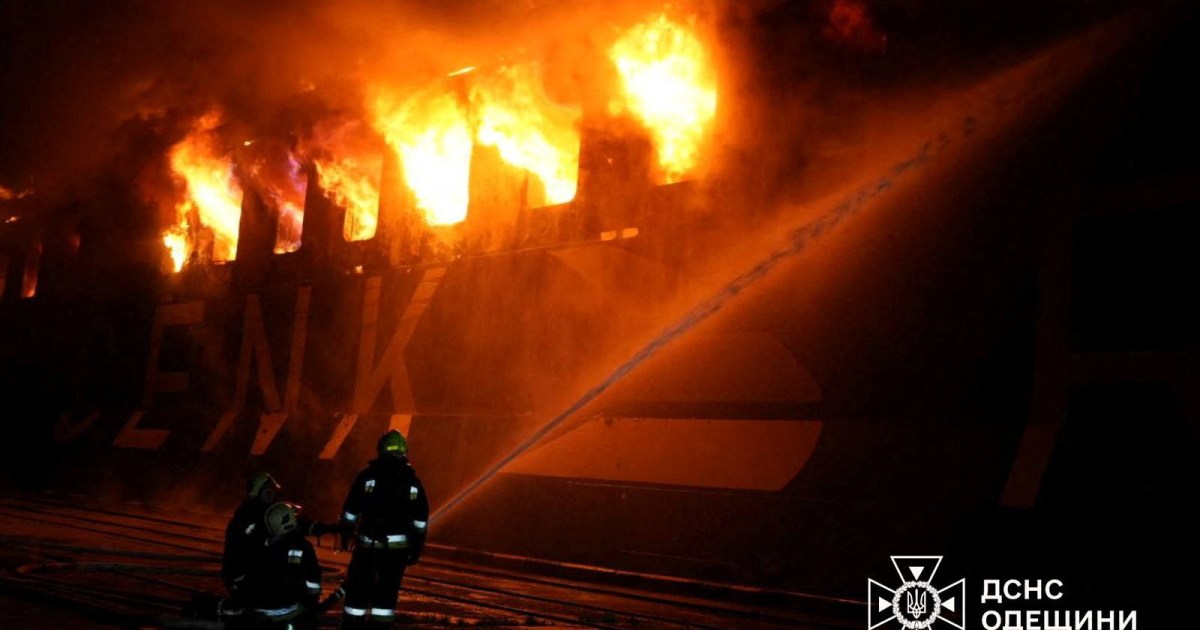
Friday’s attacks by Russian forces targeted Chornomorsk and Odesa ports in Ukraine’s southwestern Odesa region on the Black Sea. A Ukrainian navy spokesperson told the Reuters news agency that three Turkish-owned vessels were damaged in total, but did not provide additional details.
Recommended Stories
list of 3 itemsend of list
Posting video footage on social media of firefighters tackling a blaze on board what he described as a “civilian vessel” in Chornomorsk, Ukrainian President Volodymyr Zelenskyy said the Russian attacks “had no … military purpose whatsoever”.
“This proves once again that Russians not only fail to take the current opportunity for diplomacy seriously enough, but also continue the war precisely to destroy normal life in Ukraine,” Zelenskyy said.
“It is crucial that … the world maintains the proper moral compass: who is dragging out this war and who is working to end it with peace, who is using ballistic missiles against civilian life, and who is striking the targets that influence the functioning of Russia’s war machine,” he said.
Today, the Russian army carried out a missile strike on our Odesa region, and last night there was also a Russian attack on Odesa’s energy infrastructure. At one point we talked about the situation in this city and the people of Odesa with President Trump.
Today’s Russian… pic.twitter.com/gIgXUlc4AJ
Zelenskyy did not name the vessel, but it was identified as the Panama-flagged and Turkish-owned Cenk T by Reuters, which matched cranes and buildings to satellite imagery of Chornomorsk port.
The ship’s owners, Cenk Shipping, confirmed it was attacked at about 4pm local time (14:00 GMT). There were no casualties among the crew, and damage to the ship was limited, it added.
An employee of a private company was also injured in a separate attack on Odesa port, where a cargo loader was also damaged, Ukraine’s Deputy Prime Minister Oleksii Kuleba confirmed.
He added that Russia had used drones and ballistic missiles in the port strikes, which were “aimed at civilian logistics and commercial shipping”.
Ukraine’s three large Black Sea ports in the Odesa region are a key economic artery for Kyiv.
Late on Friday, Turkiye’s Ministry of Foreign Affairs confirmed the vessel had been attacked in Chornomorsk port. It added that there were no reports of injured Turkish citizens.
The ministry said in a statement that the attack “validates our previously stated concerns regarding the spread of the ongoing war in the region to the Black Sea, and its impact on maritime security and freedom of navigation”.
“We reiterate the need for an arrangement whereby, in order to prevent escalation in the Black Sea, attacks targeting navigational safety as well as the parties’ energy and port infrastructure are suspended,” it added.
Hours earlier, in talks with Russian President Vladimir Putin in Turkmenistan’s capital of Ashgabat, Turkish President Recep Tayyip Erdogan called for calm in the Black Sea and suggested that a limited ceasefire for energy facilities and ports could be beneficial for regional security.
Turkiye, which has the longest Black Sea coastline at approximately 1,329km (826 miles), has grown increasingly alarmed at the escalating attacks in its back yard and has offered to mediate between Kyiv and Moscow.
The attacks come just days after Putin promised retaliation and threatened to cut “Ukraine off from the sea” for Kyiv’s maritime drone attacks on Moscow’s “shadow fleet” – unmarked tankers thought to be used to circumvent oil sanctions – in the Black Sea.
Cambodia has accused Thailand of continuing to drop bombs in its territory hours after United States President Donald Trump said Bangkok and Phnom Penh had agreed to stop fighting.
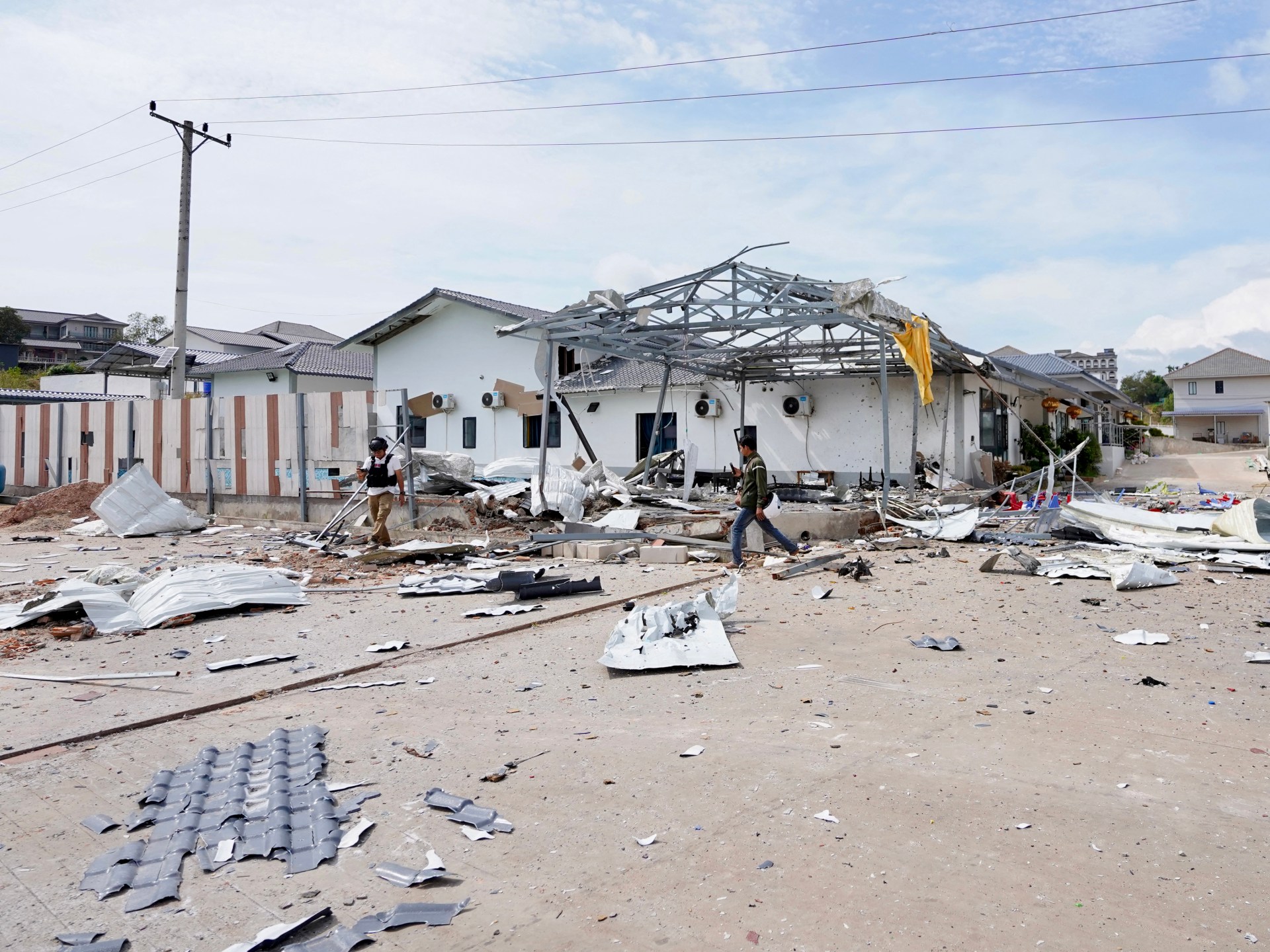
“On December 13, 2025, the Thai military used two F-16 fighter jets to drop seven bombs” on a number of targets, the Cambodian Defence Ministry said in a post on social media on Saturday.
Recommended Stories
list of 4 itemsend of list
“Thai forces have not stopped the bombing yet and are still continuing the bombing,” the ministry said, listing aerial attacks on hotel buildings and bridges earlier in the morning.
Local news outlet Khmer Times cited the Cambodian Ministry of Information as saying that two hotels were bombed in the Thmor Da area of Pursat province, on the border with Thailand. The news outlet published a series of photos showing badly bombed hotel and casino buildings.
The reports of continued bombing follow after President Trump said that Thailand and Cambodia had agreed “to cease all shooting” on Friday.
“I had a very good conversation this morning with the Prime Minister of Thailand, Anutin Charnvirakul, and the Prime Minister of Cambodia, Hun Manet, concerning the very unfortunate reawakening of their long-running War,” Trump said on his Truth Social platform on Friday.
“They have agreed to CEASE all shooting effective this evening, and go back to the original Peace Accord made with me, and them, with the help of the Great Prime Minister of Malaysia, Anwar Ibrahim,” Trump said.
With Thailand’s attacks reportedly ongoing against Cambodia, the current outbreak of violence between the two Southeast Asian neighbours has now entered a sixth day.
The latest cross-border clashes, which broke out on Monday, have so far killed at least 20 civilians and soldiers in both countries and left some 200 more wounded.
Here’s where things stand on Saturday, December 13:
Fighting
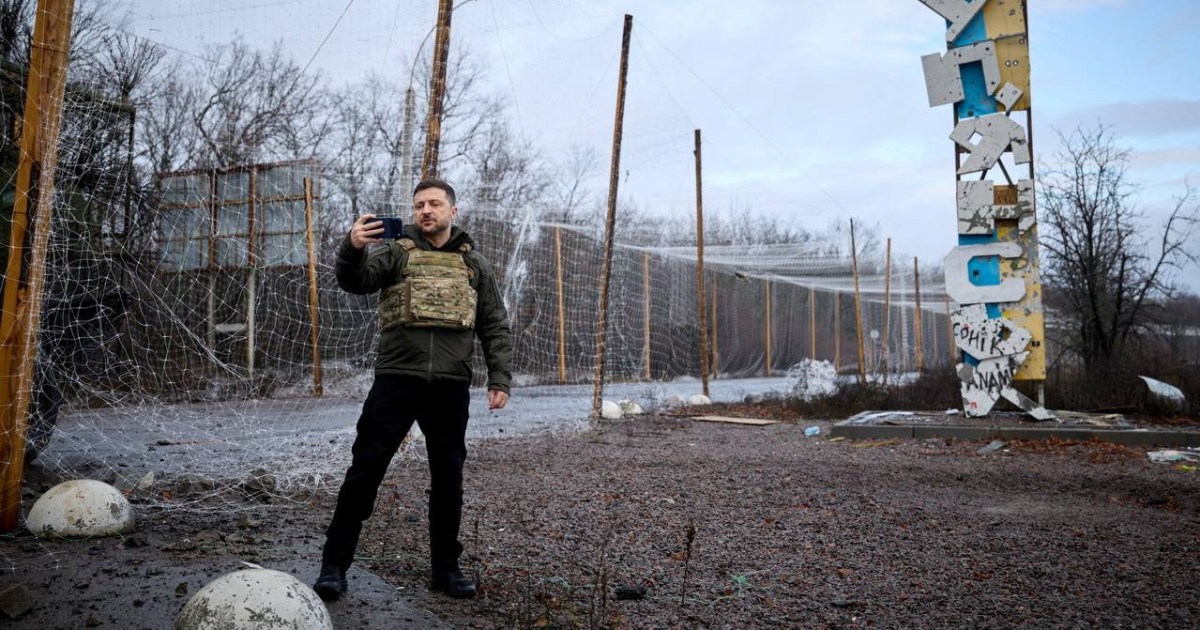
Ukrainian forces said they had retaken parts of the northeastern town of Kupiansk and encircled Russian troops there, as President Volodymyr Zelenskyy visited the area and praised the operation, saying it strengthened Ukraine diplomatically.
In a video clip, President Zelenskyy, wearing a bulletproof vest, is seen standing in front of a sign bearing the town’s name at the entrance to Kupiansk. “Today it is extremely important to achieve results on the front lines so that Ukraine can achieve results in diplomacy,” he said.
Ukrainian drones struck two Russian oil rigs in the Caspian Sea, an official in the Security Service of Ukraine (SBU) said. The SBU drones hit the Filanovsky and Korchagin oil rigs, which both belong to Russia’s Lukoil. The Filanovsky rig – part of Russia’s largest Caspian oilfield – came under attack earlier this week as Ukraine steps up its campaign to disrupt Russian oil and gas output.
Ukraine said it conducted an operation alongside a local resistance movement to hit two Russian ships transporting weapons and military equipment in the Caspian Sea. They did not specify when the strike took place.
Ukraine’s military also said it attacked a major Russian oil refinery in Yaroslavl, northeast of Moscow, and industry sources said the facility had suspended output.
Russia attacked Ukraine’s Chornomorsk and Odesa ports, damaging three Turkish-owned vessels, including a civilian ship carrying food supplies, Ukrainian officials said.
Moscow previously threatened to cut “Ukraine off from the sea” in retaliation for Kyiv’s maritime drone attacks on its “shadow fleet” tankers thought to be used to export oil.
Russia also attacked energy facilities in the southern Ukrainian Odesa region overnight, causing fires and leaving several settlements in the region without electricity, the local governor and emergency service said.
Russia’s Ministry of Defence said it had destroyed 90 Ukrainian drones over the country and the Black Sea overnight.
Moscow’s Sheremetyevo airport said it suspended departures amid the overnight drone attacks, while in the city of Tver, 181km (112 miles) northwest of Moscow, authorities said seven people were injured.
Peace deal
Turkiye has called for an urgent end to the war in Ukraine after Turkish-owned vessels were damaged in an attack on Ukraine’s Chornomorsk port by Russia, saying the incident underscored risks to Black Sea maritime security.
Ankara called for an arrangement to suspend attacks targeting navigation safety, energy and port infrastructure “to prevent escalation”.
Turkish President Recep Tayyip Erdogan also met with Russian President Vladimir Putin, telling him that a limited ceasefire around energy facilities and ports in particular could be beneficial.
Ukrainian, European and United States national security advisers met and discussed coordination of their positions on proposals for a settlement to the conflict in Ukraine, the head of the Ukrainian negotiating team, Rustem Umerov, said.
Ukraine’s Prime Minister Yulia Svyrydenko said the meeting was attended from the US side by Jared Kushner and Steve Witkoff, as well as World Bank chief Ajay Banga and BlackRock CEO Larry Fink.
We continue our joint work with our American partners and the leadership of international financial institutions on the economic track within the broader effort to secure a just and lasting peace for Ukraine.
Today, we held a meeting with representatives of the U.S. President,… pic.twitter.com/QNJzBQ0GD6
President Donald Trump said a US-proposed free economic zone in the Ukraine-controlled parts of the eastern Donbas would work after Washington suggested creating such an economic zone as a compromise between Ukraine and Russia.
Ukraine, the US and European powers are still working to find a joint position that would outline the contours of a peace deal, including security guarantees for Kyiv, in a ceasefire deal that “American negotiators are willing to bring to the Russians”, a French presidency official said.
Kremlin foreign policy aide Yury Ushakov said a ceasefire is only possible after Ukrainian forces withdraw from the entire Donbas region, and the area Kyiv currently controls is taken over by the Russian National Guard.
“If not by negotiation, then by military means, this territory will come under the full control of the Russian Federation. Everything else will depend entirely on that,” Ushakov said.
Sanctions
The European Union agreed to indefinitely freeze 210 billion euros ($246bn) worth of Russian sovereign assets held in Europe, removing a big obstacle to using the cash to help Ukraine defend itself against Russia. The agreement removes the risk that Hungary and Slovakia, which have better relations with Moscow than other EU states, could refuse to roll over the freeze at some point and force the EU to return the money to Russia.
Russia’s central bank said the EU plans to use its assets to support Ukraine were illegal and it reserved the right to employ all available means to protect its interests.
The bank said separately it was suing Brussels-based financial institution Euroclear – which holds many of the assets – in a Moscow court over what it said were damaging and “illegal” actions.
In advance of the vote to freeze the funds, Hungary lodged a protest against what it called an “unlawful” step by the EU to hold Russian assets indefinitely. Prime Minister Viktor Orban said the decision would “cause irreparable damage to the Union”.
“Hungary protests the decision and will do its best to restore a lawful situation,” Orban said.
International affairs
North Korean leader Kim Jong Un attended a welcoming ceremony for the 528th Regiment of Engineers of the Korean People’s Army that returned home after carrying out duties in Russia, praising the officers and soldiers for their “heroic” conduct and “mass heroism” during a 120-day overseas deployment.
Berlin has summoned Russia’s ambassador over what it said was a huge increase in threatening hybrid activities, including disinformation campaigns, espionage, cyberattacks and attempted sabotage. “[We] made it clear that we are monitoring Russia’s actions very closely and will take action against them,” Germany’s Federal Foreign Office spokesperson Martin Giese said.
A New York Times reporter told Jeffrey Epstein that he could write an article that would define the financier on his own terms as he faced allegations of sexually abusing minors in the months leading up to his 2008 conviction, newly uncovered emails reveal.
After a negative article about Epstein was published in September 2007, then-New York Times journalist Landon Thomas Jr advised Epstein to “get ahead” of more bad publicity by doing an interview that would define the story “on your terms”.
Recommended Stories
list of 4 itemsend of list
“I Just read the Post. Now the floodgates will open — you can expect Vanity Fair and NYMag to pile on,” Thomas wrote to Epstein in an email dated September 20, 2007, referring to the magazines Vanity Fair and New York Magazine.
“My view is that the quicker you get out ahead of this and define the story and who you are on your terms in the NYT, the better it will be for you.”
Thomas, who left the Times in 2019, urged Epstein to quickly do an interview to prevent the “popular tabloid perception” about him from hardening, and expressed sympathy over his legal troubles.
“I know this is tough and hard for you, but remember jail may [be] bad, but it is not forever,” Thomas wrote.
As part of his pitch to Epstein, Thomas recalled a 2002 profile he wrote about the financier for New York Magazine, titled Jeffrey Epstein: International Moneyman of Mystery.
Written before Epstein’s first arrest in 2006, the profile portrayed the financier as an enigmatic but highly successful businessman with the appearance of a “taller, younger Ralph Lauren” and a “relentless brain that challenges Nobel Prize-winning scientists”.
The piece contained glowing appraisals from Epstein’s many high-profile associates, whose praise-filled descriptions included that he was “very smart”, “amazing”, “extraordinary”, and “talented”.
“Remember how for a while my NY Mag piece was the defining piece on you? That is no longer the case after all this,” Thomas wrote to Epstein.
“But I think if we did a piece for the Times, with the documents and evidence that you mention, plus you speaking for the record, we can again have a story that becomes the last public word on Jeffrey Epstein.”
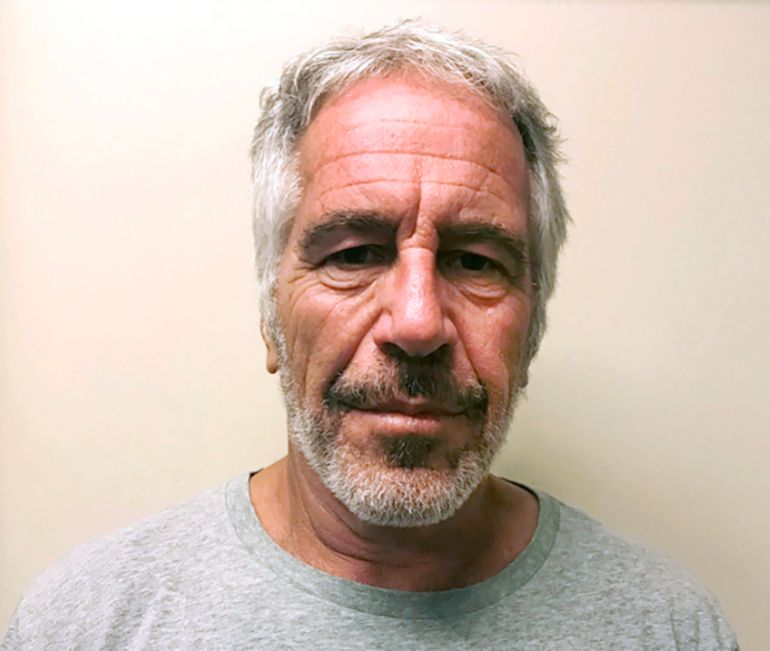
Jeffrey Epstein is pictured for the New York State Sex Offender Registry on March 28, 2017 [File: New York State Sex Offender Registry via AP]
A little more than a week later, on September 28, Thomas sent Epstein an email reiterating the importance of “getting out ahead” of other publications.
Thomas suggested that he begin reaching out to associates of Epstein who could talk about the financier’s business activities and scientific and philanthropic work, including former Harvard President Larry Summers and Israeli Prime Minister Ehud Barak.
“Before I get a glimpse of the legal material, I was thinking that I should at least start calling around to people who know you. Again to focus on the business and scientific/philanthropic aspect of the piece,” Thomas wrote.
“Could I start to do that — call people like Larry Summers, Jess Staley, George Mitchell, Ehud Barak, Bill Richardson and others?” Thomas finished the email expressing his hope that Epstein was “holding up okay” and stating his view that “we need to move on this.”
It is not clear how Epstein responded to Thomas’s emails, which were included in a trove of emails from Epstein’s personal accounts that were made available to Al Jazeera by the whistleblower website Distributed Denial of Secrets.
Thomas did not respond to a request for comment.
Following Thomas’s correspondence with Epstein, the Times went on to publish an article by the journalist detailing the financier’s downfall the following year.
The article, published a day after Epstein’s guilty plea on June 30, 2008, drew from in-person and phone interviews that Thomas had conducted with the financier, including during a visit to Epstein’s island of Little St James several months earlier.
In the article, Thomas described the financier sitting on the patio of his island mansion as he likened himself to the eponymous character of the satirical novel Gulliver’s Travels.
“Gulliver’s playfulness had unintended consequences,” Epstein was quoted as saying.
“That is what happens with wealth. There are unexpected burdens as well as benefits.”
Little St James, a small private island formerly owned by the late financier Jeffrey Epstein, is pictured in the US Virgin Islands on November 29, 2025 [File: Marco Bello/Reuters]
A 2019 report by NPR said colleagues of Thomas at the Times had been “appalled” by the article when they reviewed it years later, following the journalist’s admission that he had solicited a $30,000 donation from Epstein for a cultural centre.
The emails obtained by Al Jazeera also show that Epstein emailed an error-strewn Word document to himself in which Thomas is described discussing the legal case against Epstein with then-Florida prosecutor David Weinstein.
The purpose and origin of the document, which describes Thomas and Weinstein discussing technical aspects of the charges facing Epstein, is unclear. Weinstein said he spoke to Thomas in January 2008, but that the document did not contain an accurate description of their conversation.
Weinstein said they had spoken about the “criminal justice process and general state and federal statutes”, but not Epstein’s case specifically.
He said he did not know where the information in the document came from or who provided it to Epstein.
“I never spoke with him about the specific facts of the late Mr Epstein’s case, nor did I offer any opinion about that matter,” Weinstein told Al Jazeera.
The emergence of the emails between Thomas and Epstein comes after correspondence the two men shared from 2015 to 2018 came to light last month in a batch of documents released by US lawmakers.
Among other revelations, those emails showed that Thomas let Epstein know that the late investigative journalist John Connolly had contacted him for information for Connolly’s 2016 book Filthy Rich: The Jeffrey Epstein Story.
“He seems very interested in your relationship with the news media,” Thomas wrote to Epstein in an email dated June 1, 2016. “I told him you were a hell of a guy :)”.