‘He’s giving us a lot of joy’ – Rashford’s revival at Barcelona

Getty Images

“He is unbelievable. He has more potential he can show us.”

That was Hansi Flick’s verdict on Marcus Rashford in September, before the forward’s return to England for his first Champions League appearance with Barcelona.

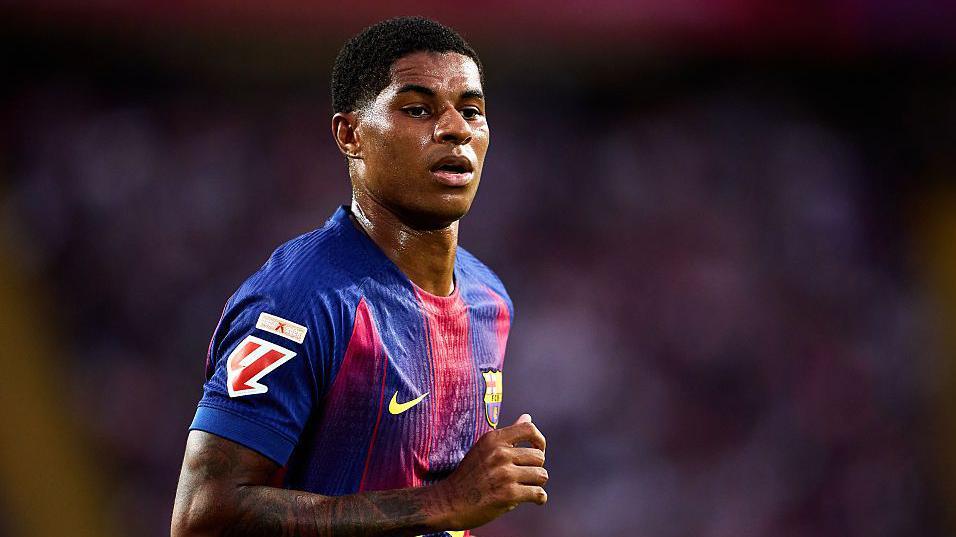
The head coach’s confidence seemed to inspire Rashford. He scored his first two goals for the Catalan giants and led them to a 2-1 victory against Newcastle at St James’ Park.

It was the breakthrough Rashford had been waiting for since he joined Barcelona in July – a loan move from Manchester United that raised several questions.

What role would he play at Barcelona? Would he earn the trust of Flick? Would Barcelona make his move permanent?

With the season paused for its second international break, Rashford has featured in 10 matches for Barcelona, and the early indications are promising.

Beyond the numbers, Rashford is winning the support of Barcelona fans.

Some say it’s too early to assess his performance while others have called him a “pleasant surprise”.

“You can tell that little by little, he is gaining more confidence,” said Alejandro, a life-long fan. “He’s been giving us a lot of joy. We can see that he’s really hungry to succeed, so, at the moment, all the fans and the whole team support him.”

Underwhelming first performances

When Rashford made his La Liga debut from the bench on 16 August, in a 3-0 win away to Mallorca, expectations were modest.

He arrived at Barcelona after falling out of favour at United, and as essentially the third-choice candidate for the attacking slot his club wanted to strengthen.

The club wanted to sign a forward who could support Raphinha on the left wing and add depth in their attack.

They took interest in the 27-year-old after failing to land their other options, Athletic Club’s Nico Williams and Luis Diaz, who was still with Liverpool at the time.

Rashford’s league debut was unremarkable and his subsequent two Spanish league fixtures were also uneventful, with the forward playing no more than 45 minutes in each.

Spanish media at the time described Rashford as ‘a fuego lento’, a ‘slow-burner’, saying his best performances were in pre-season, against easy opponents and with no competitive pressure.

Rashford’s influence increases

Injuries to Lamine Yamal, Raphinha and Robert Lewandowski have opened the door for Rashford’s resurgence, giving him an extended run in Flick’s starting XI, where his influence on Barcelona’s attack has steadily grown.

He has started in six of the past seven matches across all competitions. The only time he didn’t start, against Getafe, was because he arrived late to the team’s morning meeting, although he did play the entire second half.

Barcelona sources said that Rashford was two minutes late, prompting Flick to enforce his strict policy of excluding players from the starting line-up if they are late to training or team meetings.

A point to prove

His progress has drawn admiration. It started with a first assist against Valencia, was followed by the two Champions League goals at Newcastle, and continued with assists against Oviedo and Real Sociedad in La Liga, and Paris St-Germain in the Champions League.

In his final match before the second international break, Rashford scored his first La Liga goal, albeit a consolation in Barcelona’s 4-1 loss to Sevilla.

Two of his assists have come from corner kicks – an area where Barcelona had previously lacked threat. Spanish media highlighted his contribution. As one report noted: “With his precise delivery, Barca has found a new weapon on set-pieces.”

Rashford’s standout Champions League performance against Newcastle drew particular praise from Flick.

“He’s a fantastic player, a great talent and his finishing is incredible,” said the former Bayern Munich and Germany boss.

To play this video you need to enable JavaScript in your browser.

Barcelona’s leading goal contributor

Rashford has more goal involvements than any other Barcelona player across all competitions this season, with his three goals and four assists.

Ferran Torres has scored five goals and has one assist, so has six involvements, while Lamine Yamal has scored twice and added three assists, but the 18-year-old Ballon d’Or runner-up has missed four matches because of an injury he sustained in the September international break.

Rashford has recorded the joint-most shots (27) and shots on target (11) and the most touches in the opposition box (69) among Barcelona players. He also ranks second for chances created (18) behind Pedri (24).

Since first pulling on the shirt, Rashford has contributed to a goal for Barcelona every 88 minutes.

This ranks him fifth among players in La Liga for minutes per goal involvement, behind only Kylian Mbappe, Julian Alvarez, Vinicius Junior and Alvaro Garcia.

Will Rashford sign permanently?

Marcus Rashford celebrates on his knees after scoring for BarcelonaGetty Images

Rashford arrived in Barcelona determined to make his mark and launch a positive new chapter in an up-and-down career.

The club have the option of signing him on a permanent basis for £30.3m (35m euros) in 2026, but that is something that Deco told Spanish media would only be discussed at a later date.

“It’s too early to talk about decisions for next season but what matters is that we’re happy with him,” the director of football said.

This was reiterated by another source at the club, who said: “We’re all delighted and thrilled with him and his performance, Deco, Flick, and his team-mates. Marcus is also happy with us, with his team-mates and with the city of Barcelona.

“It’s obvious that if he continues to develop like this, there’s a very good chance that this will be the case. But we’re only at the beginning of the season and it’s still too early to talk about this.”

Barcelona have big fixtures to come before the next round of international matches, including a derby against Girona, Champions League games against Olympiacos and Club Brugge, and the Clasico against Real Madrid at the Bernabeu.

Off the back of successive defeats by Paris St-Germain and Sevilla, and with Raphinha returning from injury, Spanish media suggest Flick will be making some tactical changes.

For Rashford, it presents an opportunity to adapt and demonstrate his versatility as his quest continues for a consistent starting role.

He wanted this move in January, had to wait until the summer, and before he had kicked a ball was quick to say Barcelona “feels like home”. The onus is now on him to make sure it remains that way.

Related topics

  • Football

More on this story

    • 15 August
    A graphic of Premier League players from every team in the division in 2025-26 season, with the Premier League trophy in front of them.
    • 16 August
    BBC Sport microphone and phone

Blowing whistle on racism killed my career – Burrell

To play this video you need to enable JavaScript in your browser.

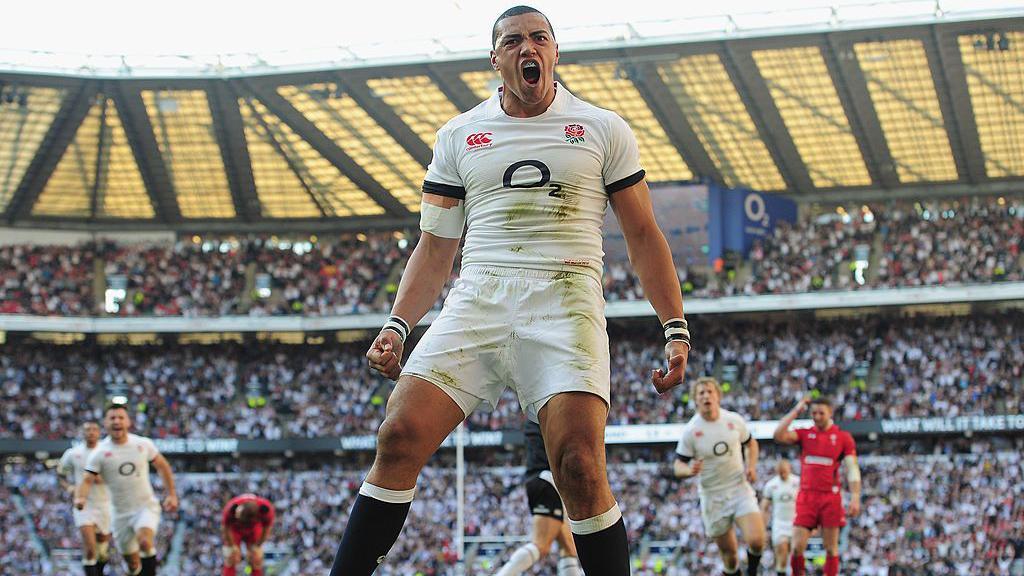
Former England centre Luther Burrell says going public to reveal racism in rugby union brought his career to an early end.

In a June 2022 interview with the Mail on Sunday, Burrell described racism as being “rife” in the game, showing Whatsapp messages and recalling training ground “jokes” he had been subject to while playing for Newcastle.

Then 34 and out of contract, Burrell’s only professional rugby since has been three appearances with invitational side the Barbarians.

“I have absolutely had to retire because of what went on,” he told BBC Sport.

“I wanted to carry on playing, of course I did. I pursued that, and it fell through when word came out that there were investigations going on.

“That was difficult – I had to just accept the fate and accept that this whole process is a lot bigger than me.”

Getty Images

Burrell told BBC Sport he also faced prejudice within the England set-up, during a Test career that saw him win 15 caps after his debut in February 2014.

“I’ve had several traumatic experiences within England camp,” he said.

“Some discrimination and some just old-school mentality that’s really unacceptable.”

Racism had become normalised in dressing rooms, in Burrell’s experience.

“It’s something that has been dressed up as banter and that’s been the problem that I’ve personally suffered and seen,” said Burrell, who is of Jamaican descent.

“Over a period of time you just learn to believe that it’s the norm and that is fine and that it’s not malicious, but that’s nonsense.”

Burrell says he was eventually spurred to speak out after a team-mate at Newcastle referred to him as a “slave” and told him to put sun cream on his wrists and ankles “where your shackles were”.

The RFU said Burrell’s revelations had led to “a deeper look at the culture within the elite game and to the implementation of an action plan for the professional game”.

“The RFU has placed significant focus on inclusion and diversity in rugby union and a great deal of work undertaken both before and since Luther Burrell came forward and shared his experiences of racism and classism,” it added.

“We are continuing work with clubs and stakeholders in the professional game to strive for a culture of inclusivity but acknowledge this takes time and is an ongoing process.”

Every Prem and PWR club now has face-to-face education on building inclusive cultures, with its success monitored via individual reports and surveys.

All England players, including age-grade squads, are trained in being “active bystanders” to intervene and protect others from harmful behaviour.

“You should be so proud of what you have done,” Burrell’s mother Joyce told him as part of the BBC iPlayer documentary Luther Burrell – Rugby, Racism and Redemption.

“I know it has had this effect on you and finished your career, but in our eyes, you have done so well. We are so proud of you and to have you as a son.”

Burrell, who grew up on a council estate in Huddersfield, continues his work to make the game more open.

His 12 Foundation aims to reach children in under-served communities and help them thrive on and off the pitch with free sports coaching, mentoring and nutrition education.

“My intentions are pure, I want to see the evolution of the game and if nobody else is prepared to share their story then I’ll continue to fight that fight because I’m not just doing this for myself,” he said.

“We have an obligation to make the sport as great as it can be and the more I talk about it hopefully the more comfortable others will feel about sharing their own stories as well.

“I need to grab the bull by the horns and keep carrying this flag and keep carrying this weight and do what I can to create opportunities and make the sport more attractive and more inclusive.

Burrell scored a try for the BarbariansGetty Images

Related topics

  • Rugby Union

More on this story

Ben Davies: Wales and Spurs’ reluctant star

Getty Images

World Cup Qualifier: Wales v Belgium

Venue: Cardiff City Stadium Date: Monday, 13 October Kick-off: 19:45 BST

Ben Davies is inching closer to becoming Welsh football’s latest male centurion.

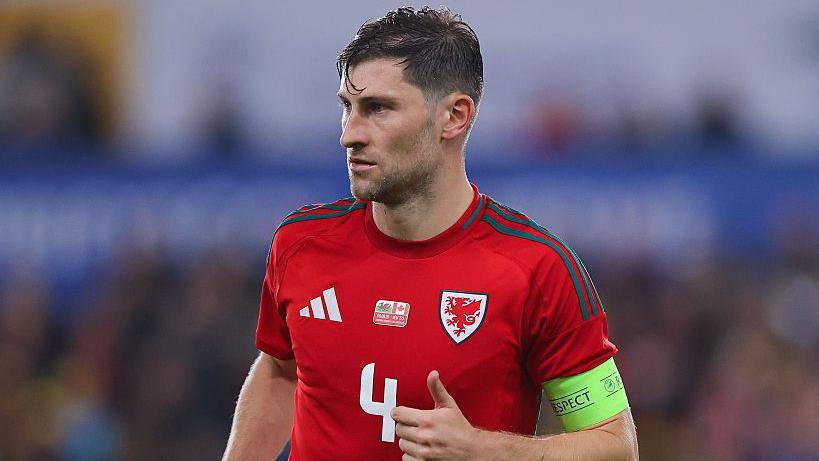
Davies, 32, is set to join Chris Gunter, Gareth Bale and Wayne Hennessey in the 100-cap club in Monday’s crucial World Cup qualifier against Belgium in Cardiff.

The Tottenham Hotspur defender has been a mainstay of the national team since his debut in 2012, featuring in three major tournaments during a golden period.

BBC Sport Wales profiled Wales’ “reluctant star” before the Euro 2024 play-offs and the following article has been adapted from the original published in March 2024.

Ben Davies playing for Swansea, Wales and TottenhamGetty Images

Ben Davies is a reluctant star. He is the rock around which Wales’ defence is built, and Tottenham Hotspur’s longest-serving current player, yet Davies is not celebrated like some of his peers.

That is partly by design from Davies, who is happy to cloak himself in the relative anonymity which comes with having played alongside the likes of Gareth Bale and Harry Kane.

Try as he might to avoid the spotlight, though, Davies’ quality shines through – and his interventions have helped change the course of history for his teams.

There was the goal-saving clearance against Slovakia at Euro 2016, without which Wales’ ascent to the semi-finals may never have got off the ground.

Then there was the Champions League semi-final in 2019. His interception led to Spurs’ last-gasp winner to seal one of the most dramatic comebacks of all time.

Now Davies wears the captain’s armband for his country – albeit in the absence of regular skipper Aaron Ramsey – it is a little harder for him to go unnoticed.

‘The only Premier League player with wind-down windows’

Ben Davies celebrates scoring a goal for Swansea CityGetty Images

Davies has always tried to keep a low profile, a quietly intelligent character who has worn his wisdom lightly from a young age.

Born in Neath, Davies showed promise as a rugby player while studying at Ysgol Gyfun Ystalyfera but, as a Swansea City season ticket holder, football was his true passion.

He watched the likes of Leon Britton and Alan Tate from the North Bank at the Vetch and, having progressed through the Swans’ youth set-up, he was soon referring to his childhood heroes as team-mates.

“You could see from training with us he was always someone who wanted to learn,” says Tate.

“He was one of those young lads to ask questions and took on information and was really diligent around the game.

“On the whole he was quiet and, to be fair, you usually are as the young lad breaking into the team. Ben was what you see now.”

Davies rose to the first-team ranks so quickly that he was still on a youth contract, worth about £400 per week, when he made his Premier League debut aged 19 in August 2012.

He was also still driving an old Volkswagen Polo, complete with wind-down windows, much to the amusement of the rest of the squad.

“That came from Ashley Williams,” Tate recalls with a laugh. “Ash was big on his cars and stuff, so I think he was the first one who noticed Ben had the wind-down windows and he didn’t let him forget it. That is, he reminded him every minute of every day!

“He was coming into what was a changing dressing room with the influx of foreign lads. But you still had a core of British lads who had grown up with each other, and we were quite harsh with each other. He came in and he thrived amongst it.

“He got on well with the Spanish players and other foreign lads as well. He and Michu got on well and used to speak a lot. I don’t know how good Ben’s Spanish was, though.”

    • 1 day ago
    • 15 hours ago
    • 1 day ago

Then Wales manager Chris Coleman agreed. After just eight appearances for Swansea, Davies earned his first senior cap in a World Cup qualifier against Scotland.

“He’d started brilliantly for Swansea and you knew it was only a matter of time until he got the call-up for Wales,” says Joe Allen, also in the Wales team that night.

“It was clear straightaway that he was very smart, a very intelligent guy, well-liked and very popular with the younger pros, but also I think all the first-team lads really respected him.

“Although he might not have been the loudest or the biggest extrovert, you could see he was quietly very confident and composed.

‘Sensible head but enjoys a good time’

Davies took his first steps in international football at a difficult time for Wales, who struggled during the early stages of Coleman’s tenure following the death of his predecessor Gary Speed.

With the likes of Gareth Bale, Aaron Ramsey and Allen a few years further along in their development, however, Wales had the makings of a promising new generation.

“We never lost faith that things were getting better and we were progressing,” Allen says.

“We had a rough patch and we had some terrible results but you looked around the squad and I think everyone believed that these lads, with the right experience and with enough time, would go on and do great things for Wales.”

They achieved that greatness at Euro 2016, not only qualifying for Wales’ first major tournament for 58 years, but then reaching a first semi-final in the country’s history.

Ben Davies, blocking a goalbound shot from Slovakia's Marek Hamsik at Euro 2016 Getty Images

It might have all unravelled after just three minutes of that first match, though, had Davies not intervened.

Slovakia’s Marek Hamsik had weaved his way through the Welsh defence and shot past goalkeeper Danny Ward, only for Davies to appear from nowhere with a sliding clearance to deny a certain goal.

“That was such a key moment,” says Allen, who would go on to be named in Uefa’s team of the tournament.

“It maybe gets overlooked by some, but a lot of people realise how vital that moment was, and just how well he played in that tournament.

“The whole squad performed out of our skins, but he was a stand-out for us. He was still only 23 at the time and playing like a real senior head. A top player who had a top tournament and really stood out.”

When Wales lost to eventual champions Portugal in the semi-finals, much was made of the absence of the suspended Ramsey – but the fact they were missing Davies for the same reason was arguably as significant.

Naturally, there was disappointment that Wales’ epic run had come to an end, but the overriding emotion after the final whistle was one of pride.

Wales’ players and staff reflected on their achievement with friends and family in Lyon that night, before travelling back to their training base in Dinard, Brittany, the following morning.

There, they had a rare thing in a footballer’s diary: 24 free hours to cut loose. Allen grins at the memory, hazy as it might be.

“Ben’s got a sensible head on him but, like anyone, he enjoys a good time,” he says.

Mauricio Pochettino gives instructions to Ben Davies on the touchline during a Spurs gameGetty Images

Pochettino’s first signing, Son’s best friend at Spurs

When Davies was asked about that block before Wales met Slovakia again three years later, he simply remarked: “It’s a good memory, but hopefully I won’t have to do it again this time around.”

Those moments are all well and good, Davies thought, but he would prefer a straightforward victory, a clean sheet and, frankly, less of a fuss.

By this time, however, he had already joined Tottenham, with whom he would play in one of the most extraordinary ties in Champions League history.

Just 24 hours after Liverpool had overturned a 3-0 first-leg deficit to stun Barcelona at Anfield, Spurs mounted another comeback for the ages against Ajax.

Trailing 3-0 on aggregate with 35 minutes left to play in Amsterdam, two Lucas Moura goals had dragged Spurs back into contention.

Then in the sixth minute of added time, Davies intercepted an Ajax clearance to launch the counter-attack which culminated in Moura’s hat-trick and sealed the most dumbfounding of triumphs on away goals.

At the final whistle, it was telling that then-Tottenham manager Mauricio Pochettino, overcome with emotion, ran on to the pitch and leapt into Davies’ arms.

The Welshman had been Pochettino’s first signing following his appointment in 2014 and, five years later, Davies was the first person with whom the Argentine shared his greatest moment as Spurs boss.

“He is still young, but his mentality, his maturity – he is so professional – he is helping the team every season,” said Pochettino.

“He’s fantastic, not only today but from the day he arrived. He’s a great professional, a great player and a great man.”

Davies is now Tottenham’s longest-serving current player, with more than 300 appearances to his name.

Son Heung-min, who left Spurs during the summer of 2025, was one Davies’ best friends at the north London club.

“Ben is one of my closest friends,” Son said in 2023. “He helped me settle in London very well.”

Davies and Son caught a train from London to Cardiff together before Wales played South Korea in a friendly in September 2023.

Student, father and natural leader

If Davies is unusually low-key for a Premier League footballer, one of the reasons is that there is more to his life than football alone.

He has an Open University degree in business and economics – graduating with a 2:1 after studying for five years alongside his day job – and has attended the FT Business of Football summit, as an observer rather than a guest speaker.

On the rare occasions he has spoken about his other interests, Davies has explained the degree is something he does not want to “shout about from the rooftops”.

Davies has always been an amenable and articulate interviewee – and is good company when the mics are off – but he would rather not talk about himself at any great length.

He became a father for the first time in 2023 when his wife Emily gave birth to their son Ralph but, while sharing the occasional update on social media, Davies understandably likes to keep his private life private.

“It’s the best feeling in the world. There’s nothing much more to say than that,” he said when asked by this reporter about new fatherhood. “A few tired nights but I love it.” Polite as ever, but brief.

Yet while Davies is happier away from the glare of public attention, do not think that he is in any way timid.

The defender showed his other, more animated side when he addressed his team-mates in an impromptu post-match huddle after Wales’ stirring victory over Croatia in October 2023.

Gesturing with the zeal of a street preacher in the middle of a circle of players and staff, Davies delivered a rousing speech which referenced Dafydd Iwan’s iconic Yma o Hyd, a Welsh-language protest song with a title which translates as ‘Still Here’.

It has become an anthem for Welsh football in recent years, and Davies was using it to illustrate how Wales were still standing after a turbulent qualifying campaign.

“On top of all the other great traits, he’s a real natural leader,” says Allen.

“He has a massive influence on that squad. That’s been vital in the past and still is now.”

Davies was close to being named Wales’ permanent captain when Ramsey succeeded Bale in 2023 but, given Ramsey’s frequent absences because of injury, the defender is getting used to wearing the armband.

He is expected to lead the team in Monday’s World Cup qualifier against Belgium and, in doing so, will become only the fourth man to earn 100 caps for Wales.

Related topics

  • Welsh Football
  • Wales Men’s Football Team
  • Swansea City
  • Tottenham Hotspur
  • Football

Can Scotland rouse themselves for World Cup finale?

To play this video you need to enable JavaScript in your browser.

At the end, there seemed to be bewilderment among the masses of Hampden, a dazed feeling about how to react to what they’d just witnessed.

To boo or not to boo? To cheer or just fall in a heap from the stress of it all?

A victory, but a lousy performance, one of the worst of the Steve Clarke era. A World Cup campaign still on track – two more victories and they’re there – but an endgame that saw Scotland wobbling across the winning line, like a marathon runner whose legs have gone.

Hanging on in the closing minutes against a team that conceded 17 goals in their past four games, including six against Denmark last time out.

This was three valuable points but it was also exhausting and deeply concerning. More of this and Scotland’s World Cup hopes will be dead in the water, if not in Group C but in the play-offs.

Scott McTominay spoke later about the need for higher standards and nobody would have been of a mind to disagree.

Andy Robertson, the captain looking a shadow of the player he so regularly is, said it didn’t feel like a win at all, which it didn’t.

    • 11 hours ago

Head-scratching, surreal and miserable

There was a surreal air to it all. Rarely have this team been so miserable on the back of a win. To a man, they looked mournful.

Clarke called the performance “a head-scratcher” and pointed out that he’s not often disappointed – the word of the night – by his team, but that he was this time.

Not good enough on both sides of the ball, he said. “Belarus dictated the whole night, to be honest.”

Scotland lacked in every department you could care to mention. For the most part, they looked like strangers, incoherent in possession and vulnerable out. Nothing worked. The Kenny McLean-Billy Gilmour midfield combination was a mess.

To play this video you need to enable JavaScript in your browser.

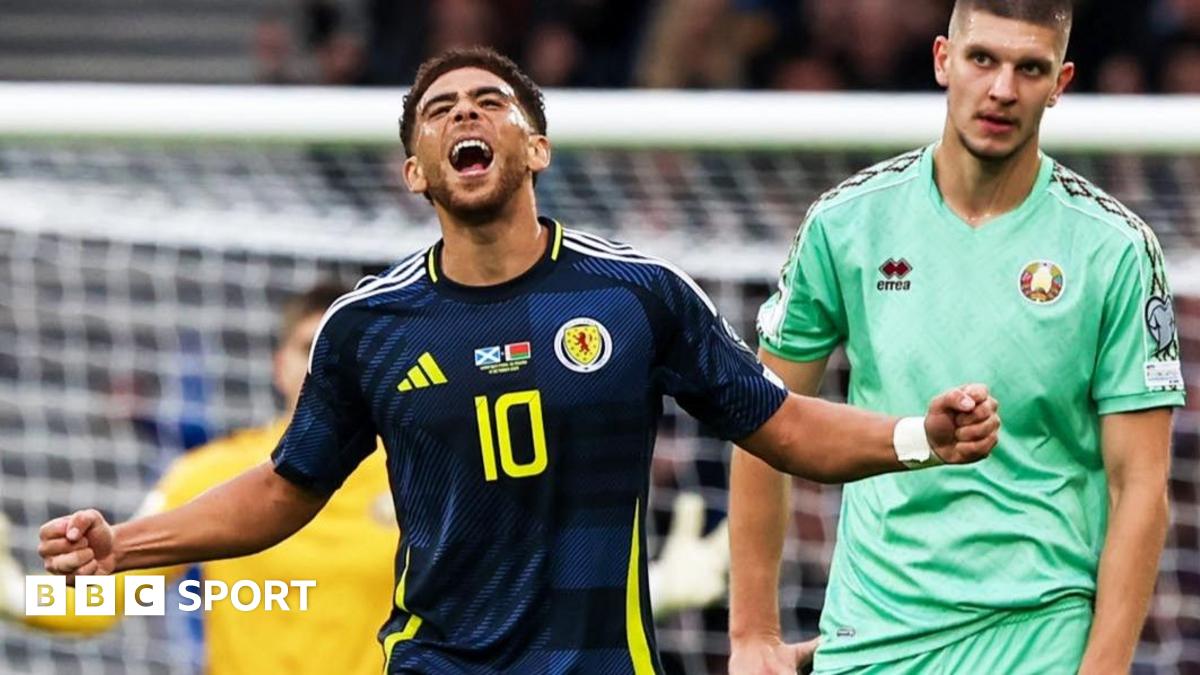
When McTominay smashed in Scotland’s second six minutes before the end, he ran away with the nonchalance of a man who was adding a cherry on top of a rich performance instead of settling nerves at the end of a massively fractious game.

In scoring the 13th goal of his international career, McTominay displayed a cool that belied the stress, but it didn’t last and nor did it deserve to last.

Belarus had more attempts on Scotland’s goal than Scotland had on theirs – and when Hleb Kuchko nipped in ahead of Robertson to make it 2-1, it was deserved.

You could argue that they deserved more. A draw would have been a fairer outcome. An away win would not have been a robbery.

Central to the deal when you come to Hampden is the possibility of palpitations, dizziness and nausea – and so it was again on Sunday.

Some of the chat leading up to this game involved the gallows humour so close to the heart of most members of the Tartan Army.

Having put themselves into a highly promising position, with seven points from nine, including a miraculous escape against the Greeks, the fatalists spoke of how typical it would be if Scotland struggled against the weakest team in the group.

This was, in many ways, a continuation of the fretfulness of Thursday, but against an opponent that had only a scintilla of Greece’s ability.

Table doesn’t lie? This one does…

To play this video you need to enable JavaScript in your browser.

Over the course of the past two games, there’s been an alarming lack of influence from many of Clarke’s go-to players.

Robertson looked off the pace; John McGinn was out of sorts; McTominay, despite his goal, looked a pale imitation of last season when tearing it up in Italy.

Adams was impressive and Ben Gannon-Doak threatened to be. He’s still a teenager whose pace and ability to ghost past defenders is second nature to him. What he does after that is the bit he must learn. The thinking game. Decision-making.

Gannon-Doak puts himself in good positions but too often wastes his own good work with hurried deliveries that are easily dealt with. He’ll get there. He’s too talented not to.

Clarke said he has a lot to mull over, which he does. He said that when it “comes to the crunch we’ll be ready”.

The crunch is next month with a visit to Greece and a home game against Denmark that will conclude the group. Scotland’s readiness is now a matter of serious debate. Those games will be extraordinarily anxious.

The group table, they say, doesn’t lie, but it really does. It’s one giant porky pie.

Scotland are lucky to be sitting in such a fantastic position. They were fortunate to beat Greece and you could say the same about Belarus on Sunday.

They survived and it was a blessing, but unless they find their best stuff in the month ahead then this campaign is going to have a grim ending.

Clarke and his players know this better than anybody. If they were impressive on Sunday it was in the way they spoke rather than in the way they played.

Get in touch

Related topics

  • Football
  • Scotland Men’s Football Team

Ghana seal place at 2026 World Cup – who else has qualified?

Getty Images

Ghana are the 21st team to qualify for the 2026 World Cup – and at least six more of the 48 places will be decided this week.

Asia and Africa are where all of the latest guaranteed spots will come from, with two from Asia and four more from Africa up for grabs.

Ghana booked their spot thanks to a 1-0 win over Comoros with Tottenham’s Mohammed Kudus claiming the only goal.

Mohamed Salah scored twice on Wednesday as Egypt beat Djibouti 3-0 to seal their place at a fourth World Cup.

Algeria joined them on Thursday with Riyad Mahrez scoring in a 3-0 Group G win over bottom side Somalia.

While no countries in North and Central America or Europe are guaranteed to qualify this month, it is mathematically possible for some countries to do so.

Four European nations could book their place this week – England, Portugal, Switzerland and France.

Thomas Tuchel’s men will qualify with victory over Latvia on Tuesday, while the other three must rely on other results too.

Croatia are all but there, sitting three points above the Czech Republic with a far superior goal difference.

Joint-hosts Canada, Mexico and the United States were all granted automatic qualification for the World Cup.

Australia, Iran, Japan, Jordan, South Korea and Uzbekistan have already qualified from Asia.

Oceania’s one direct qualification spot has been taken by New Zealand.

Tunisia and Morocco were the first two African sides to go through, before three more joined them this week.

Argentina, Brazil, Ecuador, Uruguay, Paraguay and Colombia are the South American nations currently guaranteed a place.

Uzbekistan and Jordan will also be playing at a World Cup finals for the first time.

While they have not qualified for the tournament in full, Bolivia and New Caledonia are two of the six nations confirmed to take part in the inter-confederation play-offs in March 2026.

Teams through to 2026 World Cup

Hosts: Canada, Mexico, United States.

Asia: Australia, Iran, Japan, Jordan, South Korea, Uzbekistan.

Oceania: New Zealand.

South America: Argentina, Brazil, Colombia, Ecuador, Paraguay, Uruguay.

Get in touch

How does World Cup qualifying work?

Each of Fifa’s six confederations use different methods of qualification to determine which nations out of each continent qualify for the World Cup.

Oceania is currently the only continent to have completed its direct qualification process for next year’s World Cup.

Of the 48 teams at the tournament, three places are given to the host nations and 43 of them are earned via direct qualification from the six confederations.

South America

Vinicius Jr and Bruno Guimaraes celebrate for BrazilGetty Images

Qualifying places: Six, plus one into intercontinental play-offs.

Teams already through: Argentina, Brazil, Colombia, Ecuador, Paraguay, Uruguay.

Intercontinental play-offs: Bolivia.

South American qualifying comprises a big group involving all 10 teams playing 18 games each, which started in September 2023.

The top six all reach the World Cup, with seventh place going into the intercontinental play-offs.

Asia

Qualifying places: Eight, plus one into intercontinental play-offs.

Teams already through: Australia, Iran, Japan, Jordan, South Korea, Uzbekistan.

Asian qualifying started in October 2023 with the lower-ranked teams in action.

In the third round, the top two teams in three different groups qualified automatically.

Japan, Iran, Uzbekistan, South Korea, Jordan and Australia have secured their spots.

Africa

Qualifying places: Nine, plus one into intercontinental play-offs

Teams already through: Algeria, Egypt, Ghana, Morocco, Tunisia.

There are nine African groups of World Cup qualifying, each with six teams, which started in November 2023.

The top team in each group go through automatically – with Morocco, Tunisia, Egypt, Algeria and Ghana guaranteeing their places.

The other current leaders are Senegal, Benin, Cape Verde and Ivory Coast.

The final rounds of group fixtures are taking place during October’s international break.

North, Central American and Caribbean

Mauricio Pochettino looks onGetty Images

Qualifying places: Six (including three hosts), plus two into intercontinental play-offs.

Teams already through: None through qualifying – Canada, Mexico and United States automatically as co-hosts.

The Concacaf qualifying takes a different look, with three of their biggest hitters not involved as they have qualified as hosts – but still plenty of spots up for grabs.

Twelve teams are involved in a third round of qualifying which started this month.

The winners of each group go to the World Cup and the two best-ranked runners-up going into the intercontinental play-offs.

Europe

Qualifying places: 16.

Teams already through: None.

There are 12 groups – with the winners of each group qualifying for the World Cup and the 12 runners-up going into play-offs with the four best-ranked Uefa Nations League group winners that have not already qualified – for four extra places.

Europe is the only continent that does not have a team in the intercontinental play-offs.

Qualifying started in March – with some teams not even playing their first qualifiers until this month because of the Nations League.

The groups end in November, with the play-offs in March 2026.

Oceania

Qualifying places: One, plus one nation into intercontinental play-offs.

Teams already through: New Zealand.

Oceania qualifying has already ended – with New Zealand beating New Caledonia 3-0 in the final.

New Zealand go through to the World Cup automatically, as a result of the expanded World Cup. Oceania usually only gets a play-off spot.

Who is on the brink of qualifying?

Asia’s next two places will be confirmed in October, with the winners of the two fourth-round groups qualifying.

Four European nations could book their place this week – England, Portugal, Switzerland and France.

The Three Lions will qualify with a win over Latvia on Tuesday, while the other three must rely on other results too.

Croatia are all but there, sitting three points above the Czech Republic with a far superior goal difference.

In Africa, four more places will be decided this month from the final rounds of qualification matches.

Senegal need to beat Mauritania on Tuesday or hope Democratic Republic of Congo fail to beat Sudan in their Group B ties.

Leaders Benin, who hold a two-point lead in Group C, must beat second-placed Nigeria to ensure qualification. Third-placed South Africa, who were docked three points for fielding an ineligible player earlier in the campaign, could still catch them.

In Group D, a win for Cape Verde in their final match at home to Eswatini would take them through. They can be caught in the final round of fixtures by Cameroon.

A point separates Ivory Coast and Gabon going into the final match of Group F, but victory over Kenya would seal a spot for The Elephants.

Two places will go to the six teams in the intercontinental play-offs that are played in March 2026. Bolivia and New Caledonia are the confirmed entrants so far.

What is Ask Me Anything?

Ask Me Anything is a service dedicated to answering your questions.

We want to reward your time by telling you things you do not know and reminding you of things you do.

The team will find out everything you need to know and be able to call upon a network of contacts including our experts and pundits.

We will be answering your questions from the heart of the BBC Sport newsroom, and going behind the scenes at some of the world’s biggest sporting events.

More questions answered…

Related topics

  • Football
  • FIFA World Cup

Littler demolishes Humphries to win World Grand Prix

Getty Images
  • 83 Comments

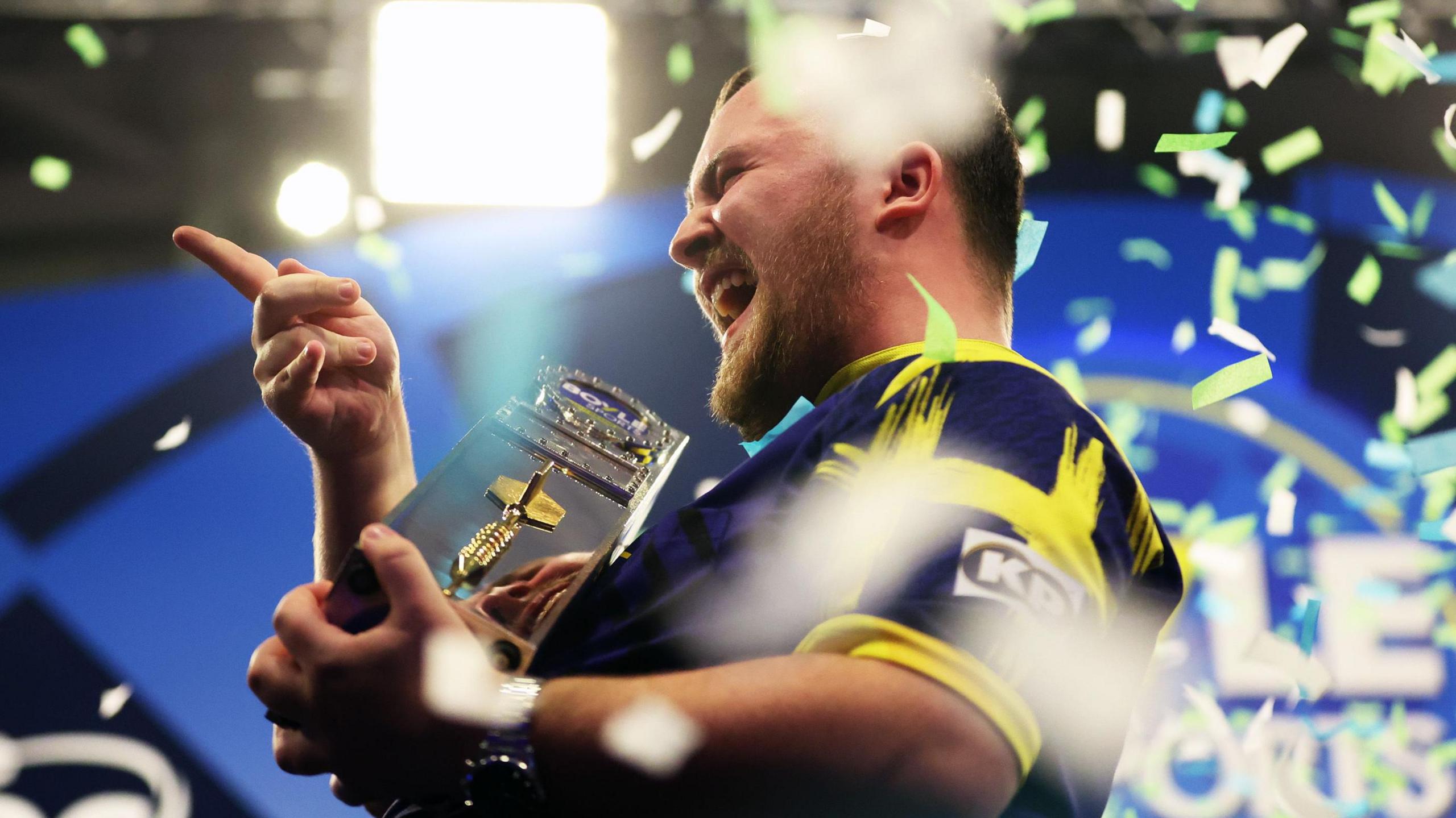
World champion Luke Littler clinically defeated world number one Luke Humphries 6-1 to win his first World Grand Prix title.

Littler, 18, was knocked out in the first round of the ‘double-in and double-out’ tournament on debut last year, but was more impressive throughout this campaign.

His average was lower than Humphries’ in the final, but he was ruthless throughout, winning five of his six sets in final-leg deciders to claim the £120,000 prize money.

It gives Littler his seventh PDC major televised title – the joint seventh-highest in history.

He has closed the gap between himself and leader Humphries to just over £70,000 at the top of the PDC’s order of merit as the two battle to arrive at December’s World Championships as world number one.

“I’m very happy to tick it off, it’s not the easiest tournament to win,” Littler told Sky Sports. “This is one I can tick off and there’s not many left.”

On the battle to be world number one, Littler said: “It’s definitely not a lot of [a difference in] prize money, especially with what we play for. Luke will know I’m behind his back now, I’m on to him.”

Humphries said he needs to “dedicate everything” to being able to match Littler.

Humphries v Littler in PDC major finals

The first set was shaky with Littler taking 13 darts in the second leg to get in, before pair exchanged breaks in leg three and four.

Littler, who beat four previous winners of the event on his way to winning it, held to claim the early advantage.

From there he clicked into gear, with Humphries, who had become just the third person to reach three successive Grand Prix finals, failing to create opportunities to snatch any initiative.

Littler took set two with a 64 checkout after a brilliant 177 set-up in leg five and he then got eight darts into a nine-darter in the opening leg of set three, before winning it after Humphries missed four darts at double.

Set four was won by Littler in another final-leg decider before Humphries got on the board by sensationally taking out 154 to pick up set five.

That could have been the spark for the 2023 winner but Littler was not willing to open the door and won the next two sets to seal the victory.

Humphries will walk away wondering what happened. He averaged 93.61 to Littler’s 92.15, while the 2024 world champion also hit more 100-plus scores and 180s.

Related topics

  • Darts