Brentford boss Andrews signs new deal to 2032

Keifer MacDonald

BBC Sport journalist

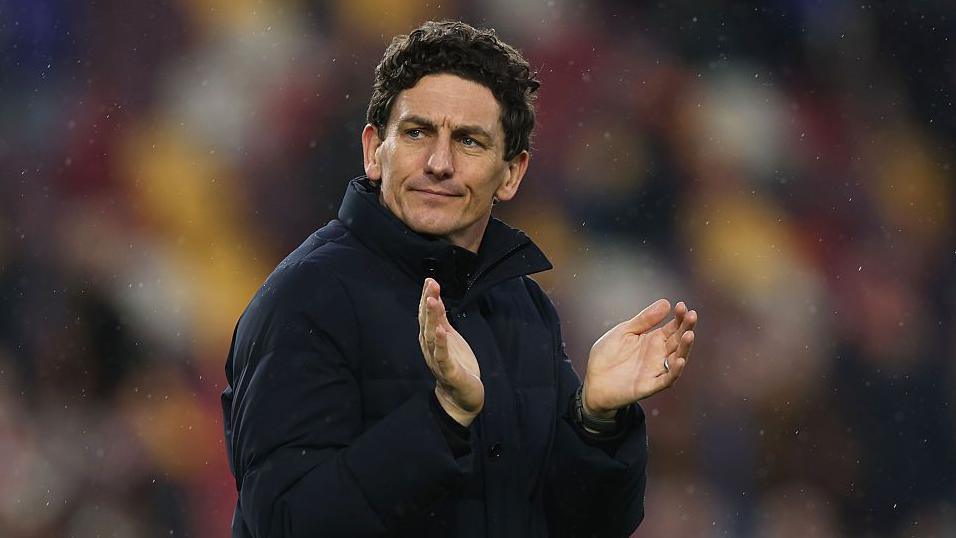
Brentford head coach Keith Andrews has signed a new contract with the club, running until 2032.

The Irishman has impressed since stepping up from his role as set-piece coach to replace Thomas Frank in June, with the Bees sitting seventh in the Premier League and eyeing European qualification for the first time in their history.

Andrews, 45, said he felt as though he needed to “earn my stripes” after following on from Frank’s successful seven-year tenure in west London, during which the club were promoted to the Premier League.

“Naturally, I think there would have been a slight concern – if I were living in Dublin looking at Thomas Frank leaving and the set-piece coach taking over, I probably would have been a little bit worried too! So, I really understood it,” Andrews told Brentford’s website.

“I was always going to grasp the opportunity I was getting with both hands.

“I wanted to be very humble about it, work really, really hard, and basically just prove to myself – more than anyone – that I was capable of doing this job to a level it needed to be.”

The club’s director of football, Phil Giles, added that Andrews has proven to be a “really good fit for the club” after an “outstanding” first season at the helm.

“When Keith accepted the job last summer, he signed a three-year contract, but the intention was always that we’d review this at the earliest opportunity,” said Giles.

“Given our progress this season, I’m really happy that we have agreed this extension within the first nine months.”

Related topics

  • Brentford
  • Premier League
  • Football

More on this story

    • 17 October 2025
    A graphic of Premier League players from every team in the division in 2025-26 season, with the Premier League trophy in front of them.
    • 16 August 2025
    BBC Sport microphone and phone

How have Chelsea made biggest loss in English football history?

Daniel Austin

BBC Sport senior journalist

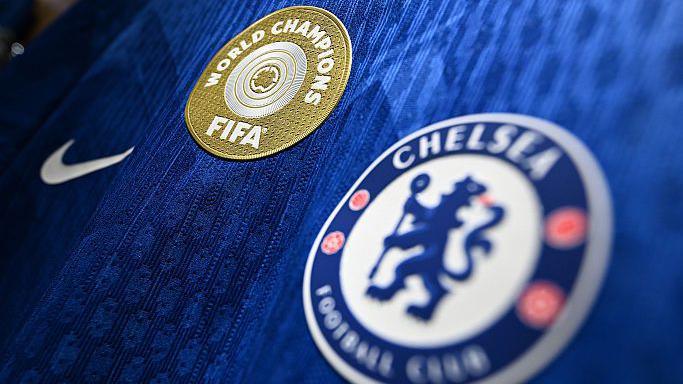
Chelsea recorded a pre-tax loss of £355m for 2024-25, according to financial figures released by Uefa.

It is the highest annual loss ever made by an English football club, and the second highest in European history, following the £484m Barcelona’s lost in 2021.

Chelsea bring in less money than other wealthy PL clubs

The report doesn’t break down the loss into its component parts, but there are clues.

Uefa’s figures show Chelsea’s overall revenue was significantly lower than some of their Premier League rivals.

The Blues brought in £511m, compared to £746m for Manchester City and £744m for Liverpool.

That difference comes from a few key areas.

Chelsea’s income from ticket sales was the ninth-highest in Europe but still £28m less than Liverpool, one place ahead of them.

The average amount Chelsea made per matchday was £1.2m less than Liverpool, who again were one spot ahead.

Chelsea’s matchday revenue is restricted by the capacity of Stamford Bridge, which at 41,798 is only the 11th-biggest ground in the Premier League, 34,000 smaller than Manchester United’s Old Trafford.

The Blues also made far less in commercial revenue than some of their rivals.

They were ranked 11th for commercial revenue in Europe last year, making £207m – £5m down on the previous year.

That puts their commercial revenue £66m lower than Tottenham – the next-highest English club – and £165m lower than Manchester City, who brought in more than anyone else in the Premier League.

Chelsea also made far less from merchandising and kit sales than the five other wealthiest Premier League clubs.

They generated £83m from that revenue stream – no improvement on the previous year. That is £46m less than Spurs and £82m less than top-ranked Manchester United.

Chelsea chairman Todd Boehly looks on from pitchside at Stamford Bridge ahead of a premier League matchGetty Images

Expenses continue to rise at Stamford Bridge

Chelsea’s outgoings were also part of the problem.

They were the sixth-highest spenders on wages in Europe, paying their players £388m – £43m more than they did the previous year.

Only Liverpool, whose spend was increased by bonuses paid to players for winning the Premier League, and Manchester City were higher in England.

Chelsea also employ the highest number of full-time non-footballer employees at any club in England, with a staff of 1,169.

The club’s operating costs – including utilities, transport, insurance, marketing, and administration – increased from £159m to £240m, putting them fifth across Europe.

The Uefa report makes clear Chelsea’s playing squad is the most expensively assembled in football history, costing £1.52bn – a value up 5% from the previous year.

Chelsea have signed many of their players to long-term contracts in order to ensure their value is ‘amortised’ – spread out over a longer period of time to reduce the yearly cost in the club accounts.

‘Chelsea believe they will comply with Uefa rules’

Nizaar Kinsella

Chelsea reporter

Sources at Chelsea say a number of factors have caused an unfavourable outlook in Uefa’s latest report.

Those factors include asset impairments (an accounting term for when an asset has a lower market value than that listed on a company’s balance sheet), settlements tied to historical regulatory matters, and the exiting of legacy contracts.

Those disclosures are required under the governing body regulations.

Chelsea say they remain profitable on an operating basis, believe they will comply with Uefa’s rules, and deny they will have to sell star players to fulfil any regulatory requirements.

After a substantial fine in the summer for breaching spending rules, they remain under Uefa scrutiny. And they could face further fines as part of the settlement should they continue to not be compliant.

Related topics

  • Chelsea
  • Football

Edwards and Le Bris condemn racist abuse of players

Mandeep Sanghera

BBC Sport journalist

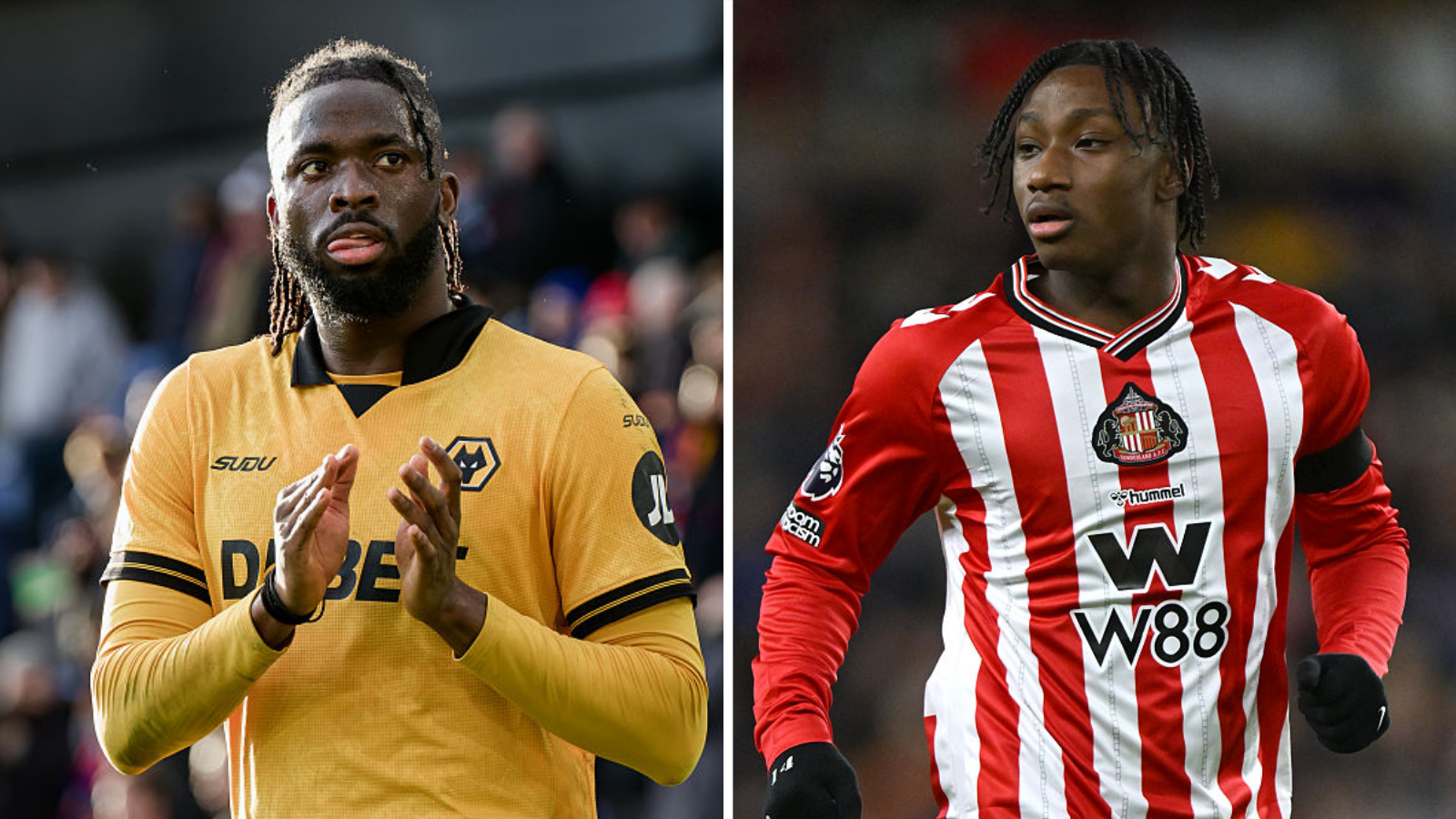
Wolves manager Rob Edwards and Sunderland counterpart Regis le Bris have condemned the racist abuse their players suffered last weekend.

Nigeria striker Tolu Arokodare, 25, received abusive messages on social media after he was part of a Wolves side beaten 1-0 at Crystal Palace on Sunday.

“[It’s been a] really difficult week for him [Arokodare],” said Edwards. “He was upset and angered by it, understandably so.

“We have supported him, and we have had a few individual chats with him. We have spoken about it as a group to make sure we get around him and support him as well.”

Sunderland’s English winger Mundle, 22, was also targeted with online racist abuse following his substitute appearance in Sunday’s 3-1 home defeat by Fulham.

“What happened to Romaine is unacceptable – we stand with him,” said Le Bris.

    • 3 days ago
    • 4 days ago
    • 8 hours ago

‘Tough to hear’

Arokodare and Mundle were two of four Premier League players who received racist abuse on social media last weekend, with Burnley’s Hannibal Mejbri and Chelsea’s Wesley Fofana being similarly targeted.

The UK Football Policing Unit (UKFPU) is investigating the incidents and said it will “do everything possible to identify those responsible and bring them to justice”.

Police Scotland has also said it was investigating after Rangers players Emmanuel Fernandez and Djeidi Gassama shared screenshots of racist abuse aimed at them on their social media accounts after Sunday’s 2-2 draw at Livingston.

Anti-discrimination group Kick It Out said reports of online abuse are at record levels, increasing by a third compared with the same point last season.

Mike Ankers, UKFPU deputy director, told BBC Radio 5 Live the police unit has had an increase of about 115% in the number of reports.

“I don’t know really why, but I repeat – we don’t want to accept that,” added Le Bris.

“We have to have a clear position and I think it’s the case here at Sunderland, we want to defend values and when someone, a group of people, want to threaten those values it’s important to react.”

Edwards added: “There have been a number of these instances, and very high-profile over this last week, which is really sad.

“I have been a head coach and a manager a number of times when my players have had this and the sad thing about it is all of them have had it before.

“They say, ‘I’m OK, I have had it before’. I think that is what is difficult. That is tough to hear.”

Edwards said Arokodare had trained this week and, despite being affected by the racist abuse, was “all right to play” in his side’s home game against Aston Villa on Friday (20:00 GMT).

However, Le Bris said Mundle “might be sidelined for a few weeks or months” with an injury and would miss Sunderland’s game at Bournemouth on Saturday (12:30).

Responding to the Fofana and Mejbri abuse at the weekend, a spokesperson for Meta, which owns platforms including Instagram, told BBC Sport: “No-one should be subjected to racist abuse, and we remove this content when we find it.

Related topics

  • Sunderland
  • Football
  • Wolverhampton Wanderers
    • 5 hours ago
    Hannah Cain arrives at a Wales game last year

More on this story

    • 17 October 2025
    A graphic of Premier League players from every team in the division in 2025-26 season, with the Premier League trophy in front of them.
    • 16 August 2025
    BBC Sport microphone and phone

India beat Zimbabwe to keep title defence alive

Elizabeth Botcherby

BBC Sport journalist
  • 99 Comments

T20 World Cup, Super 8 Group 1, Chennai

India 256-4 (20 overs): Sharma 55 (30); Hardik 50* (23)

Zimbabwe 184-6 (20 overs): Bennett 97* (59); Singh 3-24

India won by 72 runs

Defending champions India kept their T20 World Cup semi-final hopes alive and eliminated opponents Zimbabwe with a 72-run victory in Chennai.

Having previously gone unbeaten in the group stage, Zimbabwe leaked more than 250 runs for the second consecutive match in the Super 8s as India piled on 256-4.

It is the second highest total in T20 World Cup history behind Sri Lanka’s 260-6 against Kenya in the inaugural event in 2007.

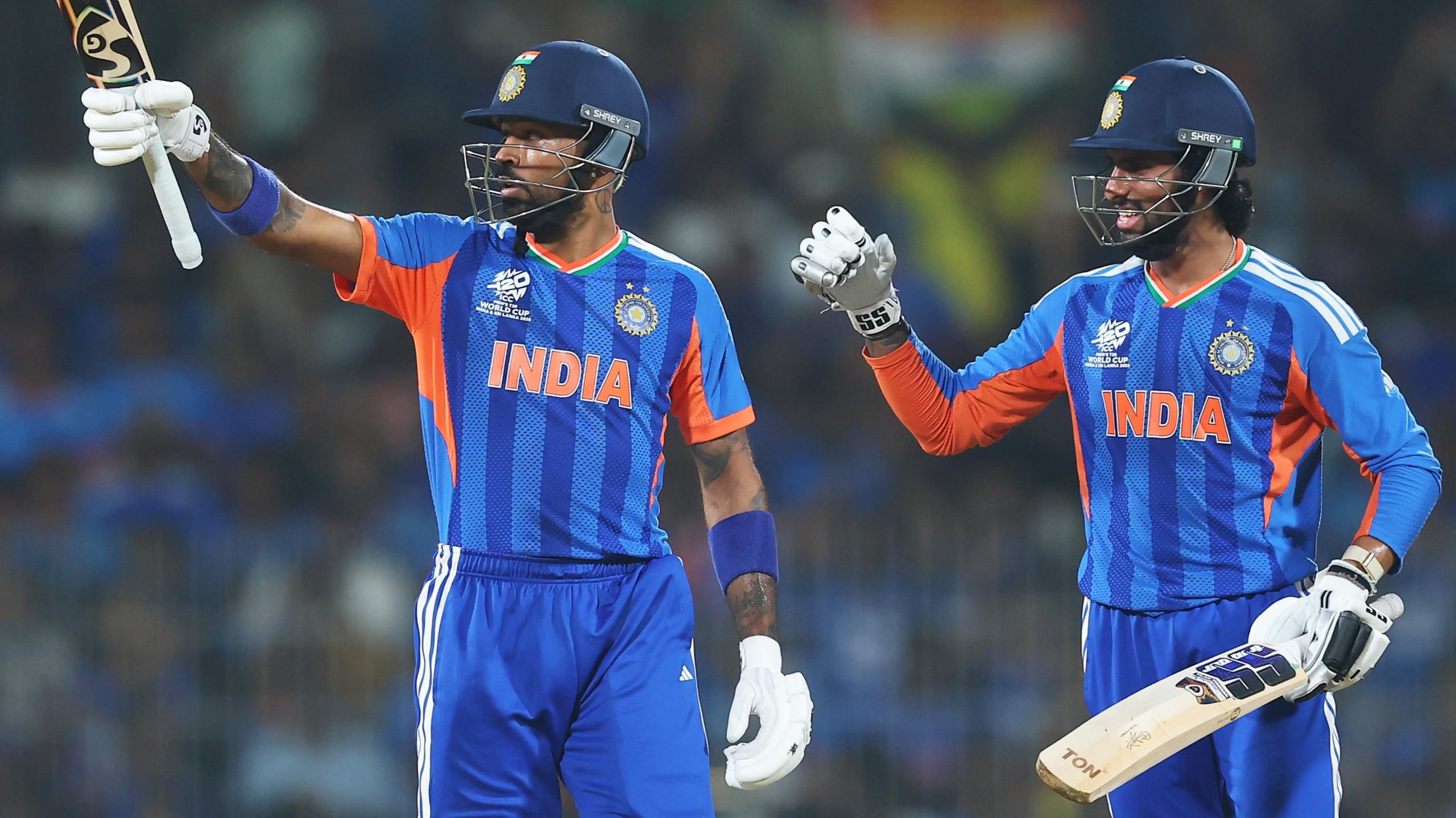
Opener Abhishek Sharma top-scored with 55 off 30 balls, including four fours and four sixes, all-rounder Hardik Pandya completed a 23-ball half-century with a six off the final delivery of the innings, and Tilak Varma flashed an unbeaten 44 from 16.

Chasing 257, Zimbabwe opener Brian Bennett showcased his talent, registering his third unbeaten half-century of the tournament with 97 from 59 balls.

The 22-year-old, whose fifty came off 34 balls, struck eight fours and six sixes but lacked support, with Sikandar Raza’s 31 (21) the next highest score.

Now level on two points with West Indies, India know victory over the two-time champions in Kolkata on Sunday will secure their spot in the last four.

India bounce back from South Africa mauling

To play this video you need to enable JavaScript in your browser.

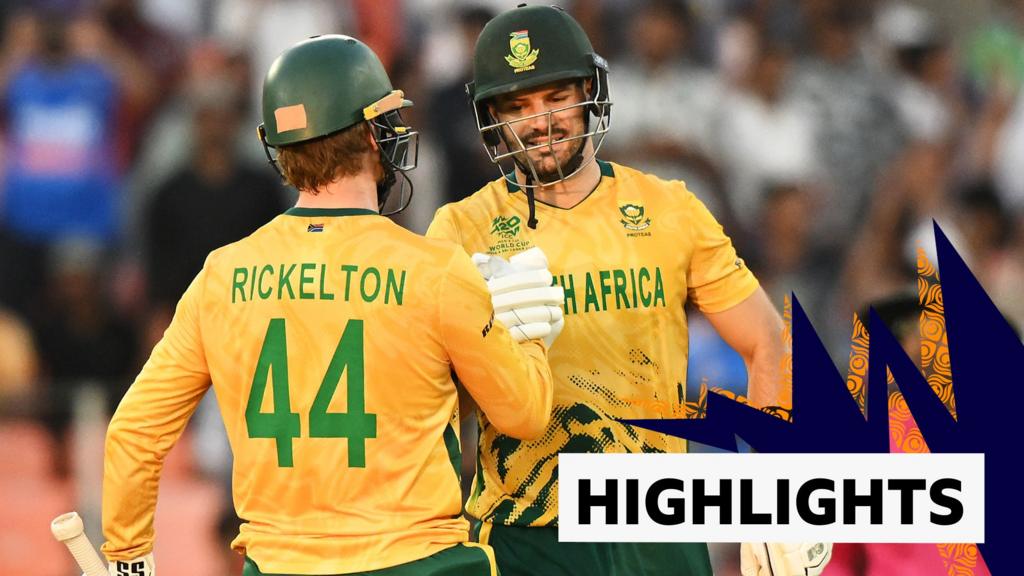
India had enjoyed a relatively comfortable passage through the initial group stage, winning all four of their matches and twice passing 190 with the bat, but had their wings clipped by South Africa in their Super 8 opener.

Chasing 187, they were bowled out for 111 – a result which left them in near must-win territory as they headed to Chennai.

Zimbabwe captain Raza, whose side were in a similar position, said at the toss it would “come down to a battle of nerves”. India showed none as they bludgeoned their highest total at a T20 World Cup and passed 250 in a men’s T20 international for the fifth time.

Sharma, who came into the match under pressure having registered three ducks in his past four innings, set the tone with a 26-ball half-century.

Initially content to play second fiddle to Sanju Samson, who struck the second ball of the match for six and made a quickfire 24 from 15 deliveries, he led India to 80-1 at the end of the powerplay, striking three fours and three sixes.

His second-wicket partnership with Ishan Kishan (38) was worth 72 runs and although Kishan could not capitalise on Tashinga Musekiwa dropping him on 26, Suryakumar Yadav punished Zimbabwe’s sloppy fielding. Dropped on eight by Blessing Muzarabani, the India skipper thrashed 33 from 13 deliveries.

It was Zimbabwe’s fifth drop from 15 attempts in the Super 8s. In the group stage, during which they were unbeaten, they had a catching efficiency of 95.2% and dropped just one.

Though Suryakumar was striking above 250, his departure flicked a switch for India, with Hardik and Varma piling on 84 runs in the final 5.1 overs, including seven sixes. Hardik accelerated from 12 from eight balls to 50 not out from 23, while Varma found the boundary seven times in 16 deliveries.

Related topics

  • India
  • Zimbabwe
  • Cricket

More on this story

  • Brian Bennett
    • 16 August 2025
    BBC Sport microphone and phone

Fans of richest PL clubs pay £74 per match as ticket revenue soars

Daniel Austin

BBC Sport senior journalist
  • 254 Comments

Fans of the Premier League’s six wealthiest clubs are paying an average of £74 per ticket for each match they attend, while ticket revenues are soaring, according to data from a new report.

The Uefa European club finance and investment landscape report shows that Arsenal, Chelsea, Liverpool, Manchester City, Manchester United and Tottenham earned an average of 19% more money from selling tickets for home matches in 2025 than in 2024.

Among Premier League clubs, Arsenal made the most per fan, per match, earning an average of £89 per ticket.

The biggest increase in ticket income was earned by Liverpool, who made 27% more than the previous year, for a total of £120m.

The figures include matches in all European and domestic competitions and comprise the average price for general admission and hospitality tickets.

The cost of competing for trophies, increasing operational expenses, and the threat of complying with financial regulations have all been used by clubs as reasons to justify rises.

“There is a big problem with ticket prices, and these figures are definitely not fair for fans,” says Thomas Concannon, Premier League network manager for the Football Supporters’ Association.

“We believe there should be a league-wide ruling on home ticket prices – it would protect fans and make for a more competitive league.

‘English football has a spending problem’

The report shows the 20 Premier League clubs are well ahead of their European rivals when it comes to overall revenue, earning a combined total of £6.5bn.

That is almost double the revenue of the next highest division, Germany’s Bundesliga, whose 18 clubs made a total of £3.4bn.

La Liga clubs earned a fraction less, while Serie A teams’ total revenues were £2.55bn and Ligue 1 totalled £2.2bn.

Of the 25 clubs who generated the most revenue, 11 were English.

The difference can be attributed to the fact that the full complement of Premier League clubs earn far more than those in other countries in areas such as broadcasting income and commercial revenue.

For example, relegated Ipswich Town earned more in TV revenue last year than Barcelona.

But those revenues did not mean the Premier League clubs turned a collective profit.

Only five made a profit while 15 made losses.

Across the division, there was a combined pre-tax loss of £559m.

Chelsea – with £355m – made the second-highest loss in European football history while Spurs (£129m) were the the third-biggest losers in 2025, with Aston Villa fifth (£85m).

“The wealthier clubs seem to have the impression that as they increase their revenues, the supporters get richer too and can afford to pay a lot more money – that’s not the reality,” Concannon says.

Do expenses justify charging fans high prices?

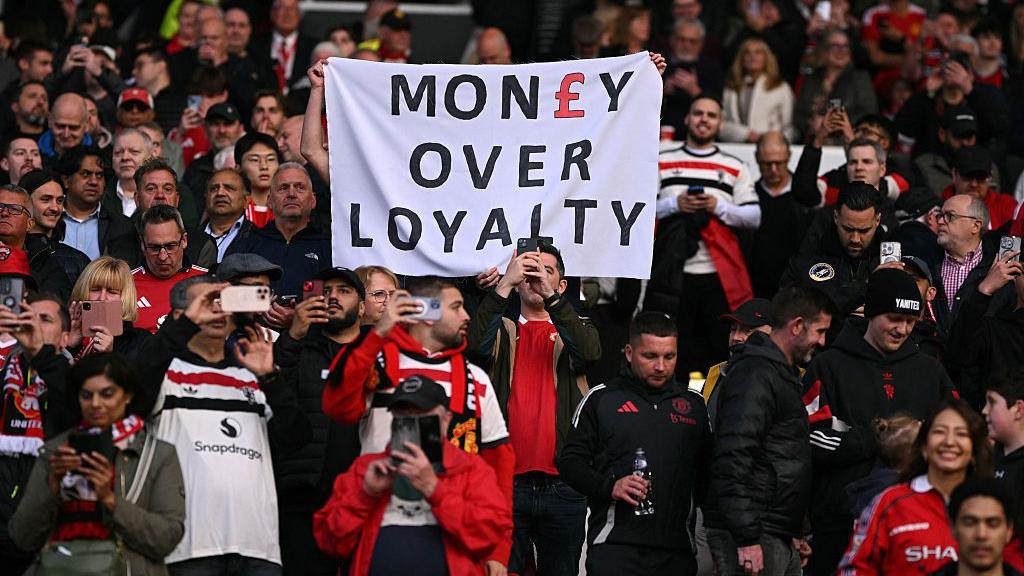
Following a series of ticket price rises, the FSA launched a national campaign called ‘Stop Exploiting Loyalty’ in 2024, calling on supporters to protest against what it sees as clubs taking advantage of fans’ devotion.

Since the campaign began, some clubs have gone further by removing concessionary discounts, and announcing further price rises.

Clubs with new-build or redeveloped stadiums – including Arsenal, Liverpool, Manchester City and Spurs – have also increased the proportion of hospitality tickets available for each game.

“Limiting concessions, and completely getting rid of them in some cases, is something we completely disagree with,” Concannon says.

“Hospitality has an impact on tickets for the long-standing matchgoing fan. There is a Premier League rule saying the most expensive tickets should subsidise the cheapest ones, but fans really don’t feel like they’re seeing that.

“It has a huge impact on the atmosphere too.”

The data shows all 20 Premier League clubs made a combined total of £920m from ticket sales last year – an increase of £90m from the previous year.

That total is almost double the total of £514m in ticket income earned by Spanish clubs.

But Premier League fans are not paying the highest prices of all – Paris St-Germain (£121), Barcelona (£101), and Real Madrid (£94) are all more expensive for fans per match on average.

Other clubs in their respective leagues charge significantly lower prices, however, meaning the average fan in Ligue 1 or La Liga is paying much less.

In some regards, Premier League clubs’ outgoings have significantly increased.

Between them, the 20 Premier League clubs have more than 11,000 full-time employees, an increase of 8% on the previous year. That is thanks largely to expansions in the commercial teams of clubs at the top end.

And operating costs – including things like utilities, transport, insurance, marketing, and administration – rose by 11% to a league-wide total of £1.77bn.

Wages paid to footballers totalled £3.1bn across the division in 2025, which was neither an increase nor a decrease.

“We can say costs are increasing and football clubs are not immune to that, but the vast majority of their expenditure is still player wages and transfer fees,” says Dan Plumley, principal lecturer in sport finance at Sheffield Hallam University.

“Clubs are constantly chasing revenue down, not to make a profit, but to stretch their squad costs as much as possible.

“That’s where clubs run the risk of alienating fanbases because a lot of fans will see that for what it is.

Related topics

  • Manchester United
  • Liverpool
  • Chelsea
  • Premier League
  • Manchester City
  • Tottenham Hotspur
  • Arsenal
  • Football