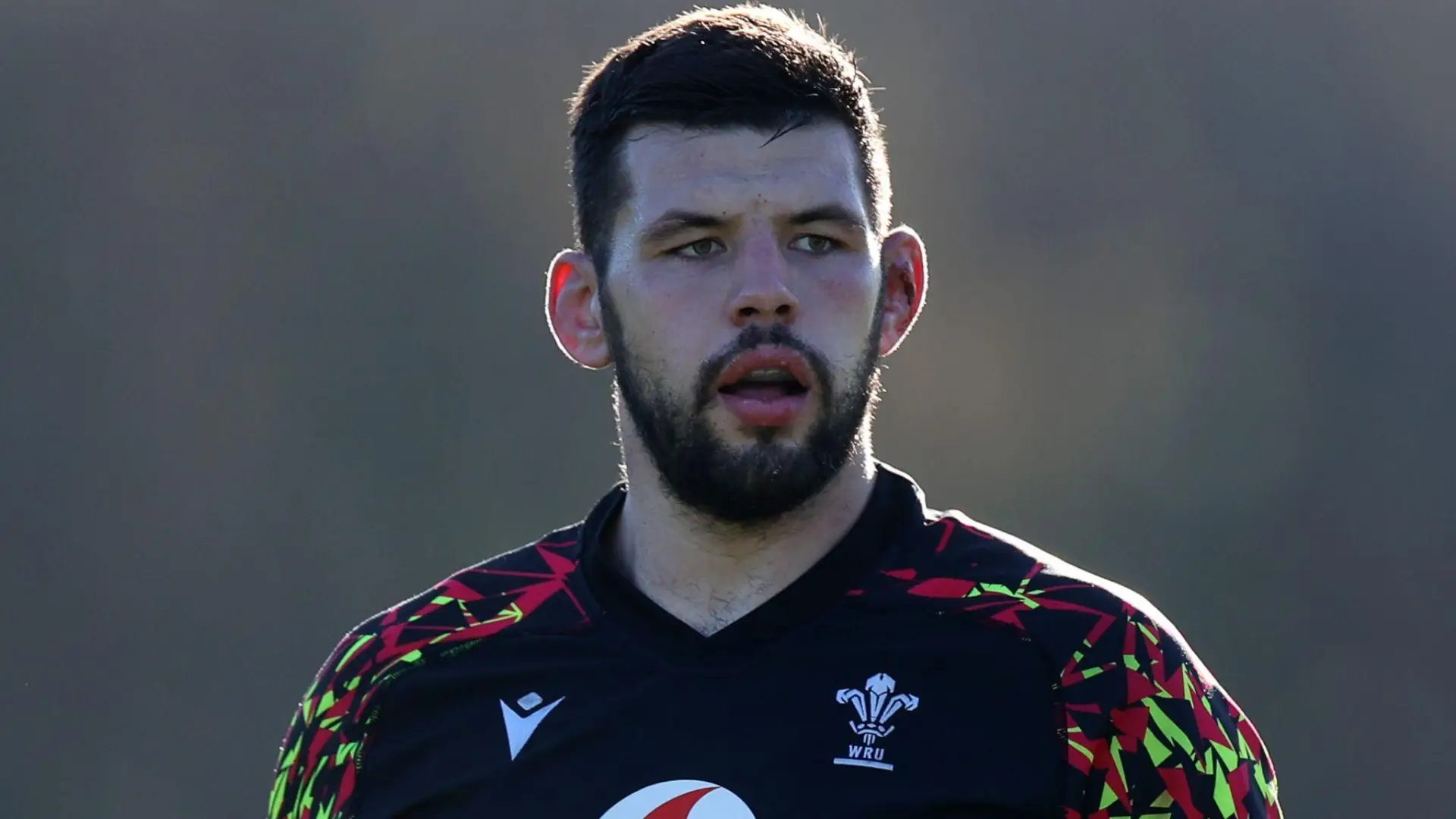
Wales have called Ospreys lock Rhys Davies into Steve Tandy’s Six Nations squad.
Davies, 27, started in the 73-0 defeat against South Africa in November but was left out of the original 38-man squad for this year’s Six Nations tournament.
Davies, who has played four internationals, is the eighth Ospreys player named in the squad, when there are doubts about the long-term professional future of the Welsh side.
It takes the total number in the squad to 39 with Exeter skipper Dafydd Jenkins, Montpellier lock Adam Beard and Dragons co-captain Ben Carter the other lock options in the squad, and Gloucester forward Freddie Thomas battling back from injury.
Captain Jac Morgan, Cardiff number eight Taulupe Faletau, Exeter lock Christ Tshiunza and Gloucester centre Max Llewellyn are also injured.
20 hours ago
1 day ago
Wales 2026 Six Nations squad
Forwards (21): Adam Beard (Montpellier), Liam Belcher (Cardiff), James Botham (Cardiff), Rhys Carre (Saracens), Ben Carter (Dragons), Olly Cracknell (Leicester), Rhys Davies (Ospreys), Harri Deaves (Ospreys), Ryan Elias (Scarlets), Tomas Francis (Provence), Archie Griffin (Bath), Dafydd Jenkins (Exeter), Dewi Lake (Ospreys, capt), Alex Mann (Cardiff), Josh Macleod (Scarlets), Taine Plumtree (Scarlets), Nicky Smith (Leicester), Gareth Thomas (Ospreys), Freddie Thomas (Gloucester), Aaron Wainwright (Dragons), Sam Wainwright (Cardiff).
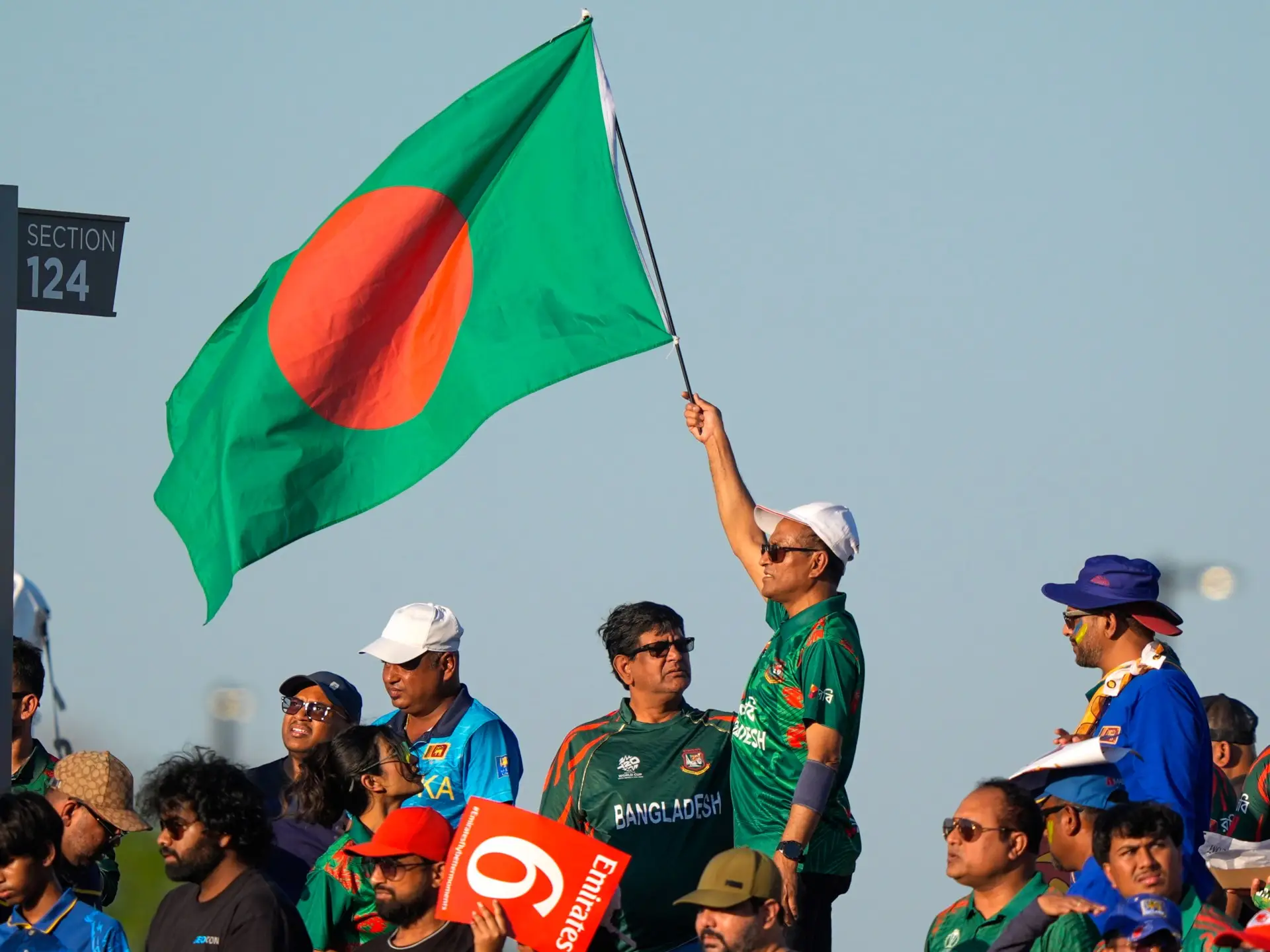
Bangladesh has approved its shooting team’s tour to New Delhi for next month’s Asian Shooting Championships, days after the cricket team’s refusal to play in India due to safety concerns cost them a place at the Twenty20 World Cup.
Bangladesh have been replaced by Scotland in the T20 World Cup, which runs from February 7 to March 8, after they insisted they would not tour India, highlighting security concerns following soured political relations between the neighbours.
Recommended Stories
list of 4 itemsend of list
The International Cricket Council (ICC), citing independent security assessment reports, dismissed Bangladesh’s demands to play their World Cup matches in Sri Lanka, the tournament cohosts, instead, arguing the late change in schedule was “not feasible”.
However, media reports in Bangladesh said a three-member contingent comprising shooter Robiul Islam, his coach Sharmin Akhter and jury member Saima Feroze had received approval from the Ministry of Youth and Sports to compete in New Delhi.
The National Rifle Association of India (NRAI) secretary-general, Pawan Singh, confirmed the shooting team’s participation in India.
“Bangladesh’s participation was confirmed a month ago. Our applications for clearances for all nations have been in process for almost three months,” Singh told the Reuters news agency.
“We have to follow ISSF norms as a sport and comply with the IOC (International Olympic Committee) charter, and as NRAI, we have always received support from the government,” he said, referring to the International Shooting Sport Federation.
Singh added that the Bangladesh contingent did not request any extra security measures.
“The Bangladesh team has come to our tournaments many times, so they know our strict protocols well. Maybe that’s why they are confident and have not made any special requests.”
The Asian Shooting Confederation, which is organising the event, did not immediately respond to a request for comment.
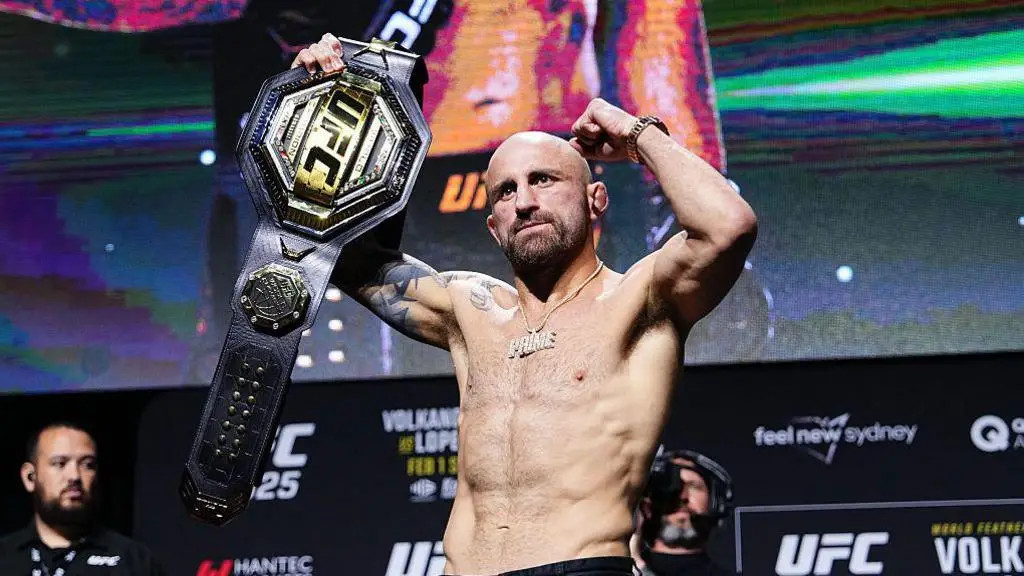
Alexander Volkanovski says he will not retire after his featherweight title defence against Diego Lopes at UFC 325 on Saturday.
Australian Volkanovski is regarded as one of the greatest featherweights of all time and will match Jose Aldo’s record of eights wins in title fights if he triumphs at Qudos Bank Arena in Sydney.
Asked if he could dispel rumours of retirement, Volkanovski said: “I don’t know where it’s come from. I know a lot of people are saying it.
Volkanovski became a two-time champion with victory over Brazil’s Lopes in April.
“I’ve got a tough fight ahead of me,” said Volkanovski.
“I’m going to get my hand raised and then hopefully a quick turnaround – hopefully minimal damage so I can get right back in there.”
Volkanovski, wearing an apron in a nod to his cooking hobby, was cheered raucously by his home fans throughout the news conference.
After the face-off with 31-year-old Lopes, the pair shook hands before Volkanovski gave him his apron.
Volkanovski beat Max Holloway for his first belt in 2019 and defended it five times before defeat by Ilia Topuria last year.
Following Topuria’s move to lightweight and vacation of the title, Volkanovski regained it with a unanimous decision win over Lopes.
Wael Tarabishi died after weeks in intensive care while his father, his primary caregiver, was held in ICE detention. Despite multiple requests, ICE denied his release and have barred him from attending his son’s funeral.
The United States and Iran are engaged in increasingly hostile rhetoric as US warships move into the Arabian Sea, despite regional nations seeking a diplomatic solution to prevent a military flare-up.
US President Donald Trump warned this week that “time is running out” for Iran to return to talks to reach a new deal on its nuclear programme.
Trump said the naval forces he was sending to Iran’s neighbourhood were even greater than those that he deployed to the coast of Venezuela before US special forces abducted the South American country’s president, Nicolas Maduro, in a military assault on Caracas on January 3.
Iranian Foreign Minister Abbas Araghchi hit back at Trump’s threats, warning that his nation’s military was ready “with their fingers on the trigger”. He added that they would “immediately and powerfully respond” to any new US attack.
The escalation comes seven months after US bombers attacked Iranian nuclear facilities during Tehran’s 12-day war with Israel last year. Iran retaliated by striking Qatar’s Al Udeid Air Base, which is used by US forces. During its war with Israel, Iran also struck several Israeli cities with missiles.
Earlier this month, Trump told Iranian protesters who were clashing with security forces that “help” was on the way, threatening to bomb Iran. However, he has since walked back his warning, seemingly accepting Tehran’s assurances that arrested protesters would not be executed.
As Iran and the US appear to be headed towards a new military escalation, key demands from both sides appear to be primarily the same as they have been for years.
We unpack what they are:
What the US wants Iran to do
Historically, the US has imposed sanctions on Iran for a range of reasons, from punishment for the hostage crisis in 1979 – when, after the Iranian Revolution, students took over the US embassy with staff inside – to supposed concern for the human rights of Iranians.
But over the past two decades, US pressure against Iran, including through crippling economic sanctions that have devastated the country’s middle class, has largely focused on Tehran’s nuclear and ballistic missiles programme.
Nuclear programme
The US and some of its Western allies insist that Iran’s programme is aimed at building nuclear weapons, even though Tehran has insisted that it is only developing a civilian programme to meet energy needs.
Under a nuclear deal that Iran agreed with the US during the Obama administration – known as the Joint Comprehensive Plan of Action (JCPOA) – Tehran capped its uranium enrichment at 3.67 percent and its enriched uranium stockpile at 300kg (660lb). This was enough for Iran to use for nuclear power plants, but far from adequate for weapons. In exchange, the US lifted most sanctions previously imposed on Iran.
At 60 percent enrichment, uranium is considered ready to be developed for weapons. At 90 percent, it is considered fully weapons-grade.
But Trump withdrew the US from this deal in his first term as president, in May 2018, and reimposed sanctions against Tehran. Iran appeared to try to stick to its end of the agreement for a while, along with European powers, Russia and China, who were all co-signatories to the Obama deal. Trump’s successor, Joe Biden, however, kept most of Trump’s sanctions in place, even though he had been Obama’s vice president.
In his second term as president, Trump has further ramped up economic coercion against Iran, which also began rapidly enriching its uranium.
In May 2025, the International Atomic Energy Agency (IAEA) warned that Iran had stockpiled more than 400kg (880lb) of uranium enriched to 60 percent. Though weapons need uranium that’s more than 90 percent enriched, no non-nuclear weapons state is known to keep uranium enriched to levels as high as 60 percent.
The US and Israel cited the IAEA warning as justification for bombing Iran in June.
“There has been a consistent lobby in Washington arguing that Iran achieving nuclear weapon capability is an enormous threat to the US and the wider world, and the US government knows that this fear is widely held in America,” Christopher Featherstone, associate lecturer at the Department of Politics, University of York, told Al Jazeera.
The US now demands that:
Iran must not build nuclear weapons, and it must abandon even a civilian nuclear programme.
Iran must not enrich uranium at all – not even to very low levels that would be useless for military purposes.
Iran must hand over any enriched uranium it already has.
Ballistic missiles
Israeli bombs and missiles killed more than 1,000 Iranians during the June war. But while far fewer – 32 – Israelis died in retaliatory Iranian attacks, Tehran’s ballistic missiles frequently managed to breach Israel’s vaunted Iron Dome, hitting several cities.
Since then, US and Israeli concerns about Iran’s ballistic missiles have grown. Iran’s Emad, Khorramshahr, Ghadr, Sejjil and Soumar ballistic and cruise missiles have ranges between 1,700km and 2,500 km (1,056-1,553 miles).
That puts Israel and all US military bases in the Middle East within the range of these missiles.
The US now demands that:
Iran must curb the number and range of its ballistic missiles.
(Al Jazeera)
Regional influence
The US’s third key demand involves Iran’s influence in its region, stitched together through alliances with governments, religious movements and armed resistance groups.
That so-called “axis of resistance” has suffered body blows over the past two years. In Syria, Bashar al-Assad’s regime, a close partner, fell in December 2024; in Lebanon, Israel decimated the leadership of Hezbollah; while Hamas in Gaza and the Houthis in Yemen have also been bloodied in wars since 2023.
Still, many of these and other groups that Iran has traditionally supported remain active and alive. Earlier this week, the Iraq-based Kataib Hezbollah, for instance, warned of a “total war” if the US were to attack Iran.
The US demands that:
Iran must end its support and links with armed resistance groups across the region.
What Iran wants the US to do
Iran, meanwhile, has its own set of demands of the US.
Economic sanctions
US sanctions, first imposed on Iran in 1979, have grown increasingly harsh in recent years, leading to shortages, inflation and economic decline.
Iran’s oil exports fell by 60-80 percent after Trump reimposed sanctions in 2018, robbing the government in Tehran of tens of billions of dollars in annual revenues.
The currency has crashed, hitting a record low of 1,500,000 rials to the dollar this week and leading to soaring inflation and a surge in the prices Iran must pay for everything it imports.
As a result, Iran’s middle class has shrunk dramatically in recent years.
Iran demands that:
The US must end economic sanctions, including the secondary sanctions that, in effect, coerce other nations from doing business with Tehran.
Nuclear programme
Iran has consistently argued that its nuclear programme is civilian in nature.
But since the joint attacks by Israel and the US last year, and the reimposition of sanctions on Tehran in recent months by the United Nations and European nations, hardliners in the country have been pressuring the government to instead race towards producing a nuclear bomb.
While the Iranian establishment has officially not shifted its position on the subject, it wants:
Iran to continue to have a nuclear programme, even if with some limits.
Iran to continue to be able to enrich uranium, even if with some limits.
A new understanding before allowing IAEA inspectors back into the country. Iran believes that the IAEA’s report on its enriched uranium last year was designed to provide the US and Israel with justification for their attacks.
Ballistic missiles
Iran believes its ballistic missiles offer it much-needed protection against regional threats, especially Israel.
That these missiles have the capacity to batter Israeli cities and reach US bases in the region gives Tehran leverage.
Iran wants:
To be allowed to keep its ballistic missiles programme.
Regional influence
Iran’s alliances and partnerships in its neighbourhood are embedded in a complex web of ideological affiliations, political commitments – such as to the Palestinian cause – and strategic calculations.
It has lost al-Assad as an ally, and Hezbollah has been weakened. But Iran’s Supreme Leader Ayatollah Khamenei alluded in December 2024 to Tehran’s belief that:
How close are we to a war?
This all depends on Trump, and how back-channel negotiations that are ongoing between the US and Iran proceed.
US allies in the region, including Saudi Arabia and the United Arab Emirates, have stated that they will not allow their airspace to be used for any attack on Iran. Qatar has been leading efforts to find a diplomatic solution.
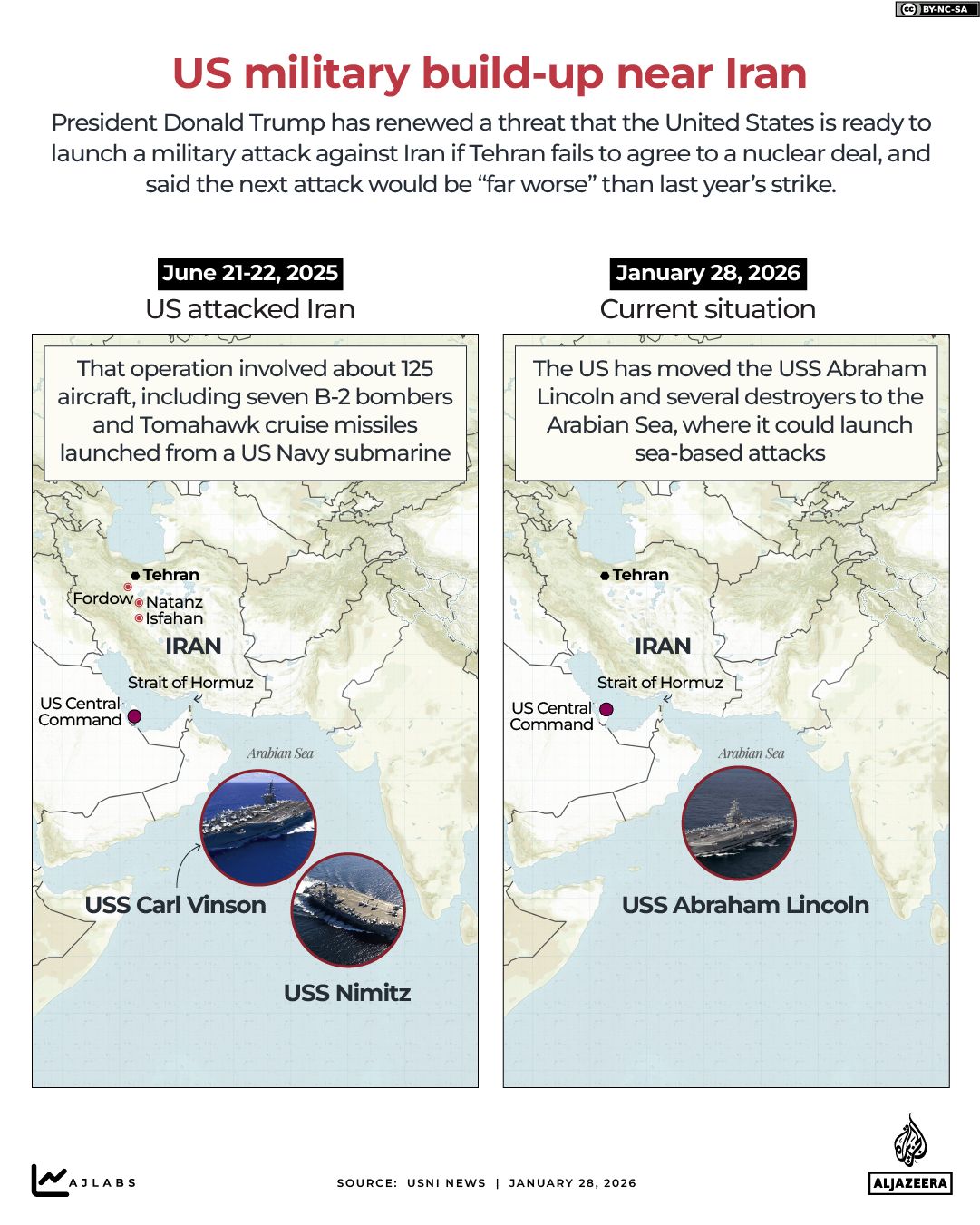
Still, the US has been beefing up its military presence off Iran. The USS Abraham Lincoln, a nuclear-powered aircraft carrier, is now in the Arabian Sea.
Over the past seven months, Trump has bombed Iran, including deeply buried nuclear facilities like Fordow.
And while Trump has called for talks, Featherstone from the University of York said “it will take an enormous diplomatic effort to see a negotiation of any real meaning.”