Why the UK’s toughest immigration voices are often politicians of colour

When Sajid Javid remarked that he would not allow people like his own parents to enter the United Kingdom today, he was not making an offhand comment. He was articulating a view that has become increasingly central to British immigration politics. The UK’s first ethnic minority home secretary said he opposed admitting unskilled workers and those who do not speak English. By his own criteria, neither his father, who arrived as an unskilled worker, nor his mother, who did not speak English, would have been permitted to settle in the country. Promoting his memoir, The Colour of Time, Javid was unambiguous: immigration must fall, English-language requirements should be tougher, and entry should be limited to skilled workers.

Far from being exceptional, Javid’s position points to a broader and increasingly visible pattern in British politics. Some of the most prominent anti-immigration positions of recent years have been articulated by ethnic minority politicians.

This pattern is most visible at the Home Office, the government department responsible for borders, asylum, detention and deportation. Since 2018, the role of home secretary has repeatedly been held by ethnic minority politicians, including Javid himself, Priti Patel, Suella Braverman and James Cleverly under Conservative governments, followed by Shabana Mahmood under Labour. Each, in turn, has advanced a tougher approach to immigration control.

Under Priti Patel, a points-based immigration system was introduced and the controversial plan to send asylum seekers to Rwanda was developed. Braverman went further still, declaring that seeing deportation flights take off would be her “dream” and her “obsession”. Yet despite the increasingly punitive tone, overall immigration numbers rose during this period. Rhetoric and outcomes diverged. Even so, the political signal from the Home Office was unmistakable: firmness on borders above all else.

The explanation for this phenomenon lies not simply in personal biography or individual conviction. Drawing on my research on ethnic minority representation in Britain, I argue that these appointments reflect a clear political logic. When political parties harden their stance on immigration, they often rely on minority politicians to act as reputational shields, figures who can front restrictive policies while insulating parties from accusations of racism.

Reputational shields matter because immigration control in the UK has long been racialised. From post-war restrictions on Commonwealth migration to the “hostile environment” policies associated with former Prime Minister Theresa May, border control has frequently intersected with race and belonging. When such policies are championed by ethnic minority politicians, criticism can more readily be reframed as ideological disagreement rather than racial exclusion.

Nowhere is this dynamic clearer than at the Home Office. The department effectively demands a hard line on immigration from its secretary, and appointing minority politicians to the role has repeatedly proven politically expedient. This does not mean white politicians are more liberal, as Theresa May’s record makes clear, but it does help explain why parties have been willing to place minority figures at the forefront of border enforcement. Four consecutive Conservative home secretaries were non-white.

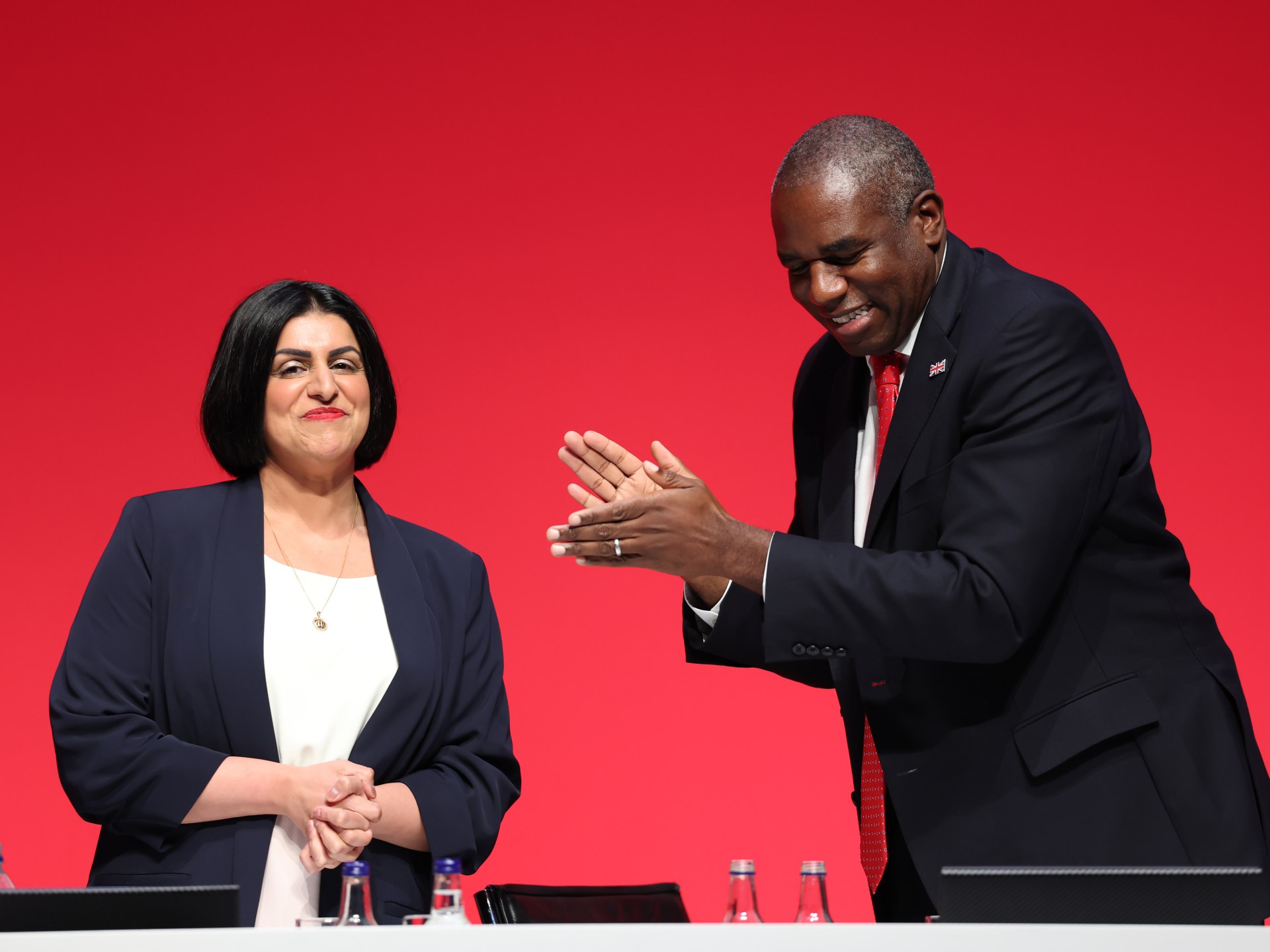
This logic now extends beyond the Conservative Party. Labour’s appointment of Shabana Mahmood as home secretary marks a notable shift for a party that has historically sought to signal greater nuance on immigration. Since taking office, Mahmood has announced and is implementing sweeping asylum reforms, which she has described as “the most substantial reform to the UK’s asylum system in a generation”.

That Keir Starmer has placed a minority politician at the forefront of Labour’s tougher turn on immigration suggests an implicit recognition of this reputational logic. Mahmood’s identity does not determine her policy positions, but it does shape how those positions are received, particularly in a media and political environment where immigration debates are routinely filtered through accusations of racism. In this sense, Labour appears to have absorbed a lesson from Conservative governments about how ethnic minority representation can function as political cover when tightening border policy.

Immigration is now cited by about four in 10 Britons as the most important issue facing the country. For Labour, long uneasy talking about borders and enforcement, Mahmood’s stance represents a recalibration. Her measures include tightening the route from asylum to permanent settlement, reforming human rights legislation to facilitate removals, and suspending visas for countries that refuse to accept returned nationals. She has been unapologetic, arguing that the pace and scale of immigration has destabilised communities and fuelled perceptions of unfairness. While Labour backbenchers and the Green Party have accused her of scapegoating migrants, figures on the political right have welcomed her approach.

It would, however, be a mistake to portray minority politicians as mere symbols or cynical mouthpieces. Many articulate their positions through narratives of fairness, legality and contribution. Javid has spoken of his family’s experiences of racism while emphasising that they entered the UK legally and worked hard. Mahmood has similarly argued that constituents who “did things the right way” feel aggrieved by irregular arrivals crossing the Channel in small boats.

These arguments reflect a broader shift in how immigration is discussed: less overtly in racial terms and more through the language of fairness, order and control. Yet this reframing does not escape the UK’s longer history of racialised immigration policy. Instead, ethnic minority politicians increasingly play a visible legitimising role within it.

The prominence of politicians of colour at the forefront of the UK’s immigration crackdown is therefore not a paradox. It is a window into how representation is operationalised in practice. When Sajid Javid says his parents would not be admitted today, he is not disavowing his background but signalling his political credibility. The deeper question is what happens when such credibility is no longer enough to contain the moral and social consequences of a system built on exclusion. Race, borders and political legitimacy, and enduring questions about belonging and citizenship, remain tightly bound together in contemporary British politics.
Scottish Championship top two set for battle – live on BBC

If you thought Heart of Midlothian against Celtic was good last Sunday, brace yourself for the latest instalment from the Scottish Championship title race.

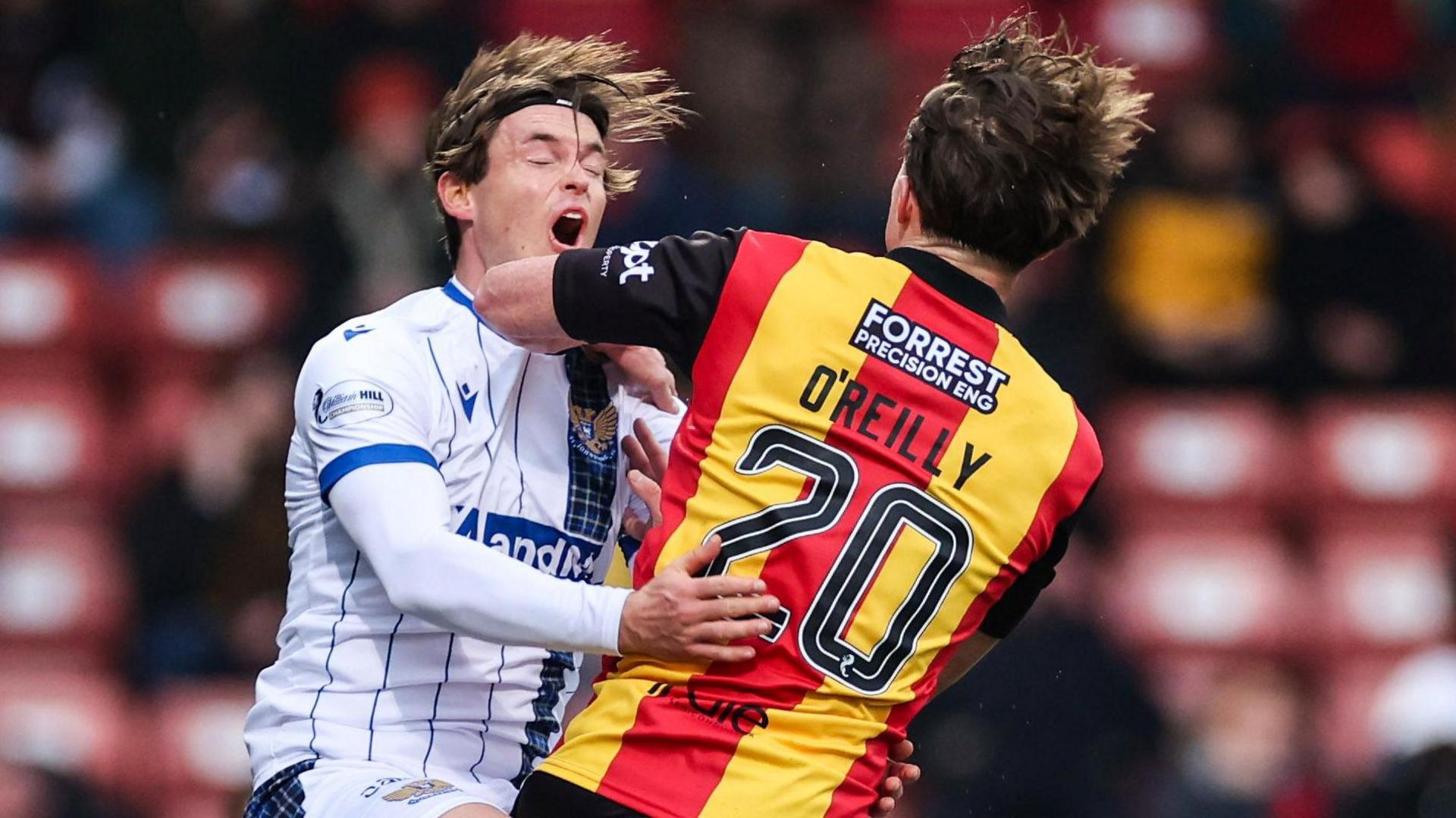
St Johnstone against Partick Thistle on Friday evening has ‘potentially season-defining’ written all over it.

A few people scoffed when Sportsound presenter Kenny MacIntyre tipped Thistle for the title on the first Saturday of the season – especially when the Jags were then trounced 5-1 by St Johnstone at McDiarmid Park.

But nobody is scoffing now.

A win for Thistle on Friday night would see them leapfrog Saints into top spot, albeit having played a game more.

Thistle were also 2-1 winners the last time these sides met, back in November at Firhill.

They have been the most consistent and impressive sides in the division, with only occasional faltering moments.

That’s what makes it an incredibly difficult call as to who will win this match – and indeed the Championship title outright.

So, to help predict what will happen at McDiarmid Park, let’s seek out the insight of a player who has played both sides this season – Arbroath midfielder Ryan Flynn.

“I will just go for strength in depth, I would say St Johnstone,” said Flynn on the Scottish Football Podcast.

“St Johnstone have scored the most goals, conceded the least, won the most games, lost the least.

Scottish Championship

St Johnstone v Partick Thistle

Watch on iPlayer

And yet… Flynn can also make a convincing case for the Glasgow Jags.

“Really you have got to credit Partick Thistle, who are really pushing them. Partick Thistle have played some good football throughout this season.

“All the credit goes to Mark Wilson for how he has galvanised that squad and got them pushing and believing.

“I think that squad believes they can go on and win the league and when it comes to Friday night, they will be looking to win and go top of the league.”

One thing is for sure; Flynn and his Arbroath colleagues will be watching closely, with their own side hovering in third place, ready for a slip-up from either of the top two.

At one point on television this season I said St Johnstone were running away with the league. The perils of broadcasting.

Partick Thistle fans – including a certain Ian McCall – have not stopped reminding me of the comment.

In the early part of the season the Perth side were striding along confidently, racking up win after win.

The overall form is still good, but the home defeat to Dunfermline last weekend came at the wrong time and it has certainly added an extra dash of spice to the match against Thistle.

The Saints saw their chance to get it out of their system on Tuesday night against Ayr United in the Challenge Cup disappear because of a waterlogged pitch.

Related topics

  • Scottish Championship
  • St Johnstone
  • Partick Thistle
  • Scottish Football
  • Football

World champion Price to face Aquino live on BBC

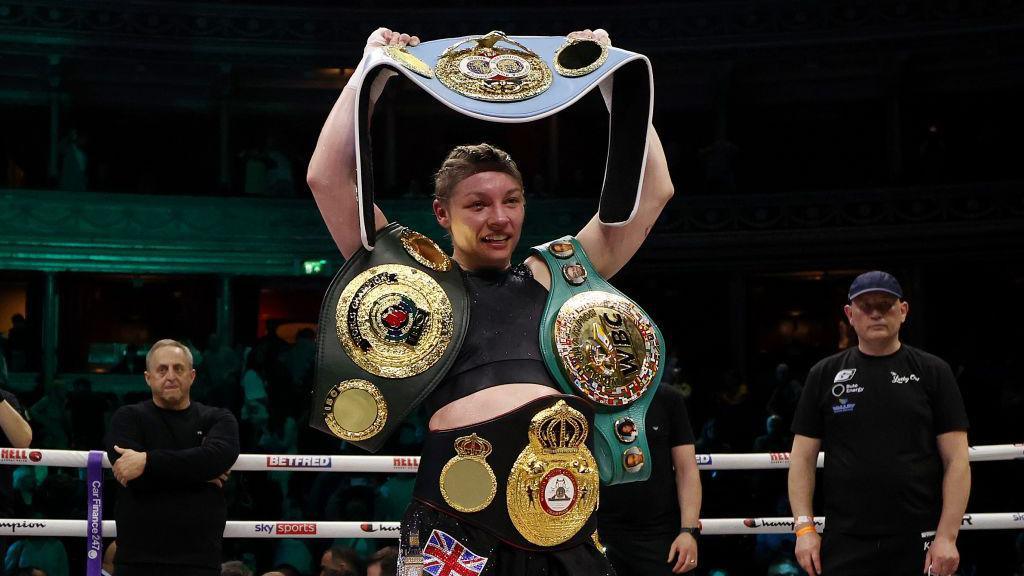
Welshwoman Lauren Price will defend her unified welterweight world titles against Puerto Rican challenger Stephanie Pineiro Aquino on Saturday, 4 April at Cardiff’s Utilita Arena.

The fight will be shown live on BBC Two and BBC iPlayer.

Price, 31, has not fought since adding the WBC and IBF belts to her WBA crown with a dominant points win over Natasha Jonas in London last March.

“Defending my world titles at home in Wales means everything to me. I want to repay the support everyone has shown me with another great performance,” Price said.

“I never turn down a challenge. Stephanie Pineiro Aquino is a dangerous fighter, but nothing is going to stop me from getting my hand raised on April 4 in Cardiff. Yma o hyd.”

Price became the first Welsh boxer to win Olympic gold at Tokyo 2020. She turned professional in 2022 and will return to fighting in Wales for the first time since defeating Jessica McCaskill in her seventh pro bout to become world champion.

Aquino, 35, is unbeaten in 10 professional fights but has never competed outside Puerto Rico.

“Lauren may have the home fans on her side, but I have a country behind me too,” Aquino said. “I am coming to take those belts back to Puerto Rico.”

A victory could set Price up for a push towards becoming the undisputed champion, a goal she said she expected to achieve by the end of last year after beating Jonas.

Price attended Mikaela Mayer’s win over Briton Sandy Ryan in Las Vegas in March, where the American defended her WBO welterweight title.

“Lauren Price is not just a world champion, she is a Welsh sporting icon and one of the greatest athletes the country has ever produced,” said Boxxer promoter Ben Shalom.

“To bring a huge world title defence home to Cardiff for her, live on BBC Two, is something we’re incredibly proud of.”

On Saturday, British bantamweight Francesca Hennessy will headline on BBC Two in a world-title eliminator against Ellie Bouttell.

Related topics

  • Boxing
    • 1 day ago
    Leigh Wood and Josh Warrington go head-to-head for a face-off
    • 28 April 2024
    Split image of Claressa Shields, Paddy Pimblett and Chris Eubank Jr

More boxing from the BBC

    • 16 August 2025
    BBC Sport microphone and phone

Record-breaking World Cup, so why no title sponsor for domestic league?

Premiership Women’s Rugby executive chair Genevieve Shore says she is “very disappointed” the league remains unable to secure a title sponsor.

England won a home World Cup in front of 81,885 spectators at Twickenham in September and the league has enjoyed a boost in attendances and TV viewers since then.

A title sponsor for the English top flight would support the league’s growth, bringing more money, stability and credibility.

As Premiership Women’s Rugby (PWR) returns on Friday following a winter break, Shore finds 90% of her time is spent on seeking such a backer, saying: “I will be more than disappointed if we go into the fourth season without a title partner.”

Certainty needed in ‘tough economy’

The key challenge for the league is convincing brands that it is worth investing in.

Despite growth in the popularity of women’s rugby since the World Cup, PWR may be missing out on additional investment because of “tough economic conditions”, according to Lisa Parfitt, the co-founder of a sports marketing agency.

In women’s football, Barclays has been the title sponsor of the Women’s Super League since 2019 and in 2024 agreed a new three-year deal worth £45m.

In cricket, Vitality and Metro Bank are title sponsors of the women’s T20 Blast and One-Day Cup, in shared deals with the men’s tournaments.

Parfitt says the current women’s sport sponsorship landscape is “healthy but selective”.

Premiership Women’s Rugby

Trailfinders Women v Harlequins Women

Friday, 30 January at 19:30 GMT

Watch on iPlayer

The bigger, the better – and numbers are soaring

The league is moving in the right direction. According to PWR, average attendance at games this season is 92% higher than last term, while audiences on broadcaster TNT Sports have increased 275% compared to this stage in the 2024-25 campaign. The BBC iPlayer viewership has almost doubled since last season.

Shore says the league has to create events that brands “want to participate in”.

She adds: “You want them to be full crowds, full stadia, and so we have to create an atmosphere at our clubs that allows us to have bigger audiences, bigger attendances that look more consistent.

Sale players arriving on the pitch for a matchGetty Images

Kildunne emerges as face of the league

Individual personalities are helping to grow the game too.

American Ilona Maher, with more than nine million social media followers, brought plenty of viewers to the World Cup.

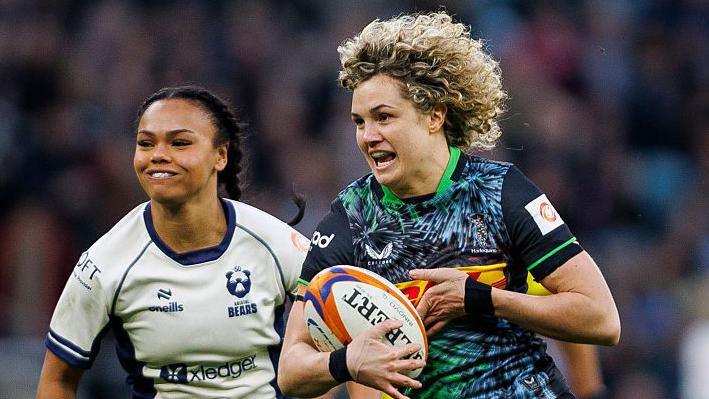
During the tournament, England’s Ellie Kildunne emerged as a star, with even the Princess of Wales getting involved in Kildunne’s now famous cowboy try celebration.

After the tournament, Kildunne was runner-up behind golfer Rory McIlroy at BBC Sports Personality of the Year and was appointed an MBE in the New Year Honours.

A more competitive league

While it is tight at the top in PWR, with Saracens and Gloucester-Hartpury both on 35 points at the halfway stage, the composition of the league still does not seem quite right.

Leicester Tigers are struggling without a win this season and have a points difference of -350 after seven games.

Fandom might also be increased by a more even geographic spread of clubs – Sale are currently the only northern representatives.

Shore says the league is considering whether to expand from the 2027-28 season.

She adds that there have been talks with Newcastle, where the men’s side are recruiting heavily after being taken over by energy drink company Red Bull in 2025, and that Bath are also a “viable option”.

Related topics

  • Rugby Union

More on this story

    • 2 days ago
    Meg Jones celebrating England's World Cup triumph at Allianz Stadium

Everything you need to know about the Champions League play-off draw

The 16 teams who have qualified for the Champions League knockout phase play-off draw will find out their opponents on Friday.

Proceedings start in Switzerland at 11:00 GMT and will involve the teams that finished between ninth and 24th in the table.

The top eight sides in the league phase have automatically qualified for the last 16 to avoid a potential fixture pile-up in February.

Friday’s draw will also determine which pathway (silver or blue) teams will be in.

Get in touch

How does the play-off draw work?

The process is fairly simple.

Clubs are paired together based on where they finished at the end of the league phase to form seeded and unseeded pairs.

The teams that finished ninth to 16th will be in the seeded pairs, while 17th to 24th will be in unseeded pairs.

The seeded teams are drawn against unseeded teams. For example, 15th and 16th will face 17th and 18th.

Champions League table from 1-18: 1) Arsenal; 2) Bayern Munich; 3) Liverpool; 4) Tottenham; 5) Barcelona; 6) Chelsea; 7) Sporting CP; 8) Manchester City; 9) Real Madrid; 10) Inter Milan; 11) Paris St-Germain; 12) Newcastle; 13) Juventus; 14) Atletico Madrid; 15) Atalanta; 16) Bayer Leverkusen; 17) Borussia Dortmund; 18) Olympiakos
Champions League table 19-36: 19) Club Brugge; 20) Galatasaray; 21) Monaco; 22) Qarabag; 23) Bodo/Glimt; 24) Benfica; 25) Marseille; 26) Pafos; 27) Union SG; 28) PSV; 29) Athletic Club; 30) Napoli; 31) Copenhagen; 32) Ajax; 33) Eintracht Frankfurt; 34) Slavia Prague; 35) Villarreal; 36) Kairat

As Newcastle finished in 11th position, they will be paired with 12th-placed Paris St-Germain as a seeded pair.

The Champions League draw bracketsUefa Champions League

What comes after the play-offs?

Once the eight winners of the play-offs have been determined they can progress to the last 16, where they will meet the top eight finishers from the league phase.

From this point onward the competition adopts a knockout format, with each fixture other than the final contested over two legs.

As with the play-offs, teams’ final ranking in the league phase will influence seeding in the last 16, with seeded sides – those that finished in the top eight of the league – being given the advantage of playing their second fixture at home.

This is the first season that the position in which teams have placed in the league phase will also influence seeding for the quarter-final and semi-finals.

Teams finishing first to fourth at the end of the league phase will be seeded for the quarter-finals, and therefore given the second leg home advantage for their potential quarter-final tie.

The two sides who finish top and runner-up in the league will also be seeded for the semi-finals, earning them the benefit of playing the second leg of their semi-final tie at home should they reach that stage.

Knockout phase draw and fixture dates

The draw that will determine the last 16, quarter-finals, semi-finals and final will take place on 27 February.

The dates for the knockout phase are as follows:

Last 16: 10-11 and 17-18 March

Quarter-finals: 7-8 and 14-15 April

Semi-finals: 28-29 April and 5-6 May

Final: 30 May

Thanks to Richard in Saffron Walden for the question.

More questions answered…

Related topics

  • European Football
  • UEFA Champions League
  • Football

‘Never much’ between Armagh and Galway – McGeeney

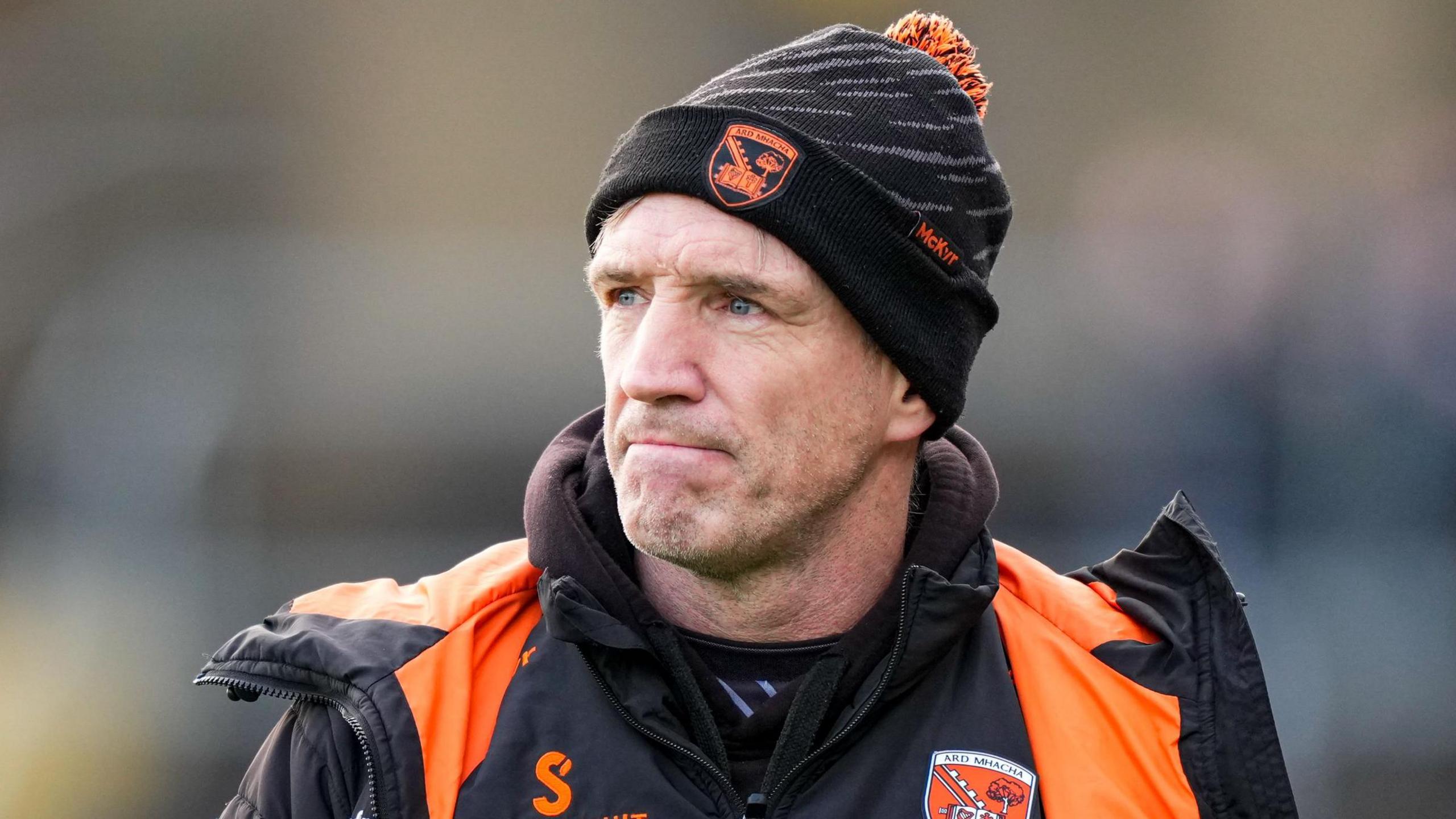
Armagh boss Kieran McGeeney is expecting Galway to visit the Athletic Grounds looking to “lay down a marker” in Saturday’s Division One clash between the 2024 All-Ireland finalists [17:00 GMT].

The Orchard County opened their league campaign with an eye-catching 12-point win over Monaghan at Clones, scoring 1-27 with 11 different players registering scores.

In contrast, Galway were beaten 3-18 to 2-18 at home by Connacht rivals Mayo in their opener.

Saturday’s game is a repeat of McGeeney’s crowning victory as manager of his native county when they beat the Tribesmen in the 2024 All-Ireland final to bring Sam Maguire back to Armagh for only the second time.

“It’ll be a tough game too, games between ourselves and Galway, there’s never much between us, it’s always a point either way and they’ll be coming to the Athletic Grounds to lay down a marker. We know what’s in front of us,” said McGeeney.

McKay unlikely to feature

Early points on the board, especially from an away fixture, will aid the Orchard cause as every county strives to secure their place in the top tier for next season.

The turnaround between league and championship will be quicker for Armagh as they will face neighbours Tyrone in the preliminary round of the Ulster Championship.

“I don’t know if there’s much freedom, it’s Galway next and they’re going to be hungry for points, so every game counts, and score difference counts too as we found out in the past to our detriment,” McGeeney continued.

“Galway are always a big game. I’m sure they’ll bring plenty as well. Every game you play in Division One, everybody knows my feelings on it, I think it should be expanded and not reduced.”

McGeeney also confirmed that Armagh are likely to be without full-back Aaron McKay against Galway after he was withdrawn before the throw-in last weekend.

“Aaron hurt his hand, so we’re hoping it’ll only be a couple of weeks.

Related topics

  • Gaelic Games
  • Northern Ireland Sport