Chelsea are in talks to recall Mamadou Sarr from Strasbourg, with Aaron Anselmino expected to move in the opposite direction to the French club.
The proposed exchange of the two 20‑year‑old central defenders is set to take place between clubs under the same Todd Boehly and Clearlake Capital ownership group, named BlueCo.
It comes amid a complicated end to Chelsea’s winter transfer window, with the club also in discussions over a substantial deal to sign Rennes defender Jeremy Jacquet.
Anselmino was recalled from his loan at Borussia Dortmund last week and was filmed in tears as he said goodbye to team‑mates in Germany.
Reports there said Dortmund were “incensed” and caught by surprise by Chelsea’s decision, which is understood to have been communicated three hours before a clause permitting a recall expired.
Dortmund said they “regretted” the sudden departure.
How Chelsea will strengthen defence
Sarr is expected to feature in Strasbourg’s home match against Paris St‑Germain on Sunday night, but it is likely to be his final appearance for the Alsace club.
Last January Chelsea completed their first permanent signing from Strasbourg since the two clubs came under the same BlueCo ownership, in a £12m deal.
Sarr made one substitute appearance for Chelsea as they won the Club World Cup in the summer before returning to Strasbourg on loan in August.
Recently appointed Chelsea head coach Liam Rosenior described Sarr as “my son”, with “scary” potential to become “world class” during his spell in charge of Strasbourg last season.
The defender’s expected return, after winning the Africa Cup of Nations as a starter for Senegal in January, is likely to provoke anger among Strasbourg supporters.
Protests from a minority of fans earlier in the season intensified when Rosenior left the club to replace Enzo Maresca, who had fallen out with senior figures at Chelsea and departed on New Year’s Day.
Chelsea’s defence has not performed at the level of their attack in the Premier League this season and they rank only 11th for expected goals (xG) against despite having conceded the joint-third fewest goals.
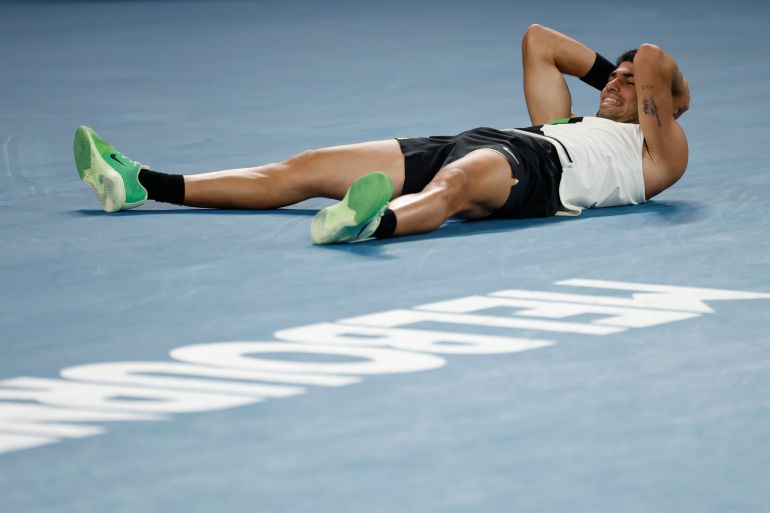
Carlos Alcaraz has rewritten tennis history by becoming the youngest man to complete the career Grand Slam with his victory over the great Novak Djokovic in the final of the Australian Open 2026 in Melbourne.
Alcaraz, 22, overcame a first-set loss to complete a 2-6, 6-2, 6-3, 7-5 triumph over the 24-time Grand Slam champion at the Rod Laver Arena on Sunday. In the process, he denied the 38-year-old a chance to become the only player with 25 Slam titles.
While the world number one later admitted his “legs were shaking” as he served for the title, he seemed to have the upper hand as the match wore on and finished after three hours and two minutes.
The top seed now has an Australian Open trophy to add to his two French Open, Wimbledon and US Open titles each, also making him the youngest to garner seven Slams.
Djokovic, from Serbia and a 10-time champion in Australia, was the quicker of the two out of the blocks and broke his younger rival twice to swiftly claim the opening set.
But Alcaraz, of Spain, didn’t waste time in pulling back and claiming the second set with the same scoreline in a display of speed, power and finesse.
In breaking the career Slam record, Alcaraz surpassed his idol and compatriot Rafael Nadal – who watched from the stands and who was two years older when he did the same.
It was a first defeat for Djokovic in a Melbourne final after he won all 10 previously, leaving him still searching for a landmark 25th major to better Australia’s Margaret Court, who was also watching on.
Tennis champion Carlos Alcaraz celebrates his victory at the Australian Open [Darrian Traynor/Getty Images)
Gladiatorial contest
Both men battled through five long sets in their semifinals, Alcaraz against Alexander Zverev and Djokovic against Jannik Sinner, and recovery was always going to be key after their physical struggles.
But they showed few signs of fatigue in another gladiatorial contest.
They both opened with comfortable holds before a double fault and netted forehand presented the first break point chance for Djokovic at 2-1.
Alcaraz saved it, but the aggressive fourth seed kept pressing and converted on his third, then consolidated for a 4-1 lead.
Djokovic was reading Alcaraz’s serve well, and once he got in the rallies, he was authoritative, with a sensational forehand winner earning him two set points.
He claimed the set in a statement 33 minutes after a ninth unforced error from the top seed, having dominated the big moments.
It was vintage Djokovic, but Alcaraz came storming back, upping the tempo to break for 2-1 in the second set, pumping his fist when he saved a break point and held in the next game.
Djokovic put drops to his eyes and began rubbing them, unable to tame a now rampant Alcaraz, who broke again for 5-2.
There were some sensational rallies that had the crowd on their feet in set three, which went with serve until Djokovic slapped a forehand wide under pressure to slip 2-3 behind.
He gamely saved four set points at 3-5, but, with his energy level dropping, was unable to save a fifth as the Spaniard took control.
On the back foot, Djokovic then saved six break points in an 11-minute opening service game in set four to stay alive and kept fighting hard.
But Alcaraz ground him down and pounced as Djokovic served to stay in the match to seal a maiden Australian championship.
It ensured he remained world number one and Sinner two, with Djokovic moving up a place to three ahead of Zverev.
Carlos Alcaraz and Novak Djokovic played some incredible points during the final [Kelly Defina/Getty Images]
Australian Open win ‘means the world’ to Alcaraz
Despite his heartbreaking loss, Djokovic was gracious in defeat as he walked around the net to congratulate Alcaraz on his side of the court.
Plenty of pats on the back and smiles were exchanged in a passing-of-the-baton moment between the two tennis icons.
Afterwards, Alcaraz told the host broadcasters that his legs were shaking as he served for the championship.
“I was telling myself, at least put it [the serve] in and then let’s see what happens,” the champion said with a laugh.
The man from Murcia, southeastern Spain, said the elusive win in Australia was something he had been working hard for.
“It means the world to me and shows that all the hard work paid off,” he said.
Alcaraz’s seventh Slam put him alongside John McEnroe and Mats Wilander and one behind Andre Agassi, Jimmy Connors and Ivan Lendl.
However, the young champion was quick to dismiss talk of overtaking his heroes Nadal and Djokovic, and said 22 or 24 titles were “too far away” at the moment.
“I know how difficult it is to win a Grand Slam,” he said. “I know what it takes, so I just want to enjoy each one because I don’t know if it’s going to be my last one.
“I want to keep going and working hard to feel this emotion again.”
Meanwhile, Djokovic did not make any explicit statements on his career but did admit he’s not sure whether he will return to Melbourne for next year’s Australian Open.
“I tried to give it back with good tennis over the years. This is my 22nd year coming to Australia,” he said at the presentation ceremony.
The Serb said he didn’t think he’d be “standing on a Grand Slam final podium again”.
“God knows what happens tomorrow, let alone in six or 12 months,” the 2023 champion said.
“It has been a great ride, and I love you guys.”
Novak Djokovic embraces Carlos Alcaraz after the end of their tennis match [Edgar Su/Reuters]
Diplomacy, much of the time, is about symbols rather than substance. And in the case of China, that can be particularly true.
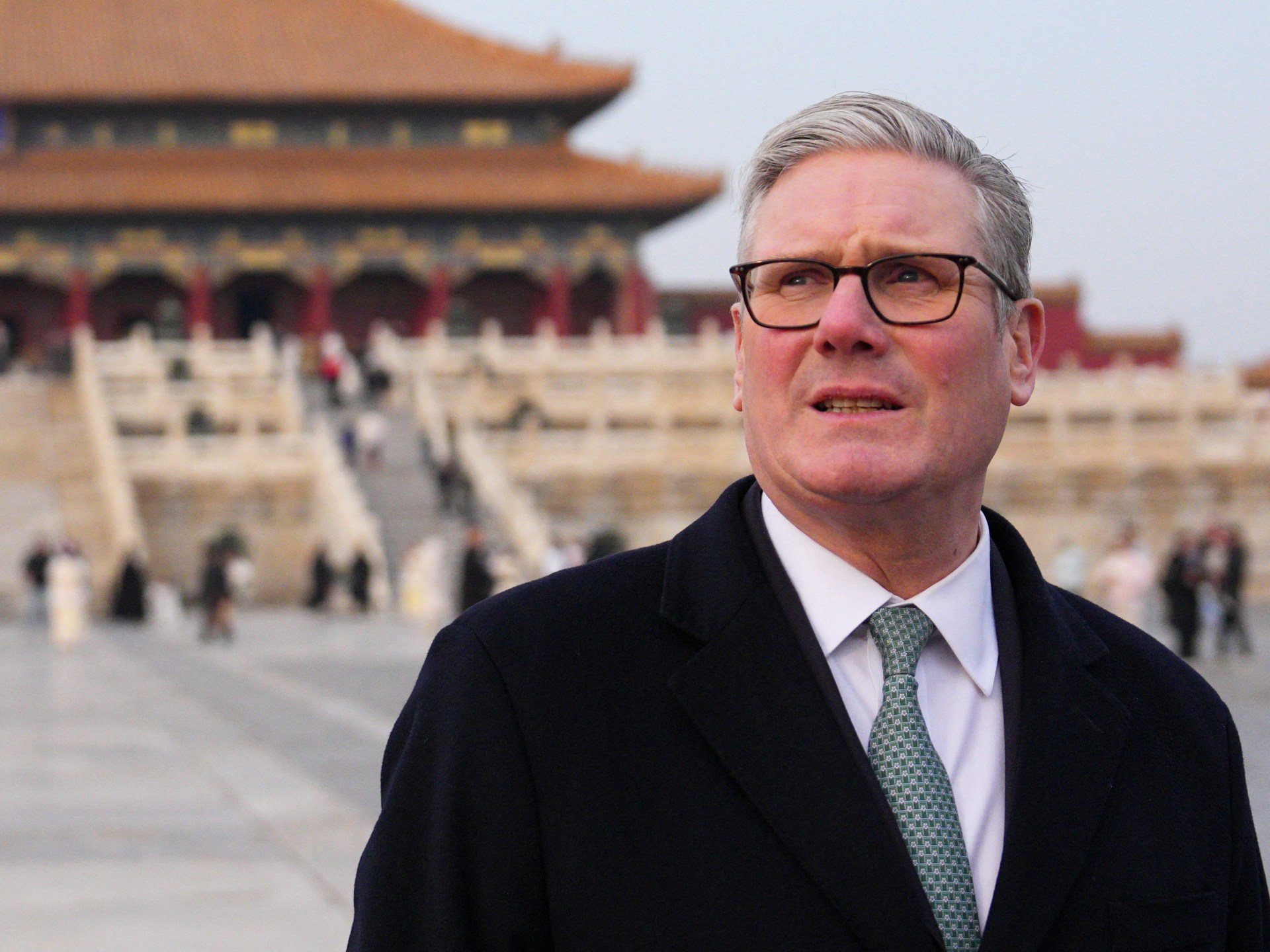
In this sense, what was important about British Prime Minister Keir Starmer’s visit to China at the end of January was that it happened at all. In recent years, there have been plenty of tensions between the two countries: the accusations against two British citizens of spying for China, the delay in the approval for the new Chinese embassy in London, the trial against democracy activist Jimmy Lai, etc.
The fact that Starmer made the trip to Beijing – the first one for a British prime minister in eight years – indicated that the arguments in favour of doing it outweighed the negatives of it. What certainly tipped the balance was the increased intensity with which the US administration is now turning on its traditional allies.
The visit did not reset relations, but it revealed that the world has entered a new era of global power dynamics, which is already reflected in diplomacy.
On January 23, just a week before his trip to China, Starmer summoned up a rare display of public anger, condemning US President Donald Trump’s remarks about British troops in Afghanistan.
This made the visit to Beijing very different from those of previous British prime ministers. In the past, there had never been a question about the alignment between the United Kingdom and the United States.
The US and the UK were close allies for decades. They acted in close coordination on the wars in the Middle East since 2001, and on combatting global terrorism and other threats. They shared intelligence through the Five Eyes arrangement and worked together as permanent members of the United Nations Security Council.
On China, moments of disagreement were brief. In 2004, the UK and its European partners attempted to lift the arms embargo imposed by them and the US on China after the 1989 Tiananmen Square massacre, on the grounds that all the equipment they forbade was restricted perfectly well by other legislation. The then Bush administration strongly opposed this, and the idea was dropped.
More than a decade later, during the first Trump administration, it looked like Europe might seek to forge its own trade deal with China to compensate for steel and other tariffs placed on it by the US. But in 2018, that receded too as the European Union ironed out a deal with Washington. Part of that was not to grow closer to the Chinese in terms of trade.
The pandemic pushed the US and Europe further towards aligning with each other against China, which they regarded as partially creating the problem by not announcing the appearance of the virus soon enough. By 2023, therefore, the UK and the US were almost vying with each other to be more hawkish, with then-Deputy Prime Minister Oliver Dowden declaring that the People’s Republic was Britain’s greatest “state-based threat”.
We are no longer in that world. Washington’s actions are raising fundamental questions about the alliance system around NATO and other security arrangements that it has sat at the heart of since the end of World War II.
We do not yet know the shape of the world we are heading into. It might take years for it to fully emerge. But for Starmer on his visit to Beijing, this shift meant he was talking to an interlocutor who is also trying to work out what the new situation means.
President Xi Jinping is not a security ally of the UK, but in the strange, topsy-turvy world we now inhabit, his administration is probably closer to the UK in terms of working out what to do about global warming or how to manage the risks of artificial intelligence (AI).
Both countries do not like the unpredictability of the current situation. They are all linked by having a problem with the US now, even if it is a different kind of problem.
This, of course, does not mean that a new kind of strategic alliance is in the making; there were no signs of that in the meeting. After all, culturally, politically and in terms of values, the UK and China disagree with each other too much for that to happen. This is regardless of Britain’s links with the US.
But that Starmer was able to announce restrictions on small engines that end up used in the boats bringing immigrants illegally across the seas around the UK was a telling sign of how, even in a deglobalising world, everything still connects, and that in a modest and indirect way, Britain needs to talk to China to address some aspects of what it sees as its own security priorities.
There were other announcements as well: the $15bn investment by British pharmaceutical company AstraZeneca, the 30-day visa-free access to China for British citizens and the lifting of sanctions against some UK Parliament members.
The groundwork was also laid for deeper economic engagement, with some steps being taken to improve trade and facilitate UK business access to the Chinese market.
Longer term, this visit could also pave the way for engagement that recognises the rise of China as a technology power. In environmental science, AI, quantum computing – indeed, in almost every area – China is outpacing not just the UK, but almost everyone else. It is producing ideas and innovations in medicine, renewable energy, etc which matter to the UK for its own good.
A single four-day visit did not reset the relationship. There are still many issues between the two countries. But at least it has allowed the possibility – now that the political blockages have been cleared – to work out strategically how the UK and others in Europe navigate the new geopolitics where there are no eternal friends or enemies, and how they react to a world where, for the first time in recent history, China has innovations, technologies and ideas that they might need and want.
Polls have opened in the Costa Rica general election as the centre-right populist government seeks to extend its mandate and secure control of the Legislative Assembly at a time when drug-fuelled violence has gripped the country.
Voting stations opened at 6am local time (12:00 GMT) on Sunday and will remain open until 6pm (24:00 GMT), with early trends likely within hours.
Recommended Stories
list of 4 itemsend of list
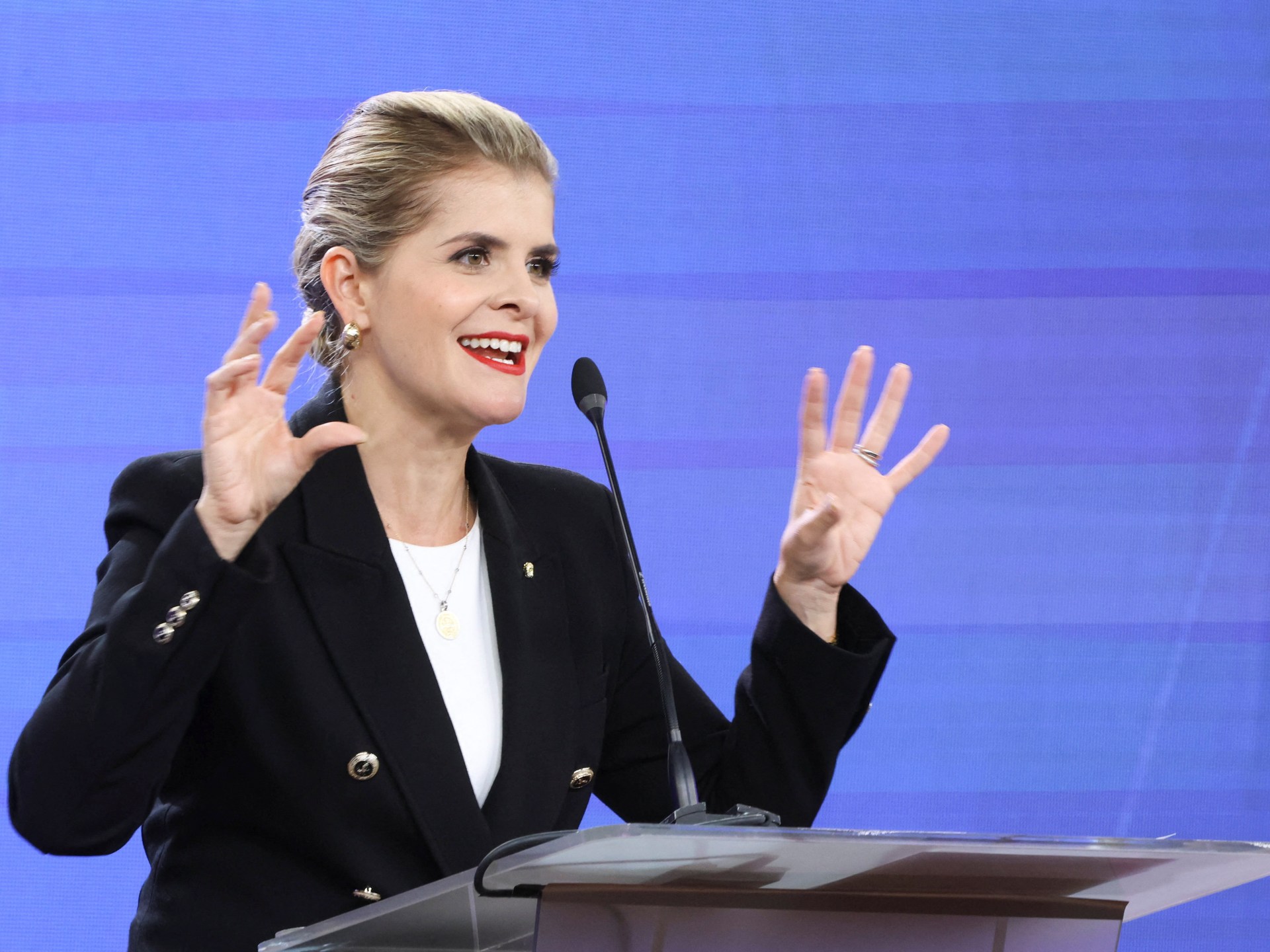
Laura Fernandez, President Rodrigo Chaves’s protege and former chief of staff, is leading in the polls with more than 40 percent, enough to win outright and avoid an April 5 run-off. She has pledged to continue Chaves’s tough security policies and anti-establishment message.
Her closest rivals in the 20-candidate field are Alvaro Ramos, a centrist economist representing Costa Rica’s oldest political party, and Claudia Dobles, an architect representing a progressive coalition and a former first lady whose husband, Carlos Alvarado, served as president from 2018 to 2022.
Both are polling in the single digits but are seen as the two most likely to compete in a possible run-off if Fernandez falls short of 40 percent.
Fernandez has also urged voters to hand her 40 seats in the country’s 57-seat Legislative Assembly, a supermajority that would allow her to pursue constitutional reforms. The current government holds just eight seats and has blamed congressional gridlock for blocking its agenda.
Polls show about a quarter of the 3.7 million voters remain undecided, with the largest group being between the ages of 18 and 34 and from the coastal provinces of Guanacaste, Puntarenas and Limon.
“People are tired of promises from all the governments, including this one, even though the government has said things that are true, like needing stronger laws to restore order,” said Yheison Ugarte, a 26-year-old deliveryman from downtown Limon, a Caribbean port city that has been the hardest hit by drug violence.
Despite homicides surging to an all-time high during his term and multiple corruption investigations, Chaves remains deeply popular, with a 58 percent approval rating, according to the University of Costa Rica’s CIEP polling.
Watch the moment Carlos Alcaraz beats Novak Djokovic in the Australian Open final to claim his seventh major title, becoming the youngest-ever man to win a career grand-slam in the process.
READ MORE: Alcaraz beats Djokovic in Melbourne to complete career Slam