Strictly’s Sara Davies shares unseen pics from Adam Peaty and Holly Ramsay’s wedding 

Adam Peaty and Holly Ramsay tied the knot in a high-profile wedding ceremony at Bath Abbey after Christmas – the happy occasion was marred by drama after a feud with Adam’s mum

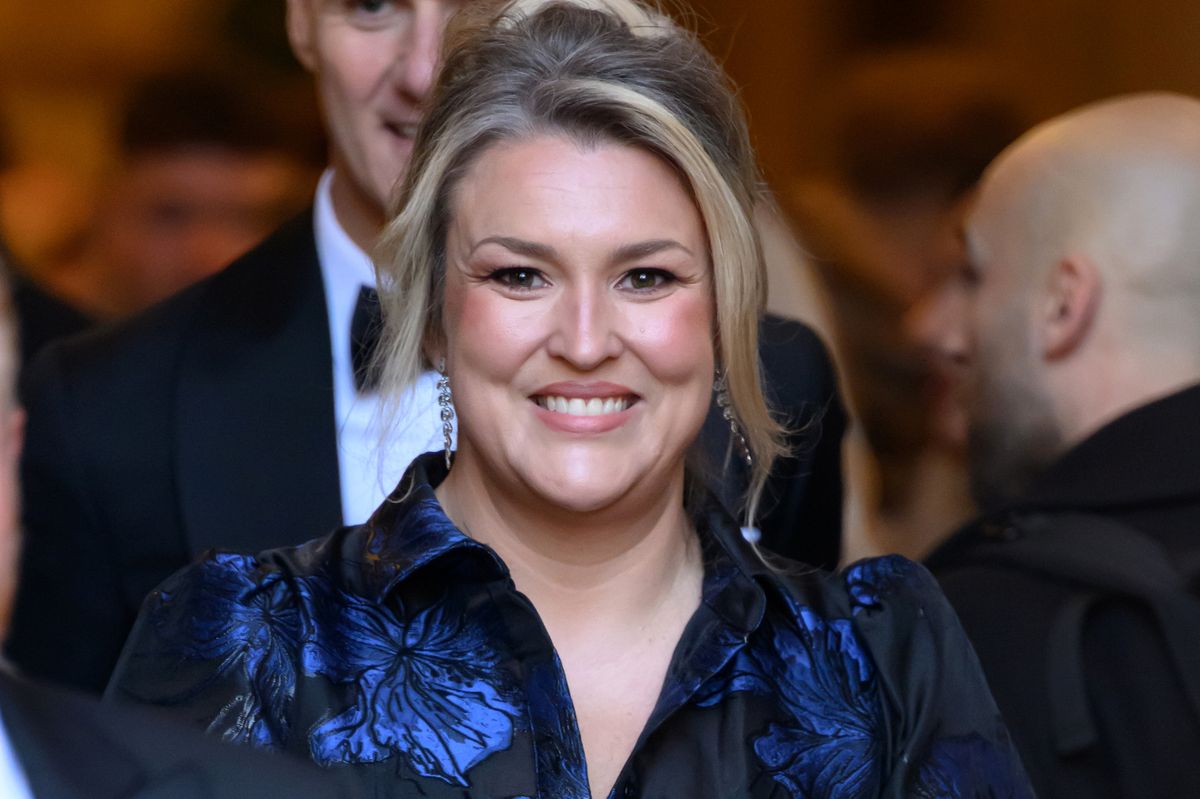
Sara Davies has shared some unseen pictures from Adam Peaty and Holly Ramsay’s very exclusive wedding, attended by A-list guests.

The Strictly star uploaded a handful of previously-unseen snaps of the big day to her Instagram account, telling fans in was “a fab day”. The nuptials took place at Bath Abbey in December, but the majority of Adam’s family weren’t invited.

In one photo, Sara – who became friends with Adam during the 2021 series of Strictly Come Dancing – could be seen laughing alongside fellow Strictly star Dan Walker as they sat at the dinner table. Another shot showed guests swinging their white napkins in the air as the newlyweds walked in.

READ MORE: Adam Peaty’s family ‘make devastating decision’ after wedding and Gordon Ramsay postREAD MORE: Gordon Ramsay ‘takes aim at Adam Peaty’s family’ with ‘upsetting’ three-word comment

Dragons Den favourite Sara could also be seen posing for a photo with Holly’s sister, Tilly, at the after party. Sara captioned the post: “Awwww just been sent the pics from the Peaty-Ramsay wedding – what a fab day! So grateful to have been there with @adamramsaypeaty and @hollyramseypeaty to celebrate such a wonderful day.”

Sara also thanked Gordon Ramsay and wife Tanya for being “amazing hosts”. Holly responded to the post, writing: “Loved celebrating with you!!” While many followers were quick to comment on how amazing Sara looked, others couldn’t help but point out the absence of Adam’s family for the occasion.

One fan wrote: “Wonder how Adam’s mum must be feeling seeing celebs at her sons wedding and she not there as a mum must be awful.” Another commented: “Not such a great day for his family though was it. But at least you all enjoyed it.”

A third chimed in: “So sorry but I cannot get over Adam’s mam and Dad missing their big day!! So very sad!!” Sara’s post comes amid reports that Adam Peaty’s estranged family are “trying to move on” after their huge family feud.

Caroline and Richard Peaty didn’t attend their son’s wedding – Adam’s mum wasn’t invited and it was reported his dad could only attend if he sat at the back of the church. “It’s been a really emotional time for them as a family,” a source told The Sun. “They’re coming to terms with what has happened and that Adam has picked his side.” They went on: “They’re keeping their heads down and trying to move on quietly. It’s clear Adam’s made his choice.”

Adam’s mum Caroline said on the eve of her son’s big day at Bath Abbey how his decision to cut ties had devastated her. Speaking to the Mail , she said: “I don’t think they understand how much they have hurt me; it’s as if they have cut my heart out.” She went on to explain how the fallout has affected the wider family during the festive period, adding: “This is the first Christmas that I’ve not had my family together – my family is broken.

“Yes, I have my other grandchildren. Yes, I have my other children, but my family is split because of the goings on…because of the wedding.” Adam’s brother, James, had been set to be a groomsman on the big day, but he, too, was uninvited, along with his parents. It’s claimed that Adam’s sibling had allegedly sent threatening messages to the swimmer and reports suggest Adam believed his parents were taking his brother’s side.

Article continues below

The only family member in attendance on the huge occasion was Adam’s sister, Bethany, who was a bridesmaid for Holly. She proudly stood at her brother’s side along with Holly’s sisters, Megan, 27, and Tilly, 24. Gordon shared a gushing social media post about the Olympian’s special day marrying the chef’s daughter Holly. The Kitchen Nightmares star called himself “dad” as he commented on a clip of Adam’s wedding speech.
Ukraine scrambling for energy as Russian strikes hit infrastructure

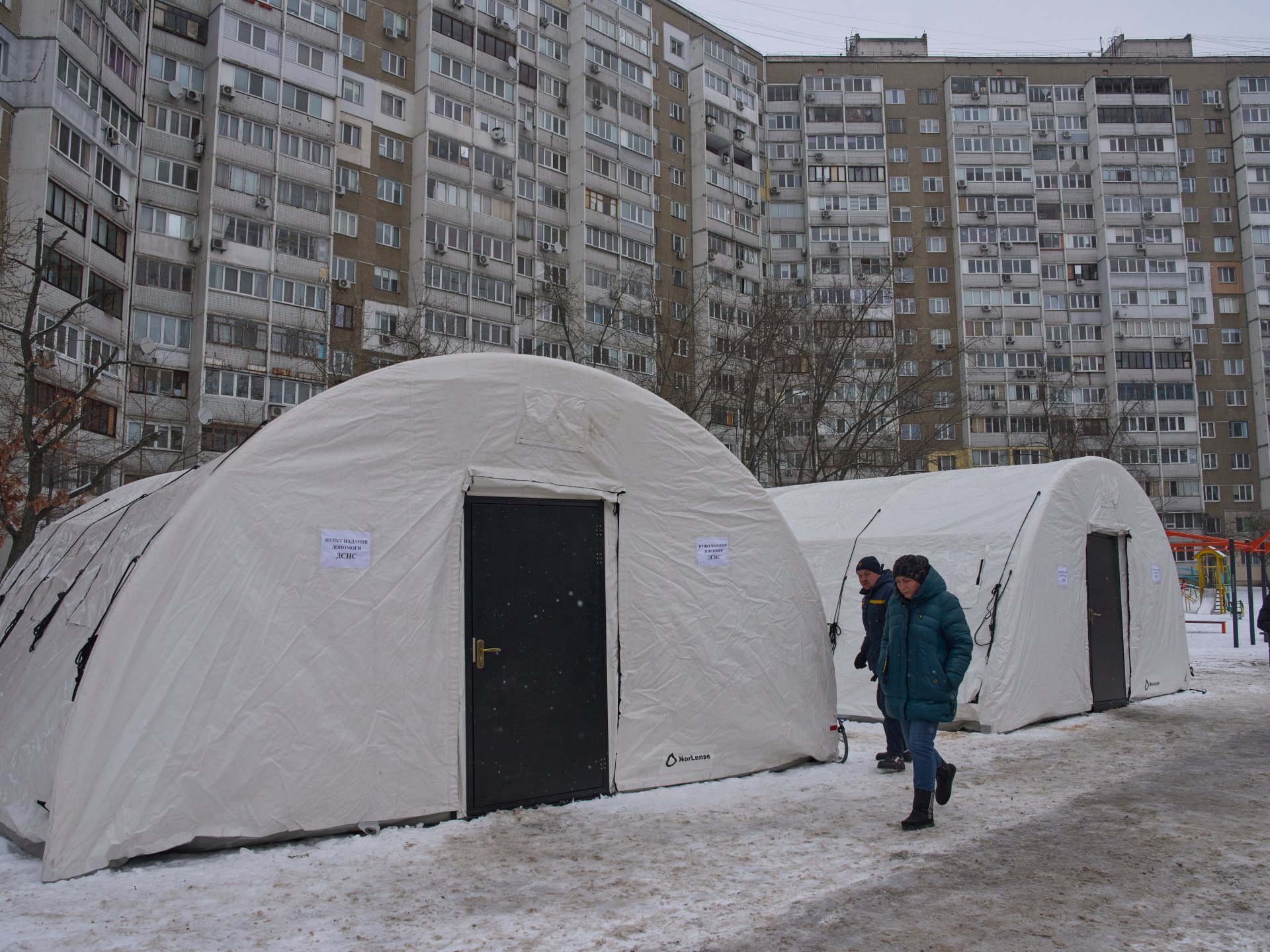
Ukraine’s energy minister has sounded an alarm over the energy situation as Russian strikes ​on the country’s infrastructure leave people shivering in subzero temperatures without heating or power.

Denys Shmyhal, who took office ‍earlier this week, told parliament on Friday that there was “not a single power plant left in Ukraine that the enemy has not attacked”.

Recommended Stories

list of 3 itemsend of list

Russia, since it launched its full-scale invasion of Ukraine in February 2022, has each winter concentrated fire on the country’s energy infrastructure in a bid to weaken Kyiv’s determination to defend itself and resist Moscow’s far-reaching demands for territory and limits on its military capabilities.

Shmyhal said the most challenging energy situation is in the capital, as well as the regions of Dnipropetrovsk, Kharkiv and ‍Odesa. Towns near the front line in eastern Ukraine are also filled with thousands of homes that have been without electricity and heating for days in subzero conditions.

“In some cities and regions, winter preparations have failed. Over the past two days in office, I’ve seen ​that many things are clearly stalling,” ‌he said.

The minister has ordered emergency imports of electricity, while declaring that Ukraine needs to install up to 2.7 GW of generation ‍capacity by the end of the year if it is to meet its consumption needs.

“State companies, primarily Ukrainian Railways and Naftogaz, must urgently ensure the procurement of imported electric energy during the 2025-26 heating season, amounting to at least 50 percent of total consumption,” Shmyhal said.

His ministry estimates that Ukraine has fuel reserves ‍for just 20 days. It did not give data on how much electricity Ukraine currently generates or imports, information that authorities have withheld due to wartime sensitivities.

Prime Minister Yulia Svyrydenko has introduced measures to try to help with the emergency, including reducing overnight curfews to allow people to access central heating and power hubs and extending school holidays in Kyiv until February 1.

Foreign Minister Andrii Sybiha said ‌the foreign and energy ministries had organised an international appeal for funds to help tackle Ukraine’s energy problems, similar to periodic meetings on arms supplies. ‌Norway, he said, had made an initial grant of $200m.

Russia has attacked the power grid and other energy facilities while pressing a battlefield offensive that has left Kyiv on the back foot as it faces US pressure to secure peace.

Kyiv Mayor Vitali Klitschko said on Thursday that ‌about 300 apartment buildings in the capital remained without heat after a January 9 attack knocked out heating to half the city’s high-rises.

Kharkiv’s Mayor Ihor Terekhov said Russian ‍forces destroyed a large energy facility in Ukraine’s second-biggest city on Thursday.

He did not specify what sort of facility had been hit, but said emergency crews were working around ​the clock. President Volodymyr Zelenskyy said the attack had left 400,000 people without electricity.

Analysis: Why a ‘quick and clean’ US attack on Iran won’t be easy

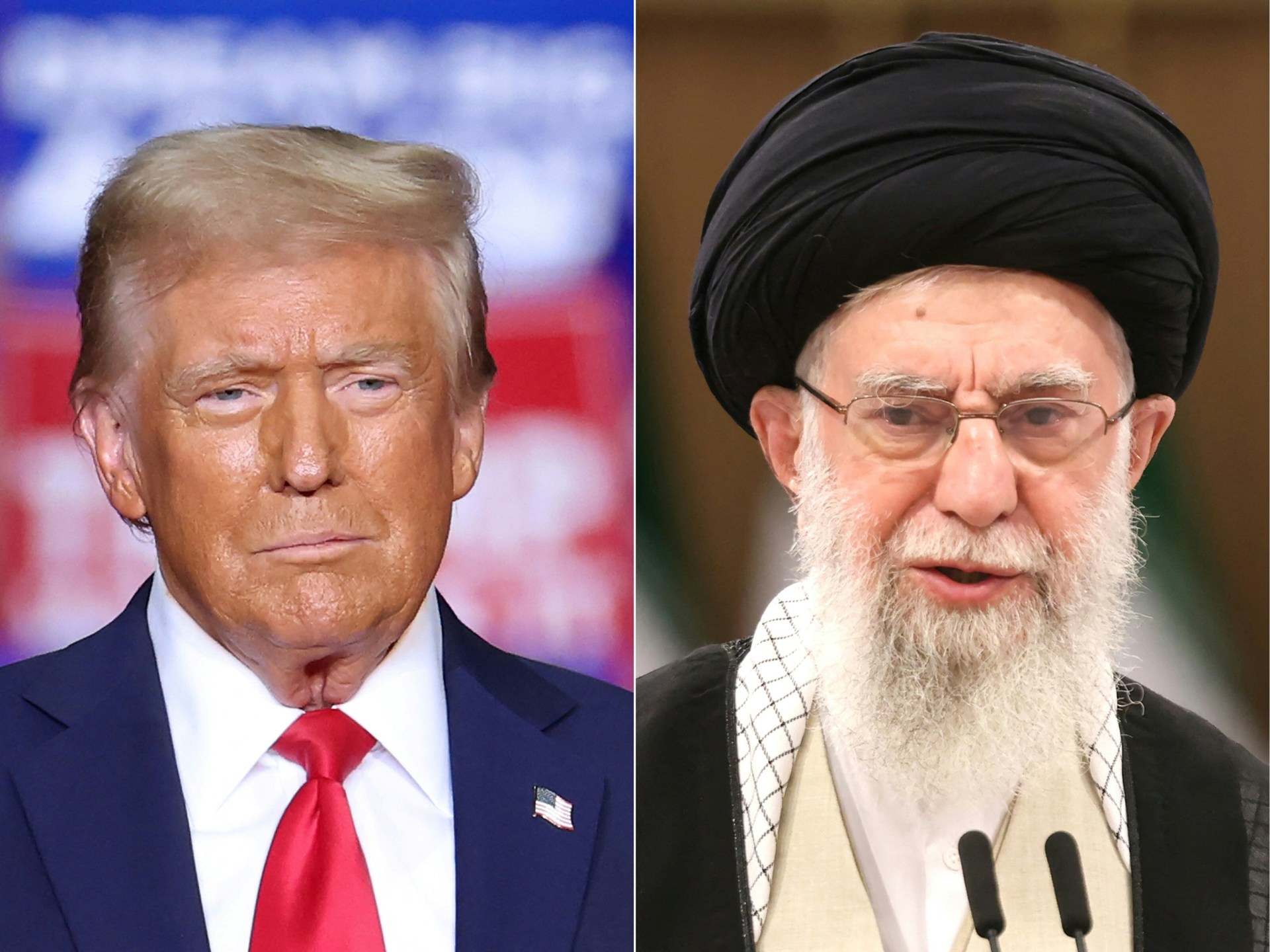
Illiberal systems often look most permanent just before they change. But moments of upheaval can also produce a different illusion: That the system is one dramatic external blow away from collapse. With Iran convulsed by unprecedented protests against the country’s leadership, it is tempting to imagine that the United States’ air power could deliver the final shove.

That temptation misreads how the Islamic Republic actually survives. Coercive cohesion is the cement of the system: The ability of parallel security and political institutions to keep acting together, even when legitimacy erodes. When that cohesion holds, the system absorbs shocks that would more conventional states would fall under.

Iran is not a single pyramid with one man at the apex. It is a heterarchical, networked state: Overlapping hubs of power around the Supreme Leader’s office, the Revolutionary Guards, intelligence organs, clerical gatekeepers, and a patronage economy. In such a system, removing one node, even the most symbolic one, does not reliably collapse the structure; redundancy and substitute chains of command are a design feature. Decapitation – a prominent narrative after US President Donald Trump’s tactical “success” in Venezuela – thus looks less like a strategy and more like a gamble on chaos.

This is why Trump’s dilemma matters. He sits between neoconservative hawks who want regime change by force and an America First base that will not support lengthy wars, post-conflict stabilisation, or another Middle Eastern adventure. The instinct, therefore, is quick-in, quick-out punishment that looks decisive without creating obligations.

Regional politics further narrow Trump’s menu. Israel wants Washington to do the heavy lifting against Tehran. Key Gulf interlocutors, notably Saudi Arabia, Qatar and Oman, have pressed for de-escalation and diplomacy. Operationally, the Gulf’s lack of support for a new campaign might push the US towards military options launched from a distance, making sustained air operations harder to sustain.

Trump has also boxed himself in rhetorically. Having warned that if Iran “violently kills peaceful protesters”, the US would “come to their rescue”, he has had to signal credible military options even as he suggests diplomacy is preferable and hints that the killing is “stopping”. In practice, this oscillation appears to be less strategic ambiguity and more bargaining and indecision, encouraging every faction around him to believe it can still win the argument.

It is important to be clear about what Washington’s inner circle seems to want. The goal is not liberal democracy. The prize is a pragmatic Iran that can be drawn into a regional geo-economic framework, opened to business with the US, and nudged away from overreliance on China. That implies constraints on nuclear activity, some curbs on ballistic missiles, and a drawdown – real or cosmetic – of Iran’s support for the so-called “axis of resistance”. This is a transformation of posture, not a wholesale replacement of the Islamic Republic.

Air power can punish and signal. It can degrade specific facilities. It can raise the cost of repression by authorities. But it cannot reorganise a security sector, arbitrate succession, or deliver a behaviour change. And it cannot protect protesters from the air. Libya in 2011 remains the cautionary tale. Military force, at most, is a high-risk attempt to coerce Iranians to the negotiation table that will likely backfire.

The most plausible military scenario is limited standoff punitive strikes, using cruise missiles and long-range munitions against Iranian Revolutionary Guard centres or enabling infrastructure. This fits the “quick and clean” preference and can be framed as punishment rather than war. Its strategic downside is that it hands the Guards an “existential threat” narrative that can legitimise harsher repression, while raising retaliation risk through proxies, shipping disruption, and pressure on US bases in the Gulf. It can also reduce the chance of internal fragmentation by pushing rival factions to rally around the flag.

A leadership “decapitation” attempt is more cinematic and less credible. It is the most escalatory option, likely to unify hardliners, and still unlikely to collapse a networked system.

A sustained air campaign is the least plausible and the most dangerous. Without Gulf basing and overflight, the logistics push operations towards more distant platforms and thinner sortie generation. Politically, it would violate the America First premise; strategically, it would internationalise the crisis, widen the battlefield, and invite a tit-for-tat escalation cycle that neither side can reliably control.

Cyber- and electronic disruption sits in a different category: Lower visibility, sometimes deniable, and potentially compatible with Gulf preferences for avoiding open war. But the effects are uncertain and often temporary, and a networked state can route around disruption. The most realistic outcome is that cyberoperations might accompany other moves, yet they are unlikely to deliver decisive political change on their own.

The deeper point is that external shocks rarely produce the specific internal outcome Washington claims to want: A pragmatic transition at the top. Severe outside pressure often hardens a system’s coercive core, because escalating violence is not always confidence; it is frequently panic wearing a uniform. The only durable trigger for transformation is internal: Fractures within the security services or elite splits that create competing centres of authority with incompatible survival strategies.

If the US wants to influence those dynamics, it should focus on cohesion-shaping levers rather than dramatic bombing. Maintain deterrence against mass slaughter but avoid promising “rescue” that cannot be delivered without war. Calibrate economic pressure towards the individuals and entities driving violence while leaving credible off-ramps for technocrats and pragmatists who might prefer de-escalation and negotiation. Above all, coordinate with the US’s friends in the region, chief of all Qatar, Oman and Saudi Arabia, who can constrain escalation and translate coercive discourse into bargaining space.

The Unknown: A Filmmaker’s Search for Lost Connections

Filmmaker Simplice Ganou, from Burkina Faso, spends his time documenting people and relationships, but when he travels to Winterthur, Switzerland, he faces a new challenge: nobody wants to talk to him. Struggling to make connections, he’s confronted with a question many documentary filmmakers know well: how do you film people who don’t want to engage?

Through humour, vulnerability and persistence, Ganou discovers a creative way to break through. But will it be enough?

Swindon charged with fielding ineligible players

Shutterstock

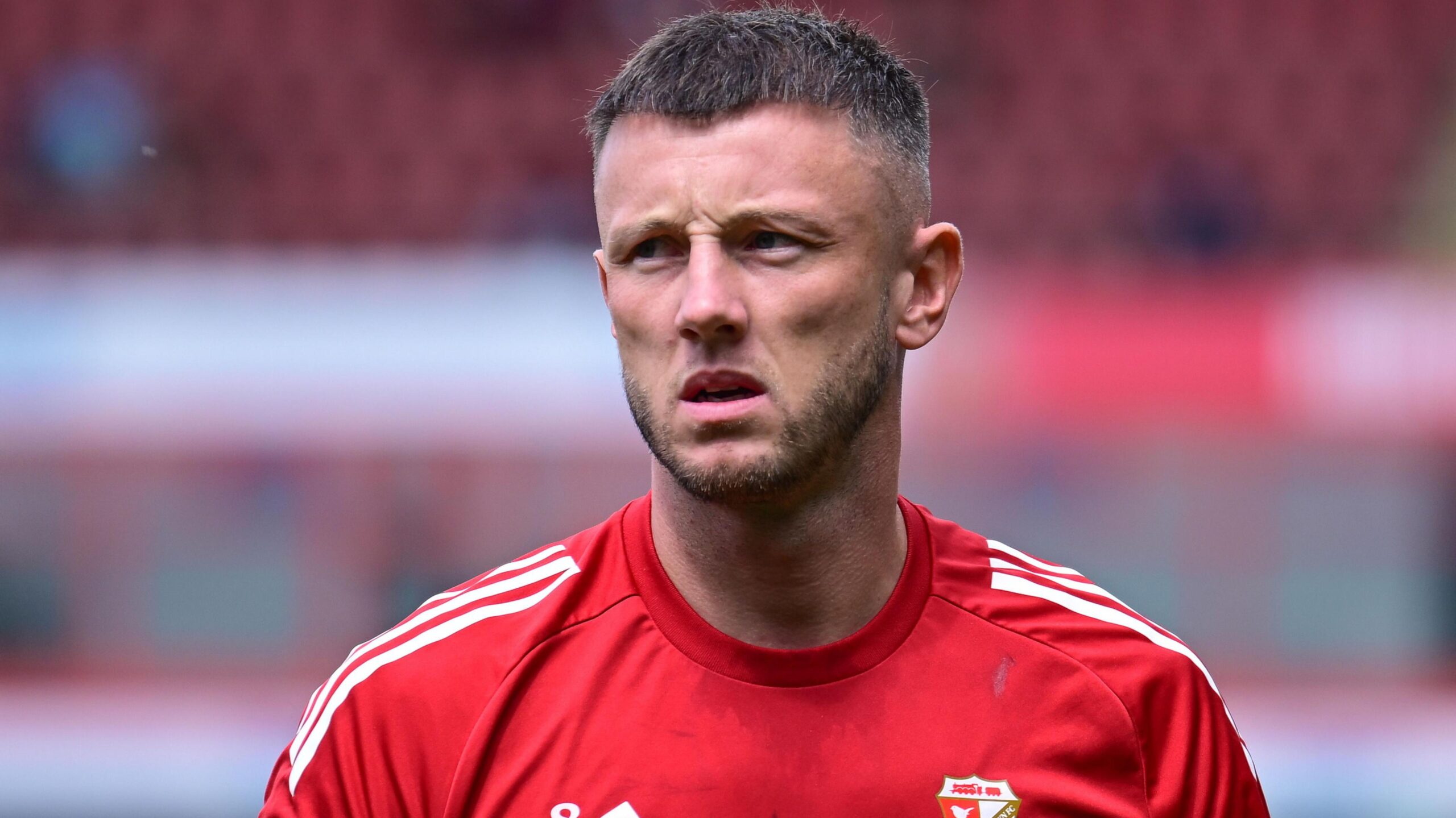
Swindon Town have been charged with fielding two ineligible players in Tuesday’s win at Luton Town in the Vertu Trophy.

Swindon started Ollie Clarke, who was serving a seven-game ban, and brought on Aaron Drinan at the start of the second half, despite him not being named on the team sheet.

They could now be thrown out of the competition with Luton reinstated, so both teams will be named in Saturday’s quarter-final draw while the investigation continues.

Clarke, 33, captained the side despite being banned for “highly violating and intentional foul play” on two opponents’ “private body parts” in Swindon’s Carabao Cup defeat by Cardiff City in August.

The EFL say the suspension had ruled him out of playing in the competition, though this is not always the case.

For example, Plymouth Argyle striker Lorent Tolaj was sent off against Northampton Town on 29 November but was eligible to play at Leyton Orient in the EFL Trophy the following Tuesday as his ban did not count in the competition.

Aaron DrinanShutterstock

“In respect of Ollie Clarke, the club maintains that the appropriate protocols and governance procedures regarding player suspensions were followed and that both the club and the player complied with the terms of the suspension as notified to them by the FA at all times,” Swindon said in a statement.

“Ollie Clarke will complete his suspension as notified and will not be available for the forthcoming fixtures against Salford City (League Two and FA Cup) and Bromley (League Two).”

Robins top scorer Drinan, 27, was a half-time substitute despite not being named on the teamsheet.

It took until the 64th minute for Drinan’s presence to be questioned, leading to an eight-minute delay in play, with the forward eventually staying on the pitch.

Swindon boss Ian Holloway admitted the club expected “some sort of action” over what they have now described as a clerical error.

“In relation to the matter concerning Aaron Drinan, the club acknowledges that his name was inadvertently omitted from the official team sheet,” Swindon said.

“This was a clerical error in the completion of match documentation. The club wishes to make clear that there was no intention to mislead, deceive, or gain any sporting or competitive advantage.

“Aaron Drinan was, at all times, a fully registered and otherwise eligible player to participate in the fixture.”

Related topics

  • League Two
  • Luton Town
  • Swindon Town
  • Football

Love Island’s Shaughna Phillips shows off 5 stone weight loss as she sizzles in pink bikini

This Love Island star showcased her incredible weight transformation to fans, as she revealed she looked back on her weight loss and vowed to bring her routine back

A Love Island star has wowed fans as she showed off her weight loss transformation – after losing previously five stone.

Former Love Island contestant Shaughna Phillips, 31, took to Instagram on Thursday to share a throwback before-and-after video showcasing her remarkable five-stone weight loss journey, before she got pregnant with her second child. The reality TV star looked stunning in a vibrant pink bikini as she placed two clips of herself before and after next to one another. In the initial clip, Shaughna is seen posing from the front and side in a bandeau bikini, revealing to her followers that she previously weighed 97kg (15st 2lbs).

The second clip sees Shaughna confidently modelling a halterneck bikini top with matching bottoms, proudly flaunting her slimmed-down figure after dropping to 61kg (9st 6lbs). The 31-year-old – who gave birth to her baby girl, Sofia Phillips-Webb, on Halloween last year – has now said she’s using the throwback clip as motivation to get her back into her old routine after giving birth late last year.

She announced in the caption of her post: “I NEED this in my life guys! Which is why … we’re bringing it BACK!!”

“After telling you all I was kickstarting shred it again for myself, I was blown away by how may of you wanted to join me, so consider the doors to the Shred It Plan club WIDE OPEN. As you probs remember, I managed to get into the best shape of my life last year following this plan – losing FIVE and a HALF STONE f**!”

The mum added: “It was NOT a quick fix – it took over 14 months to get there. So after dropping 5 dress sizes and deciding to add to my girl squad – here I am ready to shred like I’ve never shred before.”

However, the reality star recently admitted she is experiencing issues with postpartum swelling. Shaughna uploaded a video of her severely swollen feet to Instagram, joking: “The flip flops are staying for a while longer it seems”.

In the clip she rested her foot on a baby chair and wiggled her toes to show how puffed up they had become. Postpartum swelling is common as the body works to flush out excess fluids from pregnancy. While it eases up for most new mums within a couple of weeks, in some cases it can last up to six.

Shaughna announced Sofia’s birth in an emotional Instagram reel where she revealed that her daughter weighed 7lb 4oz, gushing: “Our littlest love has completed us in ways I didn’t even know was possible. The dreamiest experience for our perfect girl.”

She shared a photo of herself, her boyfriend Billy Webb, and their newborn, adding: “So many amazing photos to share with you all and I cannot get over how magical that experience was. I’ll have 20 more please!”

Article continues below

In another post, she revealed that November 6 had been her daughter’s actual due date, writing on a sweet snap of her sleeping baby: “Happy due date my darling”. She later debuted a gold necklace engraved with both her daughters’ names.

Sofia is Shaughna’s second child with her partner Billy. The pair also share a daughter called Lucia, who is two.