Red Bull driver Max Verstappen says “life goes on”, while McLaren driver Oscar Piastri adds that he’s “proud” of the work he and his team have put in after finishing first and second in the Abu Dhabi Grand Prix but missing out on the Formula 1 world title.
READ MORE: How Norris achieved his lifetime’s ambition by ‘winning it my way’
Red Bull driver Max Verstappen says “life goes on”, while McLaren driver Oscar Piastri adds that he’s “proud” of the work he and his team have put in after finishing first and second in the Abu Dhabi Grand Prix but missing out on the Formula 1 world title.
READ MORE: How Norris achieved his lifetime’s ambition by ‘winning it my way’
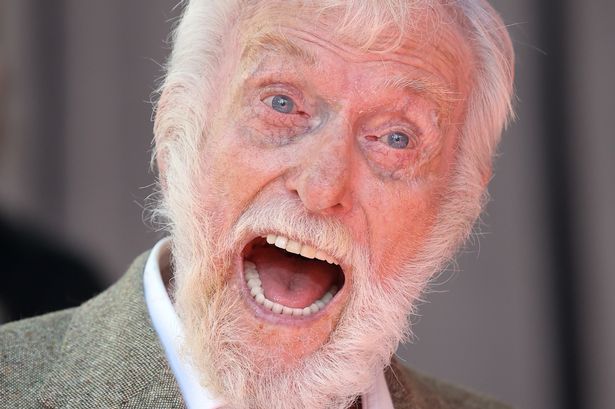
Acting legend, Dick Van Dyke, is turning 100 this month, but admits he wouldn’t be celebrating anything if he hadn’t given up two of his ‘addictions’
View 4 Images
Dick Van Dyke, has revealed which of his vices he had to kick in order to make it to his 100th birthday(Image: Getty Images)
Mary Poppins star, Dick Van Dyke, has revealed which of his vices he had to kick in order to make it to his 100th birthday, which he celebrates this month.
The Diagnosis Murder icon, who boasts 75 years in the acting industry, marks the momentous milestone on Saturday, but reckons he wouldn’t be celebrating anything if he hadn’t overhauled his lifestyle in his 50s.
Revealing that he quit smoking and drinking 50 years ago, Dick – famed for his role as loveable chimney sweep Bert in Mary Poppins – was forced to correct his son, actor, Barry Von Dyck, 74, who said his dad “never smoked too much”.
READ MORE: Richard Madeley halts Good Morning Britain with huge Prince Harry bombshellREAD MORE: Jessie J shares cancer update and reveals ‘it could come back’
Setting the record straight, the star told People magazine: “I smoked a lot, actually! I think I was probably in my 50s before it dawned on me that I had an addictive personality. If I liked something, I was going to overdo it. So I got rid of booze and cigarettes and all that stuff, which is probably why I’m still here.”
Speaking at the Vandy High Tea fundraising event – which raised money for theThe Van Dyke Endowment of the Arts and the Dick Van Dyke Museum – at his home in Malibu, the Chitty Chitty Bang Bang star said he was “probably the last person alive” who got to know and spend time with Walt Disney before the animation legend died of lung cancer in 1966.
Dick lamented: “He was a wonderful guy. He just smoked too much! Doggone.”
The seasoned star checked into rehab in 1973 to help overcome his alcoholism, and while getting sober he also quit smoking. However, he previously admitted he found quitting nicotine to be “twice as hard”.
Speaking on the Real No Really podcast in 2023, Dick said it took him “forever” to give up smoking and added: “It was much worse than the alcohol.”
The father-of-four – who married Arlene Silver, 54, in 2012 – recently admitted he feels “lonely” and “frustrated” in his old age because he’s outlived most of his best friends and he rarely gets to attend glitzy showbiz events because of his declining health.
He told The Times: “Though I still do guest spots on TV, and ads and videos, I miss going to the studio every day for a regular series. And every single one of my dearest lifelong friends is gone, which feels just as lonely as it sounds.
“It’s frustrating to feel diminished in the world, physically and socially.
“I get invites to events or offers for gigs in New York or Chicago, but that kind of travel takes so much out of me that I have to say no. Almost all of my visiting with folks has to happen at my house.”
However, the actor is determined not to become a grumpy old man as Dick continued: “We all have the capacity for a joyful life. I’ve made it to 99 in no small part because I have stubbornly refused to give into the bad stuff in life: failures and defeats, personal losses, loneliness and bitterness, the physical and emotional pains of ageing. That stuff is real but I have not let it define me.
Article continues below
“Instead, for the vast majority of my years, I have been in what I can only describe as a full-on bear hug with the experience of living.”
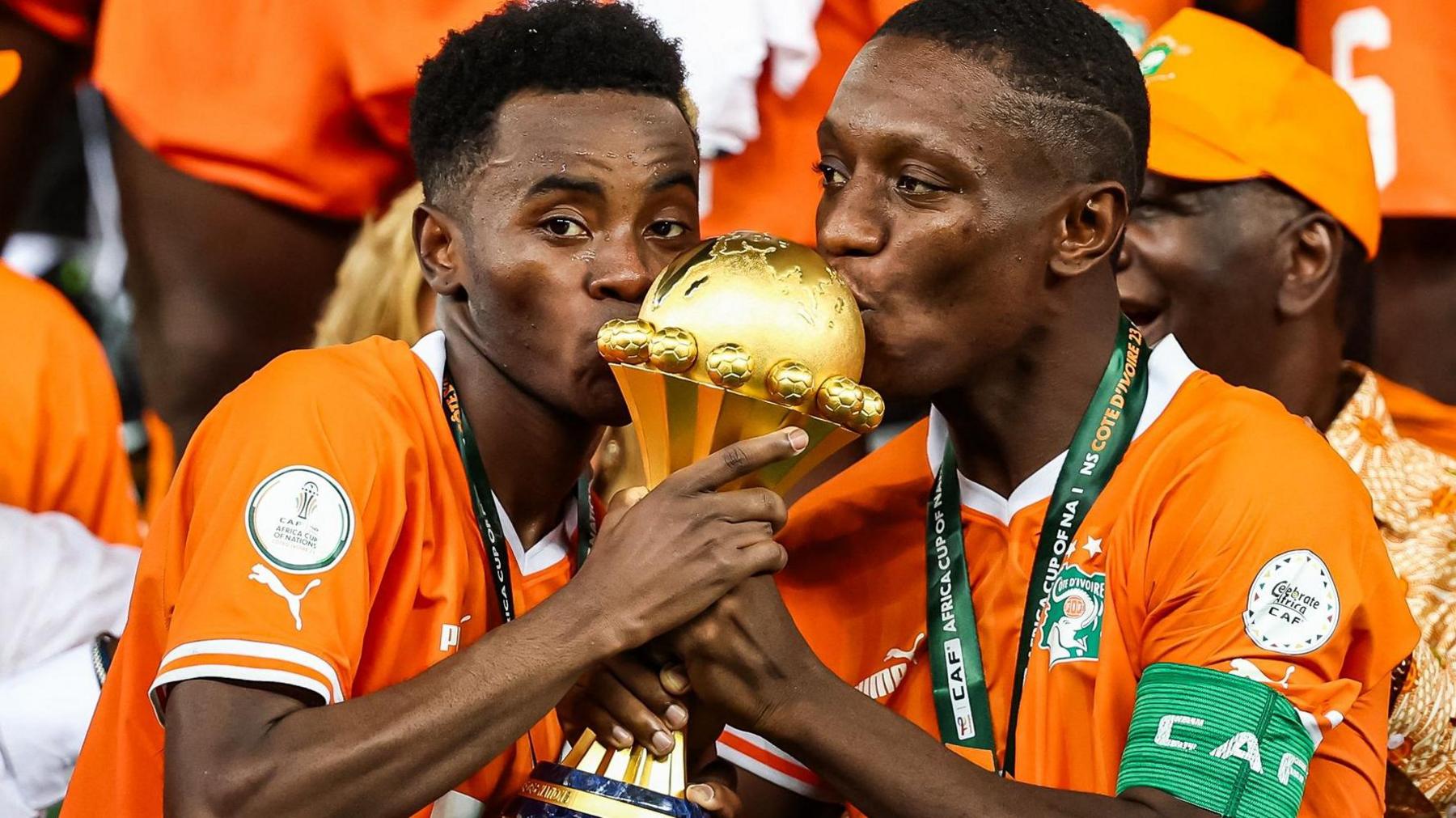
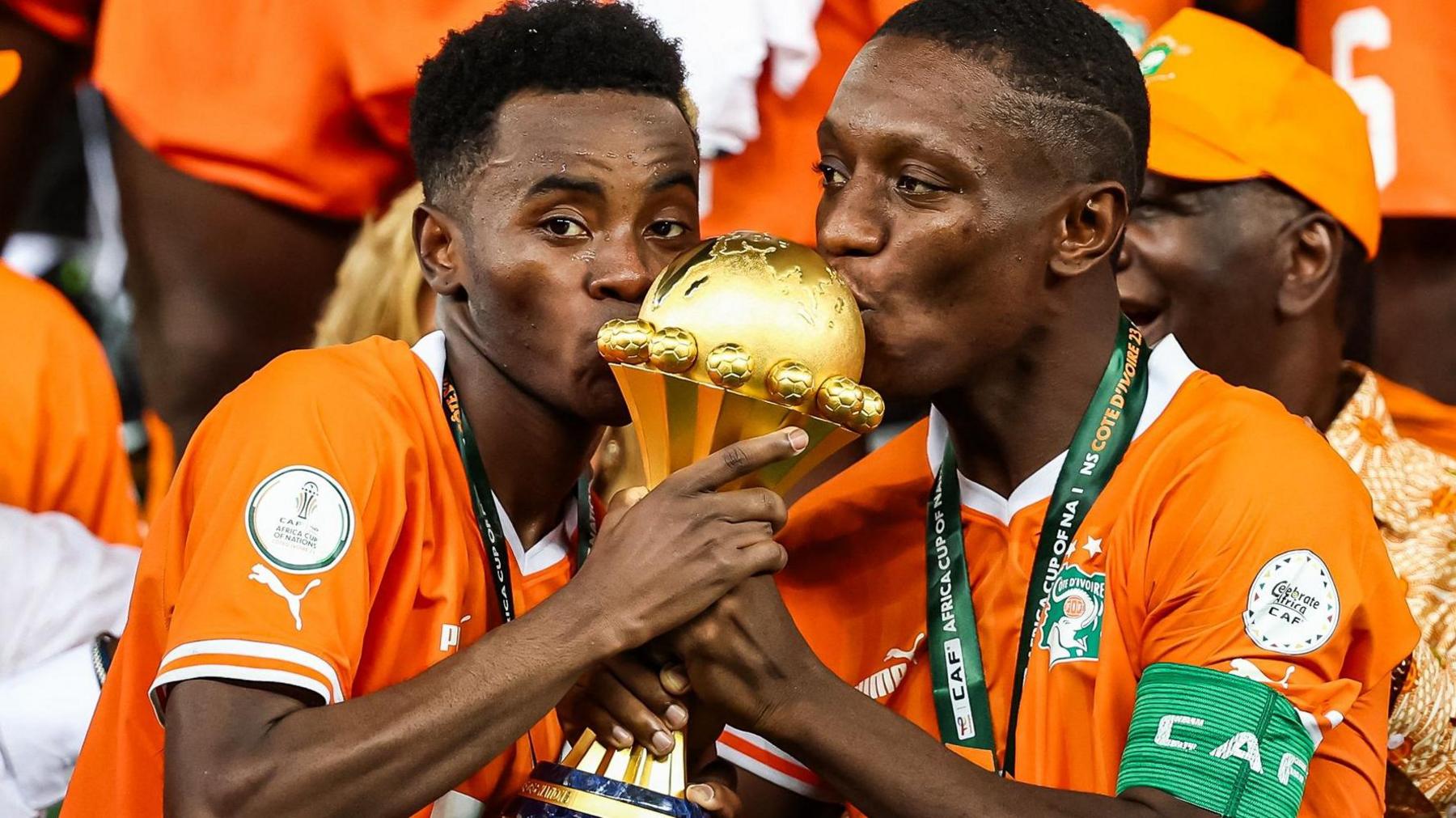
The continent’s best footballers are preparing to descend on Morocco for the 2025 Africa Cup of Nations (Afcon) as the finals are held over Christmas and New Year for the first time.
The tournament kicks off on Sunday, 21 December when the hosts take on Comoros at Rabat’s Prince Moulay Abdellah Stadium at 19:00 GMT.
The pressure is on the Atlas Lions, who are Africa’s highest-ranked nation at 11th in the world but have not won Afcon since 1976.
Meanwhile, Mohamed Salah, who is still looking for his first title, will hope to captain Egypt to a record-extending eighth continental crown after finishing as a runner-up at the 2017 and 2021 editions.
But who does he face in the group stage? What is the format of the tournament? Where are matches being played and when do they kick off?
What are the Afcon 2025 groups?
The 24 teams have been split into six groups of four, with the hosts in Group A alongside Mali, 2012 winners Zambia and Comoros.
Group F contains a heavyweight match-up, with holders Ivory Coast drawn alongside five-time champions Cameroon. Senegal against DR Congo in Group D also looks tasty.
Elsewhere, Egypt face 1996 winners South Africa in Group B, while Group C has an East African flavour, with Uganda and Tanzania taking on Nigeria and Tunisia.
Group A: Morocco, Mali, Zambia, Comoros.
Group B: Egypt, South Africa, Angola, Zimbabwe.
Group C: Nigeria, Tunisia, Uganda, Tanzania.
Group D: Senegal, DR Congo, Benin, Botswana.
Group E: Algeria, Burkina Faso, Equatorial Guinea, Sudan.
Group F: Ivory Coast, Cameroon, Gabon, Mozambique.
1 minute ago
Afcon 2025 schedule and kick-off times
The opening match between Morocco and Comoros kicks off at 19:00 GMT, with three games the next day.
After that, the group stage, which runs until 31 December, offers fans a Christmas feast of football, with four matches every day.
Those games will be played at 12:30, 15:00, 17:30 and 20:00 (all times GMT), while the final round of group action will kick off at either 16:00 or 19:00.
The knockout stage, which predominantly features games at 16:00 and 19:00, begins on Saturday, 3 January.
Afcon 2025 venues: Where is it being played?
Getty Images
Morocco has pumped vast sums of money into renovating stadiums to host Afcon 2025 while also preparing to co-host the 2030 Fifa World Cup alongside Spain and Portugal.
Nine stadiums will be used in six host cities, with four venues in the capital Rabat.
When are players being released for Afcon?
Getty Images
With Afcon once again being played in the middle of the European season, a row has developed over when clubs will make players available to their national teams.
World governing body Fifa announced that the mandatory release date would be Monday, 15 December – seven days later than the usual timing before major tournaments.
Mali coach Tom Saintfiet described the ruling as “catastrophic” for preparations.
“Everyone in Europe thinks African football is not important,” he added. “It shows a lack of respect and I’m angry.”
Some clubs may attempt to come to ad-hoc arrangements with federations in order to keep players for longer.
Who are the Afcon favourites?
Getty Images
The hosts are the overwhelming favourites.
Morocco are on a winning run of 18 consecutive victories – a world record in international football – stretching back to March 2024.
That 20-month streak has seen the Atlas Lions score 50 goals and concede just four.
Senegal, champions at Afcon 2021,have been playing impressive football this year under Pape Thiaw, and although the Teranga Lions lost to Brazil last month they immediately bounced back to beat Kenya 8-0.
Algeria, Egypt and holders Ivory Coast also went unbeaten through World Cup qualifying and the former two nations may back themselves in North African conditions.
Meanwhile, DR Congo come into the tournament on a high after seeing off Cameroon and Nigeria in Africa’s 2026 World Cup play-offs.
Africa Cup of Nations 2025 fixtures
Getty Images
All times GMT
Sunday, 21 December
Group A: Morocco vs Comoros, Prince Moulay Abdellah Stadium, Rabat (19:00)
Monday, 22 December
Group A: Mali vs Zambia, Stade Mohammed V, Casablanca (14:00)
Group B: South Africa vs Angola, Grande Stade de Marrakech, Marrakech (17:00)
Group B: Egypt vs Zimbabwe, Grande Stade d’Agadir, Agadir (20:00)
Tuesday, 23 December
Group D: Senegal vs Botswana, Grande Stade de Tangier, Tangier (12:30)
Group D: DR Congo vs Benin, Stade El Barid, Rabat (15:00)
Group C: Nigeria vs Tanzania, Complexe Sportif de Fes, Fes (17:30)
Group C: Tunisia vs Uganda, Olympic Stadium, Rabat (20:00)
Wednesday, 24 December
Group E: Burkina Faso vs Equatorial Guinea, Casablanca (12:30)
Group E: Algeria vs Sudan, Complexe Sportif Prince Heritier Moulay El Hassan, Rabat (15:00)
Group F: Ivory Coast vs Mozambique, Marrakech (17:30)
Friday, 26 December
Group B: Angola vs Zimbabwe, Marrakech (12:30)
Group B: Egypt vs South Africa, Agadir (15:00)
Group A: Zambia vs Comoros, Casablanca (17:30)
Group A: Morocco vs Mali, Prince Moulay Abdellah Stadium, Rabat (20:00)
Saturday, 27 December
Group D: Benin vs Botswana, Olympic Stadium, Rabat (12:30)
Group D: Senegal vs DR Congo, Tangier (15:00)
Group C: Uganda vs Tanzania, Stade El Barid, Rabat (17:30)
Group C: Nigeria vs Tunisia, Fes (20:00)
Sunday, 28 December
Group F: Gabon vs Mozambique, Agadir (12:30)
Group E: Equatorial Guinea vs Sudan, Casablanca (15:00)
Group E: Algeria vs Burkina Faso, Complexe Sportif Prince Heritier Moulay El Hassan, Rabat (17:30)
Getty Images
Monday, 29 December
Group B: Angola vs Egypt, Agadir (16:00)
Group B: Zimbabwe vs South Africa, Marrakech (16:00)
Group A: Comoros vs Mali, Casablanca (19:00)
Group A: Zambia vs Morocco, Prince Moulay Abdellah Stadium, Rabat (19:00)
Tuesday, 30 December
Group C: Tanzania vs Tunisia, Olympic Stadium, Rabat (16:00)
Group C: Uganda vs Nigeria, Fes (16:00)
Group D: Benin vs Senegal, Tangier (19:00)
Group D: Botswana vs DR Congo, Stade El Barid, Rabat (19:00)
Wednesday, 31 December
Group E: Equatorial Guinea vs Algeria, Complexe Sportif Prince Heritier Moulay El Hassan, Rabat (16:00)
Group E: Sudan vs Burkina Faso, Casablanca (16:00)
Group F: Gabon vs Ivory Coast, Marrakech (19:00)
Afcon 2025 second round schedule
Getty Images
Saturday, 3 January
SR1: Group D Winner vs 3rd Place Group B/E/F, Tangier (16:00)
SR2: Group A Second Place vs Group C Second Place, Casablanca (19:00)
Sunday, 4 January
SR3: Group A Winner vs 3rd Place Group C/D/E, Prince Moulay Abdellah Stadium, Rabat (16:00)
SR4: Group B Second Place vs Group F Second Place, Stade El Barid, Rabat (19:00)
Monday, 5 January
SR5: Group B Winner vs 3rd Place Group A/C/D, Agadir (16:00)
SR6: Group C Winner vs 3rd Place Group A/B/F, Fes (19:00)
Tuesday, 6 January
SR7: Group E Winner vs Group D Second Place, Complexe Sportif Prince Heretier Moulay El Hassan, Rabat (16:00)
Afcon 2025 quarter-finals
Getty Images
Friday, 9 January
QF1: Winner SR2 vs Winner SR1, Tangier (16:00)
QF2: Winner SR4 vs Winner SR3, Prince Moulay Abdellah Stadium, Rabat (19:00)
The continent’s best footballers are preparing to descend on Morocco for the 2025 Africa Cup of Nations (Afcon) as the finals are held over Christmas and New Year for the first time.
The tournament kicks off on Sunday, 21 December when the hosts take on Comoros at Rabat’s Prince Moulay Abdellah Stadium at 19:00 GMT.
The pressure is on the Atlas Lions, who are Africa’s highest-ranked nation at 11th in the world but have not won Afcon since 1976.
Meanwhile, Mohamed Salah, who is still looking for his first title, will hope to captain Egypt to a record-extending eighth continental crown after finishing as a runner-up at the 2017 and 2021 editions.
But who does he face in the group stage? What is the format of the tournament? Where are matches being played and when do they kick off?
What are the Afcon 2025 groups?
The 24 teams have been split into six groups of four, with the hosts in Group A alongside Mali, 2012 winners Zambia and Comoros.
Group F contains a heavyweight match-up, with holders Ivory Coast drawn alongside five-time champions Cameroon. Senegal against DR Congo in Group D also looks tasty.
Elsewhere, Egypt face 1996 winners South Africa in Group B, while Group C has an East African flavour, with Uganda and Tanzania taking on Nigeria and Tunisia.
Group A: Morocco, Mali, Zambia, Comoros.
Group B: Egypt, South Africa, Angola, Zimbabwe.
Group C: Nigeria, Tunisia, Uganda, Tanzania.
Group D: Senegal, DR Congo, Benin, Botswana.
Group E: Algeria, Burkina Faso, Equatorial Guinea, Sudan.
Group F: Ivory Coast, Cameroon, Gabon, Mozambique.
1 minute ago
Afcon 2025 schedule and kick-off times
The opening match between Morocco and Comoros kicks off at 19:00 GMT, with three games the next day.
After that, the group stage, which runs until 31 December, offers fans a Christmas feast of football, with four matches every day.
Those games will be played at 12:30, 15:00, 17:30 and 20:00 (all times GMT), while the final round of group action will kick off at either 16:00 or 19:00.
The knockout stage, which predominantly features games at 16:00 and 19:00, begins on Saturday, 3 January.
Afcon 2025 venues: Where is it being played?
Getty Images
Morocco has pumped vast sums of money into renovating stadiums to host Afcon 2025 while also preparing to co-host the 2030 Fifa World Cup alongside Spain and Portugal.
Nine stadiums will be used in six host cities, with four venues in the capital Rabat.
When are players being released for Afcon?
Getty Images
With Afcon once again being played in the middle of the European season, a row has developed over when clubs will make players available to their national teams.
World governing body Fifa announced that the mandatory release date would be Monday, 15 December – seven days later than the usual timing before major tournaments.
Mali coach Tom Saintfiet described the ruling as “catastrophic” for preparations.
“Everyone in Europe thinks African football is not important,” he added. “It shows a lack of respect and I’m angry.”
Some clubs may attempt to come to ad-hoc arrangements with federations in order to keep players for longer.
Who are the Afcon favourites?
Getty Images
The hosts are the overwhelming favourites.
Morocco are on a winning run of 18 consecutive victories – a world record in international football – stretching back to March 2024.
That 20-month streak has seen the Atlas Lions score 50 goals and concede just four.
Senegal, champions at Afcon 2021,have been playing impressive football this year under Pape Thiaw, and although the Teranga Lions lost to Brazil last month they immediately bounced back to beat Kenya 8-0.
Algeria, Egypt and holders Ivory Coast also went unbeaten through World Cup qualifying and the former two nations may back themselves in North African conditions.
Meanwhile, DR Congo come into the tournament on a high after seeing off Cameroon and Nigeria in Africa’s 2026 World Cup play-offs.
Africa Cup of Nations 2025 fixtures
Getty Images
All times GMT
Sunday, 21 December
Group A: Morocco vs Comoros, Prince Moulay Abdellah Stadium, Rabat (19:00)
Monday, 22 December
Group A: Mali vs Zambia, Stade Mohammed V, Casablanca (14:00)
Group B: South Africa vs Angola, Grande Stade de Marrakech, Marrakech (17:00)
Group B: Egypt vs Zimbabwe, Grande Stade d’Agadir, Agadir (20:00)
Tuesday, 23 December
Group D: Senegal vs Botswana, Grande Stade de Tangier, Tangier (12:30)
Group D: DR Congo vs Benin, Stade El Barid, Rabat (15:00)
Group C: Nigeria vs Tanzania, Complexe Sportif de Fes, Fes (17:30)
Group C: Tunisia vs Uganda, Olympic Stadium, Rabat (20:00)
Wednesday, 24 December
Group E: Burkina Faso vs Equatorial Guinea, Casablanca (12:30)
Group E: Algeria vs Sudan, Complexe Sportif Prince Heritier Moulay El Hassan, Rabat (15:00)
Group F: Ivory Coast vs Mozambique, Marrakech (17:30)
Friday, 26 December
Group B: Angola vs Zimbabwe, Marrakech (12:30)
Group B: Egypt vs South Africa, Agadir (15:00)
Group A: Zambia vs Comoros, Casablanca (17:30)
Group A: Morocco vs Mali, Prince Moulay Abdellah Stadium, Rabat (20:00)
Saturday, 27 December
Group D: Benin vs Botswana, Olympic Stadium, Rabat (12:30)
Group D: Senegal vs DR Congo, Tangier (15:00)
Group C: Uganda vs Tanzania, Stade El Barid, Rabat (17:30)
Group C: Nigeria vs Tunisia, Fes (20:00)
Sunday, 28 December
Group F: Gabon vs Mozambique, Agadir (12:30)
Group E: Equatorial Guinea vs Sudan, Casablanca (15:00)
Group E: Algeria vs Burkina Faso, Complexe Sportif Prince Heritier Moulay El Hassan, Rabat (17:30)
Getty Images
Monday, 29 December
Group B: Angola vs Egypt, Agadir (16:00)
Group B: Zimbabwe vs South Africa, Marrakech (16:00)
Group A: Comoros vs Mali, Casablanca (19:00)
Group A: Zambia vs Morocco, Prince Moulay Abdellah Stadium, Rabat (19:00)
Tuesday, 30 December
Group C: Tanzania vs Tunisia, Olympic Stadium, Rabat (16:00)
Group C: Uganda vs Nigeria, Fes (16:00)
Group D: Benin vs Senegal, Tangier (19:00)
Group D: Botswana vs DR Congo, Stade El Barid, Rabat (19:00)
Wednesday, 31 December
Group E: Equatorial Guinea vs Algeria, Complexe Sportif Prince Heritier Moulay El Hassan, Rabat (16:00)
Group E: Sudan vs Burkina Faso, Casablanca (16:00)
Group F: Gabon vs Ivory Coast, Marrakech (19:00)
Afcon 2025 second round schedule
Getty Images
Saturday, 3 January
SR1: Group D Winner vs 3rd Place Group B/E/F, Tangier (16:00)
SR2: Group A Second Place vs Group C Second Place, Casablanca (19:00)
Sunday, 4 January
SR3: Group A Winner vs 3rd Place Group C/D/E, Prince Moulay Abdellah Stadium, Rabat (16:00)
SR4: Group B Second Place vs Group F Second Place, Stade El Barid, Rabat (19:00)
Monday, 5 January
SR5: Group B Winner vs 3rd Place Group A/C/D, Agadir (16:00)
SR6: Group C Winner vs 3rd Place Group A/B/F, Fes (19:00)
Tuesday, 6 January
SR7: Group E Winner vs Group D Second Place, Complexe Sportif Prince Heretier Moulay El Hassan, Rabat (16:00)
Afcon 2025 quarter-finals
Getty Images
Friday, 9 January
QF1: Winner SR2 vs Winner SR1, Tangier (16:00)
QF2: Winner SR4 vs Winner SR3, Prince Moulay Abdellah Stadium, Rabat (19:00)
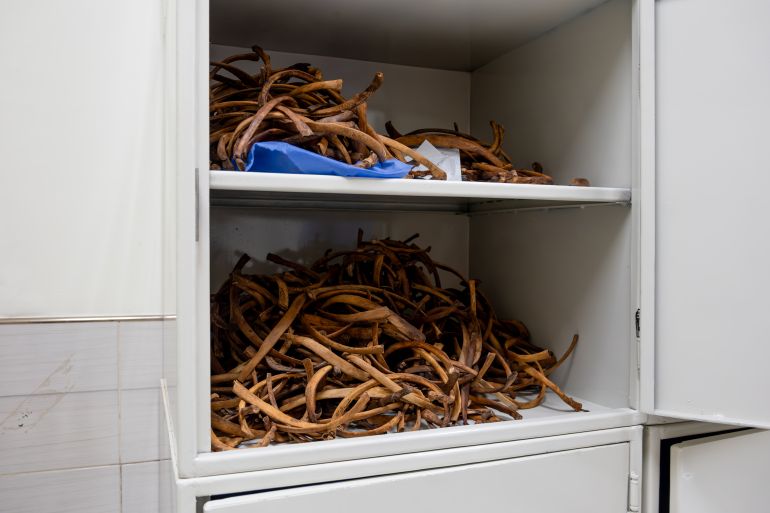
Damascus, Syria – In the basement of a nondescript building in Damascus is the Syrian Identification Centre’s forensic laboratory with storage units full of human bones.
One cabinet is entirely dedicated to ribs. Another contains skulls.
Recommended Stories
list of 3 itemsend of list
These are only some of Syria’s missing; their disappearances remain an unresolved legacy of the dictatorship under Bashar al-Assad.
A year on from the fall of the regime in December 2024, the Identification Centre’s head, Dr Anas Hourani, has examined the only mass grave that has been fully exhumed so far.
It could take his team up to four years to identify victims from that site alone, he said.
This cabinet is full of ribs discovered in a single mass grave. Dr Hourani, the centre’s lead, believes it could take up to four years to identify the victims [Harriet Tatham/Al Jazeera]
A long, painstaking process
It’s a daunting timeline. Across Syria, there may be as many as 66 mass graves, according to the International Commission on Missing Persons.
“These missing people may be our relatives, our neighbours, our families,” Hourani said. “We must hold accountable the person who did these things.”
Forced disappearances were a hallmark of the al-Assad regime, which operated a vast prison network where detainees were tortured, killed, and many were buried in mass graves.
When the regime collapsed, many Syrians were relieved, hoping to finally get answers about their disappeared loved ones.
Dr Anas Hourani is a forensic odontologist – meaning he studies teeth to help identify a person’s remains [Harriet Tatham/Al Jazeera]
Prisons were swiftly opened, and about 30,000 detainees were freed.
But for people who didn’t see their loved ones emerge, a devastating realisation set in: They’re most likely dead.
Mohammad Reda Jalkhi, the head of the National Commission on Missing Persons, believes the figure may be as high as 300,000, while the UN estimates it at about 100,000.
“According to some documents, noting that they vary in authenticity, the number is between 120,000 missing persons and 300,000,” he said.
“However, I expect that in reality the number is much higher, and the number of people affected by this loss exceeds millions of Syrians.”
The scale of work ahead for Syria’s forensic scientists is difficult to comprehend [Harriet Tatham/Al Jazeera]
Waiting for a DNA lab
As a forensic odontologist, Dr Hourani studies teeth to help identify victims.
“The teeth are one of the universal indicators,” he said.
He also looks at a victim’s bone structure and the clothes they were buried in to ascertain as much information about when and how a person died.
A winter jacket, for example, suggests the person was killed in the winter.
While these techniques can narrow down clues, real forensic work is hamstrung until Syria has a DNA centre with a functioning DNA bank.
A critical shortage of forensic labs and specialists is hampering efforts to identify Syria’s hundreds of thousands of missing people [Harriet Tatham/Al Jazeera]
“We hope to open several centres for DNA analysis, which will help us identify individuals,” Dr Hourani said, adding that they struggle to find specialised staff.
Jalkhi acknowledges these shortcomings.
“We are trying to do everything we can regarding this file,” he told Al Jazeera.
But dealing properly with crimes of this scale “does not happen overnight”, he said.
“If we look at Bosnia and Herzegovina, after more than 30 years – and up until now – they are still looking for missing people, and the same goes for Mexico and Argentina,” Jalkhi said.
Despite this, he says he is committed to delivering results.
“Failure in the file of missing people,” he said, “means failure to maintain civil peace and therefore disaster. We do not want to return to disaster again in Syria.”
It’s believed this victim died from a gunshot to the head [Harriet Tatham/Al Jazeera]




![Dr Anas Al Hourani is a forensic odontologist - meaning he studies teeth to help identify a person's remains. [Harriet Tatham/Al Jazeera]](https://i0.wp.com/www.aljazeera.com/wp-content/uploads/2025/12/DrAlHourani-1765187120.jpg?w=696&ssl=1)


![It’s believed this victim died from a gunshot to the head. [Harriet Tatham/Al Jazeera]](https://i0.wp.com/www.aljazeera.com/wp-content/uploads/2025/12/SkullGunshot-1765187511.jpg?w=696&ssl=1)