The man behind the headlines – Salah, by Klopp, Diaz and more

During the eight and a half years he has spent at Liverpool, Mohamed Salah has been beloved by supporters, who rank the ‘Egyptian King’ among the club’s greatest ever players.

But since his unexpected declaration that he feels scapegoated by Liverpool for the club’s poor run, having been picked as a substitute for three consecutive matches by manager Arne Slot, Salah’s character has been called into question by fans, former players and beyond.

So who is Salah the man – away from the latest headlines?

Mo Salah: Never Give Up

Watch on iPlayer

‘You only have problems with Mo if he is not playing’

Salah’s relentless intensity and refusal to accept lower standards from himself or those around him have underpinned Liverpool’s success, and perhaps also explain why he has found criticism of his diminished role tough to handle.

“We are all massively influenced by our past – how we were raised, where we grew up,” says Jurgen Klopp, who won every major trophy in English and European football while managing Salah at Anfield. “Mo knew early on [in his life] that he had to do more than others.

“He always developed. He never stops. That is his mindset.

“After each summer break he came back and had a new skill. It was like he had spent the whole time just practising one particular type of pass.

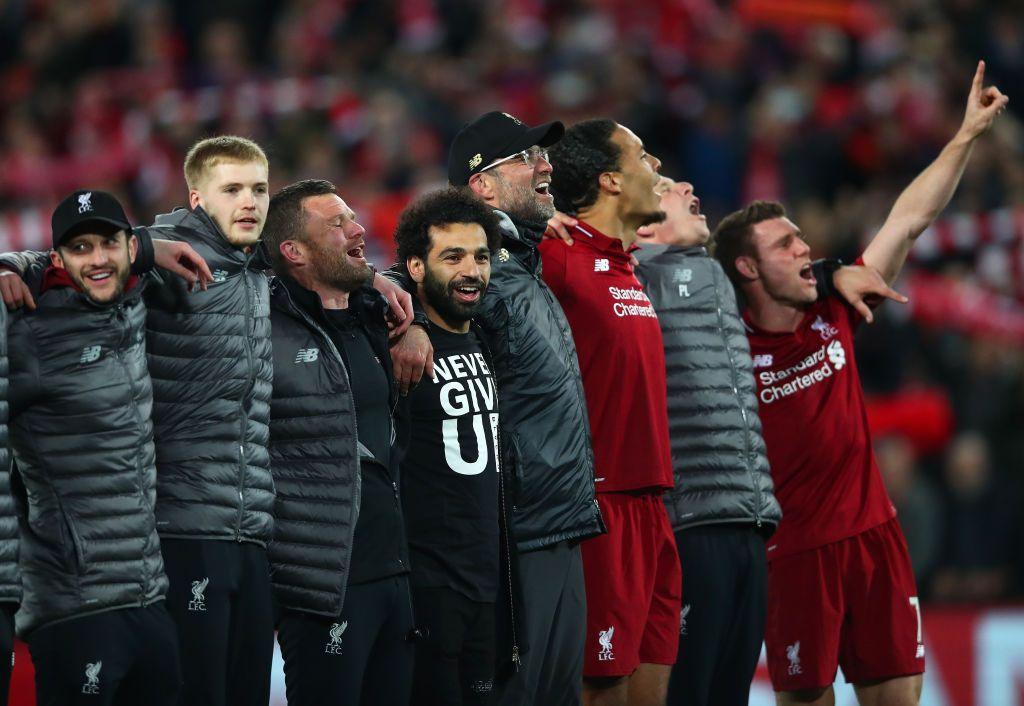
“We pushed each other, just to make sure that we would never stop. And we never did stop. That moment lifting the Premier League bonded us for life. He will be remembered as one of the greatest of all time.

“I wouldn’t say he is easy to manage, but he is also not difficult to manage. You [only] have problems with Mo Salah if he is not playing or you take him off.”

Salah has been criticised by some for not giving more frequent media interviews before his intervention in the mixed zone at Leeds’ Elland Road, particularly after defeats and poor performances.

He has been accused of demonstrating a lack of leadership. But he has often delivered calls to arms to fans on social media in difficult moments, and those who have played alongside him describe Salah as a man who refuses to give up and is capable of inspiring others.

“He will always be trying to prove someone wrong,” says former Liverpool team-mate Adam Lallana.

“He is not macho. I would often tell my children about how he behaves, how he doesn’t get too high in good moments, doesn’t beat himself up too much in low moments. He would always remain completely focused on the job in hand.

“I would look at him and it would make me feel calm because of how in control he would be all the time.

Getty Images

‘He wants to be the best at everything’

Salah defended his record when speaking at Elland Road, and compared himself to England captain Harry Kane – delivering what he felt was a reminder to those inside and outside of Liverpool who have forgotten what he is capable of.

A level of arrogance is perhaps to be expected in all elite athletes, and some believe it has powered Salah to the heights he and Liverpool have reached.

“He is a really nice guy, considering the success he has had – being a superstar around the globe,” says James Milner – Liverpool’s vice-captain during most of Salah’s time at the club.

“He plays as if he has a chip on his shoulder. He wants to be the best at everything – he even got a chess teacher to improve his game, and gave me a thumping a good few times.

“You need different types of leaders, and Mo is a big leader in that group, in terms of the standards he set every day. When you have young players come and sign, they see him and it’s ‘this is what it takes to be a top player, this is what it is to be a Liverpool player’.”

That desire to always be the best became competition – fraught at times – with team-mate Sadio Mane, Liverpool’s other flying forward who played on the opposite wing to Salah for five seasons.

Mohamed Salah plays table tennis during a pre-season training camp with his Liverpool team-mates in 2021Getty Images

‘Mo has lifted the heads of all of us’

Salah is more than just a footballer – he is a global sociocultural icon, being named one of the world’s most influential people, steering conversations on human rights, and changing attitudes towards Muslims through demonstrations of faith.

He was born in a rural village – Nagrig – about 100 miles from Cairo, where most of the roughly 15,000 inhabitants work as farmers and more than half live in poverty.

That such a region could produce one of the world’s greatest athletes borders on impossible.

“What already set him apart as a kid was his discipline,” says Maher Anwar Shtiyeh – mayor of Nagrig. “He remains deeply tied to his roots, despite fame and global recognition.

“He only finds real happiness in his village spending time with his family and friends. He is a role model for the youth of Egypt, the Arab youth, and the youth of the whole Islamic world. He has lifted the heads of all of us.”

As a child, Salah would travel up to five hours by minibus from his village to the capital, where he played youth football for top-flight club Arab Contractors.

That helped instil a resilience that has guided him throughout his professional career, alongside support from loved ones.

“You have to be mentally so strong as a young kid following your dream like that,” says former international team-mate Ahmed Elmohamady.

“His wife is from the same village. They grew up together, which is great because she knows everything about him and has supported him all the way.

“Now anyone in the village who asks him for support, he supports them. It shows what a great human being he is.”

Since leaving Egypt, Salah has maintained close ties with Nagrig and financed an ambulance station, a charitable foundation and a religious institute in the area.

Salah has proudly made his faith visible throughout his career – he prays both when walking onto the pitch and after scoring goals.

“When I first met Mo, he was coming here quite regularly,” says Shafique Rahman – Imam at Liverpool Mosque and Islamic Institute. “He would arrive a little bit late after finishing training. We had people waiting outside who wanted to see him, but nobody would bother him during prayer.

To play this video you need to enable JavaScript in your browser.

‘To get up and want to be the best every day – that’s a different mindset’

When Salah first moved to England – signed by Jose Mourinho’s Chelsea after impressing for Basel in Switzerland – he struggled to impose his personality in a squad full of established stars, and lacked self-belief.

“When I first met him, he was 21 – very innocent,” says former team-mate Mark Schwarzer. “He was coming to London – a big city, different culture – and I think he was a bit timid.

“When he signed, he was coming into a changing room packed full of international stars – players that were used to winning, and a manager that was a legend of the club. For new players, it was sink or swim.

“The more he didn’t score, the more frustrated he became. There was a moment in the changing room when Jose actually kicked a table, and was directing a lot of his frustration towards Mo, and he took him off. Mo was visibly upset.

“It’s credit to him, his determination, his dedication, everything, to go on and deliver what he has done.”

Salah rebuilt his career in Italy’s Serie A – first in a loan spell with Fiorentina then at Roma, developing a reputation as an on-field leader and ultimate professional.

“He was just different,” explains BBC pundit and former England and Manchester City defender Micah Richards, who played alongside Salah at Fiorentina. “You get those characters that just do everything by the book – he was that guy.

“He would always be in bed early, always be eating healthily. He clearly thought, ‘I’m going to show everyone exactly what I can do. All those who have doubted me are going to eat their words.’ That’s exactly what he did.”

For a young African man to set standards for European colleagues to follow was a challenge in itself.

“To succeed in Europe you have to understand the culture of where you are playing, where you are living, without losing any of your principles,” says former Egypt striker Mido, who played for Tottenham, Roma and Ajax among others. “This is the balance that he has achieved.

Football fans in Nagrig, Egypt celebrate after Liverpool forward Salah scores the opening goal in the 2019 Champions League final victory against Tottenham Hotspur at the Wanda Metropolitano Stadium in Madrid, SpainGetty Images

‘Mo has left a profound mark on me’

Even before Salah’s comments following the 3-3 draw with Leeds, doubts about his future were arising.

Inside Liverpool, concerns had already been raised about his performances, before transfer rumours were given further encouragement this week, with sources telling the BBC the Reds are open-minded about selling the 33-year-old.

Salah is not the only Liverpool hero whose time at the club – which he and Slot have said could be up in the January transfer window – has (potentially) ended with public denigration.

In different contexts, Javier Mascherano, Fernando Torres and Trent Alexander-Arnold have met similar fates, while shirts bearing the legendary Steven Gerrard’s name were set alight in the street when he was on the verge of joining Chelsea in 2005.

If this is the end of Salah and Liverpool’s love affair, the human impact he has had on those around him will not be forgotten any time soon.

“He was one of the first people to welcome me, and did so in such an incredible way,” says Luis Diaz, who played alongside Salah in Liverpool’s forward line for three-and-a-half years before joining Bayern Munich earlier this year.

“He came over to me and said: ‘if you ever need my help, I’m here for you.’ I remember him telling me on the pitch: ‘Let’s try this… let’s make this move so that it works.’ And then it would work in the match.

“To share the moment lifting the Premier League with him, to see how happy he was, how much he was enjoying it, was an incredible feeling.

Related topics

  • Egypt
  • Liverpool
  • Premier League
  • UEFA Champions League
  • Football

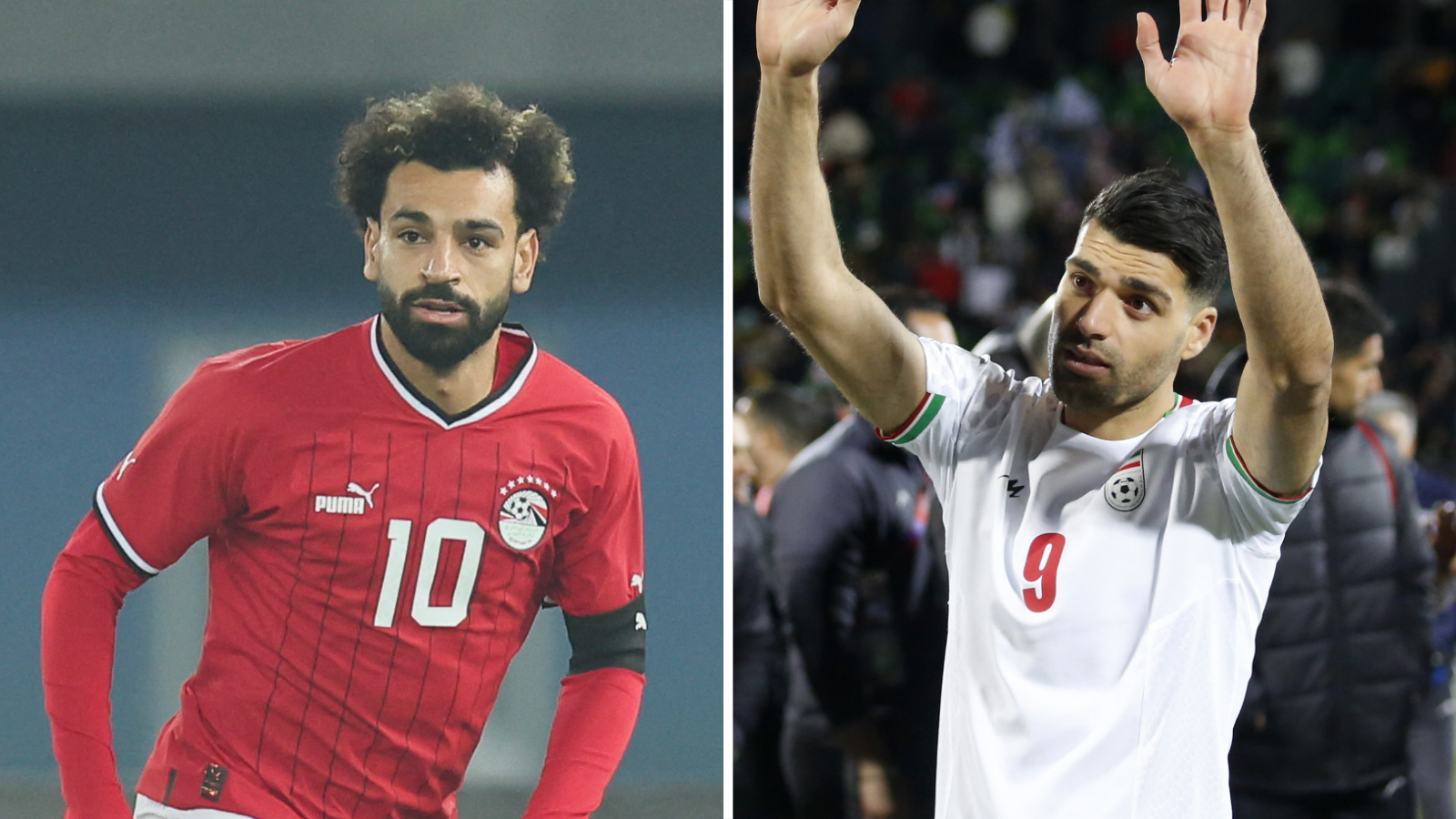
Egypt want World Cup ‘Pride Match’ plans cancelled

BBC Sport/Getty Images

The organisation behind the LGBTQ+ ‘Pride Match’ at the 2026 World Cup says it intends to push forward with plans despite Egypt objecting to Fifa.

The Egyptian Football Association said it has sent a formal letter to Fifa requesting the celebrations around their group game against Iran do not go ahead.

The local organising committee in Seattle, one of the host cities for the tournament next summer, said the match at Lumen Field on 26 June will feature celebrations of the LGBTQ+ community.

In a statement on Tuesday the Egyptian FA said it has sent a formal letter to Fifa secretary-general Mattias Grafstrom, rejecting “in absolute terms” any activities linked to LGBTQ+ support during the match.

But the local organising committee told the BBC that it is “moving forward as planned with our community programming”.

The game takes place on the weekend of Seattle Pride, and two days before the anniversary of the Stonewall Riots – generally regarded as the birth of the LGBTQ+ rights movement.

Plans were put in place before the teams involved in the fixture were selected, or the draw for the World Cup was made, and has been organised solely by the local committee and not affiliated with Fifa itself.

To play this video you need to enable JavaScript in your browser.

The lengthy Egyptian FA statement claimed the initiative would clash with “the cultural, religious and social values” of Egypt and Iran, and urged Fifa to ensure the match would remain focused on football.

It cited Fifa’s statutes on political and social neutrality, arguing matches should not be used to promote causes that are “sensitive or of a contentious nature”.

The statement read: “The Egyptian Football Association explained in the letter that, while Fifa is committed to ensuring a respectful and welcoming environment for all fans, and in order to maintain the spirit of unity and peace, it is necessary to avoid including activities that could provoke cultural and religious sensitivities between fans present from both countries, Egypt and Iran, especially since such activities are culturally and religiously incompatible with the two countries.

“The federation also relied on Fifa’s established principle of respecting cultures and encouraging all parties to organise events in a way that respects the beliefs and identities of the participating communities.

“Therefore, in order to ensure that the match is held in an atmosphere of respect and focus solely on the sporting aspect, the Egyptian Federation categorically rejects these calls and demands that Fifa not hold any events or performances related to supporting homosexuality inside the stadium on matchday.”

In response, the Seattle organising committee said it is “committed to ensuring all residents and visitors experience the warmth, respect, and dignity that defines our region”.

Hana Tedesse, vice-president of communications for Seattle Fifa World Cup 2026, said its plans focused on events around the city, rather than in Lumen Field or during the game itself.

“As the local organising committee, our role is to prepare our city to host the matches and manage the city experience outside of Seattle Stadium,” Tedesse told the BBC.

“Football has a unique power to unite people across borders, cultures, and beliefs. The Pacific Northwest is home to one of the nation’s largest Iranian-American communities, a thriving Egyptian diaspora, and rich communities representing all nations we’re hosting in Seattle.”

The Pride Match plans have also reportedly drawn criticism from Iranian media.

Mehdi Taj, head of Iran’s football federation, was quoted by local news agency ISNA as saying Tehran and Cairo had both raised “objections against the issue”, which he described as an “irrational move that supports a certain group”.

Six games are scheduled to take place in Seattle, although there could be problems switching the fixture for the Pride Match.

Co-hosts USA face Australia on 19 June, which has been designated to mark Juneteenth – the celebration of the end of slavery in the US – while the other group matches feature Egypt or Qatar, another country with strict laws against same-sex relationships.

At the 2022 World Cup in Qatar – a country which also has laws against same-sex relationships – Fifa said players who wore the OneLove armband in support of LGBTQ+ people would receive yellow cards.

Before that tournament, then UK Foreign Secretary James Cleverly said LGBT football fans who attended should show “a little bit of flex and compromise” in respect of the country’s laws – remarks described as “tone deaf” by critics.

Related topics

  • Egypt
  • Iran
  • Football
  • FIFA World Cup

More on this story

    • 16 August
    BBC Sport microphone and phone

Shields to face US rival in first bout of new deal

Getty Images

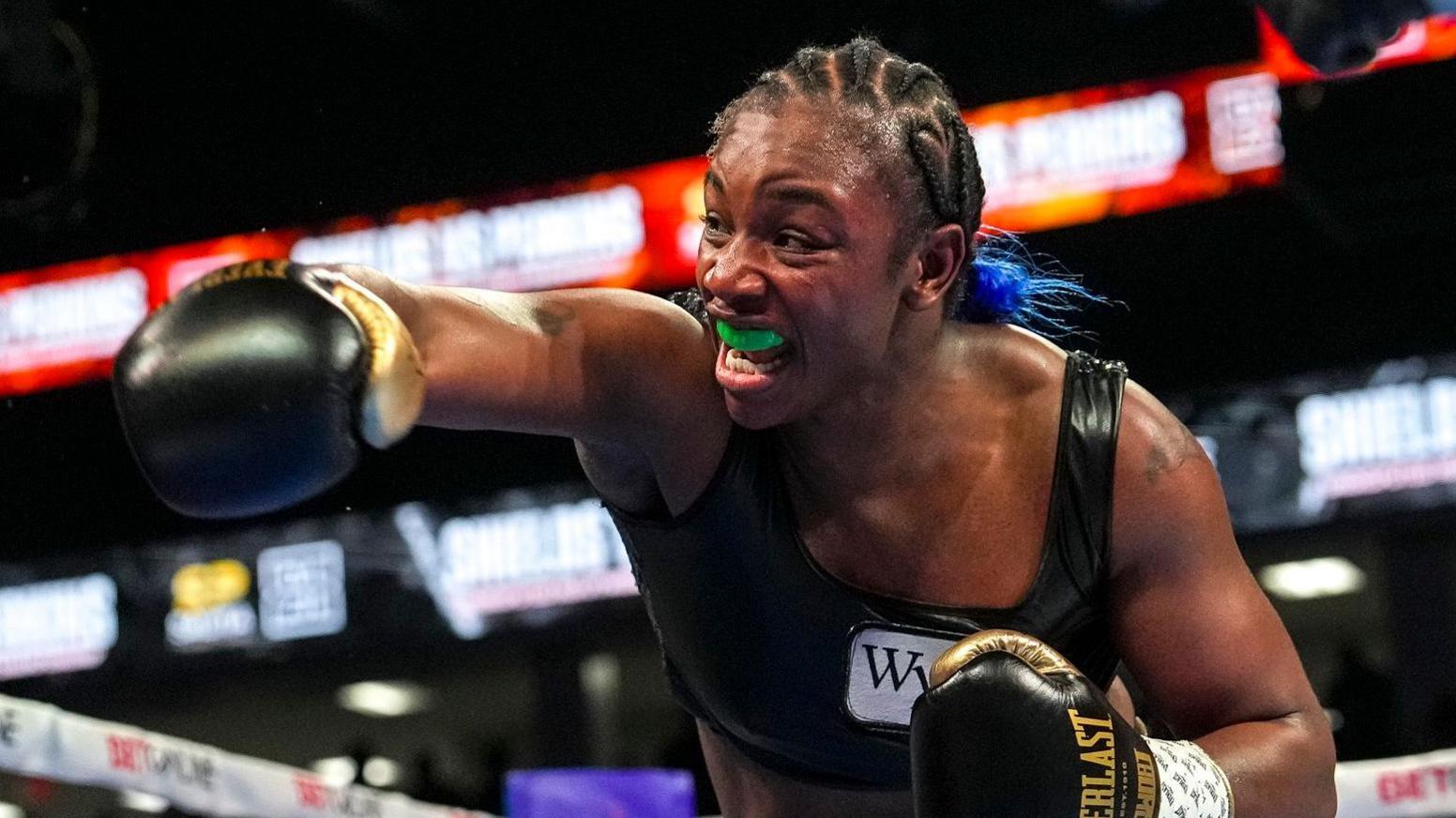
Claressa Shields will defend her undisputed heavyweight crown against fellow American Franchon Crews-Dezurn in February 2026 in her first outing since signing an $8m (£6.1m) multi-fight deal.

Shields, 30, is one of women’s boxing’s biggest stars and rejected interest from Jake Paul’s Most Valuable Promotions (MVP) to recently sign with Wynn Records and Salita Promotions.

Her last fight was a win over Lani Daniels in July when she retained her WBO, WBA, IBF and WBC titles to remain unbeaten from her 17 professional outings.

Shields, who has won undisputed titles in three weight classes and is a two-time Olympic gold medallist, will fight 38-year-old American Crews-Dezurn on 22 February at Little Caesars Arena in Detroit.

They fought in 2016 in what was the professional debut for both of them and Shields beat Crews-Dezurn by unanimous decision.

Related topics

  • Boxing
    • 29 November
    Jake Paul faces off with the much taller Anthony Joshua
    • 28 April 2024
    Split image of Claressa Shields, Paddy Pimblett and Chris Eubank Jr

More boxing from the BBC

    • 16 August
    BBC Sport microphone and phone

Military transport plane crashes in war-torn Sudan, killing crew: Report

A military transport aircraft has gone down while attempting to land at an airbase in eastern Sudan, killing all the crew members in the war-ravaged nation.

An Ilyushin Il-76 crashed on Tuesday as it approached the Osman Digna airbase in Port Sudan, near the city’s main airport, two military sources told the AFP news agency, citing a technical malfunction during the landing attempt.

Recommended Stories

list of 3 itemsend of list

All crew members on board were killed, though the government-aligned Sudanese Armed Forces (SAF) has not disclosed how many people were on the plane.

The last major incident at the airbase occurred in May, when drones struck multiple sites across Port Sudan, including the airfield.

The incident comes as SAF faces mounting losses across the country’s central regions.

On Monday, the Rapid Support Forces (RSF) seized control of the Heglig oilfield, Sudan’s largest oil facility, in West Kordofan province after SAF abandoned their positions, according to the Sudan Tribune.

Military sources told Al Jazeera on Tuesday that the army was also withdrawing from Babnusa in West Kordofan, a strategic gateway that the RSF said it had taken control of in early December.

The loss of Heglig delivers a significant blow to the military-aligned government’s revenue streams. The facility processes between 80,000 and 100,000 barrels of crude oil daily for Sudan and South Sudan, and the pipeline to Port Sudan runs through it.

Ahmed Ibrahim, a former adviser to the Sudanese government, told Al Jazeera on Tuesday that the attack on Heglig was part of an RSF effort to drag South Sudan, where a fragile truce between the country’s dominant forces has only barely held, into the war on its side.

The conflict’s epicentre has shifted to the Kordofan region following el-Fasher’s fall last month, which the United Nations has described as a “crime scene”. RSF gains across the central region now threaten to bisect the country, potentially isolating army-held territory and consolidating paramilitary control over a continuous stretch from Chad to the country’s heartland.

The same day as the plane crash, the United States imposed sanctions on four Colombian nationals and four companies accused of recruiting hundreds of military veterans to fight for the RSF.

However, the sanctions did not target Global Security Services Group, a company in the United Arab Emirates, which, a November report by The Sentry, a United States-based investigative organisation that tracks conflict financing, identified as arranging the deployment of Colombian mercenaries to Sudan.

The UAE has consistently denied providing support to the RSF.

Also on Tuesday, the International Criminal Court (ICC) sentenced Ali Kushayb, a former leader of the Popular Defence Forces (also known as Janjaweed) militia, to 20 years in prison for war crimes and crimes against humanity committed in Darfur between 2003 and 2004.

The conviction marks the first time the ICC has prosecuted crimes in Darfur, a region now witnessing renewed mass atrocities as the RSF, which traces its origins to the Janjaweed, advances across western and central Sudan.

The conflict has killed tens of thousands since April 2023 and displaced more than 12 million people.

The World Food Programme warns that 20 million people face acute food shortages, with six million on the brink of starvation.

Writing for Al Jazeera, Javid Abdelmoneim, international president of Doctors Without Borders (also known by its French initials MSF), warned that the world must not accept “a new normal” of mass atrocities in Sudan.