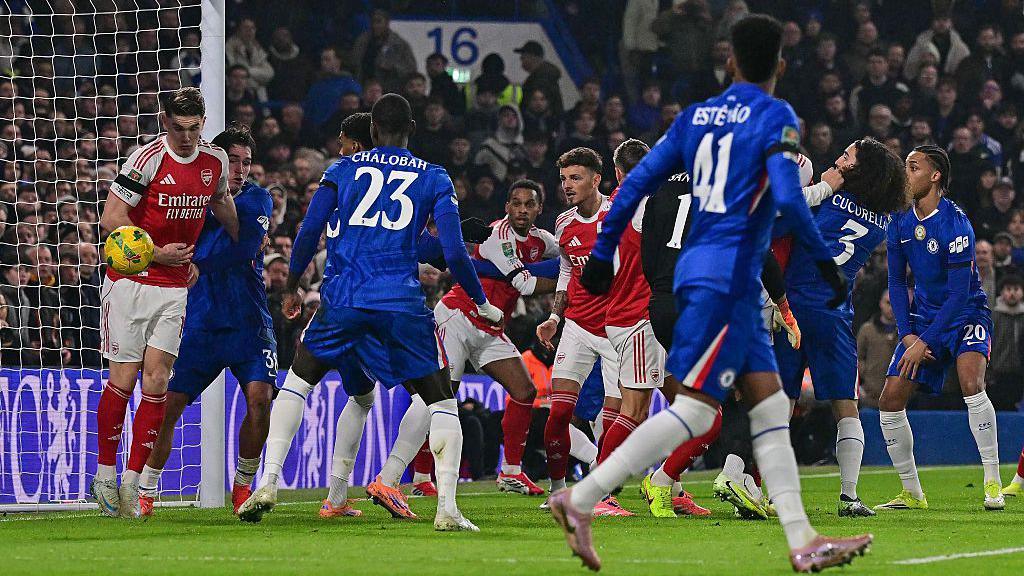
Offside or not? Man City, Arsenal and VAR inconsistencies

Getty Images
  • 48 Comments

You could not make it up, really. Just 24 hours after Manchester City had a goal controversially ruled out through VAR, Arsenal saw theirs stand.

Two EFL Cup semi-finals, two pretty similar offside situations, two different outcomes.

Supporters crave consistency, so it is understandable that questions are being asked.

How can the video assistant referee system chalk off a goal in one instance but allow it to stand in the other?

When Manchester City’s Antoine Semenyo thought he had scored a second goal in Tuesday’s 2-0 win at Newcastle United, no-one seemed to have a clue there was anything untoward.

Then the VAR, Stuart Attwell, told referee Chris Kavanagh that an offside Erling Haaland was having an impact on Malick Thiaw’s defending as the ball went past en route to goal.

Fast forward to Wednesday and Ben White’s goal in Arsenal’s 3-2 victory at Chelsea. The ball had evaded an offside Viktor Gyokeres, who was jostling with Chelsea’s Marc Guiu. The VAR stayed out of it.

Giving offside against Haaland is technically correct in law but it is a VAR over-reach. It is not the kind of intervention we have come to see in the Premier League, so by extension the same would be expected for the Carabao Cup.

The goal incidents were comparable but not the same. Haaland was effectively protecting the path of the ball and could be considered to have been stopping Thiaw from getting to it.

Antoine Semenyo of Manchester City scores a goal that is later ruled out by VARGetty Images

Benchmark for consistency should not be a bad decision

A couple of years ago the VAR failed to give a penalty against Manchester United goalkeeper Andre Onana. He had crashed into Wolves striker Sasa Kalajdzic.

When Onana made a similar challenge later in the season the VAR did not stay out of it to be consistent with an earlier error. This time the spot-kick was awarded.

The benchmark for consistency was not an incorrect decision or a bad VAR outcome. Referees were told what was expected of them and adjusted their decision-making.

This happens all the time and can be applied to the Carabao Cup offside calls. But by being markedly different just 24 hours apart it is clearly going to raise questions.

Two things particularly frustrate supporters with VAR: decisions which come as a surprise and those which take far too long.

With the Haaland offside, they got both. It did not sit well at Professional Game Match Officials Limited (PGMOL), the body that oversees refereeing in England’s professional leagues.

Since arriving as the head of referees three years ago, Howard Webb has repeatedly said that his officials should not be too forensic. A VAR must have confidence in their decision-making to be effective.

Delays cause frustration and place doubt into supporters’ minds. Quick and efficient reviews, on the whole, seem to be more trusted.

There has been a significant reduction in the time taken for VAR reviews, down to around 50 seconds on average. But the long stoppages like at St James’ Park, leaving fans in the ground in the dark, will rightly get attention.

    • 2 days ago
    • 20 hours ago
    • 1 day ago

At Stamford Bridge it was a much more efficient check by the VAR, Jarred Gillett. He did not dally, perhaps mindful of what had happened the night before.

The Haaland decision sticks out partly because the Premier League has the lowest VAR intervention rate in European football. VARs do try to stay out of the more subjective decisions.

The Premier League’s Key Match Incidents Panel says there have been only two incorrect interventions out of 47 so far this season. That is the lowest there has been at the halfway stage.

Related topics

  • Chelsea
  • Premier League
  • Manchester City
  • Arsenal
  • Newcastle United
  • Football
  • EFL Cup

More on this story

    • 17 October 2025
    A graphic of Premier League players from every team in the division in 2025-26 season, with the Premier League trophy in front of them.
    • 16 August 2025
    BBC Sport microphone and phone

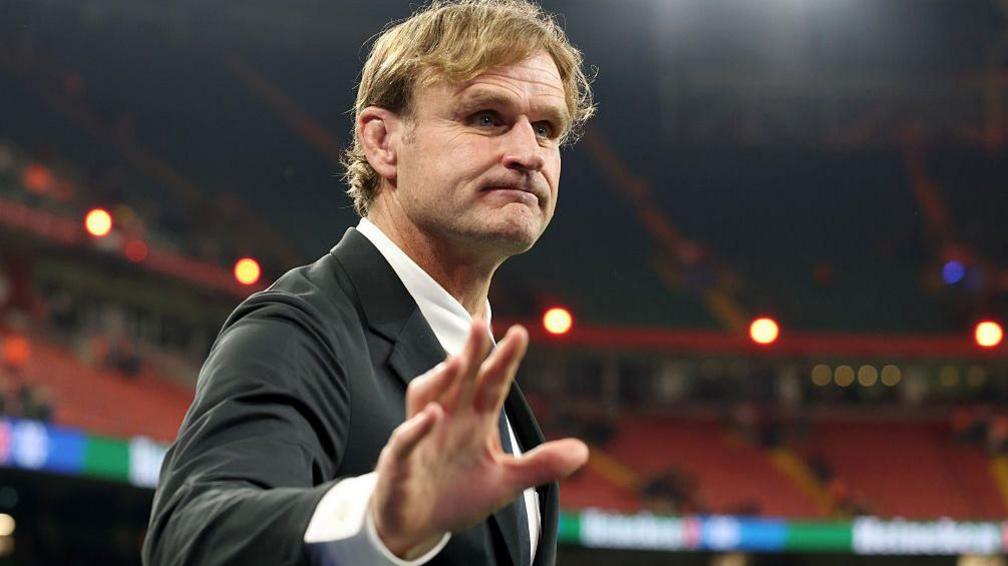
Robertson sacking marks another slip from the summit for All Blacks

Getty Images
  • 7 Comments

First, the disclaimer.

The All Blacks are not a bad rugby team. They are, in fact, a very good one.

During Scott Robertson’s time in charge they won 20 out of 27 Tests – a winning rate that no northern hemisphere side, not an all-time Ireland or a resurgent England, can match over the same time period.

They are ranked second in the world. A man down for nearly an hour, they were within a point of winning the last Rugby World Cup final.

They are very good team.

But not even the most one-eyed All Blacks fan would claim they are the best.

    • 5 hours ago

The All Black brand is based on over a century of dominating rugby union, which has seen them transcend the sport and become a global cultural phenomenon.

That a small country with a population of a little over five million is, by some distance, the most consistently successful in the history of the men’s game is an astonishing achievement that has spawned a whole cottage industry in management gurus claiming to explain their over-performance.

But, with Robertson’s dismissal on Thursday, there is a sense of a superpower in decline.

The All Blacks lost only three of 13 matches in 2025, but, when they came, each of those defeats were chastening.

In August, Argentina inflicted a first home defeat on the All Blacks.

In November, England coasted home against them at Twickenham.

And, most painfully of all, in September, South Africa walloped them 43-10 in Wellington.

The Springboks are the current undisputed kings of the men’s game.

A decade ago, New Zealand had just won back-to-back world titles and held a decent claim to being the greatest Test side ever.

Now, South Africa have the same credentials.

And there is no clear reason why, should South Africa be toppled, that New Zealand will be the ones to reclaim the summit.

South Africa, like France and England, have a vastly bigger player pool.

In the past, the All Blacks have defied those raw numbers thanks to the prominence of rugby in their sporting culture, intense domestic competition and a coaching legacy that has built on previous success.

All have been eroded.

Super Rugby, which in its pomp was a prime proving ground for future Test stars, expanded too fast, incorporating teams from Japan and Argentina, and has, with South Africa’s franchises departing for European competition in 2020, contracted dramatically.

New Zealand’s sides are left competing against struggling Australian teams, plus Fijian Drua and Moana Pasifika.

Kiwi sides have locked out the last four finals, but the All Blacks are the real losers because of the lack of regular, testing competition.

With the New Zealand dollar losing value over the past five years, plenty of players have chased more money and a higher standard of competition elsewhere – and New Zealand’s policy on picking only domestically-contracted players means the All Blacks have gone without those stars.

To play this video you need to enable JavaScript in your browser.

On the coaching side, the All Blacks have had a policy of promoting from within.

Steve Hansen and Ian Foster – Robertson’s two immediate predecessors – both stepped into the All Blacks head coach role after serving as assistants.

Robertson, who previously worked as the ‘Baby Blacks’ under-20s coach before a hugely successful spell with the Canterbury-based Crusaders, was a relative outsider, despite having no significant coaching experience outside of New Zealand.

No foreign coach has ever held the role.

For a long time, that insularity protected winning intellectual property.

Now, next to South Africa’s innovative and cosmopolitan set-up, it seems to be slowing them down.

There is a wider challenge as well.

New Zealand’s rugby authorities, like other countries, are battling against a decline in boys playing the game.

The mystique of the All Blacks has also been dented by the need to leverage it for revenue.

In 2022, US private equity firm Silver Lake bought a stake in the All Blacks in a controversial deal.

Last year, there was a very public dispute with Ineos, the petro-chemical firm owned by Sir Jim Ratcliffe, over defaults on a sponsorship agreement.

Lucrative matches in emerging markets have become a regular feature of the team’s itinerary, raising funds, but not generating enthusiasm or passion back home.

Off-the-field incidents involving a number of players who subsequently remained on the team, has also tested belief in the All Blacks’ famed policy of not tolerating poor behaviour.

The pipeline of talent, once so certain, has spluttered.

New Zealand won the first under-20 World Cup in 2008, and the following three editions.

But they have reached the final only once in the past five stagings of the tournament, losing to South Africa in Italy last year.

The National Rugby League, Australia’s powerhouse domestic rugby league competition, will reportedly stage one of the games in its showpiece State of Origin series in New Zealand for the first time in 2027, and hopes to launch a second franchise in the country by 2029.

As it is expands and scouts promising rugby prospects, the All Black talent pool shrinks further.

There is always the possibility of another golden generation.

The current one, with talents like Cam Roigard, Wallace Sititi and Will Jordan, is pretty precious.

But whoever takes over from Robertson faces the difficult task of uniting a squad of players for the Rugby World Cup only 20 months away, and overcoming deeper structural issues.

Related topics

  • Rugby Union

More on this story

McIlroy targets new challenges in 2026 after strong start in Dubai

Getty Images

Dubai Invitational, round one

-5 McIlroy (NI); -4 Syme (Sco), Puig (Spa); -3 Lindell (Fin), Wallace (Eng), Guerrier (Fra), Ayora (Spa), Rozner (Fra); -2 Larrazabal (Spa), Lopez-Chacarra (Spa)

Selected others: -2 Lowry (Ire), Fleetwood (Eng), Reed (US); -1 Willett (Eng); +1 Harrington (Ire); +3 McKibbin (NI)

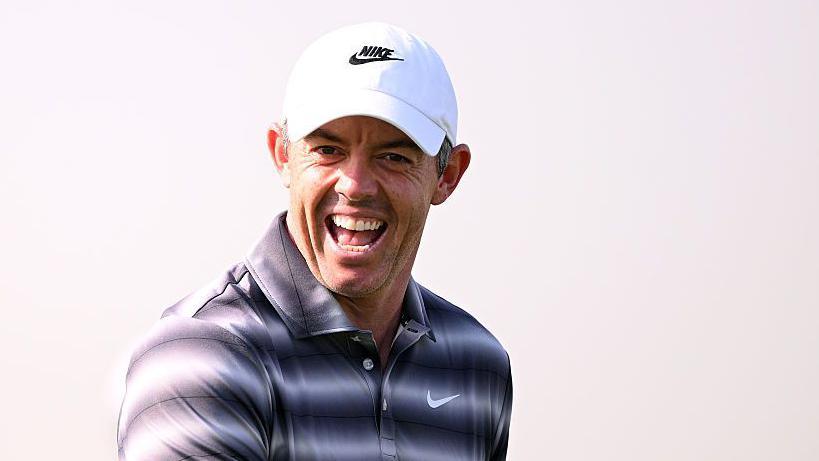
Rory McIlroy says a desire to take on “challenging things” can fuel further success in 2026 as he made a strong start to his season at the Dubai Invitational.

The world number two completed a career Grand Slam with victory at the Masters last April. He later helped Europe win the Ryder Cup in New York, while he also triumphed at the Pebble Beach Pro-Am, Players Championship and Irish Open.

In his first competitive outing of the year, McIlroy carded an opening five-under 66 to take the first-round lead at Dubai Creek Resort.

Despite becoming just the sixth golfer to complete a career sweep of men’s majors, motivation remains high for McIlroy.

“I like the work and like the process,” McIlroy told Sky Sports.

“I enjoy doing challenging things and I think if you can make that the important part and make it routine, you don’t need motivation to do it. It’s your lifestyle and what you do.

“I guess it’s who you identify as and I identify as a hard worker and someone who likes to do those things.

Opening on the back nine, Northern Ireland’s McIlroy – who is using a new golf ball and irons – made four birdies and a bogey in his first five holes.

A further three birdies left him in the lead on six under, but a bogey on the third – his 12th hole – dropped him back a shot before he closed with six pars.

“I didn’t capitalise on the second nine, which was the trickier one,” said McIlroy.

“I made a silly bogey on three and didn’t capitalise on the par five after that, so I felt I left a few out on that side, but I played a really good nine holes of golf going out and overall a nice way to start the year.”

Scotland’s Connor Syme and Spain’s David Puig carded 67s to sit one shot off McIlroy.

England’s Matt Wallace seemed to be on course for the overnight lead when he reached seven under, but he dropped four shots across his final seven holes to drop back.

Related topics

  • Golf
  • Northern Ireland Sport

Renamed Super Giants retain Buttler and Ecclestone

Getty Images
  • 4 Comments

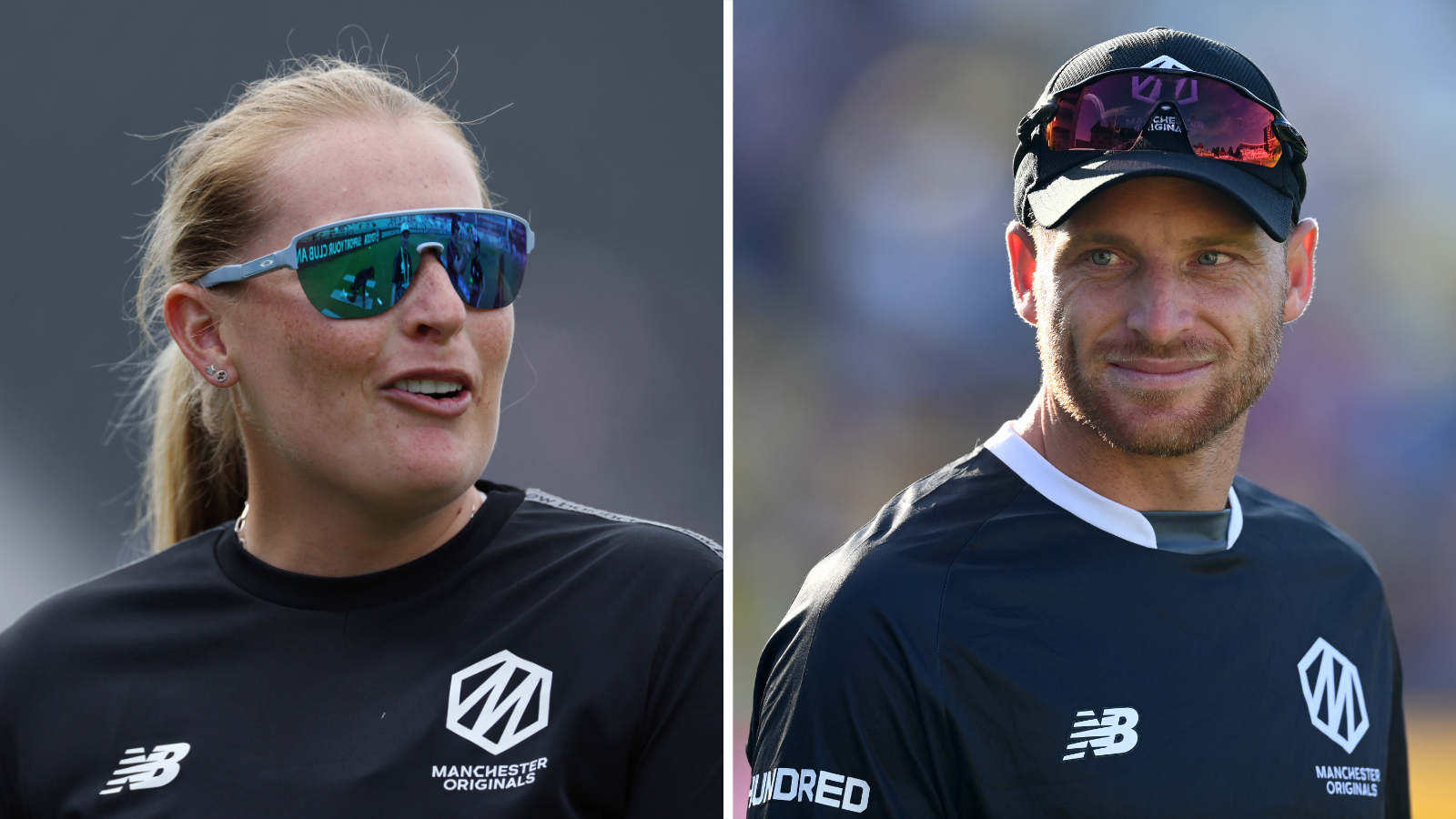
Manchester Originals have been renamed Manchester Super Giants and have retained England internationals Jos Buttler and Sophie Ecclestone for the 2026 Hundred season.

Buttler and Ecclestone, ranked fourth in T20 internationals for men’s batting and women’s bowling respectively, are retained alongside Afghanistan spinner Noor Ahmad and former South Africa batter Heinrich Klaasen.

They are joined by former Australia captain Meg Lanning, India’s World Cup winner Smriti Mandhana and England spinner Liam Dawson.

The franchise’s name change follows RPSG Group purchasing a 70% stake in the side, with the organisation already owning Lucknow Super Giants in the Indian Premier League and Durban’s Super Giants in South Africa’s SA20.

Under their previous name, Manchester were unable to secure a Hundred title in their first five seasons, although the men’s side were losing finalists in 2022 and 2023.

Buttler, the former England white-ball captain, and Ecclestone have played their entire Hundred careers with the Manchester franchise.

Lanning signs after playing the last two seasons at Oval Invincibles and London Spirit, while Dawson spent the last four years at Spirit after starting his Hundred career at Southern Brave.

Mandhana spent 2021 to 2024 at Brave, winning the tournament in 2023, but did not play in the tournament last year.

The new Manchester Super Giants logoManchester Super Giants

Related topics

  • Manchester Originals
  • Franchise Cricket
  • The Hundred
  • Cricket

More on this story

    • 16 August 2025
    BBC Sport microphone and phone

Jesy Nelson’s fiancé pens heartbreaking letter to ‘warrior’ twins after devastating diagnosis

Jesy Nelson’s fiance Zion Foster has written a heart wrenching tribute to his baby girls following their devastating health diagnosis – admitting that their daughters ‘already know how to fight’

Jesy Nelson’s fiance Zion Foster has written a heartbreaking tribute to his baby twins following their SMA diagnosis, confessing “I hear your strength every time you cry.”

After a challenging pregnancy, Zion and Jesy were overjoyed to welcome twin baby daughters Ocean Jade and Story Monroe last May. But that joy swiftly turned to heartache, when she revealed at the beginning of January that her babies had been diagnosed with Type 1 Spinal Muscular Atrophy (SMA).

Sadly, it the most severe form of a rare muscle wasting disease, which only some 50 children in the UK are born with each year and it means, devastatingly, their adorable twins may never be able to walk.

READ MORE: Christine Lampard wows Lorraine viewers in ‘slinky’ figure-hugging high street dress

Now Zion, 27, who like former Little Mix star Jesy is also a musician, has shared a beautiful poem written about his eight-month-old girls. He said: “They said it’s unlikely you’ll walk, you may not be able to talk, probably won’t be able to hold your head up, that’s what me and Jesy heard – SMA Type 1. And it became so clear, doctors only go near what they can measure, so what’s certain?

“I watch your smiles like sunsets, not promised, but real. I listen to you babble the sweetest melodies, in the moment it makes me wonder, if I keep telling you who I want you to be, what I want you to do, what I expect from you, am I loving you, or am I loving my fear?

“If I take you for how God knitted you, just as you are, nothing removed, am I loving you? Am I accepting you?”

Zion added: “Story, is your heart okay? Ocean, how’s your mind? I hear strength in your lungs every time you cry, two little warrior girls who already know how to fight.

“Honestly, my worry isn’t the milestones, isn’t forcing life to live a different way. My worry is quieter than that, deeper. It’s about accepting you, loving you for who you are right now, without conditions. No matter what tomorrow brings, and no matter what yesterday was.”

Last week, a tearful Jesy, 34, appeared on This Morning, and opened up to Ben Shephard and Cat Deeley about their unexpected new life, saying, “I just want to be their mum. I don’t want to be a nurse. It’s hard”. She added emotionally, “They’ve had their treatment, thank God. A one-off infusion. That puts the gene back in their body that they don’t have. It stops the muscles still working from dying. Any that have gone, you can’t regain them back.

“Now it’s down to constant physio. We’ve been told they’ll probably never walk or regain their neck strength. They’ll probably be in wheelchairs.”

But like Zion, Jesy is trying to remain positive – and confessed she was trying to “manifest” the best possible outcome for her girls, who must attend Great Ormond Street Hospital twice a week for treatment. She said: “They’re still smiling, they’re still happy and have each other. That’s the main thing I’m so grateful for because they could be doing this by themselves,” she added. “All I can do is try my best to be there for them and give them positive energy, keep doing physio.

“My whole life has completely changed. If you came to my house it looks like a hospital. My whole hallway is filled with medical stuff. It’s crazy how you can go from one extreme to the next.

The twin’s condition, spinal muscular atrophy, is a disease which removes a person’s strength and causes problems by disrupting the motor nerve cells in the spinal cord. It can ultimately cause a person to lose the ability to walk, eat and breathe.

Article continues below