Kerry Katona gushes over first Christmas with beau Paolo in big step for couple

Kerry Katona has revealed her Christmas plans with her Celebs Go Dating partner Paolo Margaglione, who she met on the reality dating show earlier this year, as their romance blossoms

Kerry Katona couldn’t hide her happiness as she gushed over her plans for a cosy first Christmas with beau Paolo Margaglione. Kerry and Paolo met on Celebs Go Dating earlier this year.

The TV star appeared reluctant before meeting Paolo for a date, but it’s clear she’s glad she took the plunge as she’s fallen head over heels for the businessman and their romance has gone from strength to strength. As the festive period is well and truly upon us, the couple are reaching an important milestone; their first Christmas together as a couple.

Writing in her new! column this week, Kerry gushed over her plans with Paolo as the couple plan to celebrate with all their children around the table. Kerry is mum to Molly, Heidi, Lilly-Sue, Max and Dylan Jorge while Paolo is the proud dad of two daughters.

She said: “This year I just want to be home in my Christmas PJs watching festive films. Normally I’m in a dressing room for panto! Molly and Lilly come home on December 21, so I’ll have all my five children with me – then Paolo’s two children on Christmas Day and night. It’s going to be lovely.

“There’ll be nine of us, plus four dogs – we might as well throw a giraffe in there while we’re at it! Don’t get me wrong, I do like to spoil my kids, but it’s not about what’s under the tree for me, it’s about the memories made.”

While this year will look different in some ways in the Katona household – with the new addition of Paolo and his daughters – some things will remain the same. Kerry spilled on a Christmas tradition in her house which her children, admittedly, hate.

She spilled: “There’s a tradition my kids hate, which is they’re not allowed to open their presents until I’ve got a bin bag in my hand! Otherwise, I’ve got to walk around and get all the wrapping paper in the bin bag – it just annoys me and everything gets lost. So before I’ve even seen what they’ve got the wrapping paper is in the bin bag!

“One of the kids even did a drawing of me once with a bin bag on Christmas morning, picking up the wrapping paper. It looked like I was throwing their presents in the bin – I wasn’t!”

Paolo and Kerry met earlier this year, while taking part in Celebs Go Dating. Their love story unfolded in front of viewers eyes and, off camera since the series wrapped, has continued to blossom. Earlier this year, Kerry gushed over their blended family in her new! column.

Article continues below

She said: “This week I’ve been super busy touring, but I did have a day with Paolo and the kids – my lot and his two girls – which was lovely. I love spending time with his girls; it’s such a nice feeling to have little ones around again. We’ve blended our families together seamlessly and everything fits into place perfectly.”

It is not too late for the world to redeem itself on Gaza

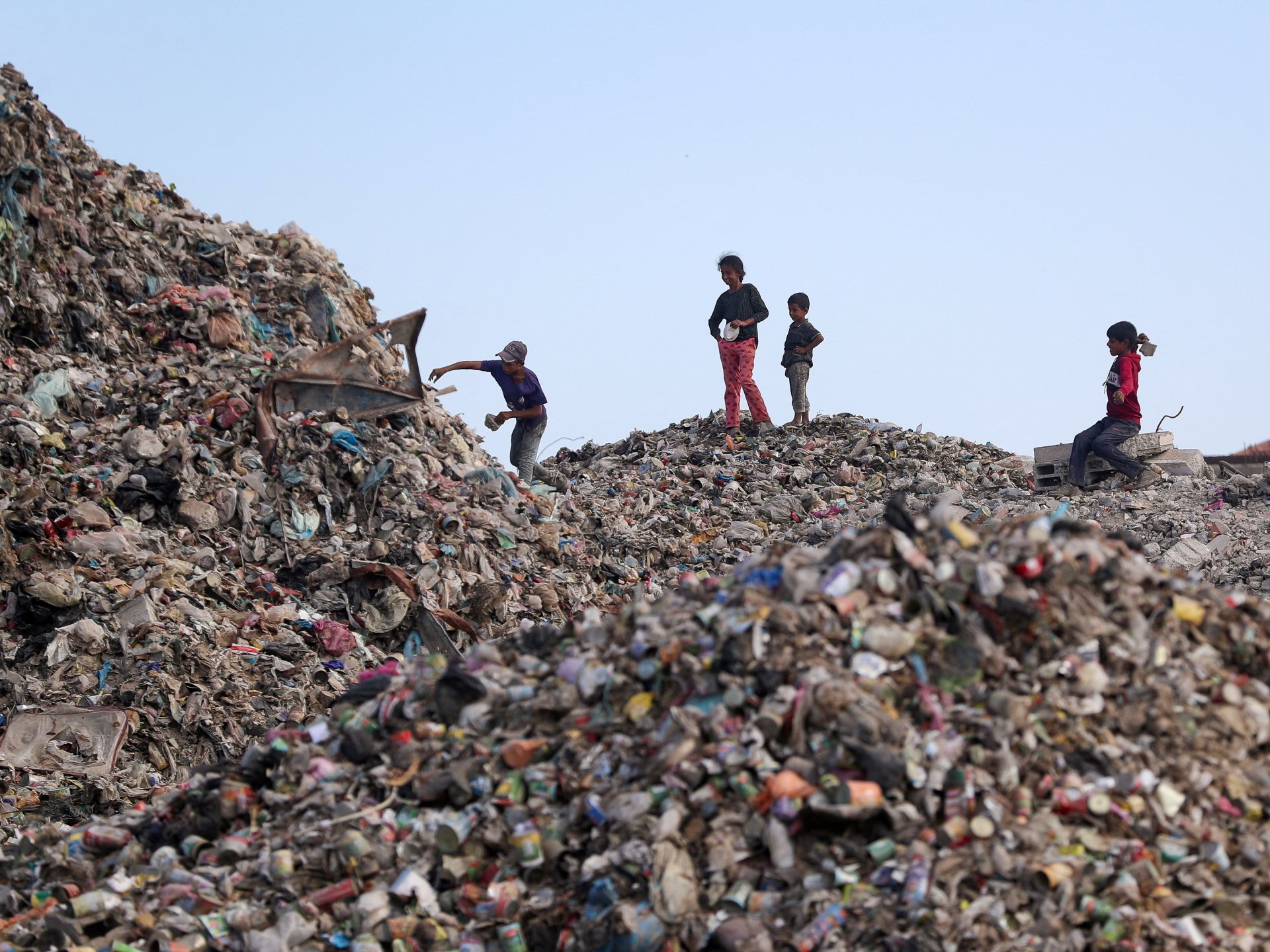
Last month, I was waiting for a shared taxi at the Nuseirat roundabout when I witnessed a heartbreaking scene. As I stood by the side of the road, I felt a small hand tugging at my clothes.

I looked down and saw a little girl, no older than eight. She was barefoot, her shirt was torn, and her hair was messy and unwashed. Her eyes were beautiful, and her face showed innocence, yet exhaustion and despair clouded it.

She pleaded: “Please, please, give me just one shekel, God bless you.”

Before I gave her the money, I decided to speak with her. I knelt down and asked, “What is your name, my dear?”

She replied in a frightened voice, “My name is Nour, and I am from the north.” Her name, which means “light” in Arabic, stood in stark contrast to the darkness surrounding her.

I asked her, “Why are you asking for money, Nour?”

She looked at me hesitantly, then whispered, “I want to buy an apple… I crave one.”

In Gaza, a single apple now costs $7; before the war, a kilogramme of apples was less than a dollar.

I tried to ignore the pain rising in my chest. I thought about the circumstances we now face, where young children are forced to beg in the street just to buy an apple.

I gave Nour one shekel ($0.30), but as soon as I did, the situation worsened. A large group of children, all Nour’s age or younger, gathered around me, repeating the same request. I felt immense distress.

For more than two years, we have faced genocide. We have witnessed countless tragedies and horrors. But for me, the sight of children begging in the streets is particularly unbearable.

Before the war, Gaza was still a poor place. We used to see child beggars, but they were few, mostly roaming in a few areas. Now, they are everywhere, from the north to the south.

The genocidal war has destroyed families and livelihoods across Gaza. The carnage has orphaned more than 39,000 children, and the enormous destruction has deprived more than 80 percent of the workforce of their jobs, driving countless children into extreme poverty and forcing them to beg for survival.

But child begging is not just a result of poverty; it is a sign of a deep disintegration affecting the family, the education system, and the community. No parent sends their child to beg because they want to. The war has left many families in Gaza without options, and in many cases, there are no surviving parents to keep the children away from the streets.

Child beggars do not just lose their childhood; they also face exploitation, harsh labour, illiteracy and psychological trauma that leaves a lasting effect.

The more begging children increase in number, the more the hope for this generation diminishes. Houses can be rebuilt, infrastructure can be restored, but a young generation that is deprived of education and hope for the future cannot be rehabilitated.

The strength Gaza possessed before the war was not just about military power; it was about human power, the main pillar of which was education. We had one of the highest levels of literacy in the world. The enrolment rate for primary education stood at 95 percent; for higher education, it reached 44 percent.

Education stood as a counterforce to the debilitating siege that dispossessed the people of Gaza and crippled the economy. It nourished skills and ingenuity within the young generations to help them cope with an increasingly harsh economic reality. More importantly, education gave children a sense of direction, security and pride.

The systematic attack on Gaza’s education system – the destruction of schools, universities, libraries and the killing of teachers and professors – has pushed what used to be a remarkably resilient and effective educational system to the brink. The pillar that protected children and guaranteed them a clear future is now falling apart.

After I left the Nuseirat roundabout, Nour’s eyes stayed with me. It was not just because of the pain of seeing an innocent child being forced to beg. It was also because of the realisation that this encounter brought about: That the capacity of the next generation to rebuild Gaza one day is being taken away.

The world allowed Israel to carry out genocide in Gaza for two years. It knew what was going on, and yet it chose complicity and silence. Today, it cannot erase its guilt, but it can choose to redeem itself. It can take all necessary action to save the children of Gaza and to grant them the rights they are inherently given by the Convention on the Rights of Children: The right to food, water, healthcare, a safe environment, education, and protection from violence and abuse.

Anything short of that would mean continuing support for the slow genocide of Gaza.

Russian attacks cut power for thousands in Ukraine as peace talks press on

Russian attacks have left thousands without power in Ukraine, while a drone attack killed two people in Russia, as United States-led peace talks on ending the war, deep in its fourth year, press on.

Ukrainian President Volodymyr Zelenskyy said Saturday that Russian night-time attacks damaged more than a dozen civilian facilities, disrupting power in seven regions.

Recommended Stories

list of 3 itemsend of list

“It is important that everyone now sees what Russia is doing… for this is clearly not about ending the war,” Zelenskyy said on social media. “They still aim to destroy our state and inflict maximum pain on our people.”

Kyiv and its Western allies have repeatedly said Russia is trying to cripple the Ukrainian power grid and deny civilians access to heat, light and running water for a fourth consecutive winter, in what Ukrainian officials call “weaponising” the cold.

Russian attacks left parts of the Kherson region, including the regional capital, Kherson, without power, according to regional head Oleksandr Prokudin.

Drone on Russia’s Saratov region

Russian authorities in the southwestern Saratov region, home to an important Russian army base, said a drone killed two people and damaged a residential building. Several windows were also blown out at a kindergarten and clinic.

Russia’s Ministry of Defence said it had shot down 41 Ukrainian drones over Russian territory overnight.

The latest round of attacks came after Kremlin adviser Yury Ushakov said on Friday that Russian police and National Guard will stay on in eastern Ukraine’s Donbas, which comprises the fiercely contested Donetsk and Luhansk regions, and oversee the industry-rich region, even if a peace settlement ends Russia’s nearly four-year war in Ukraine.

Ukraine has rejected Moscow’s demands to maintain its presence in Donbas post-war as US-led negotiations drag on.

Germany is set to host Zelenskyy on Monday for talks as peace efforts gain momentum and European leaders seek to steer negotiations. US negotiators have for months tried to navigate the demands of each side as US President Donald Trump presses for a swift end to Russia’s war.

The search for possible compromises has run into a major obstacle over who keeps Ukrainian territory currently occupied by Russian forces. Ukraine, the US and European powers are also still trying to outline the contours of security guarantees for Kyiv that could be accepted by Moscow.

In the absence of a breakthrough in negotiations to end the conflict, hostilities recently intensified in the Black Sea, with Russian forces attacking two Ukrainian ports and damaging three Turkish-owned vessels, including a ship carrying food supplies.

An attack on the city of Odesa on Friday caused grain silos to catch fire at the port, according to Ukrainian deputy prime minister and reconstruction minister, Oleksii Kuleba. Posting video footage on social media of firefighters tackling a blaze on board what he described as a “civilian vessel” in Chornomorsk, Zelenskyy said the Russian attacks “had no … military purpose whatsoever”.

Turkish President Recep Tayyip Erdogan on Saturday warned that the Black Sea should not turn into an “area of confrontation”.

Mane v Mbemba: An AFCON Cameo To Relish In Morocco

The highlight of Group D at the 2025 Africa Cup of Nations (AFCON) in Morocco promises to be the showdown between two former champions, Senegal and the Democratic Republic of Congo.

They met just two months ago in a World Cup qualifier, with the Senegalese coming from two goals behind to snatch a 3-2 victory through a Pape Matar Sarr goal.

Victory led to Senegal qualifying for a third straight World Cup, while DR Congo will face Jamaica or New Caledonia in March with a ticket to the global showcase on the line.

READ ALSO: Algeria Include Son Of Zinedine Zidane In AFCON Squad

While DR Congo hope to atone for the Kinshasa loss, the stage is set for a cameo to relish on December 27 in Tangier between Senegal striker Sadio Mane and DR Congo centre-back Chancel Mbemba.

Mane may be less in the media limelight since leaving Liverpool and Bayern Munich for Saudi Pro League outfit Al-Nassr two years ago.

But last month in Turkey he issued a reminder that his predatory instincts remain, scoring a hat-trick as Senegal crushed Kenya 8-0 in a warm-up for the AFCON.

Mane has already scaled the African football summit, converting the decisive penalty to give the Teranga Lions a shootout victory over Egypt in the 2022 final in Yaounde.

Three years earlier, Mane featured in another AFCON final. However, he had to settle for a silver medal as an early goal from Algeria proved the only one of the title decider in Cairo.

Senegal disappointed at the most recent AFCON, early last year in the Ivory Coast. After winning all three group matches, they lost on penalties to the host nation in a last-16 clash.

Long-serving coach Aliou Cisse did not have his contract renewed and another former national team star, Pape Thiaw, has proved a successful replacement.

– Crucial contributions –

A friendly loss to record five-time World Cup champions Brazil last month was his first setback after 10 victories and two draws. Trouncing Kenya three days later upped the win count.

Mbemba recently celebrated representing his country 100 times with two crucial contributions as DR Congo seek a return to the World Cup for the first time since 1974.

In African play-offs among the best four group runners-up, Mbemba snatched the late goal that sank Cameroon 1-0 in a semi-final in Morocco.

When the final against Nigeria finished 1-1 after extra time in Rabat, a shootout ensued and the penalty that separated the teams was calmly converted by Mbemba.

The professional career of the 31-year-old began in Belgium with Anderlecht. He then had spells with Newcastle United, Porto and Marseille before joining Lille.

While 33-year-old Mane hopes to add to his 51 goals for Senegal, Mbemba will be determined to shackle the two-time African player of the year.

Much of the credit for the resurgence of DR Congo goes to French coach Sebastien Desabre, a 49-year-old whose first African assignment was with Ivorian club ASEC Mimosas.

He then coached clubs in Cameroon, Tunisia, Angola, Algeria, Morocco and Egypt, and spent two years in charge of Uganda, taking them to an AFCON for the first time in 41 years.

“Our first objective is to get out of Group D. Benin, Botswana and Senegal are strong teams. It will not be easy,” Desabre told the Congolese media.

“Qualifying for the World Cup intercontinental play-offs by eliminating Cameroon and Nigeria proved we are progressing.

“I predict a bright future for the Leopards, provided we continue learning. Eliminating Nigeria was fantastic, but that result is history now.”

Benin have shown consistent improvement under German Gernot Rohr, who previously coached Gabon, Niger and Nigeria at AFCONs. They will be captained by veteran striker Steve Mounie.

Troops Clear Bandits’ Hideouts To Secure Farmers Ahead Of Harvest In Taraba

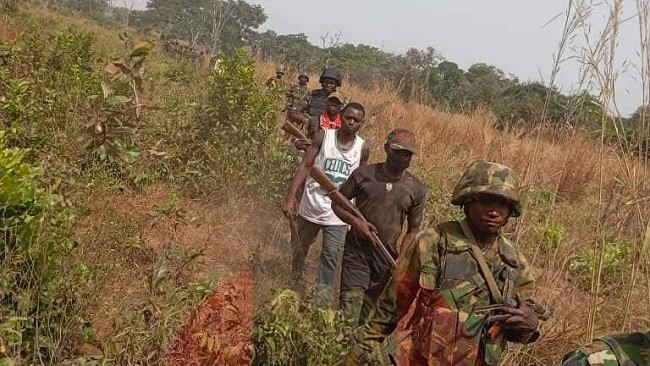
Troops of the 6 Brigade, Nigerian Army, under Operation ZAFIN WUTA, have conducted a successful security operation in Takum Local Government Area of Taraba State to protect farmers and flush out bandits.

The operation, aimed at ensuring a peaceful harvest season and safe yuletide for residents, follows concerns raised by Chanchanji locals about potential attacks during the harvest period.

The Commander of 6 Brigade, Brigadier General Kingsley Chidiebere Uwa, had earlier visited Chanchanji, assuring farmers of adequate protection. He emphasized, “The Nigerian Army will not allow criminal elements to disrupt farming activities or threaten the livelihoods of law-abiding citizens, particularly during this critical harvest period.”

Troops combing the forest.

On Friday, troops arrived in Chanchanji Town and, in collaboration with local hunters and vigilante groups, provided security for farmers traveling to Demevaa Village, about 19 kilometers away.

READ ALSO: Troops Repel ISWAP Attack, Neutralise VBIEDs, Recover Weapons, Logistics In Borno

Simultaneously, troops conducted clearance operations across several villages, including Sabe, Iyongaem, and Tse-Tseve, successfully clearing the areas of bandits and restoring public confidence.

Acting on credible intelligence, troops also advanced into the Zambana Forest, a suspected bandit hideout. The area was thoroughly combed and cleared, significantly disrupting the bandits’ operations.

Brigadier General Uwa reassured the people of Takum and Taraba State that 6 Brigade remains fully deployed and committed to securing lives, property, and farmlands throughout the harvest season and beyond.

Trump strips legal protections from Ethiopian refugees in latest crackdown

The United States has ended temporary legal protections for thousands of Ethiopian nationals, ordering them to leave the country within 60 days or face arrest and deportation.

Homeland Security Secretary Kristi Noem announced the decision on Friday, determining that conditions in Ethiopia “no longer pose a serious threat” to returning nationals despite ongoing violence in parts of the country.

Recommended Stories

list of 3 itemsend of list

The move affects approximately 5,000 refugees who fled armed conflict and is the latest action in the administration’s hardline crackdown to remove legal protections from at least one million people across multiple countries.

The termination of Temporary Protected Status (TPS) for Ethiopia takes effect in early February 2026, giving current beneficiaries two months to either leave voluntarily or find another legal basis to remain in the United States. Those who force authorities to arrest them “may never be allowed to return,” according to a Department of Homeland Security statement.

The decision comes despite the State Department’s own travel advisory for Ethiopia, which urges Americans to “reconsider” travel to the country due to “sporadic violent conflict, civil unrest, crime, communications disruptions, terrorism and kidnapping”.

The advisory, still in effect, warns that multiple regions remain off-limits and that the US embassy is “unlikely to be able to assist with departure from the country if the security situation deteriorates”.

Federal authorities justified the termination by citing peace agreements signed in recent years, including a 2022 ceasefire in Tigray and a December 2024 deal in Oromia. Analysts have also warned of the risk of renewed fighting between Ethiopia and Eritrea.

The Federal Register notice acknowledged that “some sporadic and episodic violence occurs” but claimed improvements in healthcare, food security and internal displacement figures demonstrated the country’s recovery.

However, the notice also cited national interest concerns, including Ethiopian visa overstay rates that exceed the global average by more than 250 percent and unspecified national security investigations involving some TPS holders.

The Ethiopian termination is part of a broader pattern under President Donald Trump, whose administration has moved to end protections for nationals from Haiti, Venezuela, Somalia, South Sudan and other countries since returning to office.

His administration has dismissed many nations as “Third World” countries, a term largely no longer used given its pejorative impetus for developing nations.

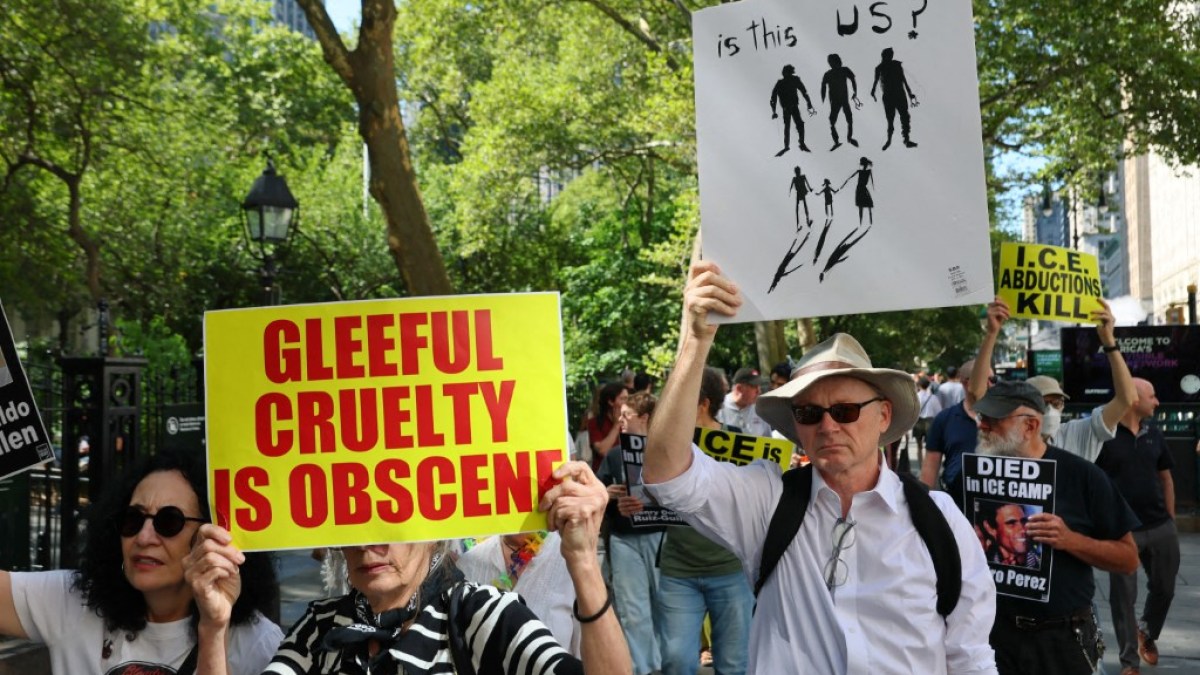
Over the past two weeks, Trump has escalated inflammatory racist attacks on Minnesota’s large Somali community in particular, including calling Somali immigrants “garbage” and directing a surge of ICE agents into the state, alarming residents and drawing criticism.

As of March 2025, approximately 1.3 million people held TPS in the United States, according to the American Immigration Council, a Washington-based research and advocacy organisation.

Trump has identified immigration control as central to his national security strategy, with the document published this month describing migration policies in Europe and elsewhere as contributing to what they term “civilizational erasure,” a far-right theory which is has been comprehensively debunked.

The approach has drawn sharp criticism for its racial selectivity. While terminating protections for Ethiopians who fled documented armed conflict, the administration simultaneously opened a refugee resettlement programme for white South Africans of Afrikaner ethnicity, claiming “race-based discrimination”. That discrimination has been rejected by the South African government and by numbers of Afrikaners themselves.

Scott Lucas, a professor of US and international politics at University College Dublin’s Clinton Institute, told Al Jazeera the contrast revealed a “perverse honesty” about the administration’s priorities.

“If you’re white and you’ve got connections you get in,” he said. “If you’re not white, forget about it.”

Legal challenges have mounted against several TPS terminations, with courts temporarily blocking some decisions.

Ethiopian TPS beneficiaries can continue working during the 60-day transition period, but after the deadline, anyone without an alternative legal status becomes subject to immediate arrest and removal.