Home Alone stars Kieran Culkin and brother Macaulay’s relationship now after Oscars ‘snub’

Kieran Culkin, who appears with his wife Jazz Charton on Celebrity Gogglebox for Stand up to Cancer tonight, appeared to snub his brother Macaulay in his Oscars acceptance speech

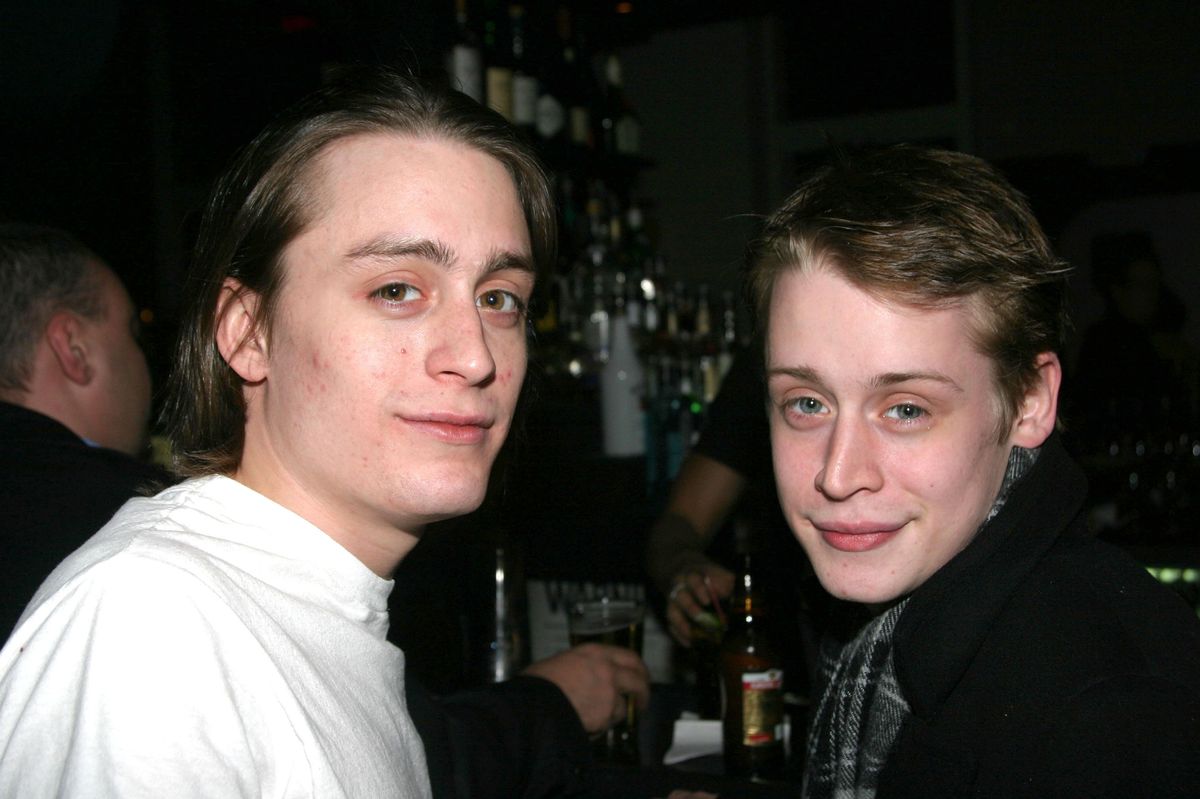
Kieran and Macaulay Culkin starred in Home Alone together (Image: FilmMagic)

Everything you need to know about Oscar-winning actor Kieran Culkin and his relationship with his brother Macaulay after the pair starred together in Home Alone

  • Oscars snub: Kieran Culkin shocked fans when he left his brother out of his Oscars acceptance speech after receiving the Best Supporting Actor gong for A Real Pain. While he spoke lovingly of his wife Jazz Charton and gave a shout out to Concession co-star Jeremy Strong, but left out any mention of his brother Macaulay.
  • Home Alone: Macaulay and Kieran Culkin both starred in cult Christmas film Home Alone, but according to the younger brother, he had no idea Macaulay was the star until the premiere. He told the LA Times: “Devin Ratray, the guy who played Buzz, lied to me and told me the movie was all about him.”
  • Huge family: Macaulay and Kieran are two of seven children, with Macauley the third and his younger brother the fourth. They have another brother, Rory, who also became a professional actor.
  • Family estrangement: Their dad Kit Culkin managed the careers of his actor sons in the late 80s and early 90s until their parents split up, sparking a bitter custody battle. Macaulay told Marc Manon’s WTF podcast: “He was abusive, physically and mentally – I can show you all my scars if I wanted to.” Kieran said: “He’s not a good dude, but he wasn’t really a big part of my life after the age of 15.”
  • Close bond: Macaulay and Kieran maintain a close bond despite their physical distance. Macaulay and his family live in Los Angeles while his brother and his wife life on the other side of the USA in New York City. Speaking to Access Hollywood in October 2021, Kieran said: “I’m a little bit ahead on the dad thing. I’ve got a two-year-old daughter and an eight-week-old son, but I haven’t actually met his son yet because he lives in California and there’s been work and a pandemic and all that stuff.”
  • Family tragedy: Macaulay and Kieran’s elder sister Dakota was tragically killed when she was hit by a car aged just 29. Macauley named his oldest child Dakota in her honour while Kieran told the Guardian last year: “I think about her all the time and I go visit where she’s buried often.”
  • Celebrity Gogglebox: Catch Kieran and his wife Jazz Charton on Celebrity Gogglebox for Stand up to Cancer. It airs tonight (Friday, December 12) at 9pm.
Article continues below

I’m A Celeb rich list as one star banks £100K a week without getting out of bed

After finding fame in the jungle, some of this year’s I’m A Celeb stars have the power to earn extraordinary amounts of money social media posts

It’s been less than a week since I’m A Celeb 2025 ended, but the stars increased social media following has left them with outrageous earning potential. Many celebs on this year’s series already had extremely high net worths before heading down under, such as Jack Osbourne, who was thought to be worth £11 million thanks to his reality TV appearances, podcasts and family money.

US sanctions family of Venezuela’s Maduro, 6 oil tankers in new crackdown

The Trump administration has imposed new sanctions on Venezuela, targeting three nephews of President Nicolas Maduro’s wife, Cilia Flores, as well as six crude oil tankers and shipping companies linked to them, as Washington steps up pressure on Caracas.

Two of the sanctioned nephews were previously convicted in the United States on drug trafficking charges before being released as part of a prisoner exchange.

Recommended Stories

list of 3 itemsend of list

The US is also targeting Venezuela’s oil sector by sanctioning a Panamanian businessman, Ramon Carretero Napolitano, whom it says facilitates the shipment of petroleum products on behalf of the Venezuelan government, along with several shipping companies.

The US Treasury Department said on Thursday that the measures include sanctions on six crude oil tankers it said have “engaged in deceptive and unsafe shipping practices and continue to provide financial resources that fuel Maduro’s corrupt narco-terrorist regime”.

Four of the tankers, including the 2002-built H Constance and the 2003-built Lattafa, are Panama-flagged, with the other two flagged by the Cook Islands and Hong Kong.

The vessels are supertankers that recently loaded crude in Venezuela, according to internal shipping documents from state oil company PDVSA.

‘An act of piracy’

In comments on Thursday night, Trump also repeated his threat to soon begin strikes on suspected narcotics shipments making their way via land from Venezuela to the US.

His remarks followed the US seizure of an oil tanker off Venezuela’s coast.

White House Press Secretary Karoline Leavitt said the US would take the tanker to a US port.

“The vessel will go to a US port, and the United States does intend to seize the oil,” Leavitt said during a news briefing. “However, there is a legal process for the seizure of that oil, and that legal process will be followed.”

Maduro condemned the seizure, calling it “an act of piracy against a merchant, commercial, civil and private vessel,” adding that “the ship was private, civilian and was carrying 1.9 million barrels of oil that they bought from Venezuela”.

He said the incident had “unmasked” Washington, arguing that the true motive behind the action was the seizure of Venezuelan oil.

“It is the oil they want to steal, and Venezuela will protect its oil,” Maduro added.

Maduro’s condemnation came as US officials emphasised that the latest sanctions also targeted figures close to the Venezuelan leader.

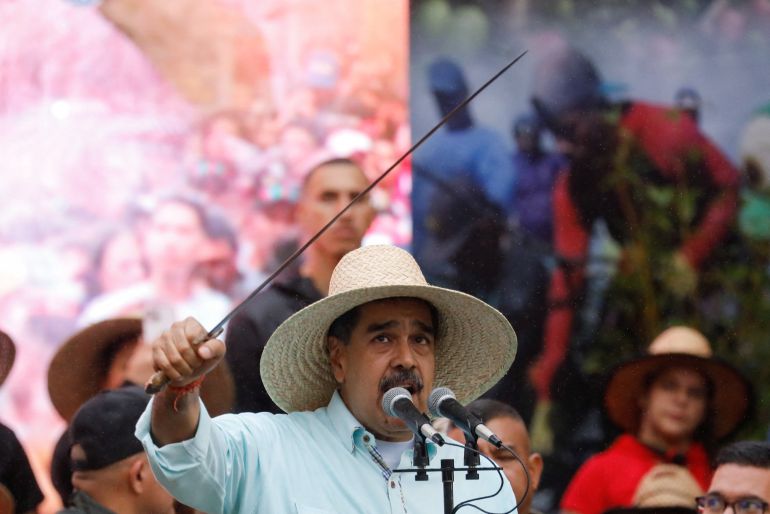
Venezuela’s President Nicolas Maduro holds a sword which belonged to Ezequiel Zamora, a Venezuelan soldier [FILE: Leonardo Fernandez Viloria/Reuters]

Maduro’s relatives targeted

Franqui Flores and Efrain Antonio Campo Flores, nephews of Venezuelan first lady Cilia Flores, were also sanctioned. The two became known as the “narco nephews” after their arrest in Haiti in 2015 during a US Drug Enforcement Administration sting.

They were convicted in 2016 on charges of attempting to carry out a multimillion-dollar cocaine deal and sentenced to 18 years in prison, before being released in a 2022 prisoner swap with Venezuela.

A third nephew, Carlos Erik Malpica Flores, was also targeted. US authorities allege he was involved in a corruption scheme at the state oil company.

Maduro and his government have denied links to criminal activity, saying the US is seeking regime change to gain control of Venezuela’s vast oil reserves.

Beyond the individuals targeted, the US is also preparing to intercept additional ships transporting Venezuelan oil, the Reuters news agency reported, citing sources.

Asked whether the Trump administration planned further ship seizures, White House spokesperson Leavitt told reporters she would not speak about future actions but said the US would continue executing the president’s sanctions policies.

“We’re not going to stand by and watch sanctioned vessels sail the seas with black market oil, the proceeds of which will fuel narcoterrorism of rogue and illegitimate regimes around the world,” she said on Thursday.

Wednesday’s seizure was the first of a Venezuelan oil cargo amid US sanctions that have been in force since 2019. The move sent oil prices higher and sharply escalated tensions between Washington and Caracas.

White House Press Secretary Karoline Leavitt
White House Press Secretary Karoline Leavitt holds a news briefing [Jonathan Ernst/Reuters]

Rooney ‘got death threats’ after making Man Utd move

AFP via Getty Images

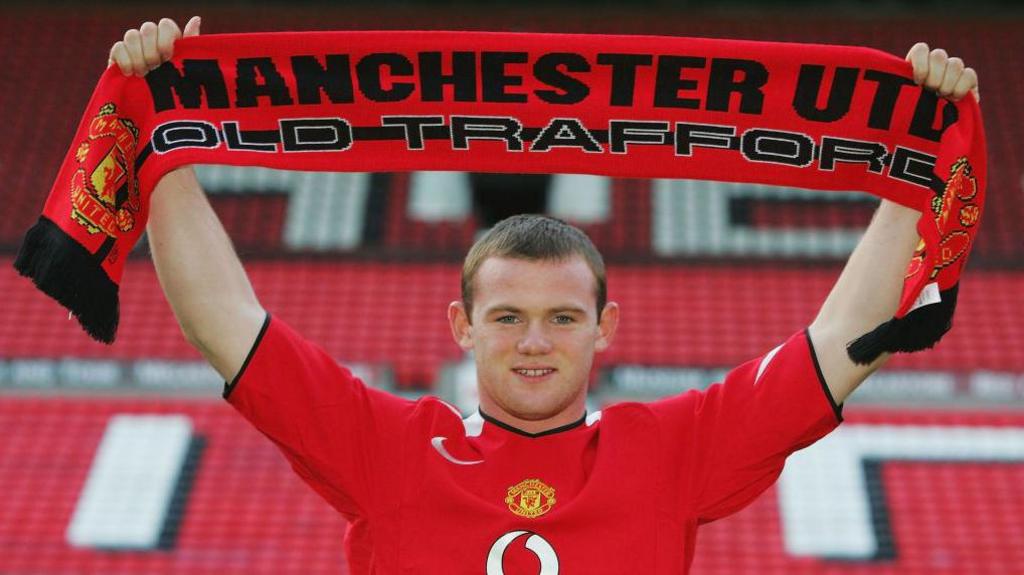
Former England striker Wayne Rooney says he received death threats when he made the move from boyhood club Everton to Manchester United.

Aged 18, Rooney signed for the Red Devils in a £27m deal in 2004 after turning down a club record contract offer from the Toffees.

But Rooney’s move from Merseyside led to a heavy backlash from some Everton supporters.

“I got death threats,” Rooney said on the latest episode of BBC Sport’s The Wayne Rooney Show.

“My parents’ house was getting spray painted and smashed up. My girlfriend at the time, wife now, her house was getting spray painted.

“I think that’s where you have to be mentally strong. The people around you have to help.

“Leaving was difficult because I went to Manchester United, and Liverpool and Manchester was a big rivalry so that made it a lot more difficult.

“But I was always of a mindset of ‘I don’t care’. I knew what I wanted and I knew how to get there.

‘There’s millions of people watching’ – Rooney on pressures of modern game

When Rooney made the move to Manchester United it was at a time with far less social media, the increase of which he feels creates a different kind of pressure on young footballers in the modern game.

Rooney’s oldest son, Kai, is currently on the books at United and has stressed the importance of making sure he has a strong support network as he looks to make it in professional football.

“Now the difference is social media,” Rooney said.

“When I was young, I was in the local newspapers and so everyone in Liverpool really knew me.

“Now I have it with my boy who’s 16 and he’s on social media. He plays for my United, he’s sponsored by Puma and there’s hundreds of thousands or millions of people watching them when they’re that young, and I didn’t have that really.

“Being a young player and going into the first team especially, you’re getting judged. Rightly or wrongly, you get judged and that’s where you need the people around you, people at the club or your family to keep you in a good place.

Rooney on writing to imprisoned Duncan Ferguson as a child

Meanwhile, Rooney also revealed that he used to exchange letters with Duncan Ferguson as a child while the Everton striker was in jail for assault.

In 1995, when Rooney was 10, Toffees striker Ferguson served a 44-day jail term for headbutting Raith Rovers defender John McStay at his previous club Rangers.

“I was a young boy who supported Everton so I used to write to him in jail, and then he’d write back,” said Rooney.

“It was just me telling him how much I love him. [He’d say] ‘thanks, it means a lot’. Obviously, when you’re in jail as well you take anything.”

Rooney joined Everton’s academy in 1996 and made his first-team debut aged 16 in 2002 while Ferguson was still at the club.

“Because I was too young to drive as well he’d take me home from training,” Rooney added.

Related topics

  • Manchester United
  • Everton
  • Football

More on this story

    • 17 October
    A graphic of Premier League players from every team in the division in 2025-26 season, with the Premier League trophy in front of them.
    • 16 August
    BBC Sport microphone and phone

John Aiken’s journey from cricketer to MAFS expert

Getty Images
  • 8 Comments

It takes a lot for cricketers to be left starstruck by other cricketers.

It is the morning of the second day of the second Ashes Test. John Aiken is chatting in the courtyard of a Brisbane hotel when he is spotted by two former England spinners – Phil Tufnell and Alex Hartley.

Tuffers asks for a video to send to his wife and her friends. Hartley gets a selfie to put in the girls’ WhatsApp group.

All standard stuff. As a relationship expert on Married at First Sight Australia (MAFS), Aiken is one of the most recognisable TV personalities in the country. If you’ve not seen it, the show does exactly what it says on the tin – strangers are matched then meet at the moment their wedding begins.

There are numerous versions, including in the UK, but it is the Australian brand that has a cult following across the globe.

But here’s the thing. Neither Tufnell nor Hartley are aware they have just met a former first-class cricketer.

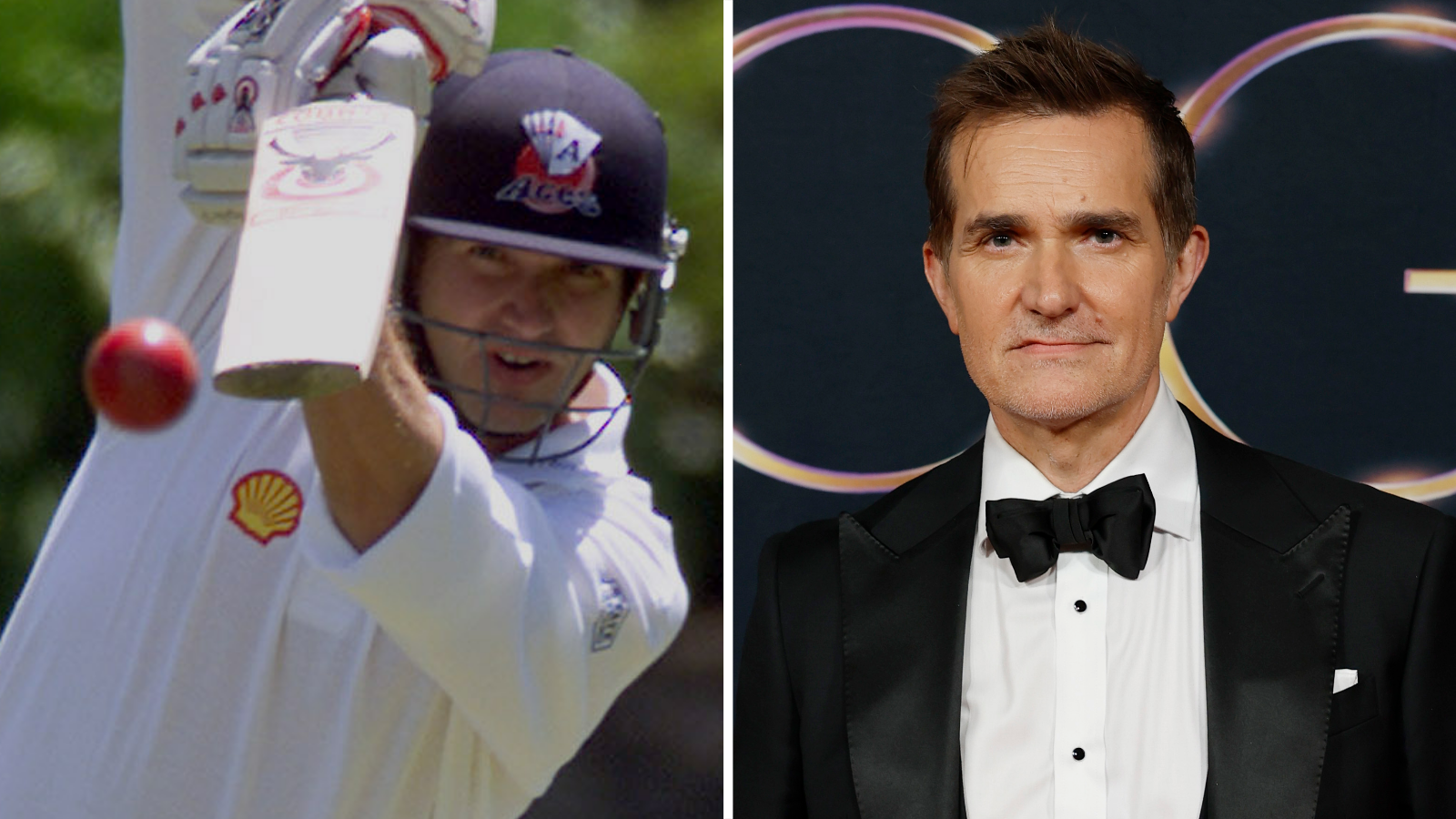
Aiken, a left-handed opening batter, had an 11-year career on the New Zealand domestic scene between 1990 and 2001. His Wikipedia page has the heading “John Aiken (cricketer)”.

“I’ve kept in contact with a lot of the Black Caps that I played with as I was growing up,” Aiken tells BBC Sport.

“I’ve stayed in touch with Mark Richardson, Chris Cairns, Chris Harris and Craig McMillan.

“What’s strange now is they see me as the guy from MAFS, not so much the left-hander who played for Wellington.”

Aiken is now 55. His post-cricket career has made him a household name in Australia. The day before, he was in the crowd at the Gabba and approached by a man in a “pink Hawaiian shirt” wanting to know about the 13th series of Married at First Sight, due to air in the new year.

Almost four decades ago, Aiken was taking his first steps in professional cricket. Born in Sydney, he moved to New Zealand at the age of 12 and made his way through the Wellington system.

In 1989, he was alongside Cairns, Harris and Adam Parore in a New Zealand Under-19s team that toured England to take on a home side including Mark Ramprakash, Dominic Cork and Darren Gough. Aiken even got to taste playing at Lord’s.

“Nick Knight put us to the sword every single time we faced him,” says Aiken.

Six months later, Aiken was making his first-class debut for Wellington. He made 156 not out against Canterbury at the famous Lancaster Park in Christchurch.

“I was a bit more conservative than the likes of Ben Duckett, Michael Slater or Matthew Hayden,” says Aiken. “If I was playing today I’d have to change my game and be more attacking.

“The one thing that held me back was that I would over-analyse pretty much everything. I’d be up at night in front of the mirror, shadow batting, all that sort of thing.”

Aiken combined his early years as a professional cricketer with studying for a master’s degree in clinical and community psychology. Though he graduated at the age of 25 and psychology would eventually become his life, Aiken’s first ambition was to play cricket for New Zealand.

He thinks he got “close”, but never managed the weight of runs to earn a black cap.

Instead, there were brushes with greatness in domestic cricket. New Zealand legends Martin Crowe and Stephen Fleming were team-mates at Wellington and an opponent was left-arm spinner and current Australia assistant coach Daniel Vettori. “He landed it on a handkerchief,” says Aiken.

Aiken regularly played against touring international teams and was run out in a one-day game by South Africa’s Jonty Rhodes, probably the best fielder of all time.

“Any day of the week it was an easy single,” says Aiken. “I hit it into the gap, I said, yes, easy one. He ran me out by half the pitch.”

When Aiken left Wellington to join Auckland, he came up against a West Indies team including the great Brian Lara.

“We had a meeting the night before and we just said: ‘Nobody say anything to Brian Lara,” recalls Aiken. “We greet him as Mr. Lara. We are polite. And if he gets bored, he may get out early. We all know that if you sledge him, he’s likely to get 400.

“So sure enough, he walks out. ‘Hello Mr Lara, how was your stay? How’s it going?’ It was delightful. He must have pumped our opening bowler out of the ground twice, then hit one up in the air and he was out. We all just breathed an immense sigh of collective relief.”

Another opponent was a young wicketkeeper-batter from Otago called Brendon McCullum – now a MAFS watcher, on orders of Australian wife Elissa.

“Anyone from Otago, you’ve got to roll your sleeves up because they’re going to come hard at you,” says Aiken.

“He had a style where he was going to really make a name for himself right from the word go. I don’t know him very well, but he doesn’t seem someone who worries too much about what others have to say.”

By the age of 30, Aiken realised the dream of international cricket was fading. After a season playing club cricket in the UK for Yorkshire side Gomersal, he called time on his playing career.

He registered a pair in his final first-class match, in February 2001. Aiken ended with four hundreds in 46 first-class matches, averaging just under 29. He made another ton in 39 List A matches.

Seven years later, Aiken moved back to Australia and set up his own private practice “seeing couples, singles, and minding my own business”. He had dabbled in some slots as a relationship expert in daytime TV, but it was an email he received in 2014 that would change his life.

Aiken was invited to audition for Married at First Sight and got the role. More than 11 years on, the show will air its 13th series in Australia in January and will follow in the UK in the spring. It is an Australian phenomenon, probably behind only children’s cartoon Bluey as the current biggest TV export from this country.

The fascination of the show is not only whether two strangers can fall in love, but also the interactions of 12 different couples – usually with fiery consequences.

“It is unscripted, it is real and it is authentic, and you don’t know what they’re going to do,” says Aiken.

It is Aiken’s role to guide the couples and “hold them to account”. The tongue-lashings he delivers are up there with the most entertaining parts of the show. Quite a character swerve from the opening batter who over-analysed himself in front of the mirror.

“I’m not inside my head when I’m in MAFS and doing my role,” says Aiken. “When I was playing cricket I was inside my head.

“Over-analysing things generally slows you down and in cricket, if you’re thinking about your technique all the time, I found that it would ultimately lead you to getting out and feeling insecure about your game.

“TV is about getting there and just dealing with whatever’s in front of you, call it out and just roll with it. I feel like I’m much more relaxed in the world of media than I was when I was playing cricket.”

In terms of his two distinct careers, Aiken says the “excitement” of Married at First Sight has the edge over the “anxiety” of opening the batting, and he would not exchange his place on the MAFS couch for a coveted New Zealand black cap.

“Cricket gave me some great moments, but I wasn’t able to flourish, to sit back and enjoy the ride,” says Aiken.

“On Married at First Sight that’s all that I do. MAFS is something that just has given me such joy.

Related topics

  • New Zealand
  • Cricket

More on this story

    • 16 August
    BBC Sport microphone and phone

From first-class cricketer to relationship expert on reality TV

Getty Images
  • 135 Comments

It takes a lot for cricketers to be left starstruck by other cricketers.

It is the morning of the second day of the second Ashes Test. John Aiken is chatting in the courtyard of a Brisbane hotel when he is spotted by two former England spinners – Phil Tufnell and Alex Hartley.

Tuffers asks for a video to send to his wife and her friends. Hartley gets a selfie to put in the girls’ WhatsApp group.

All standard stuff. As a relationship expert on Married at First Sight Australia (MAFS), Aiken is one of the most recognisable TV personalities in the country. If you’ve not seen it, the show does exactly what it says on the tin – strangers are matched then meet at the moment their wedding begins.

There are numerous versions, including in the UK, but it is the Australian brand that has a cult following across the globe.

But here’s the thing. Neither Tufnell nor Hartley are aware they have just met a former first-class cricketer.

Aiken, a left-handed opening batter, had an 11-year career on the New Zealand domestic scene between 1990 and 2001. His Wikipedia page has the heading “John Aiken (cricketer)”.

“I’ve kept in contact with a lot of the Black Caps that I played with as I was growing up,” Aiken tells BBC Sport.

“I’ve stayed in touch with Mark Richardson, Chris Cairns, Chris Harris and Craig McMillan.

Aiken is now 55. His post-cricket career has made him a household name in Australia. The day before, he was in the crowd at the Gabba and approached by a man in a “pink Hawaiian shirt” wanting to know about the 13th series of Married at First Sight, due to air in the new year.

Almost four decades ago, Aiken was taking his first steps in professional cricket. Born in Sydney, he moved to New Zealand at the age of 12 and made his way through the Wellington system.

In 1989, he was alongside Cairns, Harris and Adam Parore in a New Zealand Under-19s team that toured England to take on a home side including Mark Ramprakash, Dominic Cork and Darren Gough. Aiken even got to taste playing at Lord’s.

“Nick Knight put us to the sword every single time we faced him,” says Aiken.

Six months later, Aiken was making his first-class debut for Wellington. He made 156 not out against Canterbury at the famous Lancaster Park in Christchurch.

“I was a bit more conservative than the likes of Ben Duckett, Michael Slater or Matthew Hayden,” says Aiken. “If I was playing today I’d have to change my game and be more attacking.

“The one thing that held me back was that I would over-analyse pretty much everything. I’d be up at night in front of the mirror, shadow batting, all that sort of thing.”

Aiken combined his early years as a professional cricketer with studying for a master’s degree in clinical and community psychology. Though he graduated at the age of 25 and psychology would eventually become his life, Aiken’s first ambition was to play cricket for New Zealand.

He thinks he got “close”, but never managed the weight of runs to earn a black cap.

Instead, there were brushes with greatness in domestic cricket. New Zealand legends Martin Crowe and Stephen Fleming were team-mates at Wellington and an opponent was left-arm spinner and current Australia assistant coach Daniel Vettori. “He landed it on a handkerchief,” says Aiken.

Aiken regularly played against touring international teams and was run out in a one-day game by South Africa’s Jonty Rhodes, probably the best fielder of all time.

“Any day of the week it was an easy single,” says Aiken. “I hit it into the gap, I said, yes, easy one. He ran me out by half the pitch.”

When Aiken left Wellington to join Auckland, he came up against a West Indies team including the great Brian Lara.

“We had a meeting the night before and we just said: ‘Nobody say anything to Brian Lara,” recalls Aiken. “We greet him as Mr. Lara. We are polite. And if he gets bored, he may get out early. We all know that if you sledge him, he’s likely to get 400.

“So sure enough, he walks out. ‘Hello Mr Lara, how was your stay? How’s it going?’ It was delightful. He must have pumped our opening bowler out of the ground twice, then hit one up in the air and he was out. We all just breathed an immense sigh of collective relief.”

Another opponent was a young wicketkeeper-batter from Otago called Brendon McCullum – now a MAFS watcher, on orders of Australian wife Elissa.

“Anyone from Otago, you’ve got to roll your sleeves up because they’re going to come hard at you,” says Aiken.

To play this video you need to enable JavaScript in your browser.

By the age of 30, Aiken realised the dream of international cricket was fading. After a season playing club cricket in the UK for Yorkshire side Gomersal, he called time on his playing career.

He registered a pair in his final first-class match, in February 2001. Aiken ended with four hundreds in 46 first-class matches, averaging just under 29. He made another ton in 39 List A matches.

Seven years later, Aiken moved back to Australia and set up his own private practice “seeing couples, singles, and minding my own business”. He had dabbled in some slots as a relationship expert in daytime TV, but it was an email he received in 2014 that would change his life.

Aiken was invited to audition for Married at First Sight and got the role. More than 11 years on, the show will air its 13th series in Australia in January and will follow in the UK in the spring. It is an Australian phenomenon, probably behind only children’s cartoon Bluey as the current biggest TV export from this country.

The fascination of the show is not only whether two strangers can fall in love, but also the interactions of 12 different couples – usually with fiery consequences.

“It is unscripted, it is real and it is authentic, and you don’t know what they’re going to do,” says Aiken.

It is Aiken’s role to guide the couples and “hold them to account”. The tongue-lashings he delivers are up there with the most entertaining parts of the show. Quite a character swerve from the opening batter who over-analysed himself in front of the mirror.

“I’m not inside my head when I’m in MAFS and doing my role,” says Aiken. “When I was playing cricket I was inside my head.

“Over-analysing things generally slows you down and in cricket, if you’re thinking about your technique all the time, I found that it would ultimately lead you to getting out and feeling insecure about your game.

“TV is about getting there and just dealing with whatever’s in front of you, call it out and just roll with it. I feel like I’m much more relaxed in the world of media than I was when I was playing cricket.”

In terms of his two distinct careers, Aiken says the “excitement” of Married at First Sight has the edge over the “anxiety” of opening the batting, and he would not exchange his place on the MAFS couch for a coveted New Zealand black cap.

“Cricket gave me some great moments, but I wasn’t able to flourish, to sit back and enjoy the ride,” says Aiken.

“On Married at First Sight that’s all that I do. MAFS is something that just has given me such joy.
Related topics

  • New Zealand
  • Cricket

More on this story

    • 16 August
    BBC Sport microphone and phone