RB Leipzig Appoint First Woman CEO In German Football

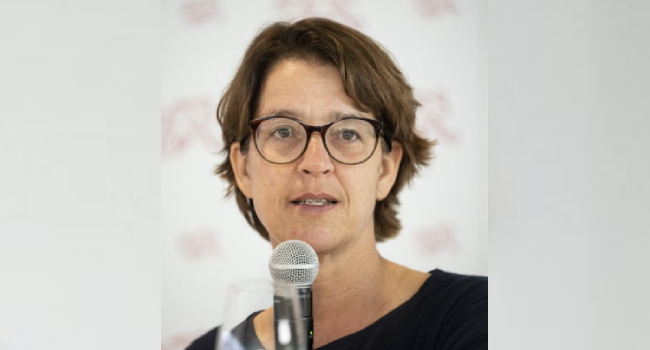
RB Leipzig on Wednesday named Tatjana Haenni as the club’s new chief executive, making her the first woman club boss in German football history.

The 59-year-old Swiss will take over on January 1 and will head Leipzig’s management board.

A former footballer, Haenni made 23 appearances for the Swiss national team. Since retiring, she has taken up sports administration roles at UEFA, FIFA and the Swiss Football Association (SFV).

“I can’t wait to get started in January and to get to know the club on a deeper level,” Haenni said in a statement released Wednesday.

“Together, we want to continue on what is already a successful path, and achieve our ambitious goals.”

READ ALSO: RB Leipzig Fire Coach Rose With Top-Four In Doubt

Former CEO and current Red Bull executive Oliver Mintzlaff praised Haenni’s “specialist knowledge, leadership and strategic thinking”, adding she would “successfully shape the club’s next stages of development”.

Founded in 2009 by taking over a club in Germany’s fifth tier, RB Leipzig rose through the ranks and was first promoted to the top flight in 2016.

Since then, the club have won two German Cups and made it to the semi-finals of the Champions League in 2020.

NHS glioblastoma symptoms after author Sophie Kinsella dies at 55

This common brain cancer is often diagnosed at around 55-years-old and there are a long list of symptoms to look out for

Best-selling author Sophie Kinsella tragically died at just 55 after she was diagnosed with a form of aggressive brain cancer that has a number of concerning symptoms to be aware of.

Kinsella was diagnosed with glioblastoma, a form of brain tumor more common in older adults, at the end of 2022. The NHS stated that this particular form of brain cancer “is the most common and most malignant primary brain tumour.”

It continued: “Glioblastoma multiforme usually spreads quickly to other parts of the brain. For this reason, these tumours are difficult to treat. It is not uncommon for them to recur after initial treatment.”

READ MORE: Dr Amir Khan says people who own £10 item are ‘healthiest’ in the UKREAD MORE: BBC expert says anyone with repeat NHS prescriptions ‘has until Friday’

The Shopaholic book series creator, whose real name is Madeleine Sophie Wickham, announced she had been diagnosed with cancer in April 2024. She also announced then that she had been receiving chemotherapy and radiotherapy.

According to Brain Tumour Research, glioblastoma is the most commonly diagnosed high-grade brain tumour in adults, with a short average survival rate of between 12 and 18 months, with limited treatment available.

Symptoms often begin abruptly and seizures are also relatively common for this cancer. The NHS states that symptoms include:

  • headaches
  • seizures (fits)
  • persistently feeling sick (nausea), being sick (vomiting) and drowsiness
  • mental or behavioural changes, such as memory problems or changes in personality
  • progressive weakness or paralysis on one side of the body
  • vision or speech problems

Tumors in specific areas can cause more unusual symptoms. Frontal lobe tumors can cause changes in mood and personality and asymmetrical weakness and seizures causing jerking.

Temporal lobe tumors can cause déjà vu, odd tastes and smells as well as dissociation and panic. Seizures may see patients looking vacant, chewing, swallowing or making hand movements. Memory and speech can also be affected.

Parietal Lobe Tumours can cause loss of sensation and or power on one side. Seizures may see people struggle to speak or understand

Cerebellar Tumours cause problems with balance and co-ordination, swallowing, double vision and weakness in the limbs.

Article continues below

Surgical removal remains the first port of call for treatment. However, this tumor looks very similar to normal brain tissue which makes it very difficult to completely remove.

Radiotherapy rarely cures glioblastoma, but studies show that it doubles the median survival of patients, compared to supportive care alone.

Colts sign grandfather Rivers, 44, out of retirement

To play this video you need to enable JavaScript in your browser.

  • 40 Comments

Philip Rivers has come out of retirement to rejoin the Indianapolis Colts, five years after the 44-year-old grandfather last played in the NFL.

The Colts faced a sudden need to fill their quarterback room after picking up two injuries during Sunday’s 36-19 loss to the Jacksonville Jaguars.

Daniel Jones was ruled out with a season-ending Achilles injury and his replacement, third-string rookie Riley Leonard, picked up a knee problem.

Back-up quarterback Anthony Richardson was already out with a facial injury, so Rivers worked out for the Colts on Monday – his 44th birthday.

The father of 10, who has been serving as the head coach at St. Michael Catholic High School in Alabama, has now been added to the team’s practice squad.

That makes Rivers the oldest current player in the NFL, surpassing Pittsburgh Steelers quarterback Aaron Rodgers, who turned 42 last week.

After spending the first 16 years of his NFL career with the Chargers franchise, Rivers joined the Colts in 2020 and led them to an 11-5 record, falling at the first hurdle in the play-offs.

The Colts, who were this season’s pacesetters before losing their past three games to slip to 8-5, have promoted Brett Rypien from their practice squad to their active roster, making the 29-year-old eligible for Sunday’s game at the Seattle Seahawks.

Rivers is seventh on the NFL’s all-time list for passing yards (63,440) and sixth for touchdown passes (421).

Colts head coach Shane Steichen served as offensive coordinator and quarterbacks coach while Rivers was with the Chargers.

Rivers’ eldest child is two months older than Colts rookie Leonard and leading up to this year’s draft – when he was a sixth-round pick by Indianapolis – the 23-year-old worked with Rivers as the veteran lives in his hometown of Fairhope, Alabama.

Rivers’ return could also affect his Hall of Fame status. Players become eligible five years after ending their career and, in his first year of eligibility, Rivers has been named a semi-finalist for the class of 2026.

    • 20 January 2021

‘It would be the most phenomenal storyline’

Analysis by NFL pundit Phoebe Schecter

I love it. I think it’s fantastic. I mean, it says a lot about what this league thinks and feels about their current quarterbacks, right, because he’s not played for so long, and yet you think he’s going to be the best one for the job to be able to just pop back in.

You know, the Colts saw what happened with Joe Flacco coming off the couch [at the Browns in 2023], so I think they’re thinking that he could bring a little extra spark, but even having him in the practice squad, they could see where he’s at speed-wise, decision-wise.

Imagine if Philip Rivers is the reason that the Colts make a deep play-off run. I mean, that would be the most phenomenal storyline.

Who are the oldest NFL players of all-time?

Related topics

  • American Football

More on this story

    • 16 August

Colts sign grandfather Rivers, 44, out of retirement

To play this video you need to enable JavaScript in your browser.

  • 40 Comments

Philip Rivers has come out of retirement to rejoin the Indianapolis Colts, five years after the 44-year-old grandfather last played in the NFL.

The Colts faced a sudden need to fill their quarterback room after picking up two injuries during Sunday’s 36-19 loss to the Jacksonville Jaguars.

Daniel Jones was ruled out with a season-ending Achilles injury and his replacement, third-string rookie Riley Leonard, picked up a knee problem.

Back-up quarterback Anthony Richardson was already out with a facial injury, so Rivers worked out for the Colts on Monday – his 44th birthday.

The father of 10, who has been serving as the head coach at St. Michael Catholic High School in Alabama, has now been added to the team’s practice squad.

That makes Rivers the oldest current player in the NFL, surpassing Pittsburgh Steelers quarterback Aaron Rodgers, who turned 42 last week.

After spending the first 16 years of his NFL career with the Chargers franchise, Rivers joined the Colts in 2020 and led them to an 11-5 record, falling at the first hurdle in the play-offs.

The Colts, who were this season’s pacesetters before losing their past three games to slip to 8-5, have promoted Brett Rypien from their practice squad to their active roster, making the 29-year-old eligible for Sunday’s game at the Seattle Seahawks.

Rivers is seventh on the NFL’s all-time list for passing yards (63,440) and sixth for touchdown passes (421).

Colts head coach Shane Steichen served as offensive coordinator and quarterbacks coach while Rivers was with the Chargers.

Rivers’ eldest child is two months older than Colts rookie Leonard and leading up to this year’s draft – when he was a sixth-round pick by Indianapolis – the 23-year-old worked with Rivers as the veteran lives in his hometown of Fairhope, Alabama.

Rivers’ return could also affect his Hall of Fame status. Players become eligible five years after ending their career and, in his first year of eligibility, Rivers has been named a semi-finalist for the class of 2026.

    • 20 January 2021

‘It would be the most phenomenal storyline’

Analysis by NFL pundit Phoebe Schecter

I love it. I think it’s fantastic. I mean, it says a lot about what this league thinks and feels about their current quarterbacks, right, because he’s not played for so long, and yet you think he’s going to be the best one for the job to be able to just pop back in.

You know, the Colts saw what happened with Joe Flacco coming off the couch [at the Browns in 2023], so I think they’re thinking that he could bring a little extra spark, but even having him in the practice squad, they could see where he’s at speed-wise, decision-wise.

Imagine if Philip Rivers is the reason that the Colts make a deep play-off run. I mean, that would be the most phenomenal storyline.

Who are the oldest NFL players of all-time?

Related topics

  • American Football

More on this story

    • 16 August

Zelenskyy warns Russia, China stepping up military-industrial cooperation

Ukrainian President Volodymyr Zelenskyy has said that China is moving to “intensify cooperation” with Russia, particularly in the military-industrial sphere, amid deepening ties between the strategic partners since Moscow launched its full-scale invasion of its neighbour.

In comments on social media on Wednesday, Zelenskyy said a report from the head of Kyiv’s foreign intelligence had noted the dependence of the Russian state on “Chinese investment, technologies, and political priorities”.

Recommended Stories

list of 4 itemsend of list

The Ukrainian leader said that Kyiv’s partner intelligence services had also noted the moves by Beijing and Moscow to ramp up their cooperation in the military-industrial sector, adding he had instructed Ukraine’s foreign intelligence service to monitor the cooperation “more substantively” for how it related to Ukraine’s and its Western allies’ interests.

“Global security must not be undermined because Russia’s appetite for aggression remains unabated,” he said.

The report also observed a growing trend of the “de-sovereignisation of parts of Russian territory” in Beijing’s favour – primarily through the use of resource-rich land, and the sale of precious resources to China, he said.

Despite pressure from the West, Beijing, Moscow’s key strategic partner, has drawn closer to Russia since it launched its full-scale invasion of Ukraine in February 2022.

It has claimed neutrality in the conflict, maintaining a low profile amid international efforts to negotiate peace, despite calls for it to use its influence over Moscow – which relies heavily on China to blunt the impact of Western sanctions – to help bring an end to the conflict.

In September, the Chinese and Russian leaders outlined their vision of a new, multilateral international order at the Shanghai Cooperation Organisation (SCO) summit, while last month, Chinese President Xi Jinping pledged to expand investment and deepen economic relations between the countries in a meeting with Russian Prime Minister Mikhail Mishustin, describing the enhanced ties as a “shared strategic choice”.

Xi highlighted industries including aerospace, energy, agriculture, and the digital economy as sectors where the countries could cooperate.

‘Coalition of willing’ to meet

Zelenskyy’s warning came as he said Ukrainian officials ​​were expected to hand US negotiators their latest proposals to end the war shortly, amid US President Donald Trump’s push for a settlement.

Zelenskyy is due to discuss the status of those negotiations in a video call on Thursday with the leaders of about 30 of Ukraine’s allies, members of the so-called “coalition of the willing” led by France and the United Kingdom. The French presidency confirmed on Wednesday that the call would take place.

Ukraine’s European allies are backing Zelenskyy’s effort to ensure that any deal to end the war is fair and deters future Russian aggression in Europe, amid concerns that Trump’s push for a swift settlement will result in an outcome heavily weighted in the Kremlin’s favour.

Responding to comments from Trump that suggested the Ukrainian president was using the war as an excuse not to hold an election, Zelenskyy also said the country would be ready to hold a vote within three months if its partners guaranteed security during wartime, and provided its electoral law could be altered.

“To hold elections, two issues must be addressed: primarily, security – how to conduct them, how to do it under strikes, under missile attacks; and a question regarding our military – how they would vote,” Zelenskyy said.

“The second issue is the legislative framework required to ensure the legitimacy of elections,” he said, referring to the fact that elections cannot be held during times of martial law.

Hospital shelled in Russian-held Kherson

Meanwhile, as efforts continued to reach a settlement in the war, hostilities continued to play out on the battlefield.

In a Russia-controlled part of Ukraine’s southern Kherson region, three people were killed and two wounded by Ukrainian shelling of a hospital, a Russia-installed governor, Vladimir Saldo, said on Telegram.

He said all the victims worked at the facility, and one of the injured was in intensive care.

Trump’s $12bn aid package: Are tariffs bleeding US farmers?

US President Donald Trump has announced a $12bn aid package for farmers, offering financial assistance to a core part of his political base that has been hit hard by falling crop prices and the impact of his trade policies.

Unveiling the plan at the White House in Washington, DC alongside Agriculture Secretary Brooke Rollins and several farmers on Monday, Trump said: “Maximising domestic farm production is a big part of how we will make America affordable again and bring down grocery prices.”

Recommended Stories

list of 4 itemsend of list

Rollins said the Farmer Bridge Assistance programme’s initial phase would provide $11bn for row crop farmers – those who cultivate crops such as corn, soya beans and cotton in rows. An additional $1bn has been earmarked for farmers who grow some speciality crops not covered by this. The aid money is expected to be made available by the end of February.

The package is Trump’s latest effort to defend his economic record and respond to public anxiety about rising food costs. It also comes after China curbed its purchases of US soya beans in retaliation for steep US trade tariffs, which have also caused the cost of fertiliser and other agricultural products to soar.

How will this aid be distributed to farmers?

The US Department of Agriculture (USDA) will calculate per-acre payments for different crops using a formula that estimates production costs. Payments will be capped at $155,000 per farm or individual, and only farms earning less than $900,000 annually will qualify.

The USDA’s formula is designed to bolster small-scale producers who may be struggling more than others. “We looked at how they were hurt, to what extent they were hurt,” Trump said.

Farmers will begin receiving funds on February 28, according to Rollins. Meanwhile, applications for funds will open in the coming weeks so that farmers “will know exactly what that number looks like”.

Trump said the money for the scheme will come from tariff revenues.

Though Trump has, at times, downplayed cost-of-living issues, he visited Pennsylvania on Tuesday to explain to voters how his administration is addressing this concern.

At the same time, he defended his record on trade and the sweeping reciprocal tariffs he has imposed on countries around the world this year. “It’s amazing,” Trump said of tariffs at a rally in Mount Pocono, Pennsylvania. “It’s the smart people who understand it. Other people are starting to learn, but the smart people really understand it.”

Why is this aid package being introduced now?

Many farmers continue to support Trump. The country’s most farming-dependent counties overwhelmingly backed him in last year’s presidential election by an average of 77.7 percent, according to the USDA.

Experts say his anti-establishment rhetoric has resonated with rural communities that feel overlooked by political elites in Washington, DC. His promises of deregulation also appealed to many farmers who feel frustrated by federal rules they view as burdensome.

But the president’s trade agenda and the imposition of trade tariffs to address the country’s trading deficit with many other countries have hit farmers hard. Trump’s “liberation day” tariff announcement earlier this year provoked steep retaliatory duties on US products, particularly from China, including on US agricultural exports.

Trump’s latest package is an echo of a $12bn programme he offered to farmers in 2018 during his first-term administration’s initial trade dispute with China.

Which crops have been hardest hit by trade tariffs?

Soya bean farmers have been badly bruised by the US-China trade spat this year. Trump was the principal architect of recent tensions – his sweeping “reciprocal” tariffs, launched earlier this year, targeted China more than any other country.

Historically, more than half of all soya beans produced in the US – mainly in the Midwest – have been sold to China. But after Trump imposed steep tariffs on Chinese goods, Beijing raised duties on US soya beans to 34 percent.

Last year, China bought slightly more than 50 percent (27 million metric tons) of the $24.5bn of produce that US soya bean farmers sold to international markets. This year, US exports to China have so far fallen by more than half.

Instead, China has begun buying more soya beans from Brazil and other South American nations.

The American Soybean Association has also warned that tariffs are driving up costs for soya bean producers. In particular, US tariffs on Moroccan fertiliser, which have been hiked from 2.1 percent to 16.8 percent, have squeezed farmers.

In October, following a meeting with Chinese President Xi Jinping in South Korea, Trump said Beijing had committed to buying 12 million metric tons of US soya beans by the end of this year, and 25 million metric tons annually for the next three years.

Trump is also facing pressure to address rising beef prices. On November 7, he asked the Department of Justice to investigate foreign-owned meatpackers in the US, which he claims are driving up costs, though he has provided no supporting evidence for this.

Then, on November 20, Trump announced he would peel back trade tariffs of up to 50 percent on certain Brazilian agricultural products, including coffee and beef. The reversal was broadly interpreted as an acknowledgement that the tariffs were fuelling inflationary pressures at home.

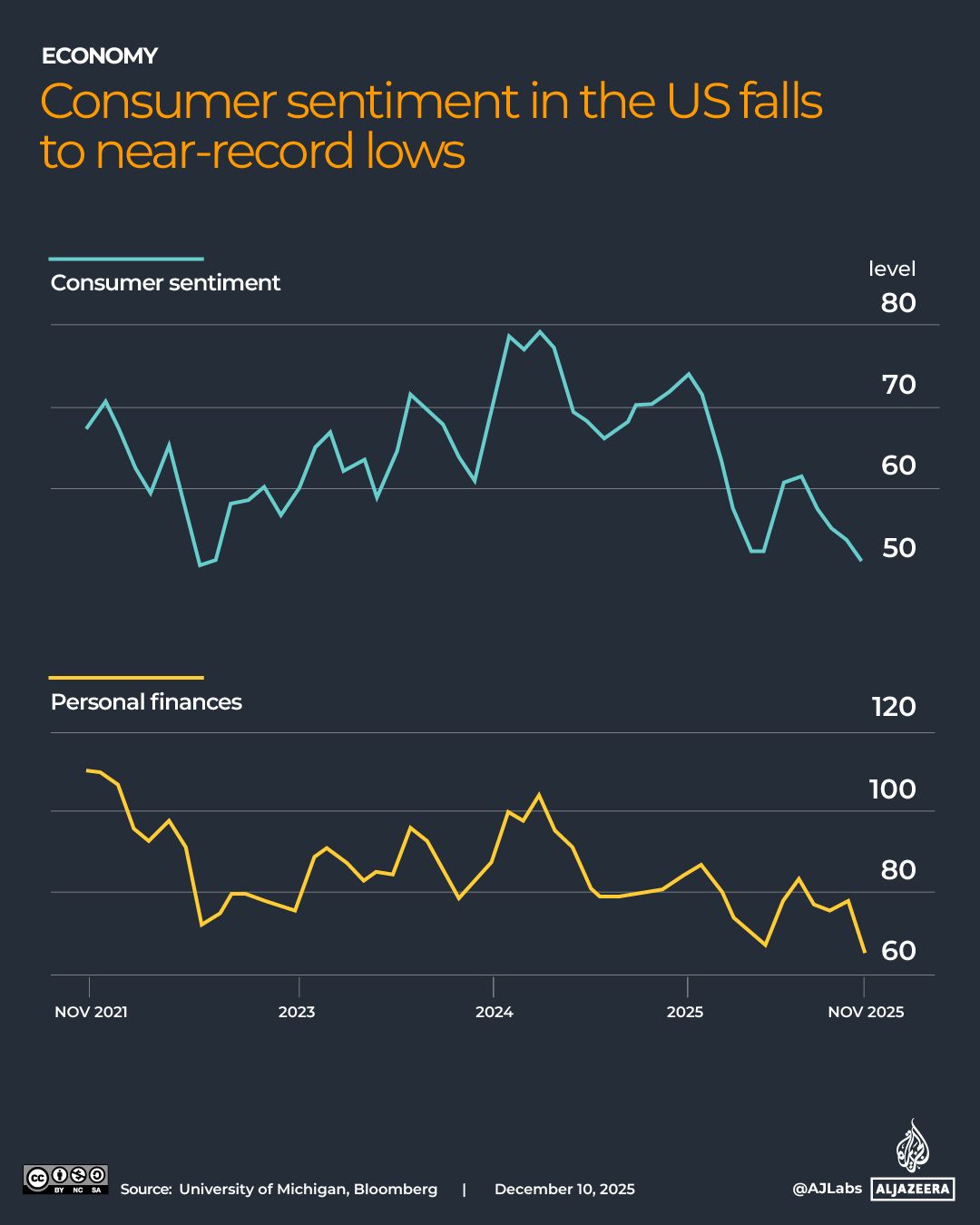
More broadly, US consumer sentiment remains near record lows. In November, data released by the University of Michigan showed that Americans view their personal finances as the weakest they’ve been since 2009. High inflation is the primary cause of concern.

Prices of other food staples have also risen recently. Compared to last year’s Thanksgiving Day, potatoes this year on the November US holiday were up by 3.7 percent, bread rolls 3.9 percent and apples 5.3 percent – all outpacing the 3 percent annual inflation rate, government data shows.

Will Trump’s bailout package be enough to rescue farmers?

While farmers have generally welcomed Trump’s bailout package, many view it as a temporary reprieve rather than a solution to long-term challenges like rising costs and the decline of small-scale farming.

“[It’s] a start, but I think we need to be looking for some avenues to find other funding opportunities, and we need to get our markets going. That’s where we want to be able to make a living from,” Kentucky farmer Caleb Ragland told the Associated Press on Monday.

Family farmers and those renting land have been particularly exposed to Trump’s trade war. Many smaller farms, already operating on thin margins, have struggled to absorb the shock of higher input costs.

As strains persist, analysts have warned that the sector may undergo further consolidation, with large industrial farms expanding their reach while smaller growers disappear or take on more debt just to stay afloat.

Earlier this year, Cornell University in Ithaca, New York, estimated that in the first half of this year, the number of farm bankruptcies was 60 percent higher than a year before. In addition, farm sector debt is expected to rise by 5 percent to nearly $600bn in 2025.

Libby Schneider, deputy executive director of the Democratic National Committee, said Trump’s aid package does not go far enough: “Farmers don’t want handouts – they want their markets back,” she said in a statement.