Israel shot my little sister during the Gaza ceasefire

Gaza City – An Israeli sniper shot my six-year-old sister at a family friend’s wedding in northern Gaza during the ceasefire on November 3.

In the Daraj quarter, far from the Israel-controlled yellow area, Sundus was playing on the first floor of a wedding hall with other kids, happy with her new clothes, while the wedding itself was taking place upstairs.

Suddenly, she collapsed.

Shouts filled the hall on the second floor. Bullets whistled loudly among the guests. One bullet hit the bridesmaid in the jaw, and another hit the groom’s cousin in her shoulder. The bride’s white dress turned red — the wedding stopped before anyone danced.

Maria, my seven-year-old sister, came running. “Sundus is sleeping on the ground and won’t wake up.”

Mum ran to the first floor, searching everywhere for Sundus, but found only a pool of blood. Her phone rang, “We are in the Baptist Hospital [al-Ahli Arab Hospital]. Come quickly,” her brother Ali said.

“An Israeli sniper shot the child Sundus Hillis in the head,” the news circulated as we were on the way to the hospital. We knew nothing about our little one.

When we arrived, Sundus was lying in a hospital bed. Blood covered her beautiful face, staining the makeup and the colourful clothes she had been overjoyed to wear.

“Sundus, oh love. Wake up,” Mum begged her, but she only groaned weakly.

“Two bullets in her head,” a nurse inspecting Sundus’s injury told Mum.

Two holes, one bullet, and some parts of the brain lost, the medical report showed.

In the ICU

Sundus was moved to Al-Shifa Hospital.

Before she entered the Intensive Care Unit (ICU), the neurosurgeon tapped her right hand – she unconsciously moved it. But when he tapped her left hand and leg, nothing moved.

Sundus underwent a three-hour-long surgery and remained in the ICU. We were permitted to visit for only 15 minutes. When I first entered the room, the doctor guided me to a child with a swollen face and a bandaged head, tubes everywhere, who bore very little resemblance to my beautiful Sundus.

One day passed, and Sundus was still kept in the ICU until another patient in critical condition needed the bed, and she was moved to the inpatient ward.

She finally woke up after two days, unable to see or move the left side of her body. No matter how much I talked to her, the only response I got was loud cries.

She was rubbing her face, trying to look at anything but failing. “My eyes are crossed … I can’t see anything. Why have you made me like this?” she would shout.

The wedding she had been looking forward to for days had disappeared from her memory. In her mind, she is still sleeping in our cousins’ shelter, where she was before the wedding hall.

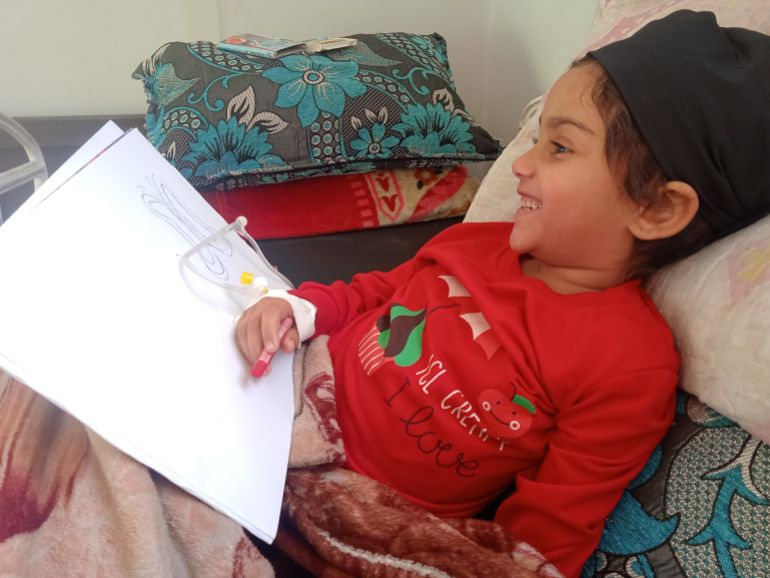
Sudnus, trying to draw, in her hospital bed [Courtesy of Eman Hillis]

Sundus, who used to chatter all the time, could now only groan weakly. I used to make her draw just for a moment of quiet, but now I try to get her to speak, and she cries.

Dad, too, who used to complain, begs her to make noise, but we get nothing except: “Stop talking. My head hurts.”

“Why have you buried me alive?” she once shouted at Mum, after agonising, futile attempts to roll over in the hospital bed.

Hung by blockade

A few days after the surgery, Sundus was able to feel the brightness of light. She was able to see apparitions sometimes; at other times, she was unable to see at all.

When she sensed the disappointment in our voices, she started guessing. That the red butterfly was blue or that the pink doll was a pink rose.

I saw Sundus get angry at herself because she couldn’t move, then burst into tears – it’s a loop she suffers daily.

The neurosurgeon had no clear answers for us when we asked whether she would return to her normal self. A simple “inshallah” was his answer for all questions.

We had to face him several times with specific questions to get a clear answer.

“She needs physical therapy, and it’s up to God whether she will regain her mobility or not … her vision will improve to a certain extent, but it won’t go back to how it was,” he said.

Sundus didn’t stop moaning in pain, and the hospital did not have proper resources. We had to scour the streets for painkillers and other things for her.

One day, I needed to find a medical cap to cover her wound – but found nothing in four pharmacies, walking through destroyed streets. Another time, I needed surgical gauze and could only find another kind, but she needed anything, urgently, so I had to buy what I found.

I tried every international organisation to help get her out of Gaza. I sent her medical reports to anyone who might be able to help – all to no avail.

Sundus heard talk of evacuation and started to dream of being able to move and see again.

“The damage is done. Whatever the bullet damaged cannot be repaired by a surgeon,” a foreign doctor told us via messaging after he looked at Sundus’s records remotely, and our last bit of hope was shattered.

Her condition deteriorated as the medical care was limited in the destroyed hospital. Her injury became infected and needed another surgery, in which she lost a significant amount of blood.

It felt like Israel shot Sundus, then used the blockade to tighten a rope around her neck.

Sundus in the wheelchair at Al-Shifa Hospital [Courtesy of Eman Hillis]

Evading death

For two years, we’ve been making impossible decisions to avoid injury to anyone in the family.

When Israel issued warnings to the north of Gaza, we evacuated to the south. When Israel warned of a ground operation in Khan Younis, we evacuated to Rafah.

When the ground operation in Rafah was announced, we rushed to Deir el-Balah. We only returned to northern Gaza as the truce took effect in January 2025.

We slept in the streets, sheltered from bombs under the thin fabric of tents. For months, we endured starvation, not approaching aid drops or the Gaza Humanitarian Foundation (GHF).

Besieged Palestinians in Gaza know what harsh fate awaits them when injured.

We felt like we owned the land when the ceasefire took effect, feeling lucky to have lost only our home and suffered from malnutrition. Then an Israeli sniper took that relief from us.

What did little Sundus do for the Israeli soldier to shoot her in the head? We are supposedly in a ceasefire.

Ironically, my friends everywhere, instead of condemning the shooting, first asked me if Sundus had been in the “yellow area” that is held by Israel.

All the times we nearly died while trying to stay in the “safe zone” crossed my mind as I repeated that she was not, sharing the location of the wedding hall with tens of people.

Shooting a six-year-old child is a war crime.

However, it didn’t even make the headlines.

It was nothing out of the ordinary in Gaza.
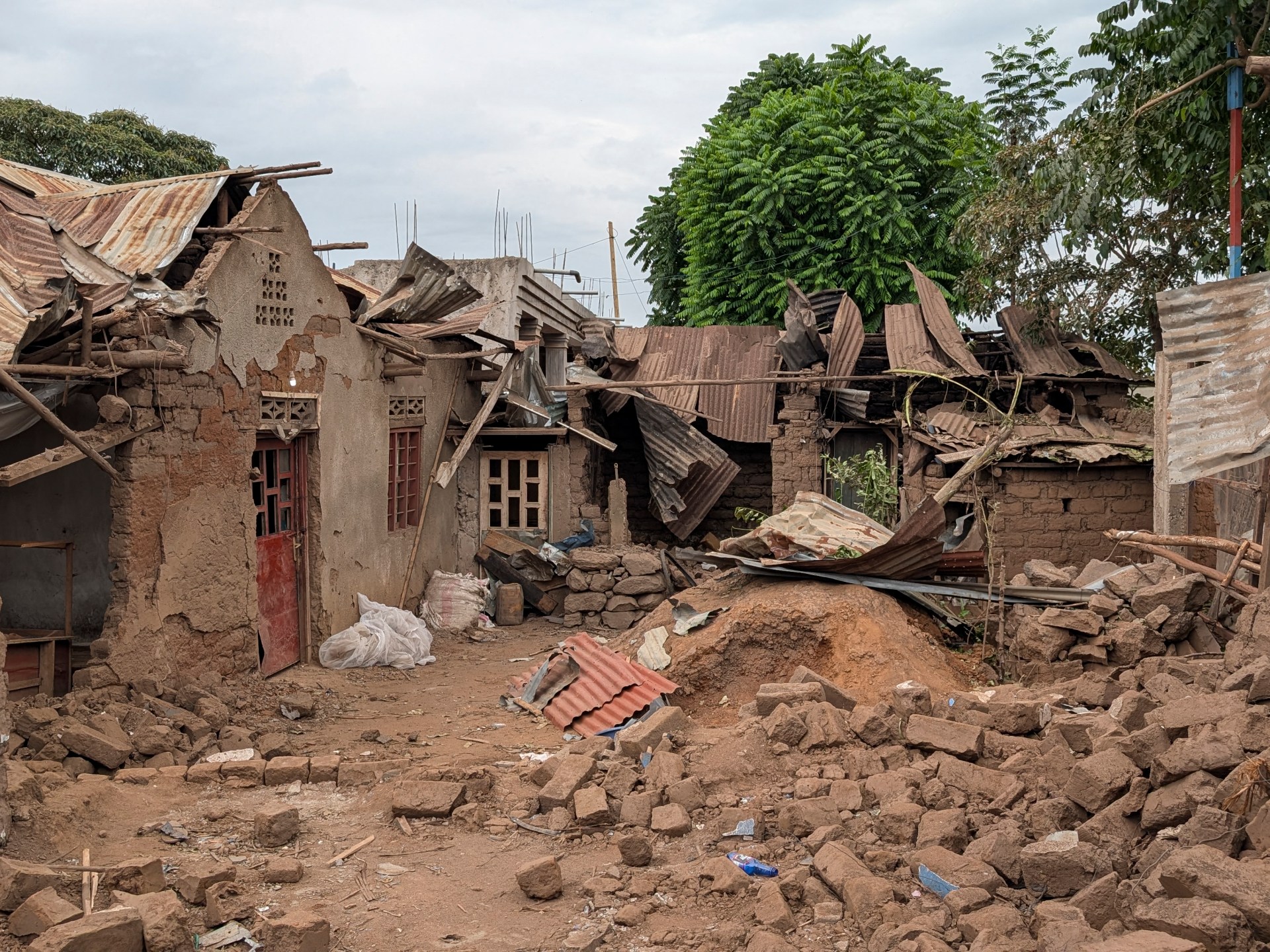
DRC accuses Rwanda of peace deal violations as M23 advances in the east

The president of the Democratic Republic of the Congo (DRC), Felix Tshisekedi, has accused Rwanda of violating a newly signed US-brokered peace deal, as the Kigali-backed M23 armed group pressed ahead with a rapid advance on a town near the border with Burundi.

Tshisekedi told lawmakers on Monday that Rwandan forces had carried out attacks in several locations in South Kivu province in the days since he and his Rwandan counterpart, Paul Kagame, signed a peace accord in Washington, DC on December 4, aimed at ending years of conflict.

Recommended Stories

list of 4 itemsend of list

“Despite our good faith and the recently ratified agreement, it is clear that Rwanda is already violating its commitments,” Tshisekedi alleged, claiming that the Rwandan army had carried out and supported attacks with heavy weaponry “on the very day after the signing”.

There was no immediate comment by Rwanda. The Anadolu news agency cited Rwandan Foreign Minister Olivier Nduhungirehe as calling similar accusations against the Rwandan army “ridiculous” and an attempt to shift blame.

Rwanda denies backing M23, but says it faces a threat from armed groups with links to the 1994 Rwandan genocide present in eastern DRC.

Thursday’s signing of the accord, which saw both sides reaffirm their commitment to a United States- and Qatar-brokered agreement reached in June, was hailed by US President Donald Trump as a new chapter for the region, even as fighting continued.

“It is an amazing day: Great day for Africa, great day for the world and for these two countries,” Trump said at the time.

Clashes near Burundi border

In eastern DRC, the M23 armed group has been advancing on the town of Uvira near the border with Burundi, the last major urban centre in South Kivu province yet to fall to the group, the AFP news agency reported.

Quoting local and military sources, the agency reported that hundreds of Congolese and allied Burundian troops had sought refuge inside Burundi amid the group’s advance.

Recent clashes were also reported near Luvungi, a settlement about 60km (40 miles) north of Uvira. Quoting residents, the Reuters news agency reported that M23 fighters had seized the village.

Fighting was also reported in the nearby town of Sange, situated between Uvira and Luvungi, with Reuters reporting that as many as 36 people were killed in apparent bomb or grenade attacks.

On Monday, Burundi’s Ministry of Foreign Affairs condemned what it said was an attack by Rwanda on its soil near Cibitoke, a town bordering Rwanda and the DRC, which had wounded two people, including a 12-year-old child.

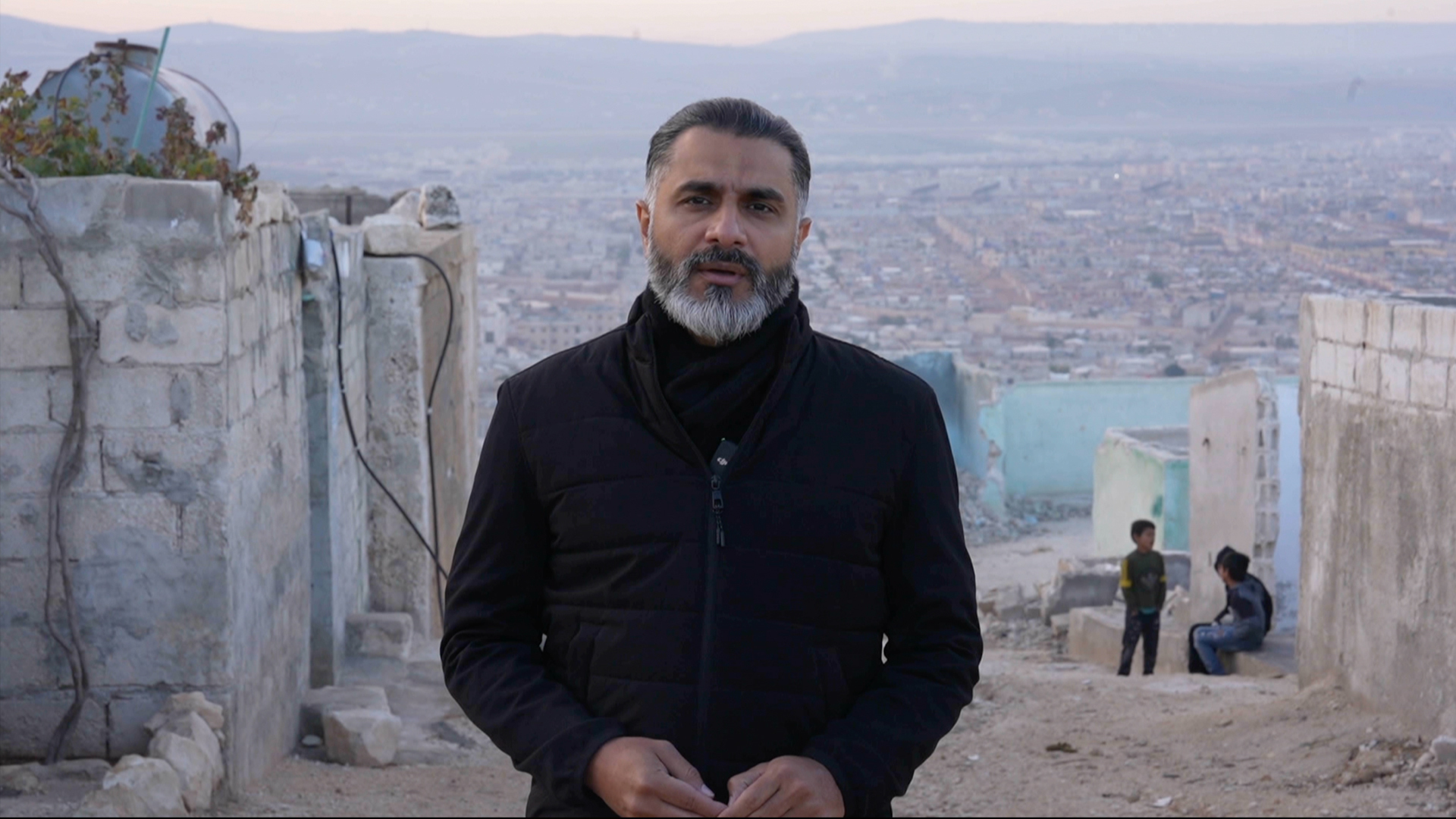
Reporting from Goma, the biggest city in eastern DRC, Al Jazeera’s Alain Uaykani said tensions were high as M23 advanced on Uvira.

He said the DRC had been concentrating military resources in the area preceding months to try to ward off any advance.

“But this could not stop the advance of M23,” he said, adding that “disorganisation” between the DRC’s military and its allies was adding to the challenges of defending against the group.

Washington ‘deeply concerned’

The US State Department said it was “deeply concerned by the ongoing violence in eastern DRC”.

“Rwanda, which continues to provide support to M23, must prevent further escalation,” a spokesperson said.

A senior Trump administration official told Reuters that the US was monitoring the situation “including areas where actions on the ground do not yet align with the commitments made”. The official said the administration was working with both sides, and that Trump had made clear he was “expecting immediate results”.

While Trump hailed the “miracle” agreement signed on Thursday, which includes an economic component intended to secure US supplies of critical minerals, observers were sceptical that it would bring peace.

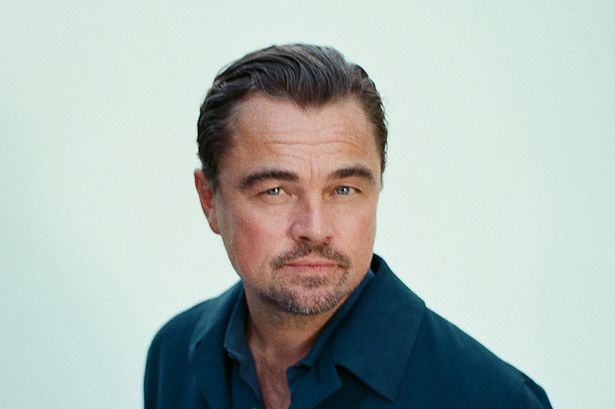
Leonardo DiCaprio reveals humble reason he always wears face mask in public

Titanic star, Leonardo DiCaprio, has spoken candidly about the reality of fame and how he stays sane as one of the world’s most recognisable actors

Hollywood heartthrob, Leonardo DiCaprio, has revealed why he always covers his face in public as he reflects on the pressure of fame as one of Tinseltown’s biggest stars.

The Titanic icon, 51, who shot to fame as a teen in What’s Eating Gilbert Grape? now boasts a CV most actors could only dream about – with a string of awards, including three Golden Globes and an Oscar to boot.

However, his stellar success has come at a price, with the star frequently seen in public wearing a face mask or a low-slung baseball cap as he humbly admits he wants to ‘disappear as much as you possibly can’.

READ MORE: Ariana Grande makes rare comments about Mac Miller after his tragic deathREAD MORE: Kylie Jenner and Timothee Chalomet silence split rumours with one bold move

Opening up about his extraordinary life outside his work as one of the planet’s most recognisable stars, Leo says he hopes his career will last longer if fans don’t see him all the time.

Claiming he was also going incognito for the sake of his career, he continued: “I was like: ‘OK, how do I have a long career?’ Because I love what I do, and I feel like the best way to have a long career is to get out of people’s face.”

Leo said he feels it’s best to ‘disappear unless you have something to say’, telling TIME magazine: “It’s been a balance I’ve been managing my whole adult life and still I’m not an expert.

“I think my simple philosophy is only get out there and do something when you have something to say, or you have something to show for it. Otherwise, just disappear as much as you possibly can.”

The Talented Mr Ripley star never seems to be seen out in public without concealing his identity with the help of a hat or a face mask. He started wearing face masks during the COVID-19 pandemic and has kept up with the practice to this day.

At Amazon boss Jeff Besos’ wedding in the summer in Venice, Leo was only papped with his baseball cap, which was worn low over his face as he maintained his bid to go incognito.

In August, the star opened up about his one regret when it comes to his career as he spoke candidly about turning down “a profound movie of my generation”.

The Oscar winner, who is best known for roles including The Wolf of Wall Street, This Boy’s Life, The Revenant, and Catch Me If You Can, revealed that his biggest regret when it comes to his movie past is turning down a role which Mark Wahlberg later got cast for.

Wahlberg’s performance in the 1997 box office hit Boogie Nights earned him global notoriety, and Leo couldn’t help but be remorseful after watching the flick, which he turned down.

Speaking to Esquire, Leo admitted: “My biggest regret is not doing Boogie Nights. It was a profound movie of my generation. I can’t imagine anyone but Mark [Wahlberg] in it. When I finally got to see that movie, I just thought it was a masterpiece.”

Article continues below

Florida lists Muslim rights group CAIR a ‘terror organisation’

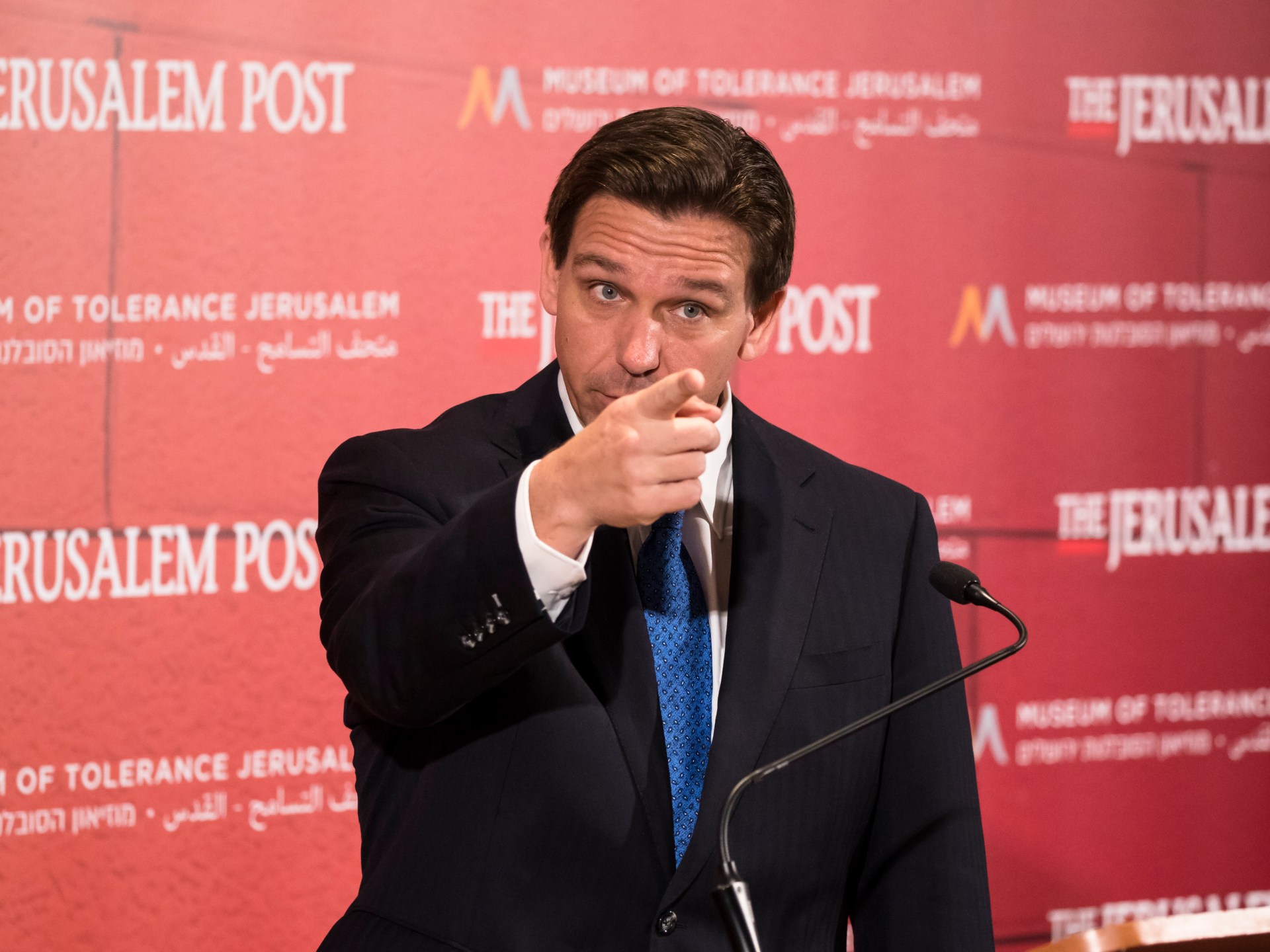
Florida’s governor has designated the Council on American-Islamic Relations (CAIR) a “foreign terrorist organisation”.

Ron DeSantis posted his executive order to list the United States-based Muslim civil rights and advocacy group on social media on Monday.

Recommended Stories

list of 4 itemsend of list

The move follows a similar declaration by the Republican governor of Texas last month. CAIR has rejected the labelling by both states and mounted legal challenges.

In a separate post, DeSantis asserted that the Florida Legislature is “crafting legislation to stop the creep of Sharia law, and I hope that they codify these protections for Floridians against CAIR and the Muslim Brotherhood in their legislation”.

The designation, which triggers heightened oversight by state law enforcement agencies and establishes financial and operational restrictions, was also declared against the Muslim Brotherhood.

DeSantis’s order asserted that CAIR was “founded by persons connected to the Muslim Brotherhood”, which, without offering evidence, the governor asserted was attempting to establish “a world-wide Islamic caliphate” and has direct links to Hamas.

The order instructs Florida agencies to prevent the two groups and those who have provided them with material support from receiving contracts, employment and funds from a state executive or cabinet agency.

Neither CAIR nor the Muslim Brotherhood is designated as a foreign terrorist organisation by the US government.

However, President Donald Trump has ordered the start of a process to label the branches of the Muslim Brotherhood in Egypt, Lebanon and Jordan as “terrorist” organisations, citing their alleged support for Hamas.

CAIR’s Florida chapter told The Associated Press news agency that it plans to sue DeSantis in response to what it called an “unconstitutional” and “defamatory” proclamation.

The group accused the Florida governor of serving foreign interests and lashing out at CAIR due to its civil rights work.

“From the moment Ron DeSantis took office as Florida governor, he has prioritised serving the Israeli government over serving the people of Florida,” CAIR and its Florida chapter said in a statement.

“He hosted his very first official cabinet meeting in Israel. He diverted millions in Florida taxpayer dollars to the Israeli government’s bonds. He threatened to shut down every Florida college’s Students for Justice in Palestine chapter, only to back off when CAIR sued him in federal court.”

Founded in 1994, CAIR has 25 chapters around the country. Last month, it asked a federal judge to strike down the designation declared against it by Texas Governor Greg Abbott.

In a lawsuit, CAIR said Abbott’s move was “not only contrary to the United States Constitution, but finds no support in any Texas law”.

On Monday, it said DeSantis and Abbott are both “Israel First politicians” and asserted that their designations are intended to silence American Muslims critical of US support for Israeli war crimes.

Lewis Cope says Strictly was ‘tough’ on actress girlfriend after Katya’s tears

Emmerdale actor Lewis Cope admits taking part in the BBC dance show was ‘tough’ on his actress girlfriend as he opens up about his connection with Katya Jones

Lewis Cope has shared further insight into his brutal elimination from Strictly Come Dancing and revealed the toll it’s had on his girlfriend.

The star released an emotional statement about his time on the BBC dance show and admitted the experience was “tough” on his girlfriend of eight years. The 30-year-old Emmerdale actor became the latest celebrity to leave the show after losing the judges’ vote in the dance off on Sunday night’s show.

Katya was left in floods of tears and said she’d finally found a partner who could ‘match’ her in Lewis.

Hartlepool-born Lewis has now opened up about his time on the show, calling his pro partner Katya Jones “extraordinary, strong, bold, funny, intelligent” and his 11 weeks on the series a “life changing experience” that will stay with him forever – but also admitted it “has been tough” on his girlfriend Rachel Lopez.

READ MORE: Home Bargains fans say new £6 handbag reminds them of chic designer French brand

“I am so proud of us and I wouldn’t change a thing,” he said of his partnership with Katya, 36. “Your strengths rubbed off on me and we were a solid team. We always had each others back. You taught me how to embrace new emotions I was scared to, brought me out my shell and have ultimately changed me. I didn’t just fall in love with dance, I fell in ln love with life again.”

Lewis and Rachel have been together for around eight years but don’t make regular red carpet appearances, choosing instead to spend their free time traveling and exploring. She has been a regular fixture in the audience at the live shows and regularly updated her social media followers on Lewis’s progress.

In his Instagram post, Lewis wrote: “This show has brought me so much joy and I’m glad we could share the joy with you. There are so many moments that will live with me forever and I am so grateful I was lucky enough to experience them. Hartlepool, my family I will never not be grateful for the love I have received.”

He continued, “@rachmayalopez I know this experience has been tough but you have been there every step of the way with love. You are a diamond, I love you so much!”

On his new friendship with Katya, who first lifted the glitterball with Joe McFadden in 2017, Lewis added: “From the moment I met you I knew something special was about to happen.

“We clicked, the energy aligned, our values connected and we knew we were going to give this our best shot. You handled this unknown experience for me with grace and kindness and it has created the most beautiful, heartwarming memories.”

Article continues below

Lewis and Katya were favourites to win for much of the series, but lost out in the dance-off against Amber Davies and Nikita Kuzmin to become the ninth couple to leave the show.

On Monday night’s It Takes Two, Katya broke down in tears several times as she said that she blamed herself for Lewis’ exit.