What is The Traitors host Claudia Winkleman’s net worth?

What is The Traitors host Claudia Winkleman’s net worth? – The Mirror

Skip to main content

Need to know

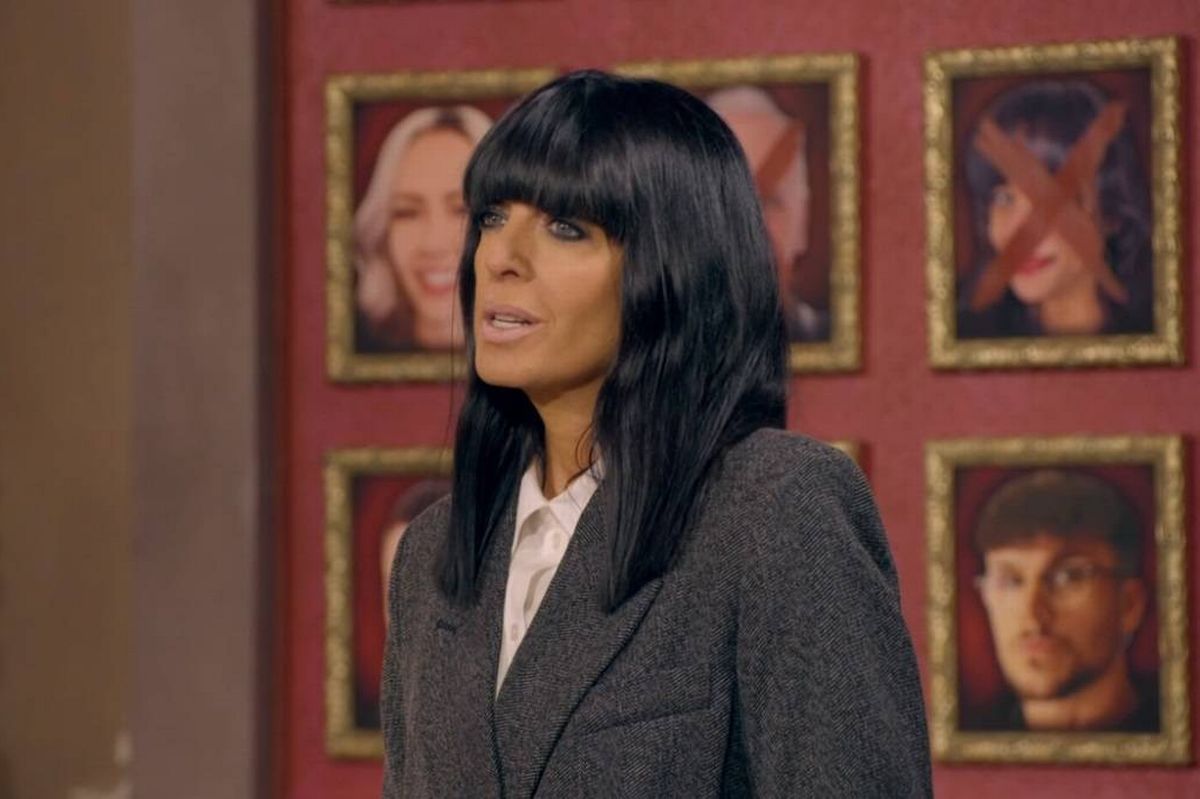
Claudia Winkleman has become at TV icon thanks to her role on BBC’s The Traitors.

Everything you need to know about The Traitors host Claudia Winkleman’s net worth

  1. The Traitors star Claudia Winkelman is set to be the focus of a brand new documentary which promises to give viewers a deep dive into her career. Claudia Winkleman: Behind the Fringe will give fans an exclusive insight into the star’s career and personal life – but an official release date is yet to be announced. It will also look at how her role on The Traitors made her a fashion icon.
  2. Claudia has become a Traitors legend, having hosted the show since its debut in 2022, including the celebrity spin-off. She even won a TV BAFTA award back in 2023, as the show continues to be a huge phenomenon across the UK.
  3. But it’s not the only show she has been a familiar face on. Just last year, the star announced she was leaving Strictly Come Dancing after over a decade – alongside co-host Tess Daly – so she could focus on other projects such as The Traitors. Back in October last year, she said: “It’s very difficult to put into words exactly what Strictly has meant to me. It’s been the greatest relationship of my career.”
  4. Claudia also presents the hit Channel 4 show The Piano, as she searches for the UK’s best amateur pianists. Claudia Winkleman fans may also remember seeing her on The Great British Sewing Bee as well as Best Home Cook.
  5. She is also a long time ambassador of haircare brand Head and Shoulders, which would bring in extra funds, but her exact salaries have not been disclosed. As for her net worth, it has been reported that her net worth is estimated to sit around £9 million – a huge sum.

READ THE FULL STORY: Claudia Winkleman documentary announced as fans promised a look ‘beyond the fringe’

Follow mirror:

reach logo

At Reach and across our entities we and our partners use information collected through cookies and other identifiers from your device to improve experience on our site, analyse how it is used and to show personalised advertising. You can opt out of the sale or sharing of your data, at any time clicking the “Do Not Sell or Share my Data” button at the bottom of the webpage. Please note that your preferences are browser specific. Use of our website and any of our services represents your acceptance of the use of cookies and consent to the practices described in our Privacy Notice and Terms and Conditions.

Agyemang returns to Arsenal for ACL recovery

Getty Images

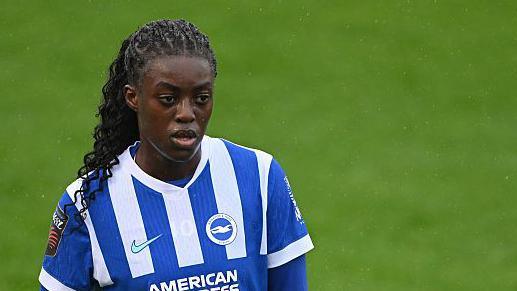
England striker Michelle Agyemang has returned to Arsenal to recover from injury following a loan spell at Brighton & Hove Albion.

The 19-year-old was ruled out for the rest of the season in October when she ruptured her anterior cruciate ligament while on England duty.

Brighton signed Agyemang on loan for a second consecutive campaign in the summer but she will now continue her recovery in north London.

She started in five of Brighton’s six WSL games this season.

Following her injury, the Seagulls said they and fellow Women’s Super League club Arsenal planned to work together on a rehabilitation programme, assisted by England and the Football Association.

“It was a real privilege to welcome Michelle back in the summer and work with her for another season,” Brighton head coach Dario Vidosic said.

“Naturally, we’re disappointed that her second loan spell with the club has come to an end, but her rehab and mental wellbeing must remain the priority.

Ellen White, Jen Beattie and Ben Haines

Related topics

  • Football
  • Women’s Super League
  • Women’s Football

More on this story

Coronation Street’s Jack P Shepherd flooded with support after new wife’s announcement

Corrie’s David Platt star has been inundated with messages of support from social media followers as his wife shared a gushing tribute

Coronation Street stalwart Jack P Shepherd has been showered with well-wishes as his wife, Hanni, shares a life update.

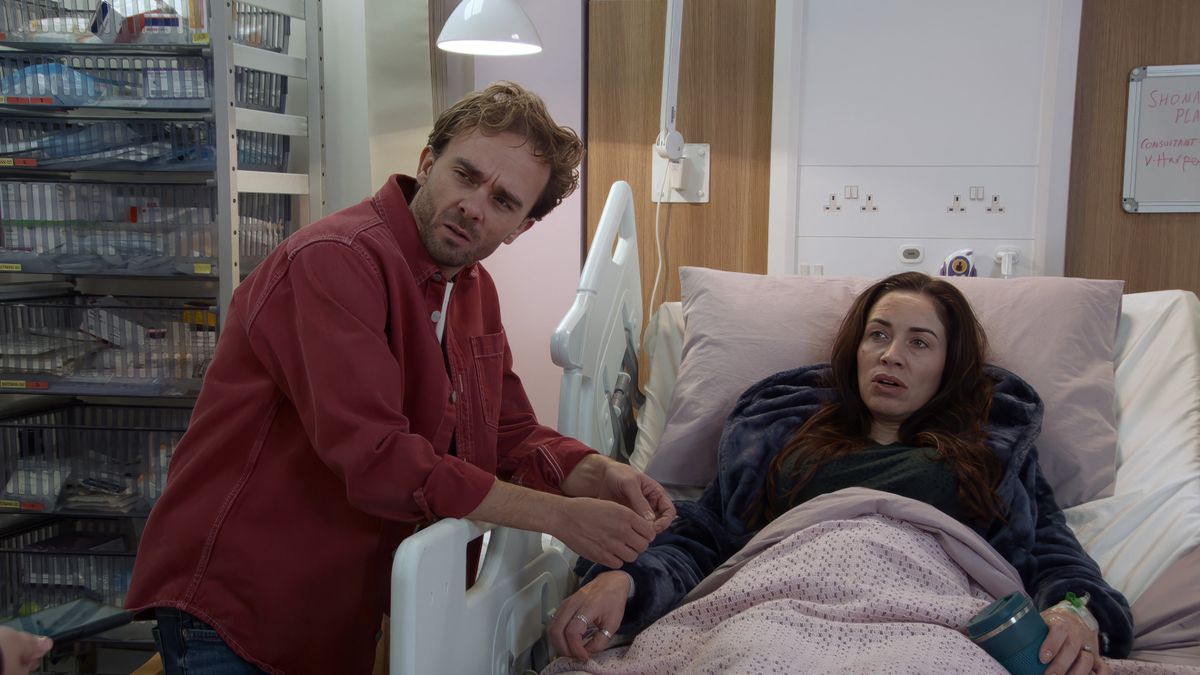
Joining the ITV soap at the tender age of 12, Jack has portrayed David Platt, the cheeky son of Martin Platt (played by Sean Wilson) and Gail (portrayed by Helen Worth), since 2000.

Over the years, David has found himself embroiled in a myriad of dramatic storylines, from nearly causing his mum’s death by pushing her down the stairs to a deeply moving suicide plot.

In recent episodes of Corrie, David was involved in a catastrophic crash during the Emmerdale crossover, culminating in the premature birth of his daughter, who now requires life-saving surgery. Away from the cobbles, Jack enjoys a more tranquil existence with his cherished wife, Hanni Treweek.

The pair tied the knot in a picturesque ceremony in Manchester last summer, surrounded by their nearest and dearest, reports the Daily Star. Their nuptials followed a year after Jack romantically proposed to Hanni during an idyllic safari holiday.

On Wednesday (January 14), Hanni took to Instagram to share a heartfelt tribute to her husband as he celebrated his 38th birthday. Hanni posted a striking black and white photo from their wedding day, showing the couple in their wedding finery, complete with sunglasses.

**For the latest showbiz, TV, movie and streaming news, go to the new **Everything Gossip** website**

She wrote alongside the post: “Happy birthday, baby! ! I love you, today, tomorrow, always @jackshepherd”, as he was quick to reshare the post to his own Instagram account for his 519,000 followers to enjoy.

In a separate Instagram upload, the soap actor appears with Ben Price, who portrays Nick Tilsley in the show, and former Craig Tinker star Colson Smith, as they mark his special day.

In the brief video, the trio is shown standing outdoors in darkness, having just wrapped up recording the latest instalment of their On The Sofa podcast, when they suddenly remembered it was Jack’s birthday.

While Colson and Jack discussed what time it was, Ben swiftly interjected, saying, “Right, I will tell you what time it is. It’s one minute past 12, and we have just finished recording, and it is someone’s birthday.”

Jack playfully responded: “Yeah, 14th of Jan now”, as Colson enthusiastically confirmed: “Yeah”, before Jack humorously mimicked the Auld Lang Syne dance, traditionally performed at New Year.

Content cannot be displayed without consent

The actor’s friends and supporters were quick to flood the comments with birthday messages as he turned 38. One fan penned: “Happy Birthday from a Corrie fanatic from the east coast of Australia.”

Another commented: “Happy birthday Jacky P! Have a good one x”, whilst someone else added: “Happy Birthday Jack, watched this week’s ep on YouTube great to watch absolutely MINT.”

“Happy Birthday Jack. What an absolutely fabulous YouTube ep, looking forward for the next one! I didn’t think On the Sofa could make me laugh more than it already did”, another fan chimed in.

Article continues below

France bans 10 far-right UK activists for targeting migrant boats

France has banned 10 British anti-migrant activists for attempting to stop migrants and asylum seekers from crossing into the United Kingdom on small boats, the French Ministry of Interior has announced.

In a statement on Wednesday, the ministry said it had been alerted to the actions of activists with the so-called “Raise the Colours” group, “searching for and destroying small boats” and engaging in “propaganda activity” on the northern French coast.

Recommended Stories

list of 3 itemsend of list

It issued a ban against 10 Raise the Colours activists on Tuesday, effectively banning them from entering and residing in France, the ministry said.

“Our rule of law is non-negotiable,” French Interior Minister Laurent Nunez wrote on social media. “Violent or hate-inciting actions have no place on our territory.”

The French authorities did not immediately name the 10 people targeted by the ban.

But French authorities have opened an investigation over an alleged “aggravated assault” on migrants in September in a coastal area near the northern city of Dunkirk.

Four men carrying British and English flags verbally and physically assaulted a group of migrants in Grand-Fort-Philippe on the night of September 9 to 10, telling them they were not welcome in England, a charity working with migrants told the AFP news agency.

In a statement shared on X, Raise the Colours said it had not received any “formal notification” from the French authorities regarding a ban.

“Raise the Colours has always maintained that its activities must remain peaceful and within the law. The organisation does not support violence or any unlawful activity,” the statement said.

Far-right activists in the UK have seized on years of migrant and asylum seeker crossings from France – via the English Channel – to advance a hardline, anti-immigration agenda.

Last year, far-right groups rallied in cities and towns across the UK, demanding that Prime Minister Keir Starmer’s government stop housing asylum seekers at hotels.

In July, data showed more than 25,000 people had crossed the English Channel into the UK by that point of the year – the fastest pace of arrivals since record-keeping began in 2018.

Why Somalia drew a line with the UAE

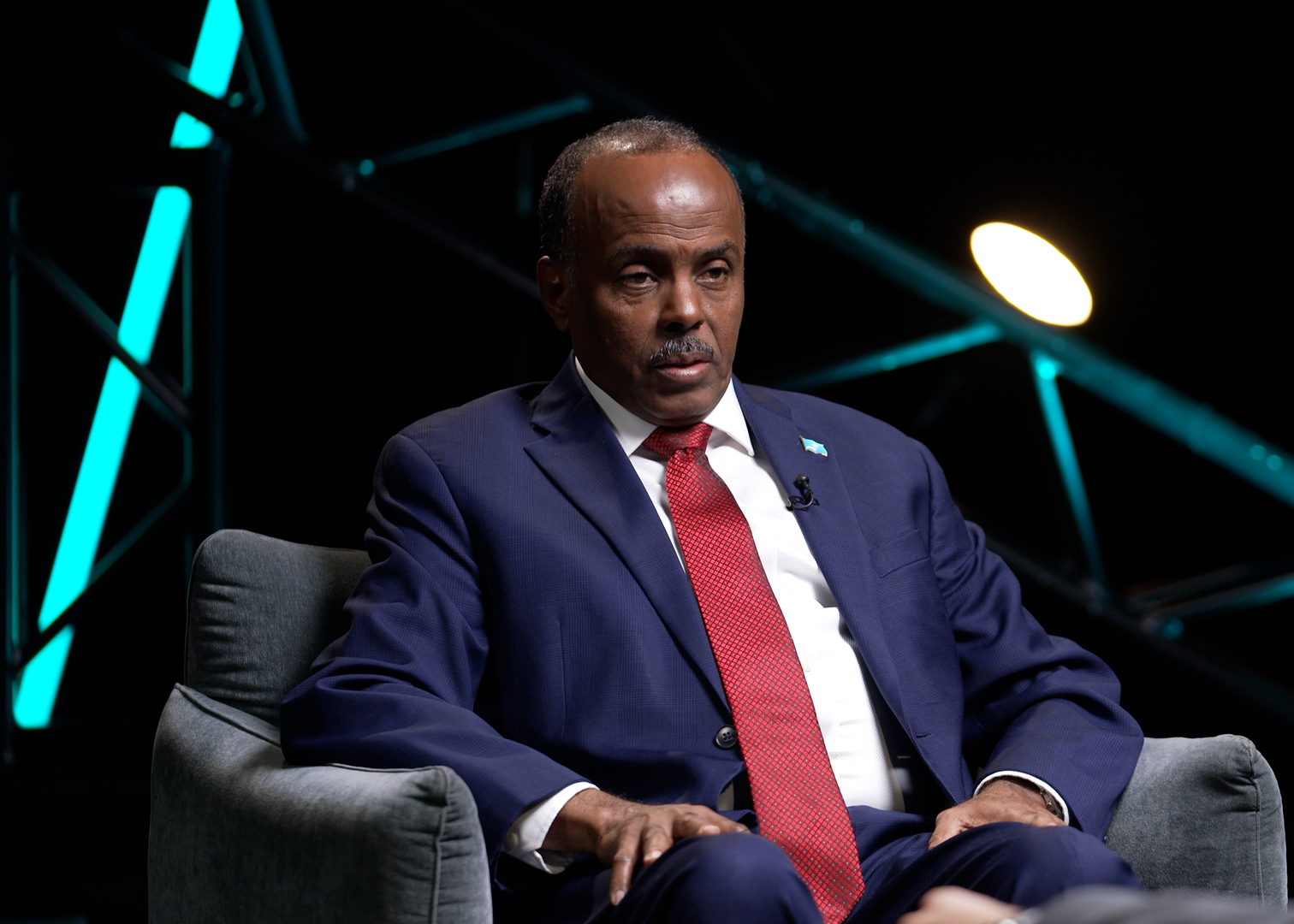
By any objective measure, the decision taken by Somalia’s Cabinet on January 12 to annul all agreements with the United Arab Emirates was neither abrupt nor reckless. It came after prolonged restraint, repeated diplomatic engagement, and a sober assessment of what any responsible government is ultimately obliged to defend: its sovereignty, constitutional order, and national unity.

For years, Somalia pursued cooperation with external partners in good faith, guided by the expectation that engagement would be based on mutual respect, positive collaboration and the pursuit of a win-win prosperous future. The Somali government’s patience was not infinite nor unconditional. When international cooperation begins to bypass constitutional institutions, fragment national authority, and distort internal political balances, it ceases to be partnership and becomes illegal interference.

At its core, sovereignty is not an empty slogan; it is a system. It means that political, security, and economic relations with foreign states must flow through a country’s recognised national institutions. When parallel arrangements emerge, direct dealings with sub-national entities, security cooperation outside federal oversight, or agreements concluded without national consent, the integrity of the state is gradually eroded. Somalia experienced precisely this pattern over an extended period with the UAE engagement in the country. Therefore, our national decision on the UAE agreements was not a rejection of positive bilateral engagement, nor an abandonment of diplomacy: It was an affirmation of boundaries in line with international law.

Some critics of the Somali government’s decision to annul all UAE agreements have framed the decision as “drastic,” arguing that Somalia should have absorbed these practices for the sake of short-term stability or economic convenience. That argument misunderstands both Somalia’s recent history and the foundations of durable statehood. Fragile states do not become stable by tolerating fragmented authority driven by external interests. They become stable by consolidating institutions, clarifying chains of command, and ensuring that foreign engagement strengthens rather than substitutes the state. The nullification of UAE agreements concluded with sub-national administrations, and the suspension of bilateral security arrangements, must be understood in this context.

Under international law, and through all established diplomatic rules, sovereign nations must engage through their relevant national institutions. National institutions are solely responsible for the engagement with sub-national level institutions and actors. Accordingly, absolutely no independent country can accept security structures that operate outside its constitutional framework or port arrangements that dilute national control over strategic assets and undermine intergovernmental fiscal federalism.

What Somalia has done is draw a clear, lawful line. It has said that engagement is welcome but only on transparent, state-to-state terms, consistent with constitutional authority and international law. It has affirmed that dialogue remains possible but that principles are not negotiable.

Given Somalia’s strategic location, concerns about economic disruption resulting from the annulment of the UAE agreements are understandable. However, our government has put in place mechanisms to ensure continuity in port operations and security responsibilities, including the use of neutral international operators to continue facilitating global trade where necessary. Fundamentally, Somalia recognises that sustainable economic development and growth depend on the right enabling environment, political coherence and legal clarity, which investors are seeking across the world. Only a strong and unified state can provide this, not a fragmented one, divided within by destructive external interests.

Somalia’s decision to annul the UAE agreements reflects a broader regional reality. Somalia sits at a strategic crossroads linking the Red Sea, the Gulf of Aden, and the wider Horn of Africa. Any use of Somali territory, ports, or political space to advance external conflicts or agendas carries risks not only for Somalia, but for regional trade and stability as a whole. Therefore, a strong and united Somalia, reinforcing its national sovereignty, is a regional and global asset.

For too long, Somalia has been spoken about as an object of regional politics rather than as a subject of international law. The Cabinet’s decision on the UAE agreements signals a shift away from that narrative. It asserts that Somalia will engage the world as a sovereign equal, not as a fragmented space open to parallel influence and abuse.

History is often unkind to states that delay difficult decisions in the name of convenience. Somalia chose clarity instead. That choice deserves to be understood not as confrontation, but as an overdue act of constitutional self-respect.

Iran, Gaza and the politics of counting the dead

There is a crisis of belief in Western media, one that has little to do with evidence and everything to do with whose deaths align with the interests of empire.

For two and a half years, Western media has scrutinised every dead Palestinian, and the ways in which their bodies were maimed, broken and burned in Gaza. Were they real people? If they were, were they truly dead? If dead, were they actually killed by Israel’s bombs, bullets, torture and siege? If they were killed, how could anyone know they were not combatants, and thus actually “deserved it”?

The destruction reported by Palestinians on the ground, by those watching their loved ones fall one by one, was not believed. Even the death toll periodically released by the Gaza Health Ministry, widely acknowledged to be a massive undercount, was repeatedly questioned.

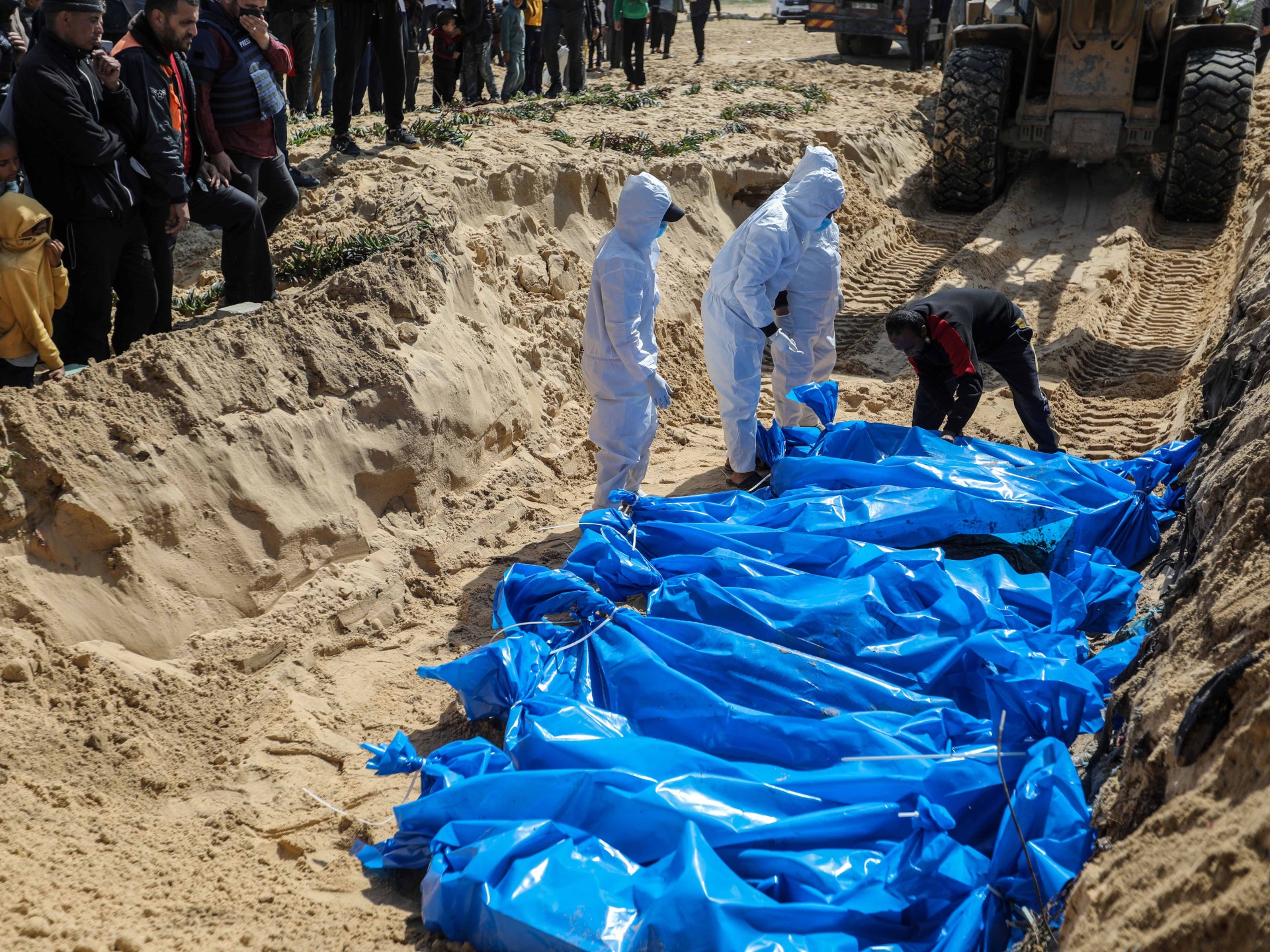
As of late 2025, the Gaza Health Ministry reports that at least 70,117 Palestinians have been killed in Gaza since the conflict began, with a large majority of those victims civilians. The United Nations and countless independent researchers agree that the official toll is an undercount. In the first nine months of the war alone, the number of deaths from traumatic injury was estimated at around 64,000, approximately 40 percent higher than the ministry’s figure, and that does not account for deaths caused by lack of healthcare, starvation or failures in water and sanitation. All demographic modelling suggests that overall mortality is significantly higher once indirect deaths are included. A July 2024 study published in The Lancet put the figure at more than 186,000. There is no doubt that hundreds of thousands more have lost their lives to bombs, bullets, avoidable illnesses and hunger since.

The Health Ministry documents deaths through hospital morgues, recording names and ID numbers, counting only the bodies it is able to identify because, as we all know, many bodies in Gaza, blown to pieces, crushed under rubble or flattened by tanks, can never be identified. Further, with every hospital in the Gaza Strip bombed or rendered inoperable, there were periods when morgues were unable to count even bodies that were identifiable.

Yet Western media, to this day, refuses to report the true scale of the carnage, and even the undercount it does publish is wrapped in caveats. It is “disputed by Israel”, “cannot be confirmed”, or merely “claimed” by the “Hamas-run health ministry”, never treated as an established fact.

Now, as the genocide in Gaza continues, albeit at a slower pace under the guise of a so-called “ceasefire”, another story of conflict, loss and death has emerged in the same region. In Iran, people are taking to the streets to resist the regime, and are being killed as they do so.

The way this tragedy is handled by the very same media outlets that spent years questioning the scale of devastation in Gaza is markedly different.

Striking death tolls emerging from Iran, in many cases based on estimates by diaspora organisations such as the Human Rights Activists News Agency (HRANA), which have no ground access and no direct communication lines into the country, are being accepted as fact almost instantly.

CBS reported on Tuesday that “two sources, including one inside Iran”, told its journalists that “at least 12,000, and possibly as many as 20,000 people have been killed”. The report acknowledged that foreign journalists are not allowed into Iran and underlined the ongoing communications shutdown, yet still treated the toll claimed by an anonymous source as credible. It ran with the headline: “Over 12,000 feared dead after Iran protests, as video shows bodies lined up at morgue.”

Videos of piled-up bodies, footage of children burning alive in their tents, and photographs of mass graves, however, were never accepted as proof of a staggering death toll in Gaza.

This is just one example.

Since the beginning of the Iran protests, Western media appears to have suddenly developed a new understanding of what counts as credible, accurate and acceptable reporting of death tolls in a crisis that it cannot directly access.

Deaths in Gaza, despite being recorded and tallied as meticulously as possible amid an ongoing genocide, were relentlessly questioned and routinely presented as unreliable by the very same journalists now ready and eager to accept figures produced by the Iranian opposition, or more precisely, by Washington-based Iranian diaspora networks.

Why?

It seems Western media applies a far lower threshold for credibility when it comes to Iranian deaths, because reporting on them, unlike reporting on Palestinians shot, crushed, starved and tortured to death by Israel, serves the interests of empire.

Thousands of Iranians killed while protesting their government offer Washington an opportunity to manufacture consent for bombing or toppling that regime, this time in the name of “human rights” and “democracy”.

This is not to say that Iranians resisting the regime are not dying. It is not to say they should not be believed, or that their deaths should be ignored because they are difficult to count or because the regime restricts information.

Their struggle matters. Their deaths matter. Every innocent death matters.

But as we listen to Iranians resisting the regime, we must not ignore the hypocrisy of media outlets that amplify their story while simultaneously transforming their struggle into a convenient pretext for imperial intervention.

These same outlets refused to believe us for years as we Palestinians documented our American-enabled slaughter. They did not believe us when we said Israel was hunting us as we queued for aid. They did not believe us when we said our babies were freezing to death or starving as Israel blocked timber, tents and even baby formula from entering the Strip.

They never believed our dead were really dead. They did not believe us when the Gaza Health Ministry published over 1,500 pages of names, the first few hundred listing only children under 16, nor when the United Nations said these figures, while still an underestimate, were the most credible available. Our corpses required endless verification.

This is because Palestinian deaths at the hands of Washington’s cherished “democratic” and “civilised” ally Israel expose the cruelty, impunity and violence of United States power. Our bodies pile up as evidence of an international order that decides which lives are expendable. The deaths of Iranians at the hands of a US-opposed government, by contrast, offer Washington a chance to present itself as the benevolent saviour, ready to “help” and deliver “democracy” once again.

So selective belief is perfected by the empire’s media. Reports of mass Iranian deaths, even when based on estimates by anonymous sources thousands of miles away, receive instant credibility.

This is not a failure of journalism alone, but a failure of moral consistency. Death is not measured by evidence, but by political utility. Some corpses demand action, others demand silence. Until Western media confronts the role it plays in deciding which deaths are worthy of belief and which are not, it will remain complicit in the violence it claims only to observe.