Iran war: What is happening on day seven of US-Israel attacks?

The war between the United States, Israel and Iran has entered its seventh day, with attacks continuing across Iran and other countries in the Middle East.

Iran continues its missile and drone attacks across the Gulf as Washington and Tel Aviv claim their campaign – codenamed Operation Epic Fury – is crippling Iran’s military.

Estimates released by the Center for Strategic and International Studies (CSIS) on Thursday put the cost of the first 100 hours of Operation Epic Fury at $3.7bn, or about $891m per day. Most of this cost – $3.5bn – has not been budgeted for, CSIS reported.

Here is what has happened in the past day:

In Iran

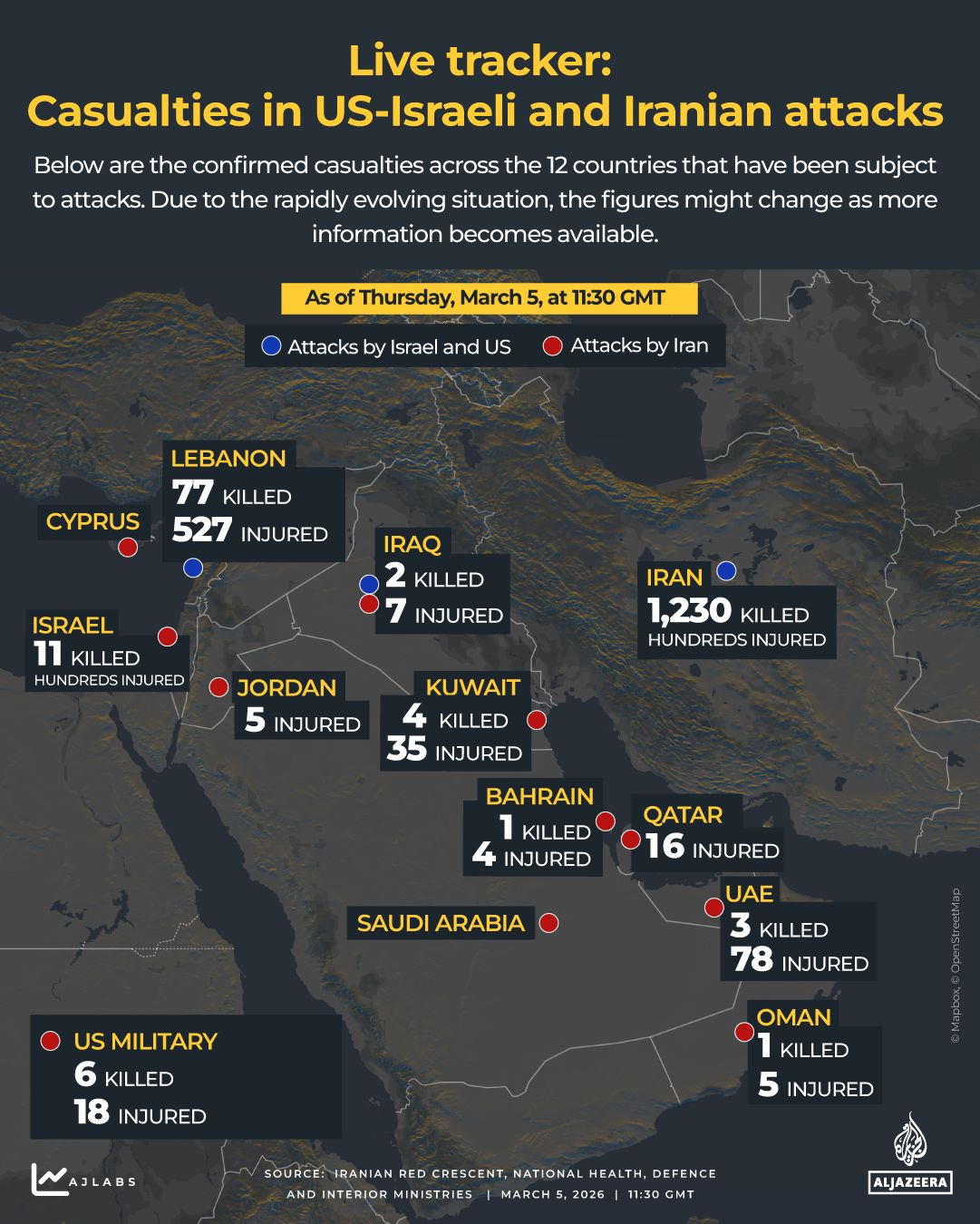
  • Ongoing US and Israeli military campaign: The US and Israel are continuing their military strikes on Iran, marking the seventh day of the conflict. More than 1,230 people have been killed in Iran since the attacks started on Saturday.
  • The Israeli military claims to have achieved “near-complete air superiority”, stating it has carried out 2,500 strikes and destroyed 80 percent of Iran’s air defence systems.
  • Leadership succession and US interference: Following the killing of Supreme Leader Ayatollah Ali Khamenei in a US-Israeli strike on Tehran on Saturday, the question over his succession remains, with reports circling that his son, Mojtaba Khamenei, could take over.
  • However, on Thursday, US President Donald Trump said he intends to play a direct role in selecting Iran’s next leader, explicitly calling Mojtaba an “unacceptable” choice.
  • Invasion warnings: Ali Larijani, Secretary of Iran’s Supreme National Security Council, warned that Iranian forces are “waiting” for a potential US ground invasion and threatened to kill and capture thousands of US troops.
  • Negotiations rejected: Iran’s Foreign Minister Abbas Araghchi stated there is “no reason why we should negotiate with the US”, asserting that Washington cannot be trusted.
  • Iran strikes:The US says Iran’s ballistic missile attacks have fallen by 90 percent since the first day of the conflict, while drone attacks have dropped by 83 percent over the same period.

In Gulf nations

  • Kuwait: The US suspended operations at its embassy in Kuwait City following retaliatory Iranian strikes, as Kuwait’s air defence systems intercepted missiles and drones.
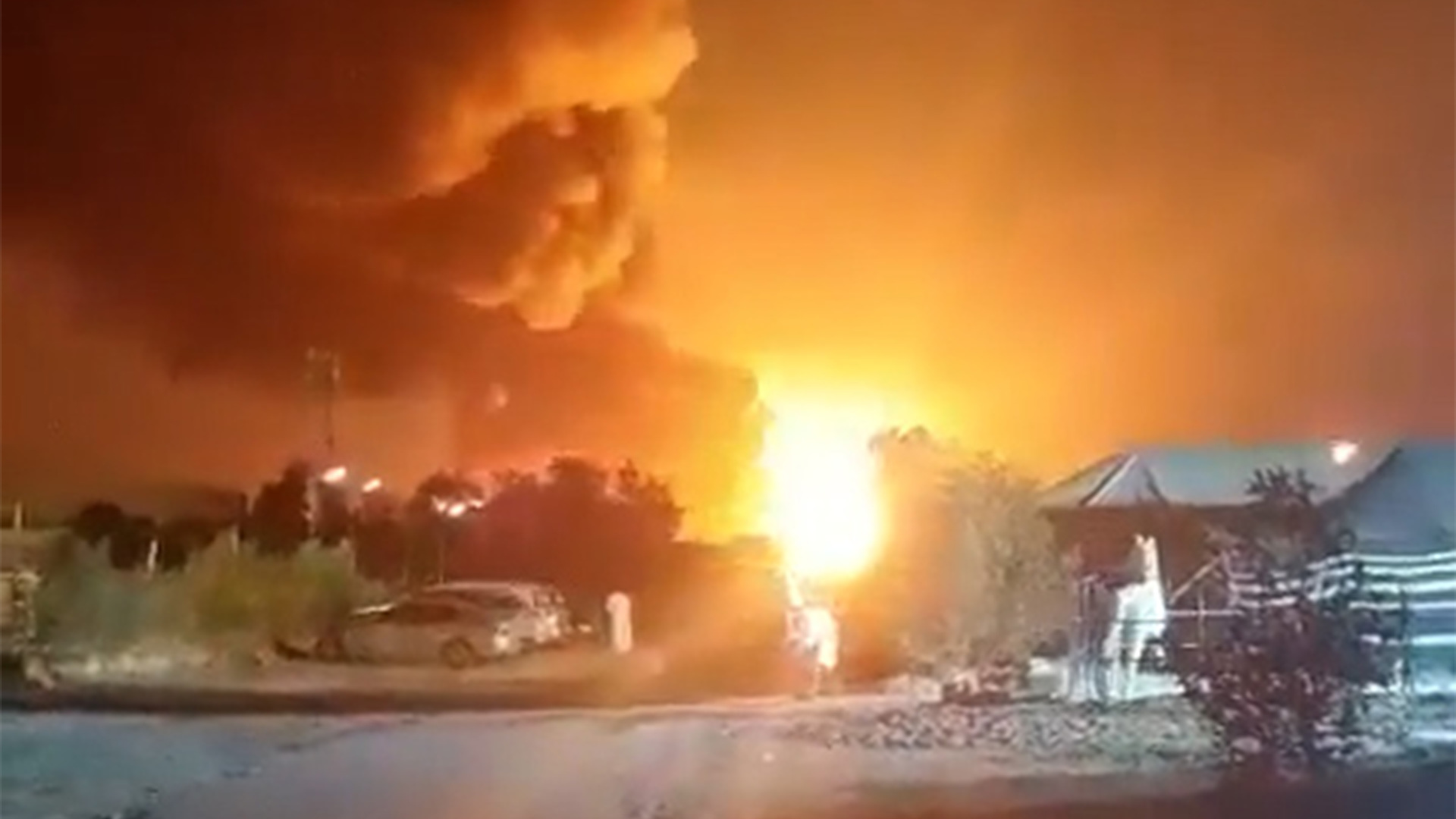
  • Bahrain: An Iranian missile hit a state-run oil refinery in a Bahraini industrial town, but the resulting fire was contained.
  • UAE and Qatar: The UAE said its air defences intercepted multiple Iranian missiles and more than 120 drones. Qatar also reported being targeted by a barrage of Iranian missiles and drones on Thursday after loud explosions were heard in the capital, Doha.
  • About 20,000 Americans have left the Middle East: The State Department reported that thousands have already left the region, primarily unassisted, but the government is arranging charter flights for private citizens still looking to evacuate.
  • Evacuation disruption: A French evacuation flight charted by the government to rescue citizens stranded in the United Arab Emirates was forced to turn back mid-flight due to missile fire in the region.

In Israel

  • Tel Aviv targeted: Iran’s Revolutionary Guard announced it had launched a combined drone and missile attack on Tel Aviv and central areas of Israel.
  • Domestic closures and West Bank violence: Amid the security threats, Israel’s Civil Administration has closed all holy sites in Jerusalem’s Old City and cancelled Friday prayers.

In the US

  • Military strikes: US Central Command reported striking approximately 200 targets in Iran over the past 72 hours, including ballistic missile launchers and naval vessels.
  • Trump’s claims: Trump said Iran is being “demolished”, “ahead of schedule and at levels people have never seen before”, claiming the country now has “no air force, no air defence”. The air force is “gone”, he said.
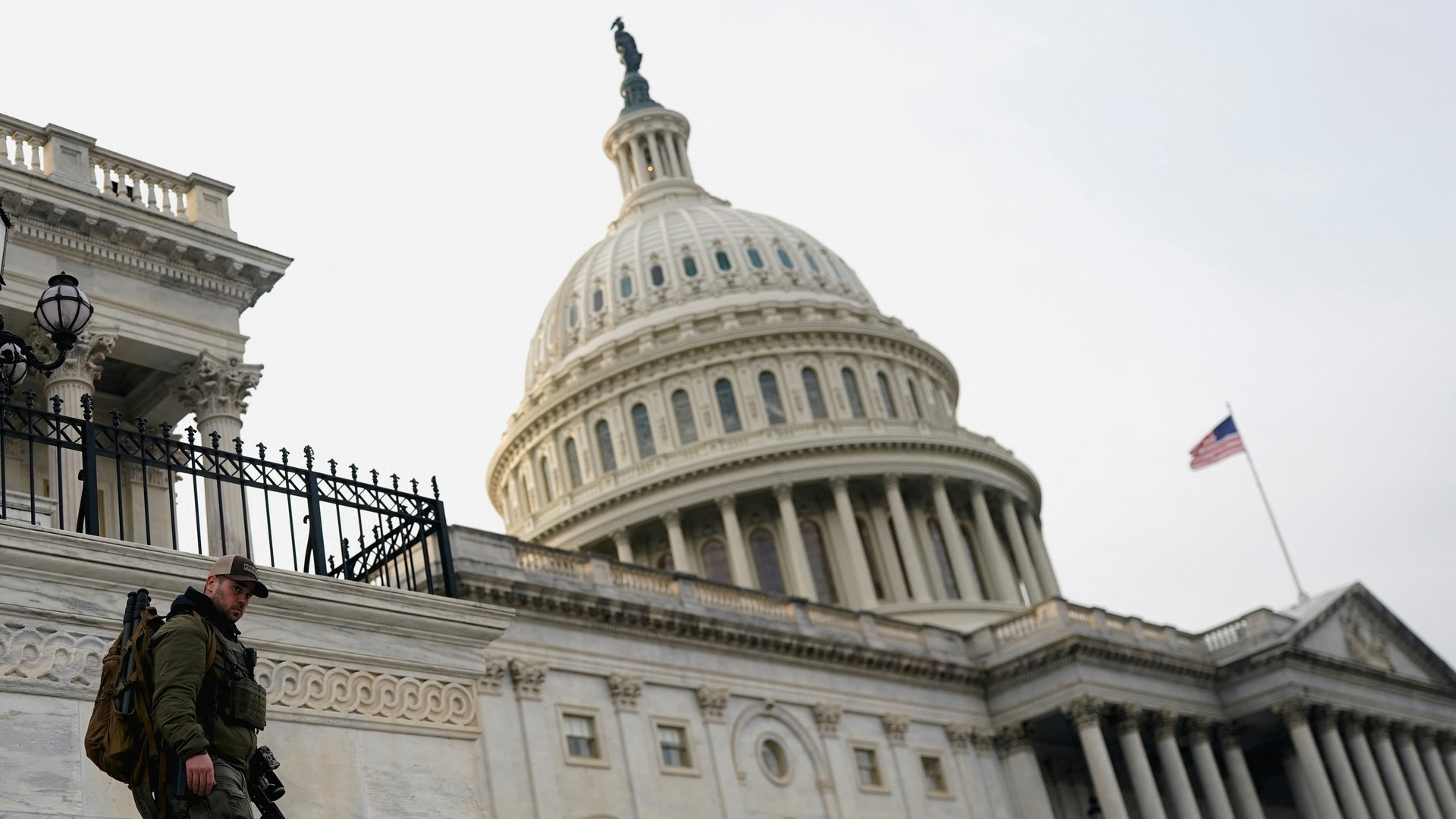
  • Congressional backing: The Republican-led US House of Representatives voted 219 to 212 against an effort to halt the war and require congressional authorisation for hostilities against Iran.
  • Instability denied: US Defense Secretary Pete Hegseth pushed back against criticism, denying that the US and Israel have caused regional instability.
  • Economic impact: The ongoing war has rattled US financial markets. Earlier in the week, the Dow Jones plummeted by more than 1,000 points (2.2 percent) as oil prices climbed due to the war.

In Iraq, Lebanon, Egypt

  • Iraq military base: Iraqi forces shot down a drone targeting a military base with US assets near Baghdad International Airport. The drone approached Victoria airbase overnight on Wednesday but was intercepted before reaching its target, according to reports.
  • Iran attacks Kurdish groups: Iranian state television, Press TV, reported early on Thursday that Tehran was striking “anti-Iran separatist forces”, referring to Iranian and Iraqi Kurdish groups believed to be based in mountainous, hard-to-reach areas near the Iran-Iraq border. It is understood that US President Donald Trump has been in talks with some of these groups with a view to their joining attacks against Iran.
  • Escalating offensive in Lebanon: Israel is heavily bombarding Lebanon and has issued evacuation warnings for Beirut’s southern suburbs and parts of the Bekaa Valley.
  • Egypt’s economic warning: Egypt’s President Abdel Fattah el-Sisi has warned that the country is economically in a “state of near-emergency,” as the ongoing Middle East war threatens to drive up prices.

In Europe

  • Europe under pressure: European governments are divided over how to respond to the escalating conflict in the Middle East, with some deploying defensive military assets while others emphasise diplomacy.
  • The United Kingdom and France have moved naval and air-defence resources to the eastern Mediterranean to help protect allied interests. A drone attack hit the British Royal Air Force base at Akrotiri on the Mediterranean island of Cyprus on Monday. Other European countries, including Germany, Ireland, Belgium and the Netherlands, have so far focused on diplomatic responses and have not announced direct combat deployments.
  • Azerbaijan: The country halted cross-border truck traffic with Iran and is preparing “retaliatory measures” after an Iranian drone attack injured four civilians in its Nakhchivan exclave.
US House joins Senate to vote down war powers resolution

NewsFeed

The US House of Representatives has joined the Senate in killing a war powers resolution that would have forced Donald Trump to end his war on Iran. Although the vote was largely symbolic, Al Jazeera’s Patty Culhane says Democrats are using it to get Republicans on the record.

Leclerc leads Ferrari one-two in Melbourne practice

Andrew Benson

F1 Correspondent in Melbourne
  • 11 Comments

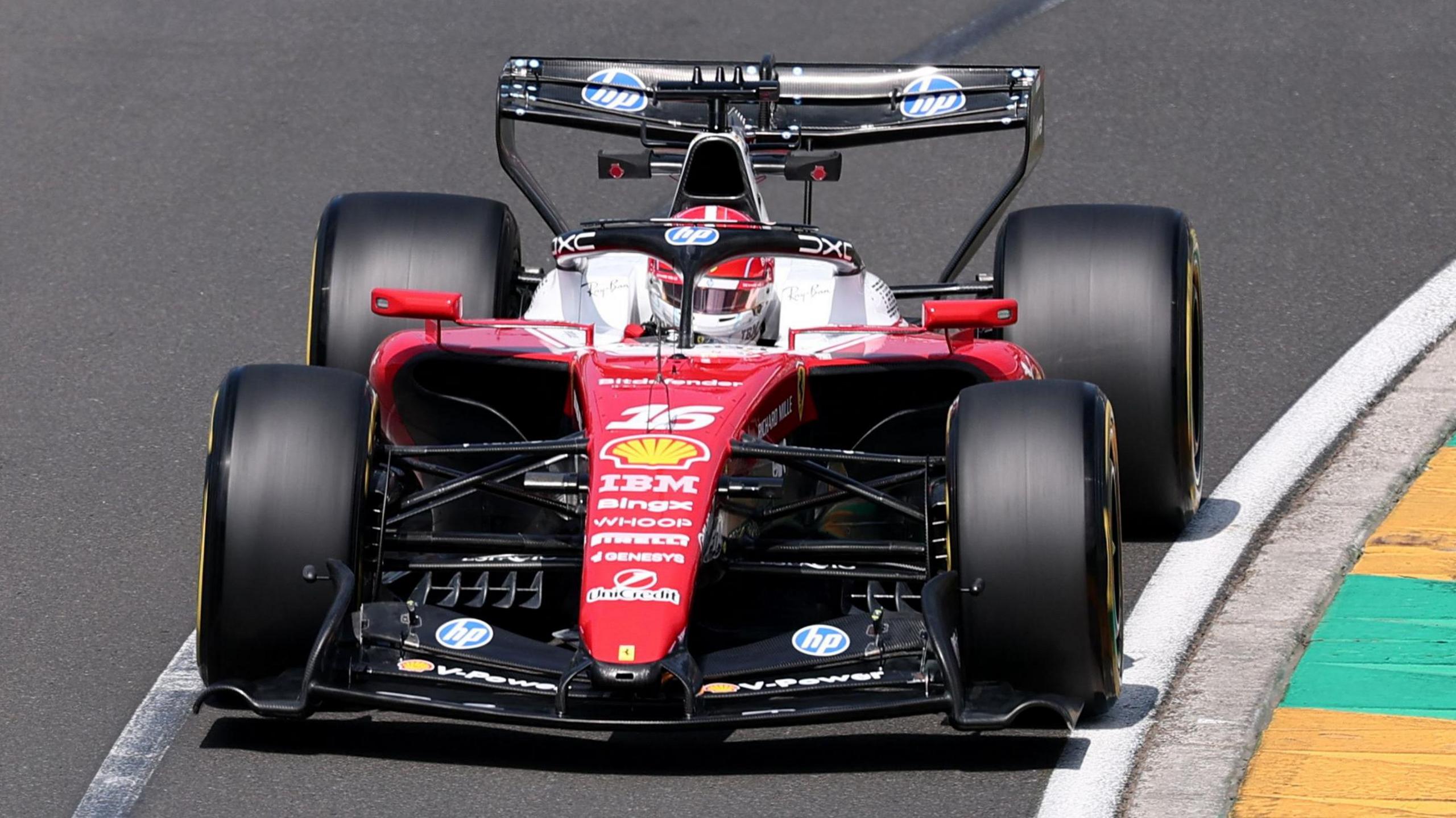
Ferrari’s Charles Leclerc and Lewis Hamilton struck the first blow of the new Formula 1 era with first and second fastest times in opening practice at the Australian Grand Prix.

Leclerc replaced Hamilton in top spot with a late lap that moved him 0.469 seconds clear of the seven-time champion.

Until then, less than 0.1secs had separated Hamilton, Leclerc and Red Bull’s Max Verstappen.

Verstappen’s new team-mate Isack Hadjar was fourth fastest, 0.820secs off the pace, ahead of 18-year-old Briton Arvid Lindblad, making his debut for the Racing Bulls team.

Aston Martin, whose dire form has been in many ways the story of the new season so far, had a predictably difficult session.

Fernando Alonso was not able to run at all because of a problem with his Honda power-unit. Team-mate Lance Stroll managed just three laps before an engine problem was also discovered on his car.

Team principal Adrian Newey had stunned F1 on Thursday when he said that the vibrations from the Honda engine were so bad that Alonso felt unable to do more than 25 laps without risking permanent nerve damage in his hands.

    • 1 day ago
    • 14 hours ago

Mercedes had come to Melbourne tipped as the favourites after pre-season testing but they had a low-key session and George Russell ended the session seventh fastest, 1.104secs off the pace and behind McLaren’s Oscar Piastri.

As always, the caveat of practice is that it is impossible to know the specifications in which the cars run and fuel loads and engine modes can have a significant effect on performance.

McLaren had a difficult session afflicted by gearbox problems and world champion Lando Norris was down in 18th place.

Mercedes’ Kimi Antonelli was eighth fastest, ahead of the Audi of Gabriel Bortoleto, whose team-mate Nico Hulkenberg took the final spot in the top 10.

Haas driver Esteban Ocon was 11th, split from British team-mate Oliver Bearman by Williams’ Carlos Sainz and the second Racing Bull of Liam Lawson.

Australian Grand Prix

Listen on Sounds

Related topics

  • Formula 1

More on this story

    • 1 day ago
    Fans cheer in the fanzone and hold up signs for Australian driver Oscar Piastri
    • 3 days ago
    Gabriel Bortoleto drives the Audi on track in Bahrain
    • 25 February
    Arvid Lindblad
    • 1 day ago
    Christina Sullivan
    • 6 days ago
    Valtteri Bottas in a Cadillac ahead of Gabriel Bortoleto in an Audi during F1 pre-season testing in Bahrain
    • 2 days ago
    Oscar Piastri of Australia driving the (81) McLaren MCL40 Mercedes on track during day one of F1 Testing at Bahrain
    • 1 day ago
    A split image of Valtteri Bottas, Lando Norris and Arvid Lindblad

Video shows projectile exploding near Ali al-Salem Air Base in Kuwait

NewsFeed

Videos showed a projectile striking near Kuwait’s Ali al-Salem Air Base, which has hosted a substantial number of US forces. Earlier on Thursday, the United States announced it was closing its embassy in the country and is reportedly evacuating its staff.

How US sinking of Iranian warship blew hole in Modi’s ‘guardian’ claims

New Delhi, India — Dressed in a blue Navy uniform and sleek sunglasses, Indian Prime Minister Narendra Modi, in late October, addressed a gathering of the country’s sea warriors.

He listed out the strategic significance of the Indian Ocean — the massive volumes of trade and oil that pass through it. “The Indian Navy is the guardian of the Indian Ocean,” he then said, to loud, proud chants of “Long Live Mother India” from his audience.

Less than five months later, India has been shown up as a “guardian”, unable to protect its own guest.

On Wednesday, the Iranian warship, IRIS Dena, was torpedoed by a US submarine just 44 nautical miles off (81km) southern Sri Lanka, as it was returning home from naval drills hosted by India. During the “Milan” biennial multilateral naval exercise, Indian President Droupadi Murmu had posed with sailors from the Dena.

Yet it took the Indian Navy more than a day after the Iranian warship was struck to respond formally to the attack, which US officials made clear was a sign of how the Donald Trump administration was willing and ready to expand its war against Iran.

“An American submarine sank an Iranian warship that thought it was safe in international waters,” US Defense Secretary Pete Hegseth said at the Pentagon on Wednesday. “Instead, it was sunk by a torpedo. Quiet death.”

Tehran is furious over the attack on its warship hundreds of miles away from home. And Iran made sure to note that the IRIS Dena warship was  “a guest of India’s navy”, returning after completing the exercise it joined upon New Delhi’s invitation.

“The US has perpetrated an atrocity at sea, 2,000 miles [3,218km] away from Iran’s shores,” Iran’s foreign minister Abbas Araghchi said, referring to the sinking of the frigate. “Mark my words: The US will come to bitterly regret [the] precedent it has set.”

Now, the IRIS Dena is at the bottom of the Indian Ocean, and more than 80 Iranian sailors, who marched during joint parades and posed for selfies with Indian naval officers during their two-week visit, are dead.

What has also fallen, said retired Indian naval officers and analysts, is India’s self-image as a net security provider in the Indian Ocean. Instead, they said, the US attack on the Dena has exposed the limits of India’s power and influence in its own maritime back yard.

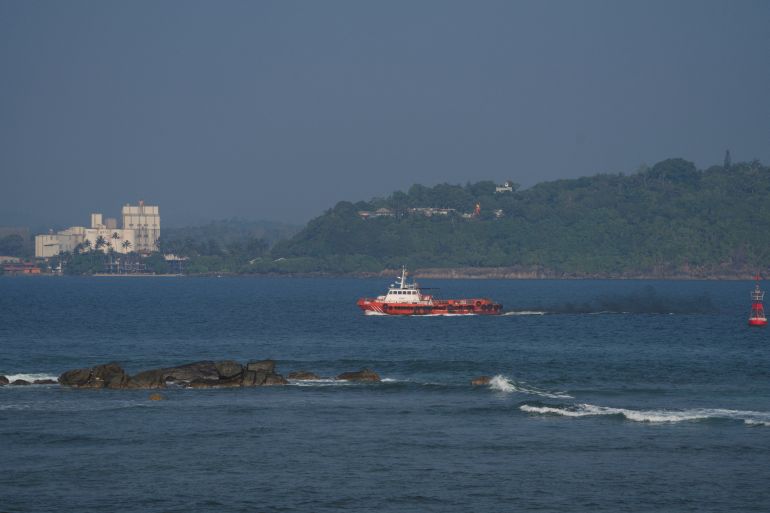
A vessel sails off the Galle coast after a submarine attack on the Iranian military ship, Iris Dena, off Sri Lanka, in Galle, Sri Lanka, March 4, 2026. REUTERS/Thilina Kaluthotage
A vessel sails off the Galle coast after a submarine attack on the Iranian military ship, Iris Dena, off Sri Lanka, in Galle, Sri Lanka, March 4, 2026 [Thilina Kaluthotage/Reuters]

‘War reaches India’s backyard’

After participating in the naval exercises, IRIS Dena left Visakhapatnam on India’s eastern coast on February 26. It was hit in international waters, just south of Sri Lanka’s territorial waters, in the early hours of March 4, local time.

In response, Sri Lankan Navy rescuers recovered more than 80 bodies and picked up 32 survivors, reportedly including the commander and some senior officers from the warship. More than 100 men are still missing.

In a tweet welcoming the Dena to the naval drills, the Indian Navy’s Eastern Command had posted: “Her arrival … [reflects] long-standing cultural links between the two nations [Iran and India]”.

Vice Admiral Shekhar Sinha, the former vice chief of India’s naval staff, told Al Jazeera that he attended the Iranian parade at the function.

“I met and really liked them, especially their march for sailors travelling thousands of miles,” Sinha said. “It is always sad to see a ship sinking. But in a war, emotions don’t work. There’s nothing ethical in a war.”

Sinha said that the Indian Ocean — central to the strategic and energy security of the nation with the world’s largest population — was thought to be a fairly safe zone earlier. “But that is not the case, as we are learning now,” he told Al Jazeera.

“The unfolding battle [between the US and Israel on the one hand, and Iran on the other] has reached India’s back yard.
New Delhi has to be concerned,” Sinha, who served in the Indian Navy for four decades, added. “The liberty we enjoyed in the Indian Ocean has apparently shrunk.”

iris dena
Security personnel stand guard as an ambulance enters inside the Galle National Hospital, following a submarine attack on the Iranian military ship, IRIS Dena, off the coast of Sri Lanka, in Galle, Sri Lanka, March 5, 2026 [Thilina Kaluthotage/Reuters]

India’s Catch-22 situation

Only on Thursday evening did the Indian Navy issue any formal statement on the attack — more than 24 hours after the Dena was hit by a torpedo.

The Navy said that it received distress signals from the Iranian ship and had decided on deploying resources to help with rescuing sailors. But by then, it said, the Sri Lankan Navy had already stepped to lead the rescue effort.

Neither New Delhi nor the Navy has criticised — even mildly — the decision by the US to sink the Iranian warship.

Military analysts and former Indian naval officers say India is caught in a classic catch-22: Was India aware of the incoming US attack in the Indian Ocean on an Iranian warship, or was it blindsided by a nuclear-submarine in its backyard?

Admiral Arun Prakash, the former chief of India’s naval staff, told Al Jazeera that if New Delhi was blindsided, “it reflects on the US-India relationship directly.”

“If it is a surprise, then that’s a great concern since we have a so-called strategic partnership with the USA.”

And if India knew about the attacks, it would be seen by many as strategically siding with the US and Israel over their war on Iran.

C Uday Bhaskar, a retired Indian Navy officer and currently the director of the Society for Policy Studies, an independent think tank based in New Delhi, said that the US sinking an Iranian warship in the Indian Ocean muddies the Indian perception of itself as a “net security provider” in the region.

Bhaskar said the incident is a “strategic embarrassment” for India and weakens New Delhi’s credibility in the Indian Ocean, while its moral standing “takes a beating” because of the Indian government’s near-silence.

IRIS Dena
An injured Iranian sailor is moved on a stretcher at Galle National Hospital, where the sailors are receiving treatment, following a submarine attack on the Iranian military ship, IRIS Dena, off the coast of Sri Lanka, in Galle, Sri Lanka, March 5, 2026 [Thilina Kaluthotage/Reuters]

‘India on aggressor’s side’

In the post-colonial world order, India was a leader of the non-alignment movement, the Cold War-era neutrality posture adopted by several developing nations.

India now no longer calls its approach non-alignment, instead referring to it as “strategic autonomy”. But, in reality, it has inched closer to the United States and its allies, most importantly, Israel.

Merely two days before the US and Israel bombed Iran, Modi was in Israel, addressing the Knesset and warmly hugging Prime Minister Benjamin Netanyahu, who called his Indian counterpart a brother.

But Iran, under the late Supreme Leader Khamenei, was a friend of India as well, with New Delhi making strategic, business, and humanitarian investments in the country.

However, Modi has not said a word in condolence after Khamenei’s assassination. On Thursday, Indian Foreign Secretary Vikram Misri visited the Iranian embassy in New Delhi to sign a memorial book. Indian governments normally deploy ministers — not bureaucrats or diplomats — for such sombre occasions.

It is against that backdrop that India’s response to the attack on the Dena has come under scrutiny.

Because the frigate was hit when it was in international waters, India had “no formal responsibility”, said Srinath Raghavan, an Indian military historian and strategic analyst.

“But the US Navy’s actions underline both the spreading geography of this war and the sharp limits of India’s ability to manage, let alone control, its fallout,” Raghavan told Al Jazeera.

Diplomatically, India has “objectively positioned itself on the side of the aggressors in this war,” he said, by “acts of commission — visit to Israel on the eve of war — and of omission, with not even [an] official condolence, let alone condemnation, of the assassination of the Iranian head of state.” Modi visited Israel on February 25-26.

Mallikarjun Kharge, the president of India’s opposition Congress party, said the Modi government had recklessly abdicated “India’s strategic and national interests”. And the government’s silence “demeans India’s core national interests and destroys our foreign policy, carefully and painstakingly built and followed by successive governments over the years.”

In addition, Raghavan highlighted that Modi has only criticised Iran’s retaliation, which threatens to drag the Gulf region to the brink of war.

“It is difficult not to conclude that India has drastically downgraded its interests in the relationship with Iran,” he said.

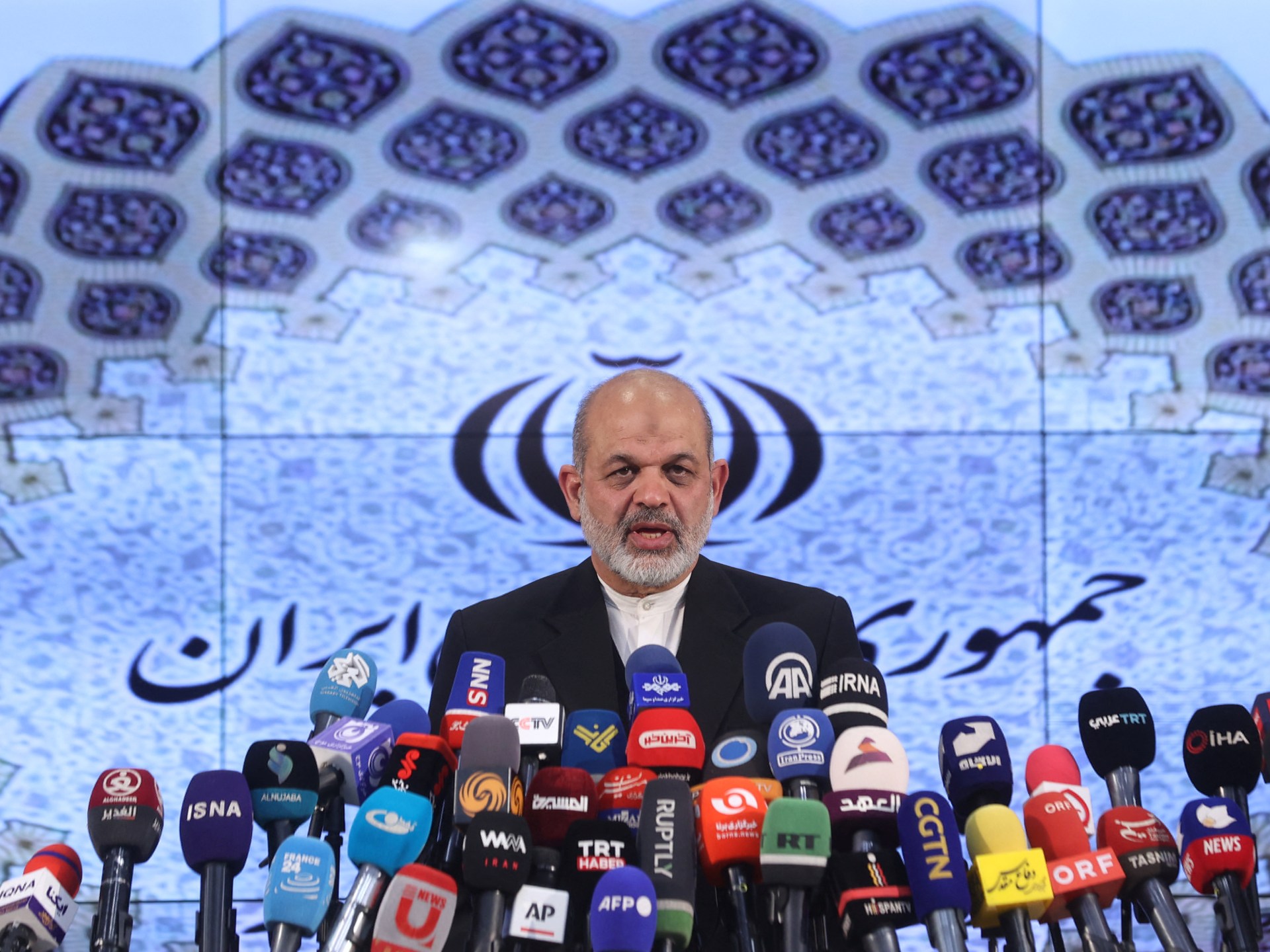
Who is Ahmad Vahidi, the IRGC’s new commander?

Brigadier General Ahmad Vahidi has a job that’s among the most powerful and influential in Iran – and one in which the shadow of death constantly hovers.

Vahidi has taken command of Iran’s Islamic Revolutionary Guard Corps at a particularly challenging moment, amid a joint US-Israeli war on his country that has killed more than 1,000 people, devastated Iranian cities, and assassinated much of the country’s senior military leadership.

Recommended Stories

list of 3 itemsend of list

His is a dangerous job. Qassem Soleimani, the long‑time commander of the IRGC’s elite Quds Force, for example, was killed in a US drone strike in 2020 ordered by US President Donald Trump.

Mohammad Pakpour, the most recent IRGC chief, was also killed during the opening phase of the joint Israeli-US attacks on February 28. Pakpour had been appointed only after Israel killed his predecessor, Hossein Salami, during the 12-day war in June 2025.

This churn at the top of the IRGC underscores the risks attached to one of the most powerful posts in Iran’s military establishment. Now, Vahidi is tasked with a responsibility that even Soleimani, an iconic figure in Iran, never had to embrace: Leading the sword edge of Iran’s military in an actual, full-blown war.

Who is Ahmad Vahidi?

Vahidi’s appointment as the new IRGC chief isn’t surprising. In December, the late Supreme Leader Ali Khamenei – who was killed on the opening day of the war, on February 28 – named him deputy chief. Prior to that, he served as deputy chief of Iran’s army.

A product of the IRGC from its earliest days in the late 1970s, Vahidi rose through the ranks during the 1980s, holding key positions in intelligence and in the military. Iranian state media reports that he led the elite Quds Force from 1988 to 1997.

He would hand the Quds Force’s leadership to Soleimani, who took command in 1998 and was widely credited with expanding Iran’s influence across the Middle East, until he was assassinated in 2020.

Vahidi appears to have publicly sworn himself to upholding the principles and aims of the Islamic Revolution. When he was appointed the deputy chief of the IRGC in December, he said, “Guarding the Islamic Revolution is one of the greatest virtues in the world, and the greatest evil that has been committed is opposing the Islamic system.”

In a 2025 interview with Iran’s Press TV, marking the 46th anniversary of the Islamic Revolution, he described that uprising as a “burst of light” which changed the history and destiny of the region and the world.

He has shown pragmatism when it serves Tehran’s strategic goals.

In the mid‑1980s, Vahidi reportedly took part in covert contacts between Iranian representatives and intermediaries close to the administration of then-President Ronald Reagan that were linked to the broader Iran‑Contra affair, in which US officials secretly facilitated arms deliveries to Iran.

Ali Alfoneh, an Iran expert at the Arab Gulf States Institute, a Washington-based think tank, told Al Jazeera that Vahidi was “intimately familiar” with Israel and the US through his involvement in those talks.

Career in cabinet

Unlike his two predecessors, Vahidi is not solely a military figure.

He has also held senior political roles, serving as defence minister under former President Mahmoud Ahmadinejad. He was appointed interior minister under the late President Ebrahim Raisi, leaving office in 2024.

Alfoneh told Al Jazeera that Vahidi is a “capable bureaucrat”, whose background makes him a “key wartime leader and an ideal chief commander of the Revolutionary Guard, which is far more than simply a military organisation.”

However, his time in the IRGC and in political office has drawn allegations which have followed him.

In the late 2000s, Interpol issued a red notice for him at the request of Argentine authorities over his alleged role in the 1994 bombing of the AMIA Jewish community centre in Buenos Aires, which killed 85 people.

Iran denied involvement in the attack, and its Ministry of Foreign Affairs dismissed the Interpol notice as “baseless”.

The US and the European Union sanctioned him over Iran’s deadly crackdown on nationwide protests following the killing of Mahsa Amini in 2022. Amini died in police custody after she was arrested for not fully covering her hair. 

Mohammad Ali Shabani, the editor-in-chief of the Middle East news outlet Amwaj, said in a post on X that Pakpour and Salami, Vahidi’s predecessors, were “schoolteachers compared to this guy”.

“The man is brutal. Hardliners wasting no time filling vacancies thanks to Israel,” Shabani added.

What impact is he likely to have on the IRGC?

When the late Supreme Leader Ali Khamenei appointed Vahidi as the deputy of the IRGC in December, one of his primary tasks was to ready the Iranian armed forces for another possible attack from the US and Israel.

His extensive experience across Iran’s government and security institutions gives him broad influence within the state, say analysts, an advantage that is especially significant now, after the deaths of many of Iran’s senior leaders and veteran military figures.

That challenge was underscored by comments from Foreign Minister Abbas Araghchi, who suggested in an interview with Al Jazeera that some Iranian military units have become “independent and somewhat isolated”, operating on general instructions rather than being tightly controlled by the civilian government.

Alfoneh told Al Jazeera that the former IRGC chief, Major General Mohammad-Ali Jafari, intentionally decentralised the IRGC to ensure “the organisation could survive decapitation and even the fall of the capital, Tehran”.

“Brigadier General Vahidi is well placed to coordinate the activities of such a decentralised structure with the help of key commanders and IRGC veterans, who together constitute an informal collective leadership within the organisation,” he added.

Nader Hashemi, director of the Alwaleed Center for Muslim-Christian Understanding at Georgetown University and author of Sectarianization: Mapping the New Politics of the Middle East, told Al Jazeera that Iran’s leaders are seeking “the most reliable and dependable candidate” as IRGC chief, someone who can maintain institutional continuity after the assassination of senior leaders and “inspire the rank and file to continue fighting despite overwhelming military odds”.