GB’s Kartal & Fearnley progress at Indian Wells

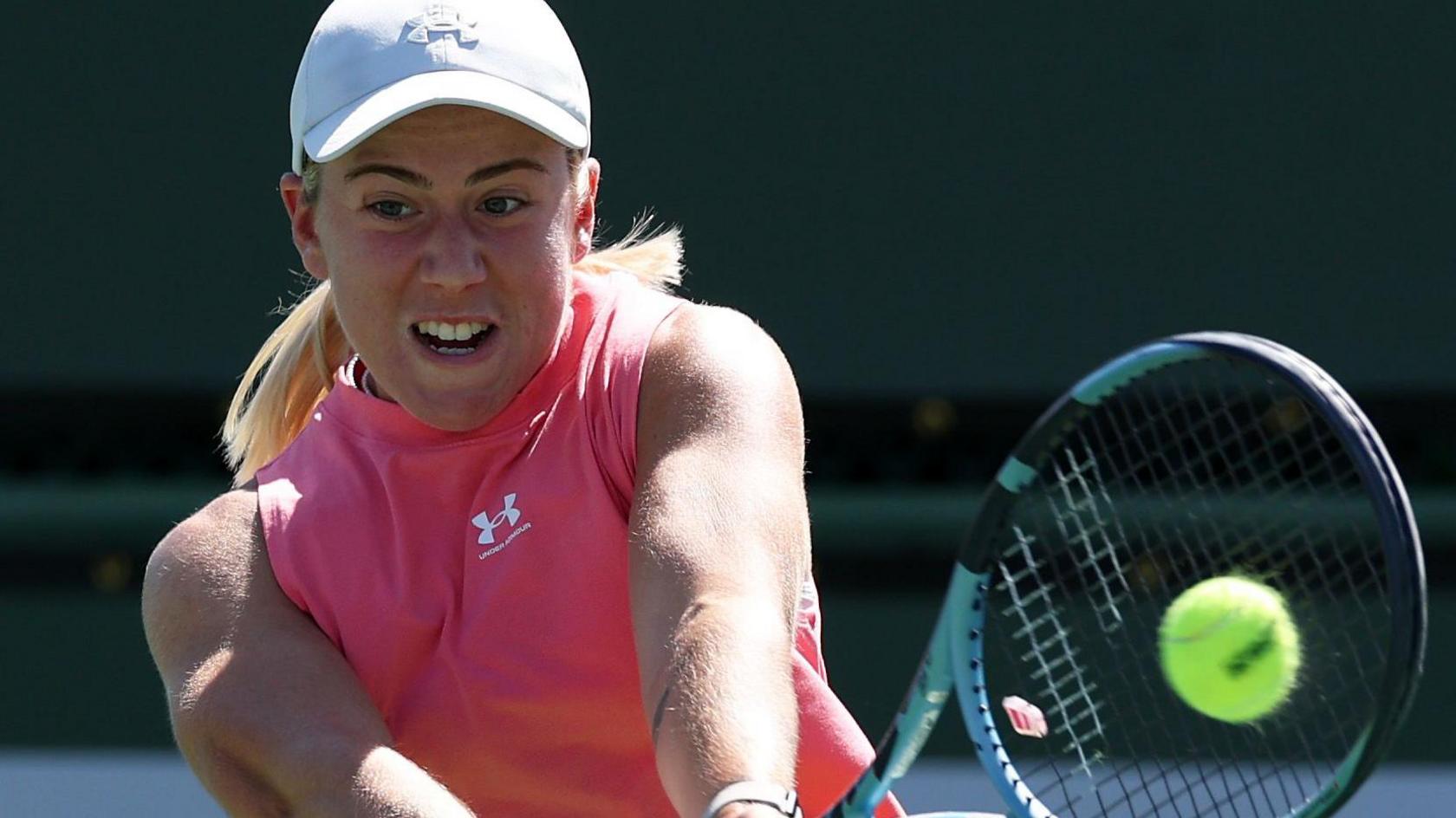
Britons Sonay Kartal and Jacob Fearnley both progressed to the second round at Indian Wells with straight-set wins.

The 24-year-old Kartal defeated Thailand’s Lanlana Tararudee 6-4 6-4 to set up a meeting with American 20th seed Emma Navarro.

But it was far from straightforward for the British number two, who battled back impressively from a 4-2 deficit in both sets to win in one hour and 48 minutes.

Fearnley, the British men’s number three, will face American seventh seed Taylor Fritz next after the 24-year-old defeated Bosnia’s Damir Dzumhur 6-3 6-3.

However, fellow Briton Fran Jones suffered a straight-set loss to American qualifier Kayla Day, who completed a 6-3 6-1 win to set up a meeting with Poland’s world number two Iga Swiatek.

Related topics

  • Tennis

More on this story

  • Some tennis balls
    • 16 August 2025
    BBC Sport microphone and phone

GB’s Kartal and Fearnley progress at Indian Wells

Britons Sonay Kartal and Jacob Fearnley both progressed to the second round at Indian Wells with straight-set wins.

The 24-year-old Kartal defeated Thailand’s Lanlana Tararudee 6-4 6-4 to set up a meeting with American 20th seed Emma Navarro.

But it was far from straightforward for the British number two, who battled back impressively from a 4-2 deficit in both sets to win in one hour and 48 minutes.

Fearnley, the British men’s number three, will face American seventh seed Taylor Fritz next after the 24-year-old defeated Bosnia’s Damir Dzumhur 6-3 6-3.

However, fellow Briton Fran Jones suffered a straight-set loss to American qualifier Kayla Day, who completed a 6-3 6-1 win to set up a meeting with Poland’s world number two Iga Swiatek.

Williams defeated by Parry

There was an eighth consecutive singles loss for seven-time Grand Slam champion and former world number one Venus Williams.

American Williams, 45, has not won since she became the second oldest woman to win a WTA Tour-level singles match by beating Peyton Stearns at the Washington Open last July.

Making her 10th appearance at Indian Wells, and first since 2024, the 554th-ranked Williams was beaten 6-3 6-7 (4-7) 6-1 by French world number 111 Diane Parry, who will play American 15th seed Madison Keys in the second round.

Williams, who has now experienced opening-round exits in her last five tournaments, felt the windy conditions in California played a part in the defeat.

“Today is not the kind of day that you want to assess. The conditions were impossible,” she said.

Related topics

  • Tennis

More on this story

  • Some tennis balls
    • 16 August 2025
    BBC Sport microphone and phone

Disillusionment and disbelief – thousands leave early as Spurs in freefall

To play this video you need to enable JavaScript in your browser.

Joe Rindl

BBC Sport journalist at Tottenham Hotspur Stadium
  • 213 Comments

As thousands of Tottenham fans streamed out of their stadium at half-time on Thursday, no one could have been in any doubt about the threat of relegation.

After taking an early lead against Crystal Palace, three goals for the visitors in 12 first-half minutes – sparked by a penalty conceded and red card for Micky van de Ven – condemned Igor Tudor’s side to another miserable defeat.

Spurs remain the only Premier League side without a victory in 2026. Their 11-match winless league run is the club’s longest since 1935, when they went 15 games without winning.

With nine matches to go, they remain one point above the relegation zone and in real danger of losing their Premier League status for the first time.

The thousands of empty seats were telling. The fans who remained until the end met the final whistle with loud jeers as belief of survival appears to be draining from them.

“Anxiety was all through the stadium,” former Chelsea and England winger Joe Cole said on TNT Sports. “The whole performance was tepid.

“There was no bite and no anger and the fans were feeling that. It feels like they have given up.

“It looks like the fans are disillusioned, disenchanted and not believing it.”

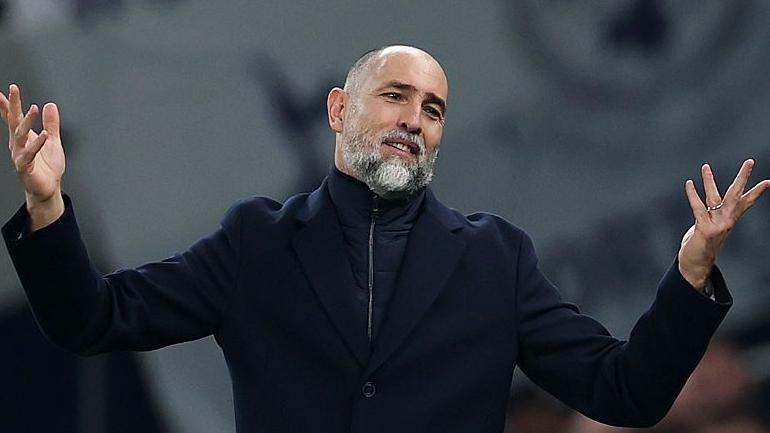
When Tudor was appointed as interim boss last month, he said Tottenham “100%” wouldn’t go down. It would take a brave person to say that now.

“Of course i understand the fans [leaving]. It’s normal, they wanted more,” said the Croat, whose has lost all three of his matches in charge.

“I need to choose the right guys: Who is in the boat and who will leave the boat.”

Tudor refused to be drawn into conversations about his future after full-time, despite questions already being raised about whether he would see out the season.

Spurs fan Chris Cowlin told BBC Radio 5 Live: “I’m lost for words over what I’ve seen tonight. You want fight, desire and most importantly points.

“It is too much for a lot of people and this is the reality that Spurs might get relegated.

“When we moved to this stadium in 2019 it was meant to be a game changer for us, the springboard for success and always competing for top honours. I’ve never known a time like this.

What information do we collect from this quiz?

    • 2 hours ago

‘More likely than not to go down’ – Spurs fans have their say

Tottenham Hotspur Stadium is not a happy place at the moment.

They have not won in the Premier League in 2026 and have only led in league games for 13 minutes since 7 January.

Outside the stadium, Tottenham supporters told BBC Sport the club were “in their worst moment in history” and “were more likely than not to go down”.

One fan blamed Tottenham’s form on the players, saying “there are too many egos” and “the players are still living off that high of the Europa League and sleep-walking to relegation”.

Another added “Nottingham Forest and West Ham have got fight and grit. We don’t have any of that.”

One supporter said the board’s failures in the transfer market was the main culprit, pointing to a lack of goalscoring options and a failure to cover Tottenham’s many, many injuries.

Spurs currently have nine players sidelined.

Fans also pointed to the team’s lack of discipline. Cristian Romero was serving the final game of a four-match ban after a straight red card in February.

Van de Ven’s sending off on Thursday means he will now serve a three-match ban.

Many also queried the appointment of former Juventus boss Tudor. The Croat had never managed in the Premier League before his appointment in February.

Tudor has ‘more belief now than before’

To play this video you need to enable JavaScript in your browser.

On New Year’s Day, Tottenham were 12th and 12 points clear of the drop.

When they appointed Tudor on an interim basis to succeed the sacked Thomas Frank on Friday 13 February, they were 16th and five points clear.

Before kick-off, Opta gave Tottenham a 8% chance of relegation. Post-match, that rose to 14%.

“It’ll sound strange but I believe more after this game than I believed before,” said Tudor.

“I saw something. I want to be positive. I saw the guys gave everything. We need to stay together now, This is key. There’s still nine games to play.”

Still, the stats make grim reading for Tottenham supporters.

Since Tudor’s appointment, Spurs are bottom of the league in terms of goals conceded, goal difference, xG conceded, xG difference and points.

Tottenham were on a poor run even before Tudor’s appointment.

They have only won twice at home in the league all season – beating Burnley on the opening day and Brentford on 6 December.

As things stand, only Wolves (20) have lost more home Premier League games than Tottenham (19) since the start of last season.

They also have the fewest home points (31) of any ever-present side since the start of 2024-25 season.

One of the Premier League’s traditional ‘big six’, Tottenham haven’t been relegated since 1976-77.

Ten months ago, they won the Europa League and, despite being 16th in the Premier League table, are in the Champions League last 16.

Since promotion from the Second Division in 1949-50, they have spent just one season below the top flight (1977-78).

But none of that guarantees anything right now. Tottenham’s next Premier League game is at Liverpool on 15 March. They still need to play fellow strugglers Forest, Leeds and Wolves. And they need points.

“Tottenham have not got many games left, but they need to find a concoction and some understanding to go get some results over the line,” former Crystal Palace striker Glenn Murray told BBC Radio 5 Live.

“It is ridiculous to think of them sacking [Tudor] after three games after seeing what the players have ultimately produced.

Related topics

  • Premier League
  • Tottenham Hotspur
  • Football

More on this story

  • Tottenham Hotspur stadium
  • Ask Me Anything  logo

Berger leads as McIlroy struggles at Bay Hill

Arnold Palmer Invitational – first round leaderboard

-9 D Berger (US); -6 L Aaberg (Swe), C Morikawa (US); -5 J Vegas (Ven), C Young (US)

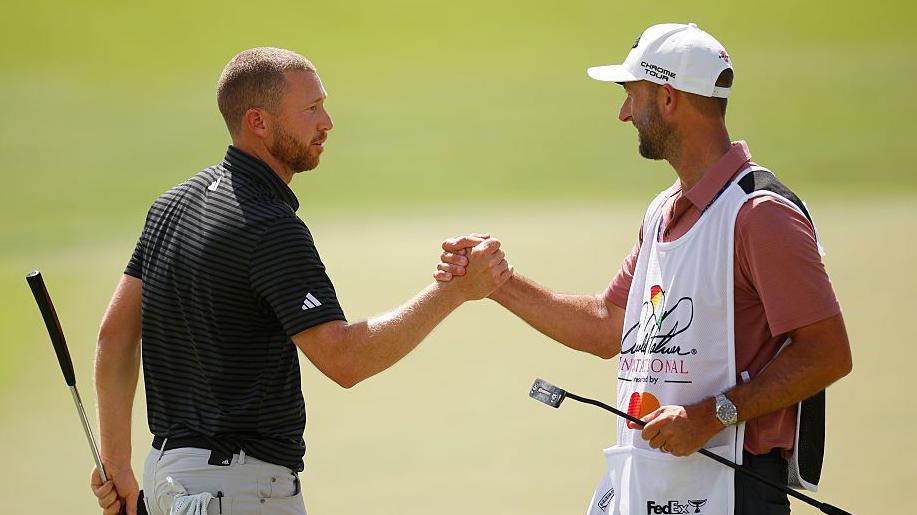
Daniel Berger hit an opening round of nine under to take a three-shot lead in the Arnold Palmer Invitational.

The 32-year-old has suffered a run of injuries – including a back issue which sidelined him for 18 months – and fractured a finger at the BMW Championship in August last year.

But having returned to full fitness, the American made six birdies on the back nine on his way to shooting a 63 – one short of the Bay Hill course record.

“I think the biggest thing for me is just getting in a bit of a rhythm,” said Berger. “When you come back [from injury], you are just kind of getting back into the flow of things and getting into your routine.

“I have really played not that poorly, I just haven’t had the results. You just kind of keep doing the same things and good things will come, so that’s kind of where I feel like I am at.”

A double bogey on the 13th hole, followed by dropped shots on the 14th and 18th, proved costly for Northern Ireland’s Rory McIlroy as he had to settle for a level-par round.

World number one Scottie Scheffler is at two under, along with England’s Justin Rose.

Sweden’s Ludvig Aaberg sunk a long eagle putt on 12 as a strong finish left him three shots behind Berger on six under.

Related topics

  • Golf

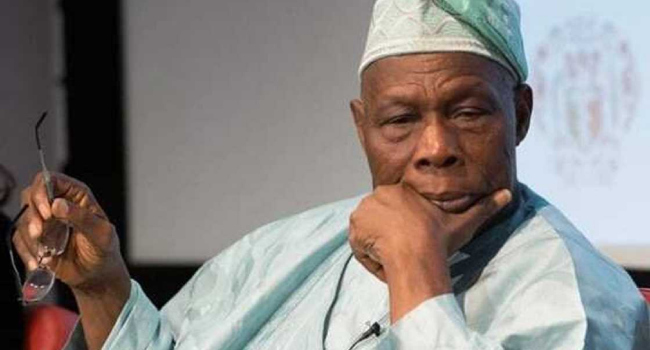
Africa’s Greatest Deficit Is Leadership, Not Resources — Obasanjo

Former Nigerian President Olusegun Obasanjo has said Africa’s greatest challenge is not a lack of resources but a leadership deficit.

Obasanjo stated this on Thursday during his 89th birthday celebration in Abeokuta, Ogun State.

At the event, the former president recounted his decades in public service, stressing that Africa’s development challenges stem largely from poor leadership rather than a shortage of natural or human resources.

“I have seen across more than five decades of public life that Africa’s greatest deficit is not money, not land, not intellect. It is leadership. The bane of our development is leadership,” he said at the event attended by prominent figures, including Peter Obi, Rabiu Kwankwaso, former Ogun State governor Ibikunle Amosun, and the governor of Ogun State, Dapo Abiodun, among others.

Obasanjo warned that poorly prepared leaders often leave nations weakened and divided.

“I’ve seen what happens when leaders are poorly formed. Nations fracture. Resources are stolen. Children without education go to bed hungry. And young people with brilliant futures abandon hope and take great and dangerous risks in search of greener pastures,” he added.

READ ALSO: ‘Our Leaders Lack Basic Economics,’ Obasanjo Faults Africa’s Political Class

‘Africa Needs More Leaders’

However, the former military leader noted that the presence of capable and principled leaders can transform societies.

“I’ve also seen the opposite. I’ve seen what one well-formed leader can do. One leader with vision, with discipline, with integrity, with better service and incorruptibility, and with courage to serve rather than take.

“I’ve seen such a leader transform a community, rescue an institution, and redirect a nation. We have had them in Africa and outside Africa. OOLI (The Olusegun Obasanjo Leadership Institute) exists because Africa needs more of those leaders. Many more.

“They must be trained deliberately, rigorously, and unapologetically. They must be formed by internalising and being imbued with the necessary attributes and values,” the ex-president said.

Obasanjo, who served as Nigeria’s military head of state between 1976 and 1979 and later as civilian president from 1999 to 2007, has consistently criticised the quality of leadership across Africa.

In June 2025, while speaking at the Afreximbank Annual Meetings in Abuja, the former leader criticised Africa’s political elite for lacking basic economic knowledge, warning that the gap contributes to corruption, wasteful borrowing, and continued dependence on foreign aid.

“How many of our leaders even understand basic economics to be able to run the affairs of their country?” he asked.

The former president also condemned the misuse of public funds, saying, “Waste and corruption… are strange bedfellows of development.”

Obasanjo argued that Western-style democracy has not always worked effectively in Africa, calling for governance systems that better reflect African political traditions.

According to him, Africa’s traditional governance structures, built on consensus, communal responsibility, and dialogue, often provided more inclusive approaches to leadership.

The elder statesman also lamented Africa’s continued reliance on foreign aid, urging the continent to focus on strengthening leadership and domestic economic capacity.

“We have lived too long on aid. Is that how Africa should be expecting to survive? I don’t believe so.

“We run to Japan; we run to China. But for how much? China will give $20 billion, which a single African country can generate if it is well governed,” he said.

Obasanjo has also recently expressed concerns about governance in Nigeria. In November 2024, while speaking at the Chinua Achebe Leadership Forum at Yale University in the United States, he criticised the administration of President Bola Ahmed Tinubu, warning that Nigeria risks becoming a “failing state”.

“The failing state status of Nigeria is confirmed and glaringly indicated for all to see,” he said.

The former president attributed the situation to corruption, weak governance, and insecurity, adding that “state capture” by powerful interests has undermined public institutions.