Dickie Bird, a legendary former cricket umpire, passed away at the age of 92.
One of the most well-known umpires in the game was Bird, whose first-class playing career was hampered by injury.
He also served as an official witness for three World Cup finals and 66 Tests and 76 one-day internationals.
Bird’s native Yorkshire, where he played and served as president, called him a “national treasure, known for his eccentricities and warmth as well as his umpiring excellence.”
Growing up in a nomadic family in central Somalia’s Galgaduud region, Luul Dahir Mohamed, like many girls in her Bedouin community, never got the opportunity to go to school.
But as she grew up, married and had two children – Mohamed and Mariam – she dreamed of a better life for them. After her marriage ended, the young mother decided to relocate from her rural community in Bergan to the central Somali city of El Buur in 2018, hoping the move would help her provide for her children.
Recommended Stories
list of 3 itemsend of list
But just a few months later, Luul, 22, and Mariam, aged four, were killed.
It was April 1, 2018, when Luul and her daughter joined several other passengers in a pick-up truck headed to the town of Dac, about 18km (11 miles) from El Buur. They were on their way to visit Luul’s older brother Qassim when the vehicle was struck.
“She’d only been there [in El Buur] for a couple [of] months, before she was killed in the [United States] drone strike,” her other brother, 38-year-old Abubakar Dahir Mohamed, told Al Jazeera.
That day, according to media reports and Luul’s family, US drones bombed the pick-up truck. Immediately after, locals found several bodies in and around the site. Further down the road, about 60 metres (200 feet) away, was the lifeless body of Luul, clutching onto her child, whose small body was covered in shrapnel.
“When they fired on the vehicle, Luul made it out with her daughter. They knew it was a woman and child, and then they fired once again, killing them both in the second strike,” Abubakar said from the Somali capital, Mogadishu.
“The Americans claim to uphold human rights, but apparently, when it comes to people like my sister and niece, their lives don’t matter.”
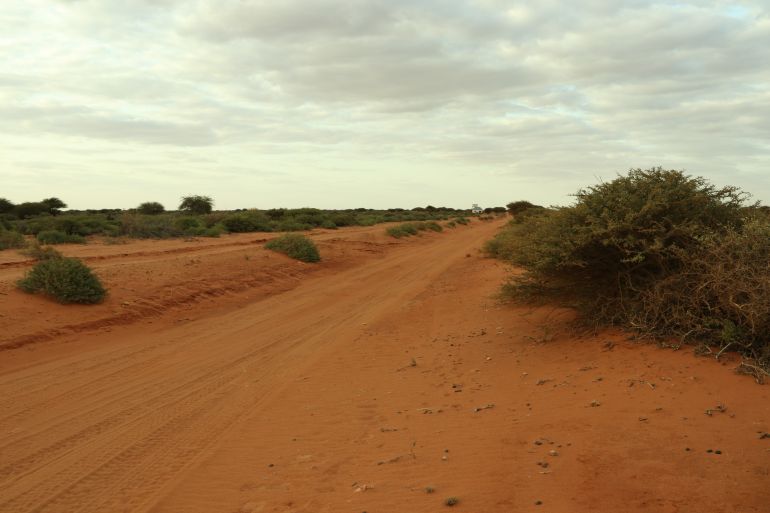
A dirt road in Somalia’s Galgaduud region, not far from where the strike that killed Luul and her daughter took place [Mohamed Gabobe/Al Jazeera]
Reparations ‘not feasible’
The Africa Command (AFRICOM), which oversees US military operations on the continent, has carried out more than 410 air raids in Somalia since 2005, according to the think tank New America, which tracks such attacks. According to AFRICOM’s own data, the command carried out 37 strikes in Somalia in 2018, including the one that killed Luul and Mariam.
A day after the April 1 strike, AFRICOM released a statement claiming it struck “five terrorists” and destroyed one vehicle in the strike.
“No civilians were killed in this airstrike,” said the statement.
The US military says its air raids target armed groups, including al-Shabab, in Somalia. However, locals and rights groups often report civilian deaths.
Twelve months after the attack, following pressure from rights groups, AFRICOM conducted an internal review and admitted that a “mother and child” had been killed in an attack near El Buur.
This marked the first-ever US admission of civilian casualties from their decades-long air campaign in Somalia. The report did not name Luul and Mariam.
This month, legal rights organisation Humanus, which represents civilian victims of attacks like these, received a letter from AFRICOM, seen exclusively by Al Jazeera, confirming that Luul and her daughter were killed in a US attack.
AFRICOM is “committed to learning from the circumstances around these tragic deaths”, the letter read, but said making a “condolence payment” to Luul’s relatives, including her young son, now 13, is “not feasible”.
Victims’ families and rights groups say it is not enough.
A woman walks past graffiti depicting a US drone in Sanaa, Yemen, in 2019. For decades, US drone attacks targeting armed groups have killed civilians in countries including Yemen and Somalia [File: Yahya Arhab/EPA]
Search for answers
“AFRICOM has never reached out to us directly,” Abubakar told Al Jazeera, saying he tried to contact them for answers on two separate occasions – first through the “contact us” section on their website to reach public relations, and later by utilising the command’s civilian harm reporting portal.
“I even left them my contact details,” he said, but he never received a response.
A year after AFRICOM’s internal review and its admission about civilian deaths, the command created a civilian casualty reporting form on its website where people could share information on those killed or injured by US air raids.
From a distance, the initiative seems good for filing complaints, but the move has come under sharp criticism by researchers for several reasons, including being in English, a language not familiar to most Somalis, and being impossible for civilians in al-Shabab-controlled areas, where most air raids happen, to access as the armed group puts prohibitions on internet, mobile data and smartphone use.
“The current civilian complaint system is profoundly inadequate for the context,” Eva Buzo, the executive director of Humanus, told Al Jazeera.
“It is a system that has repeatedly failed victims. In our clients’ cases, they exhausted every available channel, including an online portal that is utterly inappropriate for a population with high levels of illiteracy and a lack of internet access.”
Abukar Arman, a Somali analyst and author who has written extensively on US drone attacks and the so-called “war on terror” in Somalia, believes AFRICOM’s civilian reporting portal has more to do with optics than accountability.
“Look at the language [English] the civilian harm reporting portal is in, and you can just imagine the hurdles and exercise in futility that many Somalis go through when attempting to report or complain about their loved ones who might have been harmed in US drone strikes,” he said.
Still, for Abubakar, trying to use the online portal was worth the effort, despite his intermediate English language skills, as he was desperate for answers about the deaths of his sister and niece.
But it was to no avail. He says his messages were ignored.
People walk down a street in Mogadishu, Somalia [Mohamed Gabobe/Al Jazeera]
In an email sent to Al Jazeera, AFRICOM said “those affected had representatives engage on their behalf”, and the command determined that “it would be more appropriate to communicate through those representatives” instead of with individual queries.
However, Abubakar told Al Jazeera that AFRICOM’s claims were not true, as when he reached out to them in 2019 and used the civilian harm reporting portal in 2020, “there was no one representing our family with AFRICOM”.
Humanus took up only Luul’s family’s case in 2023, he said, which Buzo also confirmed.
There had been “persistent and ultimately futile attempts by the victims’ families to seek a response from the US military”, Buzo said about Luul’s case, as well as another family her organisation is representing, the Kusows.
“In both cases … they exhausted every available channel … Until Humanus provided legal support, these efforts were met with silence.”
‘She would scream nearly every night’
The Kusow family has lived for generations in the Jubba Valley of southern Somalia.
On the night of February 2, 2020, while preparing dinner, the family’s home in Jilib was struck by a missile from a US drone. AFRICOM in a press release initially claimed the air raid “killed one terrorist”, adding that the “removal of even one terrorist makes the region and the US safer”.
However, AFRICOM’s own internal review and investigation found that that particular strike killed one civilian and injured three others, according to another letter sent to Humanus in September, and seen by Al Jazeera, in which they named the victims.
“Bombing people while they’re having dinner, only to say they killed terrorists despite having the capabilities to determine who the targets actually are beforehand, shows their complete disregard for the lives of my family,” Mohamed Osman Abdi, a relative of the Kusow family, told Al Jazeera.
The attack injured Mohamed’s mother-in-law, 74-year-old Khadija Mohamed Gedow. After the strike, she initially struggled to walk due to her injuries. Her health has deteriorated further, and she is now unable to walk at all and has become blind in her right eye.
Khadija has partially lost her vision and her ability to walk since the US strike [Al Jazeera]
Mohamed’s three young nieces were also casualties of the attack.
Fatumo Kusow Omar, 14, suffered serious injuries to her shoulder and still struggles to pick up things five years later, Mohamed said. “But the first two years were the worst, because she was battling trauma,” he added. “She had difficulties sleeping at night and would have flashbacks of the loud explosion [from the missile] and the dust, debris and fire that engulfed their home.”
Fatumo is yet to fully recover, he says, but feels it is his other niece, Adey Kusow Omar, who was nine at the time, who has suffered worse. “She would scream nearly every night; I tried to put her to sleep because she feared another explosion … I knew she was traumatised, but there was nothing I could do for her.”
A third niece, Nuro Kusow Omar, 17, was the most tragic victim that day; she was killed in the attack. At her burial the following morning, in accordance with Islamic traditions, both relatives and community members were terrified because drones were spotted hovering over the town, including over her funeral procession, causing fears that another US air raid was imminent.
“We didn’t know if they’d be bombed again and whether we’d lose more family members,” Mohamed said. “It was like reliving the nightmare, but this time, we were more scared, not knowing who could die next.”
Lives lost ‘worth nothing’ to the US
Humanus has been advocating for both the Kusow family and Luul’s relatives since 2023, trying to help them get answers as well as accountability from AFRICOM.
Buzo told Al Jazeera it took intervention by the Humanus legal team just for the cases to be noticed by AFRICOM, only for them to be refused any further action.
“This lack of a functional, accessible path to redress is not just a procedural flaw; it compounds the suffering of victims by silencing their attempts to seek justice,” she said.
When it comes to the prospects for any form of reparations or financial compensation for the victims and their families, AFRICOM stated in the letters to Humanus that under “current Department of Defense guidelines and policies, US Africa Command determined it is not feasible to make a condolence payment in this matter”.
When asked for further clarification, in an email response sent to Al Jazeera, AFRICOM said it carried out an assessment bearing in mind the “mission objectives, cultural norms, local economic realities; the feasibility, safety, security, and logistics of making the payment itself” and made their decision based on the risk that funds meant for surviving family members could be “subject to confiscation, extortion, or unofficial taxation by terrorist or hostile insurgent groups”.
A picture from 2008 shows a woman in the centre of Dhusamareb district, Somalia, where US forces killed an al-Shabab leader in a missile attack [File: Badri Media via EPA]
In a statement published on Tuesday, Humanus said, “AFRICOM’s perfunctory acknowledgment and empty condolences are not just underwhelming, they are a profound injustice. Our clients have already navigated a long and arduous process exhausting every available channel, only to be met with a system designed to look the other way.”
It added: “Reparations are not just about money; they are a formal recognition of the harm and a vital, final step toward a full stop for survivors. When this crucial component is absent, the so-called ‘accountability process’ reveals itself as little more than an elaborate exercise in futility.”
Mohamed and Abubakar say AFRICOM’s reasoning for not paying compensation is “painful” and “more injustice” at the hands of those who killed their loved ones.
“It’s a cheap excuse. They killed and maimed these people [the Kusow family]. Using fears of the money being extorted or confiscated is another way of saying the lives [lost] are worth nothing to us [the US],” Mohamed said.
“It’s painful and shows how desperate they are to rid themselves of any accountability.”
Abubakar also slammed AFRICOM’s explanation. “It shows they totally are unwilling to pay and will go to extreme lengths to avoid compensation for what they did to my sister and niece,” he said.
“Every year, the US gives [millions] of dollars [in aid] to Somalia in different sectors, and there is never any fear of the money being stolen or being exploited by armed groups, but when it comes to us [our family], they say things like this.”
Additionally, in the letters seen by Al Jazeera, AFRICOM said it is unable to meet the surviving family members due to the “security situation in Somalia” and “threats to US personnel”.
“Such a claim is illogical. AFRICOM and the US in general have people [personnel] already stationed in Mogadishu,” the Kusows’ relative, Mohamed, told Al Jazeera. “If they wanted, they could easily meet with my family, but it’s clear that they are avoiding to go before the families they hurt to avoid further scrutiny.”
On September 3 – the day AFRICOM wrote the letters to Humanus – General Dagvin Anderson, the recently appointed commander for AFRICOM, arrived in Mogadishu and met leadership from the Somali government and international coalition, including US officials. The AFRICOM commander would later give an interview to the Somali-run television.
“If he [the AFRICOM commander] can sit down in front of cameras, then he and other [US] personnel can sit down with our family, instead of slaughtering them like animals and looking the other way,” Mohamed added.
AFRICOM commander, General Dagvin Anderson [File: Cheikh AT Sy/AP Photo]
Culture of ‘impunity’
Over the years, rights groups, including Amnesty International and Human Rights Watch, have raised concerns about AFRICOM’s lack of transparency and openness when dealing with family members of drone attack victims, as well as in investigating cases and providing compensation.
Analysts who spoke to Al Jazeera say the refusal by AFRICOM to pay compensation is part of a culture of impunity that has persisted with US drone operations in Somalia for nearly two decades.
“When US authorities are unwilling to do the right thing [compensate financially] with surviving family members, it shows not only their complete disregard but how even AFRICOM themselves know they’re immune from accountability – no matter how many civilians that continue to lose their lives at the hands of US drones,” said Arman.
AFRICOM’s refusal to provide compensation “is deeply disappointing” to Buzo and her team at Humanus. “It reinforces the perception that seeking justice through official military channels is an incredibly difficult and often unrewarding process for victims,” she said.
During President Donald Trump’s first term in office, the US carried out more than 200 air raids in Somalia, surpassing all his predecessors combined, according to the United Kingdom-based watchdog, Airwars. This year, the US has carried out 80 air raids in Somalia, according to New America, surpassing all strikes conducted during former President Joe Biden’s time in office.
Abubakar and Mohamed told Al Jazeera they feel they are being forced to relive the nightmare of the attacks that killed their relatives because of the continued “disregard” of the US in the handling of their cases.
Mohamed believes AFRICOM does not care whether their air raids hit al-Shabab or civilians who are nothing more than “collateral damage” to them, while Abubakar says the lack of concern from the US “will never bring us closure” after the killing of Luul and Mariam.
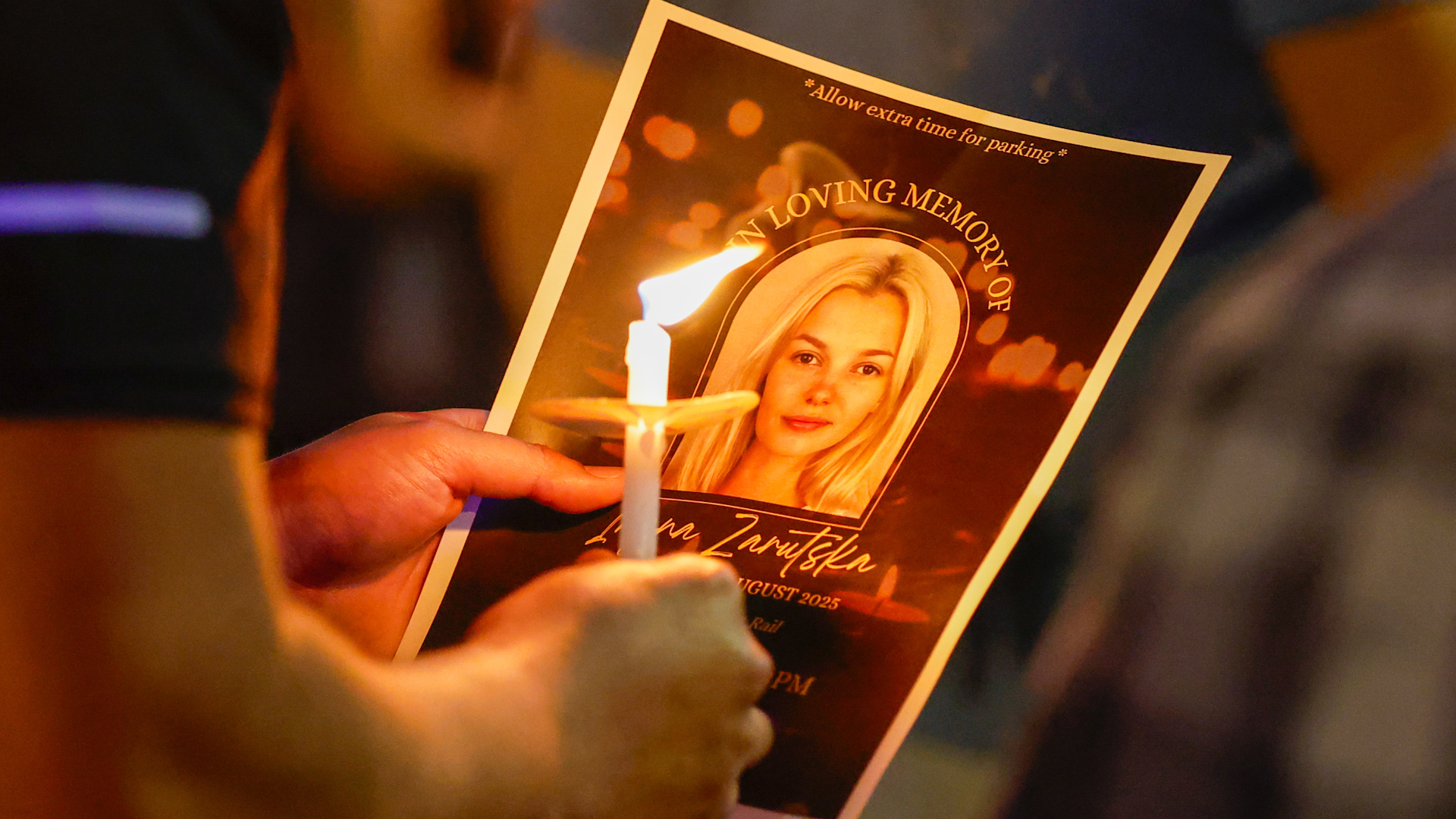
Iryna Zarutska, a 23-year-old Ukrainian refugee who was stabbing and killing on a train last month, was the subject of a vigil held in Charlotte, US, by hundreds of people.
After Bonnie Blue was allegedly “punched in the face” at one of her contentious “much-understandable” Freshers parties, the police released a new statement.
The adult-oriented star, whose real name is Tia Billinger, was at Sheffield’s Onyx nightclub last Thursday as part of her contentious UK university tour, which includes her lacked “Bang Bus” and various “activities.”
The adult film star was allegedly met by a woman who allegedly waited until 1am when Bonnie arrived at the event before punching her in the face.
When the alleged incident started, the 26-year-old was allegedly taking selfies with partygoers. A witness said, “I saw a woman standing next to Bonnie Blue talking to her friend.” They turned to Bonnie, turned to their friend, and then struck her in the jaw.
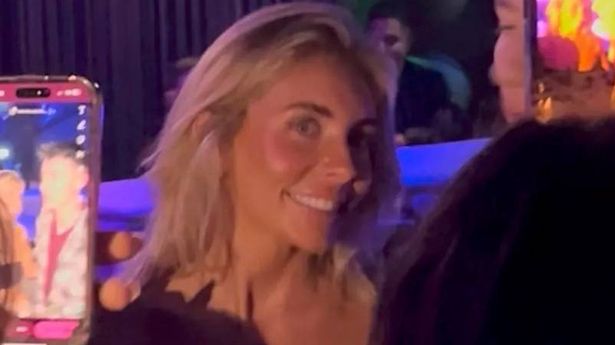
At a freshmen event, Bonnie was present. (Yorkshire Live/Lyra Auld)
Police are seen dealing with the suspects outside the venue in videos captured by the victims’ witnesses. At the time, South Yorkshire Police said in a statement that “we were called to reports of a disturbance at Onyx nightclub on Portobello Street, Sheffield, at 1.22am today (Friday, September 19).
A woman was reportedly assaulted at the nightclub, but she didn’t suffer any harm. At the scene, a woman was taken into custody before being released. In the interim, additional details have been released regarding the incident.
Our officers have spoken to all parties involved, according to the force, and arrangements have been made to bring the case to restorative justice.
On Friday morning, Bonnie Blue and the Bang Bus were parked further down Fitzwilliam Street and walked into Onyx Nightclub at around 1 a.m.
Bonnie Blue is being mobbed by university students while she is ‘Bang Bus’ (TikTok/ @j_hus6).
The extensive security guards’ presence and the video footage that emerged showed her arrival. Prior to the alleged assault, another witness described the atmosphere as being “extremely tense.”
Venues across cities have hosted Bonnie’s bus, offering “interactive mini-games” and “high-energy DJ sets,” but with no explicit sexual behavior. This is known as the “wildest freshers night.”
Onyx Nightclub decided to issue a “no sex” warning prior to the adult star’s arrival, despite the risqué name of the “Bang Bus.” This is a night dedicated to making new friends, laughing until your cheeks hurt, and experiencing Sheffield’s wildest Freshers Experience, according to Skiddle, the event’s website.
Important Notice: Everyone is welcome at this event. Respect other people and enjoy the party in a proper way inside the venue; no sexual activity is permitted.
Bonnie and her “Bang Bus” have been traveling the UK.
Bonnie has increased security measures to prevent fans from getting inside the building since the alleged attack. According to the Daily Star, the adult star was just spotted surrounded by two obnoxious security guards in Lincoln. She always has her security detail with her. Bonnie’s team and South Yorkshire Police have been contacted for comment by The Mirror.
Bonnie has previously expressed concern for her safety as a result of her contentious work. In an effort to get more people to watch her adult content, the star proudly uses rage-bait to entice fans. However, she is constantly threatened due to her antagonistic behavior.
How “isolating” Bonnie’s line of work can be, according to a recent Channel 4 program titled “1,000 Men and Me: The Bonnie Blue Story.” She claims in the show that she never went out alone, both on business trips and in the UK, and that she never did. It’s no longer that secure. I receive 100 to 100 death threats each day, so walking around is not that safe.
The actress admitted that she is concerned about being attacked on the street with acid. I tell her, “It will happen at some point, someone will come and give me a stick,” and fair play to her, at least they are getting up off their sofa. She claims that acid is her worst enemy, and that she could see a spiteful girl acting in it.
Prior to the alleged assault, Bonnie had a heated argument with a different partygoer before the incident, as it has been revealed.
A woman has now shared the argument she had with Bonnie at the time on TikTok. The clubber, known as Ffi, can be seen filming herself in her first video while the adult star is being filmed in the background.
In the nightclub, Ffi and Bonnie got into a fight (INSTAGRAM).
Bonnie says, “Your hair looks so cool,” and Ffi responds, “Thank you, but how many years have you set back feminism?”
Before Fifi claims “You’ve saved so many women’s lives s****,” Bonnie then says, “get out, I haven’t.” Bonnie insists she hasn’t “made anyone’s life s****” as the discussion continues. Bonnie says, “Get these fat f******s out,” at the end of the clip.
Ffi has since clarified that she wasn’t the woman who allegedly punched Bonnie in a video that went viral.
I confronted her, and I immediately posted a video about it. The woman claimed that she wasn’t the victim of my punched. I can happily say that I said nothing wrong despite the fact that I don’t agree with what she’s saying.
Ffi clarified in her most recent video that she wasn’t the woman who allegedly punched the adult star (INSTAGRAM)
She continued, “I said what I wanted to say, and she obviously chose to call me fat and my friend,” which I believe just goes to show.
Nobody else says it, so Fifi says in the video that she chose to confront Bonnie about her controversial job, which involves sleeping with “nearly legal” teenagers and filming it for adult platforms.
A witness who claims to have witnessed the Ffi-Boot exchange said, “A girl had spoken to Bonnie about how she was reinforcing feminism,” the report claimed. We overheard Bonnie telling her security to “get those fat f**** away from me” while we were in the queue behind them. ‘”.
Bonnie’s team has been contacted by The Mirror for comment.
After “jumping the fence” to serve Justin Baldoni’s deposition papers, a man was detained at Travis Kelce’s Kansas home.
5 images to be viewed
Taylor Swift has man arrested at Travis Kelce’s home(Image: PA Archive)
A man was arrested at Travis Kelce’s Kansas home while trying to serve Taylor Swift with deposition papers from Justin Baldoni’s legal team. The incident is reported to have taken place earlier this month.
On 13 September, a judge who was overseeing the defamation and sexual harassment lawsuits between Baldoni and Blake Lively denied a request to depose Swift.
Because Swift was “unavailable” for the rest of the set window, the legal team for Baldoni and his production company Wayfarer requested an extension of the deadline to remove him until the end of October. Judge Lewis Liman argued that the team had to show why they hadn’t removed Swift within the six months that they had been given permission to do so.
According to court records, former police officer Justin Lee Fisher was accused of “jumping the fence onto a private residence in a private neighbourhood” two days later. After attempting to subpoena Swift, a close friend of Blake Lively, he is alleged to have been taken into custody at 2am. Before his arrest, it is unknown whether he succeeded in doing so.
Following his arrest, Fisher told Star that he wasn’t harmed during his arrest, but implied this could have financial consequences for him. “[I] wasn’t hurt or anything besides being arrested for doing my job and possibly losing my [private detective] license.” He is scheduled to appear in court in October.
Baldoni and Lively have both filed lawsuits against each other after working together on It Ends With Us. Lively has claimed that her co-star and director sexually harassed her and organised a smear campaign to ruin her reputation, while Baldoni has denied these claims and filed a counter defamation lawsuit, which was dismissed in June.
Swift was dragged into the legal battle after Baldoni named her in documents for the $400million countersuit. Baldoni alleged that while he was at a meeting at Lively’s New York apartment during their film’s production, he was blindsided by the arrival of both Lively’s husband, Ryan Reynolds, and Swift. He also shared text messages in which Lively referred to her husband and friend as her “dragons”.
Though they have been close friends for years, the relationship between Swift and Lively is thought to have soured. Swift reportedly felt she had been manipulated by Lively, leading to a major falling out. A source told the Daily Mail: “[Swift’s] friends also think that Blake’s “I’m Khaleesi, and like her, I happen to have dragons” text to Justin was uncool and unnecessary because she was essentially used as an intimidation tactic. She was referred to as some kind of pet or possession.”
Doug Baldridge, Swift’s attorney, has previously written in a letter to the court that the singer would not testify unless required to do so. In Lively’s lawsuit, she claimed she had “no material role.”
Swift has denied this and her attorneys claim they were unaware of the deposition until three days prior, despite the fact that Baldoni’s team had previously filed court documents that stated the singer had agreed to testify and that she would be available at the end of October. They did state, however, that if Swift were to be forced to testify, the availability would be true.
Baldoni claimed that Lively and her team were only trying to get Swift into the lawsuit as a publicity stunt. The “Wayfarer Defendants” have repeatedly pressed for Ms. Immediately enter this legal action to further their relentless media campaign. They have not yet attempted to establish a just cause.
Continue reading the article.
Meanwhile, Judge Liman granted Lively’s request to extend the time for her team’s subpoena for Baldoni and Wayfarer co-founders Steve Sarwitz and Jamey Heath. According to the judge, Lively was “generally diligent” and that her request did not stem from “carelessness, an attorney’s otherwise busy schedule, or a change in litigation strategy.”
Following criticism from the audience, the Cheltenham Festival organizers are changing the venue and price of a pint.
The four-day meeting in March serves as the jumping racing calendar’s star, but there has been a marked decline in attendance, with some competitors complaining about the cost.
At all the course meetings this season, the price of a pint of draught beer or cider will be reduced by 30p to £7.50.
The Cheltenham Gold Cup’s opening day, which featured the Festival’s final day, was sold out this year, but some attendees complained of crowd overcrowding that day.
Although there was a lag of 56, 000 in attendance on the first three days of 2025, the daily capacity will be decreased from 68, 500 to 66, 000.
Drinkers have been particularly sore lately due to the high prices of alcohol, and especially Guinness, with an estimated 265,000 pints sold in the week.
According to course CEO Guy Lavender, “We regularly benchmark our food and beverage prices against those of other major sports venues and comparable events.”
We have chosen to lower the price of draught beers and cider for the 2025/26 season despite being subject to the same price increases in goods and services as all other industries.
He claimed that the price reduction would be in line with 2022.
Absent regulars cited overcrowding in previous years, as well as the cost of lodging, tickets, travel, and food and beverage as reasons for skipping the meeting, which was cut from three to four days in 2005.
According to reports that thousands have traveled to Spain to watch the action on big screens, including Benidorm and Tenerife, it costs less to spend a week in the sunshine than to attend the game.
A year ago, race organizers made changes that were supposed to enhance the experience of spectators and increase competition.
What other changes are planned?
What are Cheltenham’s ticket prices?
The 2026 Festival’s “super early bird prices” ranged from £35-£83 for the first three days of the event to £50-£99 for the Friday.
What kind of crowds did Cheltenham have this year?
The total attendance for the week was significantly lower than the record 280, 000 people who attended the first post-Covid meeting that was free for spectators in 2022.
The lowest daily attendance since 1993 was 41, 949.