Trump departs ASEAN with lingering questions for Southeast Asia’s trade

President Trump has left a meeting of Southeast Asia’s leaders, leaving Malaysia, but many questions remain about how the region will fare under his constantly changing trade strategies.

Trump visited Malaysia on Monday to attend the Association of Southeast Asian Nations’ (ASEAN) 47th Summit, where his main event was the signing of a ceasefire agreement between Thailand and Cambodia.

Recommended Stories

list of 4 itemsend of list

He met with ASEAN leaders to discuss US tariff rates, which range from 10% for Singapore to 40% for Myanmar and Laos, on the sidelines of the summit in Kuala Lumpur.

The White House announced framework agreements, which outline the terms of upcoming trade agreements with Thailand and Vietnam, with Malaysia and Cambodia, in the midst of a frenzy of activity.

While Trump’s most recent round of negotiations resulted in tariff exemptions for some of its key exports, many more important issues remain unanswered.

Will Trump follow through on his threats to impose a 40% tariff on “transshipments” and a 100 percent tariff on semiconductors, primarily referring to Chinese exports routed through third countries to avoid pre-existing tariffs, remains to be seen.

If Trump decides to start a transshipments ban, it’s unclear how the US might define the “country of origin” of goods that cross borders dozens of times before they are finished.

Despite the threat that a broadly applied tariff on goods with multiple countries of origin would pose to Southeast Asia’s highly integrated supply chains, none of the agreements signed on Sunday made mention of semiconductors, which are a crucial export for Malaysia, or specific country-of-origin regulations.

Additionally, there were no details about trade talks involving Indonesia and the Philippines, two of the biggest economies in the area.

All four nations agreed to the same US tariff rates that the White House had previously announced, 19 or 20%, as part of the agreements with Malaysia, Thailand, Cambodia, and Vietnam, making a number of concessions.

All four nations have pledged to lower non-tariff barriers to US trade, with Cambodia and Thailand promising to do so on a 100 and 99 percent of US imports, respectively.

Malaysia, Thailand, and Vietnam also agreed to purchase billions of dollars worth of US agricultural exports, US-made aircraft, and offer concessions on digital services, while Kuala Lumpur pledged to invest an additional $70 billion in US capital.

To support further US investment, Thailand and Malaysia signed separate memorandums of agreement to work together on supply chains of rare earths and other crucial minerals, including nickel and cobalt.

The US appears to be most benefited by the terms of the agreements, but they also offer some concessions to the area.

The most comprehensive agreement reached at the summit, which places a zero percent tariff on some of Malaysia’s key exports, including cocoa, rubber, and palm oil, is included in the agreement.

According to Jaideep Singh, an analyst at the Institute of Strategic &amp, International Studies in Kuala Lumpur, the majority of the language surrounding Malaysia’s lifting of trade barriers also refutes existing trade policies.

There is no additional regulatory burden on the Malaysian government, Singh told Al Jazeera, “for many of the commitments to reduce non-tariff barriers set out in the agreement.”

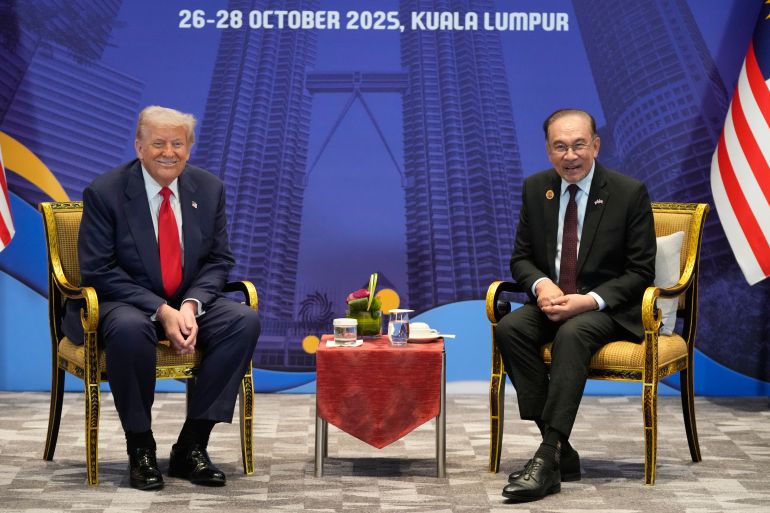
On the day of the ASEAN Summit in Kuala Lumpur, Malaysia, on October 26, 2025, President Donald Trump and Malaysia’s Prime Minister Anwar Ibrahim meet.

Malaysia also received “peace of mind” on tariffs, according to Priyanka Kishore, director and principal economist at Asia Decoded in Singapore.

Trump threatened Southeast Asia with some of the highest tariffs in the world in his “liberation day” announcement in April, before lowering the tariffs for the majority of nations to 20% or less.

In their ongoing negotiations with the Trump administration, Kishore said other ASEAN nations might benefit from the Malaysia-US agreement as they compete for lower tariffs or specific goods exemptions.

According to Kishore, “It’s very likely that Malaysia serves as a model for Vietnam, Thailand, and the rest of the world in terms of what they can look forward to.”

Trump’s tour of the area did not include tariffs applicable to certain industries, such as those affecting cars, aluminum, steel, and pharmaceuticals.

The most crucial remaining issue after Trump’s visit, according to Jayant Menon, senior fellow at the ISEAS-Yusof Ishak Institute in Singapore, is how the agreements will be enforced.

Menon noted that while Trump has imposed tariffs by using emergency powers, the US Congress has the authority to regulate foreign trade, such as through free trade agreements.

Because these are not traditional free trade agreements, he told Al Jazeera, and neither the framework agreements nor the trade agreements being done have clear legal nuances.

Minister accused of victim blaming after Australia players assaulted

Many people accuse an Indian minister of victim-blaming after he said two Australian cricketers were “touched inappropriately” last week when they should have called the authorities before leaving their hotel.

The players were walking to a cafe in Indore, Madhya Pradesh state, on Thursday when the incident occurred. According to the police, the harasser was detained.

The incident, which has sparked a global outpouring of anger, was condemned by India’s cricket board.

Women’s harassment is a common practice in India, but the incident on Thursday caused national attention because it involved international players playing in the Women’s World Cup, a highly anticipated international competition.

The players were “approached and touched inappropriately by a motorcyclist” the morning after Australia beat England, according to Cricket Australia’s statement.

The harassment was quickly denounced by the Indian Board of Control for Cricket, calling it “a deeply regrettable and isolated incident.” Additionally, it pledged to “review the existing safety protocols and strengthen them as needed” to prevent future tragedies.

However, Vijayvargiya, the state’s Bharatiya Janata Party (BJP) government’s director of urban development, housing, and parliamentary affairs, appeared to be putting some of the pressure on the players to keep them safe.

We tell a local whenever a player leaves, just like we do when we leave. The players will also be aware that if we leave, they should inform security or the local administration, Vijayvargiya told reporters on Sunday.

He continued, warning that players should be cautious when leaving because they have a sizable fan base.

“In this country, there is a craze for cricket, just like there is for football.” Football players frequently have their clothes torn, so I’ve seen them do it. Because they are so well-known, players must be cautious whenever they leave.

Vijayvargiya’s comments have caused controversy in India, where many have accused him of being a victim-blaming, and the opposition’s politicians, media, and many citizens have criticized his statements.

Arun Yadav, the leader of the opposition Congress party, called his statements “disgusting and regressive,” while Chinmayi Sripaada, the singer, accused him of victim-blaming.

“BJP Minister Kailash Vijayvargiya basically says that women who travel to other cities or countries must be concerned about their own safety when they leave without telling anyone. She wrote on X, “It was really the women’s fault,” she said.

Such victim-blaming remarks from a public representative only add to the embarrassment, according to another user, “at a time when India’s image has already taken a hit as a result of this shameful incident.”

The minister chose to lecture the victims, which was tone-deaf and inappropriate for his position, rather than defend the city’s dignity and condemn the culprits.

Later, Vijayvargiya described the incident as “shameful” and claimed strict action had been taken, but added that the players should have informed the security guard before departing.

This is not the first time Vijayvargiya has made headlines for remarks that many people find offensive to women.

India batter Iyer hospitalised with lacerated spleen

Images courtesy of Getty

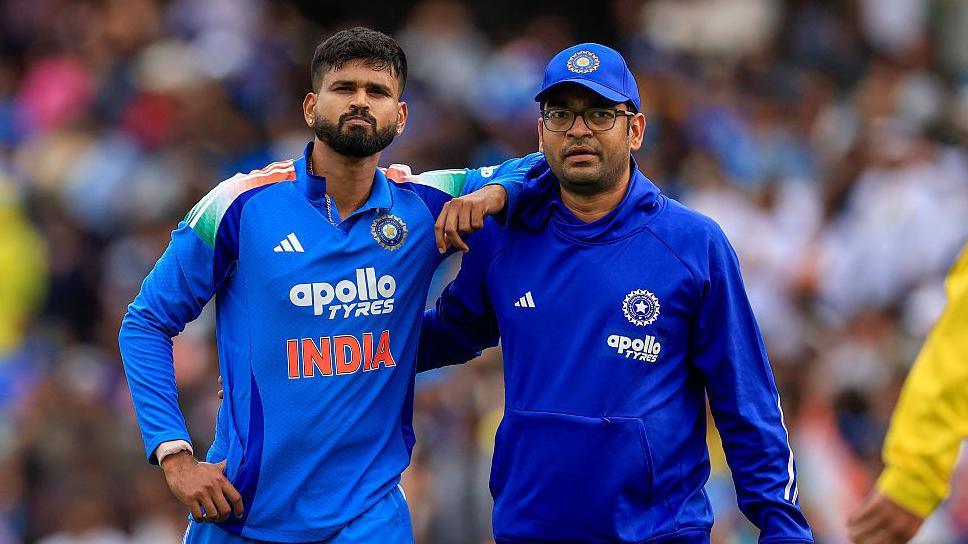
After suffering a lacerated spleen while taking a catch in Australia’s third ODI against India on Saturday, Shreyas Iyer is “recovering well” in the hospital.

Iyer rushed backwards to take a catch to dismiss Alex Carey and landed awkwardly on his side as the 34th over.

The 30-year-old immediately grabbed his side as he went to the field for treatment before being hospitalized.

Although confirming that he is “medically stable,” the Board of Control for Cricket in India (BCCI) has not given a date for his return.

While playing in the third of their third international match against Australia in Sydney, Shriyas Iyer suffered an impact injury to the left lower rib cage. In a statement released on Monday, the BCCI said that he was taken to a hospital for further evaluation.

“Scans have revealed a spleen laceration injury. He is receiving treatment, is recovering well, and is stable in his health.

His injury status is being closely monitored by the BCCI medical team in consultation with experts in Sydney and India. The Indian team doctor will evaluate Shreyas’ daily progress while he and the other doctor will be in Sydney.

India then won the series by nine wickets before falling to Australia with a score of 2-1.

related subjects

  • India
  • Cricket

More on this story.

    • August 16
    BBC Sport microphone and phone

Wembanyama makes NBA history as Spurs beat Nets

Images courtesy of Getty
  • 1 Comments

The San Antonio Spurs defeated the Brooklyn Nets in Texas in the first game since the NBA’s first player, Victor Wembanyama, to surpass 100 points and 15 blocks in the previous three regular-season games.

With a 118-107 victory, San Antonio overcame a 26-point deficit to keep their unbeaten start to the campaign.

With nine minutes left in the third quarter, the Nets’ home team had a lead of 81-55, but a 26-7 run helped to reduce the deficit to 88-81.

The Spurs won the game, but a strong fourth quarter performance, including a 10-0 run, helped them.

In 36 minutes of action, Frenchman Wembanyama recorded 31 points, 14 rebounds, four assists, three steals, and six blocks.

The 21-year-old, who was the top draft pick in 2023, has 33.3 points, 13.3 rebounds, and six blocks in his three games so far this year.

Without James &amp, Doncic, or Lakers, they defeat Kings in a round-up.

The Los Angeles Lakers defeated the Sacramento Kings 127-120 to record a career-high 51 points for Austin Reaves.

Reaves overtook a leading role in February when Luka Doncic and LeBron James were injured, surpassing his previous best of 45 against the Indiana Pacers.

Anthony Davis added 25 points and 10 rebounds to the Dallas Mavericks’ 139-129 victory over the Toronto Raptors, while James Harden added 20 as the Los Angeles Clippers defeated the Portland Trail Blazers 114-107.

The Milwaukee Bucks were unable to stop the Cleveland Cavaliers from falling to the Cleveland Cavaliers in a 118-113 defeat despite Giannis Antetokounmpo’s 40 points, 14 rebounds, and nine assists.

related subjects

  • Basketball

Could COVID-19 mRNA vaccines also fight cancer?

New studies have demonstrated that the immune system can recognize and treat cancer tumours thanks to the mass-produced COVID-19 vaccines created using the mRNA model, which were quickly produced during the global pandemic.

A startling pattern emerged from studies in mice and an analysis of cancer patients’ medical histories after receiving mRNA shots for COVID-19 before beginning immunotherapy for cancer treatment.

This week, researchers from the University of Florida and the University of Texas’ MD Anderson Cancer Center presented the findings at the German Congress for Medical Oncology. They also published their findings in Nature, a peer-reviewed journal.

The results, according to the researchers, show that mRNA vaccines not only stop infections but also “wake up” and activate the body’s defense against tumors.

The finding comes at a time when US President Donald Trump’s administration has cut funding for mRNA research.

Why is this being marketed as groundbreaking, then? What does it mean for people who have cancer? And how did this unlikely discovery come about as a result of the COVID-19 pandemic?

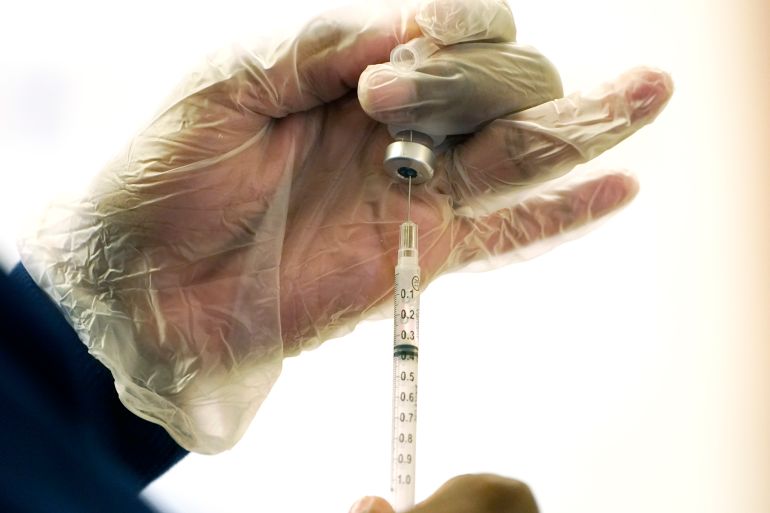
Prior to vaccination a Jackson Public School student at a vaccination station in Jackson, Mississipi, US, on February 16, 2022, a nurse loads a syringe with the child’s dose of Pfizer COVID-19 vaccine.

An mRNA vaccine is what?

Unlike traditional vaccines, which inject a small strand of genetic code known as “messenger RNA” directly into the body’s cells to activate the immune system’s defense, use weakened or inactive parts of a virus.

The cell interprets this blueprint as an instruction to create a spike protein that resembles the virus and appears on its surface, effectively displaying a red flag that prompts the immune system to launch a defense.

The body then creates antibodies and memory cells trained to recognize and respond to the protein spike if it ever appears again.

This area of research has been ongoing for some time, most recently by paediatric oncologist Elias Sayour, the University of Florida’s Bonnie R. Freeman Professor for Pediatric Oncology Research.

As the world rushed to vaccinate the populace in large numbers, the COVID-19 pandemic presented a unique opportunity to examine the repercussions of mRNA for cancer treatment.

A striking pattern emerged when Sayour’s former student, oncologist Adam Grippin, examined the clinical records of more than 1, 000 patients treated at the MD Anderson Cancer Center between August 2019 and August 2023.

Within 100 days of initiating immunotherapy, those who had the same medical treatment but did not have the vaccine lived significantly longer.

covid
[File: Evgeniy Maloletka/AP] A patient who died from COVID-19 at the city hospital 1 in Rivne, Ukraine, on October 22, 2021.

How long did the vaccine last for the vaccine’s use?

If the patient received the vaccine, their median survival rate nearly doubled, increasing from 20.6% to 30.3%.

More remarkable is the improvement in survival in patients with immunologically “cold” tumours, which suggests that the mRNA vaccine appeared to “wake up” the immune system in these harder-to-treat cancers, making “cold” tumors into ones that the immune system could more easily recognize and attack.

The researchers noted that their findings varied depending on a number of variables, including the number of vaccine manufacturers, the dose, and the duration of the immunization.

The researchers also compared the survival rates of a smaller sample of patients receiving immunotherapy for metastatic melanoma, the most advanced skin cancer stage. In the study, 167 patients received mRNA COVID vaccines, compared to 43 who received none.

The median survival time for those who received the vaccine was less than two years. In contrast, the study found that those who were vaccined before starting treatment had not yet reached the median survival point more than three years into the follow-up.

What is the process?

The researchers discovered that mRNA vaccines trigger the body’s defenses by acting as an alarm.

The immune system becomes more alert when the vaccine is administered, increasing its ability to recognize cancer cells that it might otherwise have missed. When these cells are activated, the immune system launches an attack.

However, cancer cells are resilient. They create a protein called PD-L1, which acts as a “hield” for them from the immune system. However, immune checkpoint inhibitors are available that can block this shield.

When the immune system is active and alert, and the cancer’s defenses are weak, Grippin explained, this situation is created when both the vaccine and these drugs are used.

The findings suggest that mRNA vaccines can be used to re-programme immune responses to cancer, despite the researchers’ claims that they are still developing an incomplete understanding of the mechanisms.

China pharmaceuticals lab
On March 13, 2019, a technician from a pharmaceutical company in Lianyungang, Jiangsu province, China, inspects anti-cancer drugs in vials.

What does this mean for people who have cancer?

These observations are preliminary. However, if the study is clinically proven to be accurate, it could have significant effects on cancer treatment.

According to Grippin, “These vaccines have powerful anti-tumour immune responses that are linked to significant increases in cancer patient survival.”

The implications are extraordinary; they could transform oncologic care in its entirety, Sayour said. We could create a better nonspecific vaccine that would essentially be an off-the-shelf, universal cancer vaccine for all cancer patients, to mobilize and reset the immune response.

Grippen, who co-led the study with professor of radiation oncology Steven Lin, announced that his team is launching a Phase 3 clinical trial to verify the study’s initial findings and determine whether COVID mRNA vaccines should be included in patient standard of care.

What results from experiments on mice did scientists discover?

Researchers found that dendritic cells, a type of white blood cell, became more alert when they were injected with an mRNA COVID vaccine directly into a tumour.

When the tumor’s dendritic cells recognized its presence, they released signals that enticed T cells to attack it. This helped some mice stop the cancer from spreading.

There is, however, a significant catch. Not everyone who has cancer-fighting T cells is naturally immune. Some people’s immune systems can identify a tumor as dangerous, but their specific T cells are unable to destroy it.

One reason why some patients respond to immunotherapies, which boost the immune system to fight cancer, but not others.

Rodgers, Steelers fall short as Love leads Packers’ win