‘I’ve put TikTok’s two most viral lip stains to the test to see which one lasts the longest’

Shopping Writer Meghan has replaced a lot of her lipsticks with lip stains, but she’s now testing which of TikTok’s most viral lip stains, Wonderskin or Sacheu, are worth adding to your makeup bag

It’s no secret that I’m a huge fan of the Wonderskin Lip Stain, which I’ve reviewed in several shades already, but beauty buffs will have no doubt noticed there’s a new viral lip stain on the block – and it’s backed by several celebrities and beauty influencers, earning a place in many makeup bags. That is, of course, the Sacheu Lip Liner.

Both have gone viral online for their long-lasting pigment and easy application, but which one truly comes out on top? I’ve decided to conduct a wear test of both the Wonderskin Lip Stain and the Sacheu Lip Liner to determine which one delivers better colour and longevity, so you know which is worth your money.

The Wonderstain Lip Stain retails for £18 at Wonderskin’s website or for £17.47 on Amazon. Meanwhile, the Sacheu Lip Liner sells for £13 at Revolve or £14 at Beauty Bay.

READ MORE: Claudia Winkleman keeps her trademark tan through autumn with simple £39 purchase

READ MORE: Olivia Attwood ‘couldn’t be more in love’ with her new favourite IPL gadget with £500 off

The Sacheu long-wear lip stain is said to keep your lips in line all day and night. Infused with hyaluronic acid and vitamin E for conditioning benefits, it also nourishes your lips while working its magic.

It’s designed to blend slightly to achieve a full lip tint, or follow A-lister Billie Eilish’s routine of applying the liner ahead of the rest of her makeup, then peeling it off ten minutes or so later, revealing perfectly lined lips that last for most of the day.

Meanwhile, the Wonderskin lip stain is described as easy to use; simply apply the mask and let it sit for 10 to 30 seconds before wiping it off with a damp cloth. The result is a natural-looking lip stain that stays in place all day, even when you’re eating and drinking. It includes a number of ingredients, such as squalane, to keep lips hydrated while they stain, although many shoppers follow it up with lip balm.

In terms of packaging, both lip stains come with a doe-foot applicator, with the Sacheu Liner offering a slightly thinner and more precise doe-foot, ensuring it’s easily used as a lip liner or as an all-over colour.

While the Wonderskin’s first colour may be slightly off-putting to start, as it comes out in a blue/purple metalic shade that won’t resemble the hue you’ve picked out of the 17 shades on offer – until wiped off, that is – the Sacheu lip liner is argueably even more alarming, as it’s formula appears thick, tacky and nearly black once you open the packaging.

It is worth noting that before applying any lip stain, I recommend exfoliating your lips. Use a lip scrub or mask, as this reduces the amount of dry or cracked skin on your lips, allowing the pigment to cling to them more effectively. I’ve found that, when applied to dry or chapped lips, the colour will appear uneven or patchy, regardless of the brand used.

When it comes to application, Wonderskin’s thinner formula allows for a more seamless application, making it easier to spread evenly across the whole lip without excessive bleeding outside the lip line or transferring onto your teeth.

The Sacheu’s almost tarr-like consistency does make for a messy application; it’s not easily spreadable, and due to its tackiness, it can be somewhat difficult to get a precise line without excessive patience and delicacy. Plus, Sacheu may not be the best pick if you’re in a hurry, as the colour can (and definitely will) transfer onto your teeth, tongue and fingers, leaving stains behind. This colour transfer does come off after some time, but it’s not ideal if you’re about to head out of the house.

When it comes to the novelty ‘peel off’ design of these lip masks, Sacheu definitely comes out on top. I’ve never been able to peel off the Wonderskin lip stain and have instead opted to use a makeup wipe. However, the Sacheu Lip Liner tends to peel off nearly perfectly every time, with only the occasional patch left behind. This isn’t a deal breaker for me when it comes to the Wonderskin lip stain, as I don’t mind using a wipe, but what I will say is – despite the satisfaction of the peel off design, the Sacheu is definitely messier as the colour will transfer onto your fingers and nails, unless you use tweezers.

Article continues below

When it comes to colour payoff, the Wonderskin leans towards a higher level of pigment and lasts the longest. I’ve also always noticed a less patchy finish with the Wonderskin lip stain. That said, this time I tried one of the newest shades, Hush, which is described as a more neutral brown colour. However, much like my old favourite shade, Lovely, this lip stain still results in a dark pink colour that’s similar to my natural lip colour but more saturated. This is fine and I like the look, but if you’re actually looking for a more nude/brown colour, Wonderskin isn’t going to do it.

EU, Spain reject Trump’s US tariff threats over NATO spending

The European Commission and Spain’s government have dismissed US President Donald Trump’s latest threat to impose higher tariffs on Madrid over its refusal to meet his proposed NATO target for defence spending.

Trump said on Tuesday that he was “very unhappy” with Spain for being the only NATO member to reject the new spending objective of 5 percent of economic output, adding that he was considering punishing the Mediterranean country.

Recommended Stories

list of 3 itemsend of list

“I was thinking of giving them trade punishment through tariffs because of what they did, and I think I may do that,” Trump added. He had previously suggested making Spain “pay twice as much” in trade talks.

Trade policy falls under the remit of Brussels, and the European Commission would “respond appropriately, as we always do, to any measures taken against one or more of our member states”, commission spokesperson Olof Gill said in a press briefing on Wednesday.

The trade deal between the European Union and the United States signed in July was the right platform to address any issues, Gill added.

“The defence spending debate is not about increasing spending for the sake of increasing it, but about responding to real threats,” Spain’s Economy and Trade Ministry said in a statement.

“We’re doing our part to develop the necessary capabilities and contribute to the collective defence of our allies.”

Spain has more than doubled nominal defence spending from 0.98 percent of gross domestic product in 2017 to 2 percent this year, equivalent to about 32.7bn euros ($38bn).

Defence Minister Margarita Robles said allies weren’t discussing the 5 percent target for 2035 in Wednesday’s meeting because they were prioritising the present situation in Ukraine, but wouldn’t completely rule out a shift in Spain’s position.

Targeted tariffs by the US against individual EU member states are rare, but there are precedents, said Ignacio Garcia Bercero, a senior fellow at the Brussels-based economic think tank Bruegel.

In 1999, the US hit the EU with 100 percent punitive tariffs on products such as chocolate, pork, onions and truffles in retaliation for an EU import ban on hormone-treated beef. But those tariffs excluded Britain, which at the time was still a member of the trade bloc.

The US could impose anti-dumping penalties on European products that are mostly produced in Spain, said Juan Carlos Martinez Lazaro, professor at Madrid’s IE business school.

In 2018, Washington imposed a combination of duties of more than 30 percent on Spanish black table olives at the request of Californian olive growers. Spain’s share of the US market plummeted from 49 percent in 2017 to 19 percent in 2024.

How are World Cup favourites shaping up – and who will win?

Getty Images
  • 232 Comments

England have booked their place at the 2026 World Cup and so attention turns to how they might fare in North America next summer – and how some of their rivals are looking.

Thomas Tuchel’s contract runs to the end of the tournament and the feeling has been that England have gone all out to get to this point.

Yet Tuchel believes England will be “underdogs” at the World Cup “because we haven’t won it for decades”.

Argentina and Brazil, who have both qualified, will hope the location gives them a boost.

Seven of the eight World Cups set in the Americas have been won by a South American team.

And 10 of the 11 World Cups held in Europe have been won by European teams.

Spain

Spain are the early bookmakers’ favourites to win the World Cup – and with good reason.

They were deserved winners at Euro 2024, beating England in the final.

And in teenage Barcelona winger Lamine Yamal they have one of the best players in the world.

Not counting a penalty shootout defeat in June’s Nations League final against Portugal, they have not lost a competitive game since facing Scotland in March 2023.

France

Jean-Philippe Mateta jumps into the air by the corner flag, smilingGetty Images

France, still managed by Didier Deschamps – who took charge in 2012 but will step down after the tournament – are aiming to reach their third World Cup final in a row.

They beat Croatia in 2018 before losing to Argentina on penalties after a 3-3 draw in probably the greatest ever final in 2022.

Key to their hopes will be Kylian Mbappe, who has hit 17 goals in 13 matches for Real Madrid and France this season.

England

Thomas Tuchel embraces Declan Rice Getty Images

There is a real hope this could be England’s year after several near misses under Gareth Southgate.

The fact the Football Association appointed the highly-decorated German on a deal just for this tournament shows how focused they are on their bid to win it.

And fortunately for Tuchel, he has a fully-firing Harry Kane. The 32-year-old has bagged 20 goals in 11 matches for Bayern Munich and England.

    • 21 hours ago
    • 22 hours ago

Brazil

Carlo AncelottiGetty Images

Brazil used to be the country most synonymous with World Cup glory, lifting their fifth trophy in 2002.

But they have not reached any of the five finals since then.

And so they made a bold move and brought in serial winner Carlo Ancelotti as their first foreign head coach since 1965.

He took over in May after Dorival Junior was sacked following a 4-1 loss to arch-rivals Argentina in World Cup qualifying.

Argentina

Lionel Messi waves from the standsGetty Images

Argentina are the defending champions, beating France on penalties in the last World Cup final in Qatar.

And they won the South American qualifying group by some way, finishing nine points above second-placed Ecuador.

All-time footballing great Lionel Messi has not yet committed to playing in the World Cup – but it would be a major surprise if he did not.

Portugal

Caoimhin Kelleher celebrates saving Cristiano Ronaldo penaltyGetty Images

Portugal are yet to qualify for the World Cup but will be confident of their chances as they are running away with Group F, despite drawing with Hungary on Tuesday.

There was a feeling at Euro 2024 that national great Cristiano Ronaldo, the all-time leading goalscorer in international football, was holding them back.

But since then Ronaldo – who will be 41 by next summer – has scored 13 goals in 13 games for Portugal.

Germany

Nick Woltemade scores v Northern IrelandGetty Images

Germany will have to drastically improve on recent major tournaments if they are to challenge in North America.

Since winning the 2014 World Cup they have gone out in the group stage twice and failed to get beyond the quarter-finals of a European Championship.

And they are making hard work of even reaching the World Cup, sitting above Slovakia only on goal difference in Group A.

The Netherlands

Memphis DepayGetty Images

The Netherlands are in good form and have only lost once since England beat them in the Euro 2024 semi-final.

In qualifying they have 16 points from six games – with 22 goals scored and only three conceded.

Italy

Italy celebrateGetty Images

It feels customary to put Italy in an article on World Cup favourites – but the data does not back it up.

Since winning the 2006 World Cup they have failed to play in one single knockout game.

They exited the groups in 2010 and 2014 and then failed to even reach the next two World Cups.

And that could yet be three in a row as they sit three points behind Group I leaders Norway and may well need the play-offs.

What information do we collect from this quiz?

Related topics

  • Football
  • England Men’s Football Team

More on this story

    • 9 hours ago
    Nigeria 2018 World Cup kit
    • 15 August
    A graphic of Premier League players from every team in the division in 2025-26 season, with the Premier League trophy in front of them.
    • 16 August
    BBC Sport microphone and phone

Raila Odinga: The symbol and symptom of Kenya’s political tragedy

Kenyans are wont to refer to Raila Odinga, the long-reigning 80-year-old opposition leader who died on Wednesday, as the “Enigma of Kenyan politics,” a reference to the title of a 2006 biography of him penned by the Nigerian author, Babafemi Badejo. His unequalled ability to survive, even thrive, at the top of the country’s political landscape for decades confounded his rivals and inflicted headaches on the regimes he plagued. But I think he would be best remembered as more mirror than mystery: the personification of Kenya’s tragedy.

The son of Kenya’s first vice president, he carved out a path as a crusader for freedom and better governance that led him from the country’s prisons and torture chambers to some of the highest political offices in the land. But at the end of his life, the compromises he had made to get there, the handshakes that peppered his career, had taken their toll, with a new generation shunning him, considering him part of the problem.

Throughout his long career, he was inseparable from the fight for a better Kenya. From the struggle for the restoration of multiparty democracy in the 1990s to the 25-year battle for a new constitution, he was never far from the limelight. Few could match his ability to mobilise Kenyans or the sway he held over his supporters. Despite believing Kenya needed to ditch its presidential system for a parliamentary one, a position he argued vociferously during the constitutional conference in 2003, he ran for president in every election since 1997 with the exception of the 2002 one, when his proclamation of “Kibaki Tosha” was sufficient to propel Mwai Kibaki to the office.

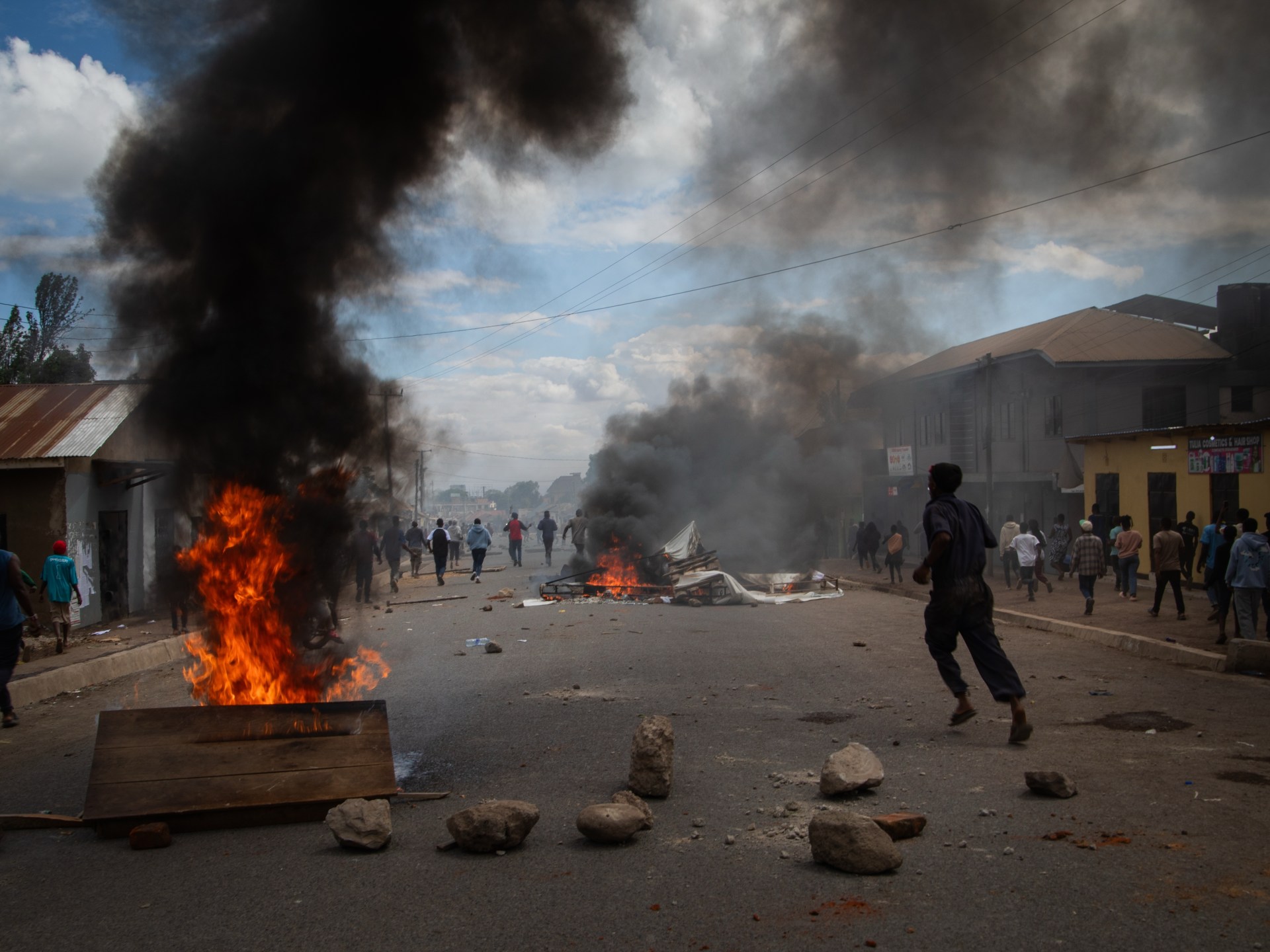
He was a man Kenya seemed content to celebrate but determined to frustrate. He was arguably robbed of the presidency on at least two, perhaps three, of those attempts, in 2007, 2013 and 2017. His refusal to meekly accept the injustice led to his opponents, and even The New York Times, branding him “a perennial loser”. His resort to the street as an avenue to protest not just the electoral controversies, but terrible state policies, also led to accusations of being a dangerous instigator of political violence, though in truth, the violence associated with Kenyan political demonstrations almost always comes from the state.

However, it is also important to recall that for all his legendary contributions and deeply held beliefs, he was prone to startling bouts of hypocrisy. It is a potent illustration of how power in Kenya corrupts even its greatest reformers. In 2000, after his handshake with the dictatorship of Daniel arap Moi, which would eventually see him appointed to his cabinet, he called for his erstwhile comrades in the opposition to be charged with treason for holding unauthorised antigovernment rallies. In 2006 he boasted that, as part of the Rainbow Coalition that had ended Moi’s KANU party’s grip on power, he had blocked action by the Kibaki administration to hold the dictator accountable for some of the looting that had happened during his 24 years in power. In early 2008, the standoff between him and Kibaki over the bungled December 2007 presidential election would cost 1,300 Kenyans their lives and see hundreds of thousands displaced. Yet a few months later, following yet another handshake resulting in Raila becoming only the second person in Kenya’s history to be appointed prime minister, his family and close associates were implicated in a maize subsidy scam that left a third of the country starving.

For his reputation, the straw that broke the camel’s back was his infamous 2018 handshake with President Uhuru Kenyatta, which again came after the state’s violent repression following the historic annulment of the 2017 presidential election. It was widely seen as a betrayal of his supporters, more than 70 of whom had been murdered by security forces while protesting the hasty repeat election, which Raila boycotted, and its aftermath. Following that, though he still had enough in the tank for a final run at the presidency, he was largely a spent force. His challenge to the William Ruto regime in the latter part of 2022 and into 2023 was a pale shadow of the protests he had commanded in previous years and was eclipsed by the Gen Z uprising a year later.

Raila’s life epitomised both the promise and disappointment of Kenya, which was born in struggle, nurtured in hope and ruined by betrayal. The true tragedy, however, lies not in his compromises, but in a system that made, and continues to make, integrity nearly impossible. Despite his tremendous achievements which made him stand out among his contemporaries, not just in Kenya but across the continent and the globe, his trajectory sadly traced a path that too many of Kenya’s – and Africa’s – most promising politicians have walked. His death is a big blow to the country, and he will undoubtedly be remembered fondly by many. But perhaps it should also be with a tinge of sadness and anger for what could have been but for Kenya itself.

Denial and amnesia: Is the global community ready to welcome Israel back?

In both Israel and among its Western allies, the Gaza ceasefire deal is seen as an opportunity – to move on from the accusations of genocide against it, and to restore close relations weakened as a result of public anger.

Over two years of its unrelenting war on Gaza, Israel has killed more than 67,900 Palestinians and injured more than 170,000. It has destroyed or damaged 92 percent of the enclave’s residential housing and its actions in blockading Gaza have led to a famine being declared.

Recommended Stories

list of 3 itemsend of list

Rights groups, international bodies, and organisations from within Israel, such as B’Tselem and Physicians for Human Rights Israel (PHRI), have concluded that the country’s actions amount to genocide: a view confirmed by a UN commission of inquiry in September.

By that month, criticism of Israel’s war had reached near consensus across Europe, and millions attended protests against Israel’s actions in world capitals every weekend.

However, marking the ceasefire in the Israeli Knesset on Tuesday, opposition leader Yair Lapid told lawmakers, including United States President Donald Trump: “Those who demonstrated against Israel in London, Rome, Paris … were deceived by propaganda … The truth is, there was no genocide, no intentional starvation.”

Denial 

“There is a relatively strong consensus that outside criticism must be dismissed as unjust,” former Israeli government adviser Daniel Levy told Al Jazeera. “This dismissal has been central to manufacturing societal consent for genocide: relentless media mobilisation around the war, coupled with rejection of criticism.”

“This pattern is consistent across almost the entire Zionist political spectrum, save for a small dissident cohort,” he said of the various groups within Israel which opposed the war from the outset.

Across Israel, there remains a refusal to accept the scale of the devastation their war has visited on Gaza, the lives destroyed, and the people – including children – pushed into famine as a consequence of government policies.

According to observers from within Israel, no public reckoning with the human cost of its war looks likely. Without acceptance of that cost, a resumption of hostilities – whatever the international consensus may be – remains possible.

“It’s not as if there’s just no awareness of the genocide in Israel,” Guy Shalev of PHRI told Al Jazeera. “There isn’t even an awareness of the suffering or widespread destruction of Gaza.

“A lot of the conversation is still fixed on [false allegations of] faked footage [of starving children or other potential war crimes] and how it’s all Hamas’s fault,” said Shalev. “Many of us aren’t even living in the same reality. My family and I aren’t even living in the same reality. We can’t agree on what truth is and, until that happens, there can never be accountability, and all of this could happen again.”

Some in Israel are hoping for just that.

Reacting to news of the impending ceasefire over the weekend, Israel’s hardline National Security Minister Itamar Ben-Gvir branded the agreement a “national defeat” and “eternal disgrace”. Others, such as Amit Halevi, a member of the Israeli parliament representing Prime Minister Benjamin Netanyahu’s Likud party, went further, saying Israel should have declared “to Hamas and to the whole world that the Jewish people will not forget or forgive until the complete annihilation of the neo-Nazis in Gaza and the restoration of Israeli control over this strip of our homeland”.

International amnesia

Many in the West already appear to be rushing to accept the ceasefire and US assurances of “everlasting peace” at face value.

Earlier this month, German Chancellor Friedrich Merz said he saw no reason for Germans to continue protesting against Israel now that the ceasefire had been reached. On Wednesday, some of the country’s most senior politicians called upon him to resume arms exports to the country, despite the continued death toll in Gaza, and Israel’s illegal occupation of Palestinian territory.

On Monday, Israel’s new ambassador to the EU, Avi Nir-Feldklein, suggested that the US might allow the EU to participate in Gaza’s reconstruction if the EU would just “clear the table of what is hanging above our relationship”, he said of the potential sanctions the bloc is considering against Israel.

An aerial view shows the extensive destruction in southern Gaza’s Khan Younis following the implementation of a ceasefire and the withdrawal of Israeli forces on October 15, 2025 [Muhammed Eslayeh/Anadolu]

In both sport and culture, potential bans on Israel’s participation by the Union of European Football Associations (UEFA) and Eurovision are reported to be in doubt following the US-imposed ceasefire.

“Israel is eager to normalise relations with Europe and its other Western allies,” Levy said. “The current narrative [in Israel] emphasises that, with the ceasefire, Israel is no longer isolating itself, that Hamas is contained, and that international opinion has swung in its favour.”

“In many respects, Israel and the Western political establishment share this goal of quieting public dissent,” he said, before noting that while Western governments may be eager for rapprochement, their publics may not. “The cultural and public zeitgeist has shifted. Increasingly, people will not accept the narrative that ‘everything is fine’ or that government complicity in structural violence and genocide is acceptable.”

Toleration of violence 

With no drastic reappraisal of Israel’s internal policies towards Palestinians or the occupied West Bank likely, analysts such as Royal United Services Institute’s HA Hellyer suggested that lawmakers in the West and beyond may be preparing for a return to relations similar to the period following the Oslo Accords in the 1990s.

The accords were supposed to eventually bring about a Palestinian state, but as Israeli intransigence made that increasingly unlikely in the years that followed, Western rhetoric shifted from claiming outright support for the two-state solution to supporting the process towards it.

“I think we can see a similar phase ahead,” Hellyer said, “as long as the violence is below a certain level, it will be acceptable.”

people walk past concrete buildings that have been reduced to rubble
Displaced Palestinians, including children, returning to their homes after the ceasefire agreement walk among the destroyed buildings in the Israeli attacks on October 12, 2025, in the Sabra neighbourhood in southern Gaza City, Gaza [Khames Alrefi/Anadolu]

“For now, the focus will be moving rubble and rebuilding; not on the fact that half of Gaza remains off-limits to all Palestinians apart from collaborators and the other half remains under occupation,” he told Al Jazeera from Washington.

However, while lawmakers – wary of US pressure and, for some, their own country’s potential complicity in Israel’s genocide – may be eager for a return to pre-war detente, among the public, especially the young, two years of carnage in Gaza have produced a seismic shift.

“Public attitudes have changed,” Levy said. “More and more people are refusing to accept the story that ‘everything is fine’ or that government complicity in systemic violence and atrocities is acceptable.

“The reality on the ground – Israel’s ongoing dehumanisation of Palestinians, its structural violence, and harsh occupation – gives people plenty of reason to speak out.”

However, for the remaining population of Gaza, still suffering from hunger and Israeli attacks, the implications of any international rehabilitation of Israel carries far more immediate consequences.

“People will move on, not just in Israel, but for the many states who weren’t too concerned about the genocide or want to avoid questions over their complicity in it,” Shalev said.