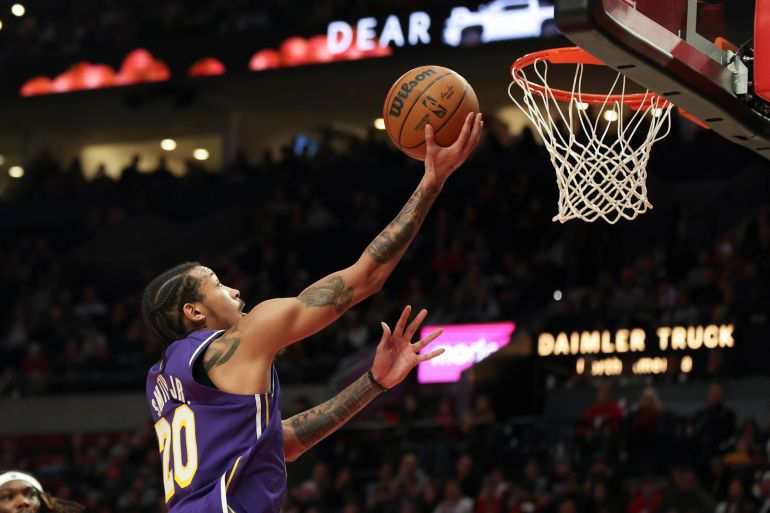
Nick Smith Jr, Lakers stun Blazers without injured James, Doncic and Reaves

Two dead as Typhoon Kalmaegi brings massive flooding in central Philippines

‘Ball of the century? That was my job’ – Ashes ‘rhino’ Harris

History has had some great supporting characters.

Not sidekicks. That would be disrespectful. The number twos – those who make the stars shine that little bit brighter.

Brian Clough had Peter Taylor. Elton John had Bernie Taupin. Elsa had Anna.

Mitchell Johnson, the moustachioed menace who destroyed England at the speed of light, had Ryan Harris.

The 2013-14 Ashes, when England were humiliated 5-0, will forever belong to Johnson. The left-armer was pure pyrotechnics, battering stumps, pads and helmets, for his 37 wickets. At the other end, new-ball partner Harris was every inch his ‘Rhino’ nickname – rampaging and relentless.

It was Johnson who walked away as an Ashes legend, but Harris who produced ESPN Cricinfo’s ‘ball of the century’, a physics-defying in-outer to bowl England captain Alastair Cook. Kevin Pietersen called Harris the best Australian seamer he ever faced, and KP took on Johnson, Glenn McGrath and Brett Lee.

There were plenty of reasons why Harris might never have pulled on a baggy green cap.

His father was born in Leicester, meaning Harris could have played for England. An attempt to spend time with Sussex as a local player in 2008 was aborted. Before then, a younger Harris who liked “drinking beers” was let go by South Australia, only to regain his state contract as a first reserve when another player rejected theirs.

With a second chance, Harris realised he could add some pace to his bowling, and a move to Queensland helped fulfil his potential. Still, a troublesome right knee, a hangover of schoolboy injuries sustained fielding and playing Aussie rules, would plague and ultimately end his career.

He did not make his Test debut until the age of 31 – just before an Australia side in transition was famously humbled 3-1 on home soil in 2010-11 by Andrew Strauss’ team. It remains the last time England won down under.

“They were just relentless,” Harris tells BBC Sport. “I just remember walking into changing rooms at breaks thinking ‘what do we have to do to get these blokes out’.”

As his team suffered, so too did Harris, breaking his ankle in the fourth Test. Nothing compared to the misery of Johnson, whose game fell apart to a soundtrack of taunts from the Barmy Army. He bowls to the left, he bowls to the right. You know the rest.

“For the first time in his career he was challenged and the ball wasn’t coming out anywhere near what we would have liked,” says Harris. “Mentally, he started second guessing himself.

“That happens when there is so much pressure on. He was there to intimidate and bowl fast, but he couldn’t quite get that.”

Harris’ next crack at the English, in 2013, was just as problematic for Australia.

A chaotic build-up, including controversy over homework and David Warner punching Joe Root in a Birmingham bar, culminated in Mickey Arthur being replaced as head coach by Darren Lehmann.

“Boof had a massive meeting about how we all have to be in it together,” says Harris. “We had team values Mickey had drawn up – starting with ‘I will do this, I will do that’. Boof flipped that. He changed the ‘I’ to ‘We’. It was all about us being together.”

Australia found themselves 2-0 down, but could have won all the last three Tests before ultimately losing the series 3-0. There was a return series in Australia straight away, and Harris sensed the shift in momentum.

“You look at it on paper and it’s one of the worst results, but we thought it was way closer than that,” he says.

The other reason for Australian optimism was Johnson. Not part of the Test series in the UK, he came in for the one-dayers that followed. Johnson 2.0 was bowling rockets and unsettling England batters.

“We spoke a lot about it,” says Harris. “England knew what they were coming back against.

“We went through the footage. Seeing the way he was, we knew there might be a bit of a chink in their armour and it planted a pretty big seed for us for what to expect on our wickets.”

Australia captain Michael Clarke knew his team were on to something. “It wouldn’t surprise me in a couple of months’ time to see Mitch [Johnson] being man of the series,” Clarke said before the first Test.

Assembling his pace attack of Johnson, Harris and Peter Siddle, Clarke tasked his pacemen with neutralising Alastair Cook, the England opener Australia could not get out three years earlier.

“Michael Clarke pulled the fast bowlers aside,” says Harris.

“He said ‘you guys are going to win this for us. We’re going to target Cookie, make sure he’s not getting off to a good start’.

“We went through every plan we had for each batter, then Mitchell did what he did.”

In the first Test in Brisbane, it was Harris who sparked England’s first-innings collapse from 82-2 to 136 all out. In the second innings, Johnson took five as the tourists were not only hammered, but also left in no doubt of the aggression they were up against.

Facing up to Johnson, England number 11 James Anderson exchanged words with short-leg fielder George Bailey. Clarke intervened and was heard on the stump mic using an obscenity when warning Anderson to “get ready” for a broken arm.

“That surprised a few of the players as well,” says Harris. “Michael was vocal around the team, not necessarily to opposition players, and Jimmy got under the skin of most players at times.

“We wanted to play that way. We wanted to be aggressive, but we didn’t have a plan to go hard with verbal stuff.

“When we heard the words Michael said we all thought ‘ooohhh, that’s cool’. We knew he was in it with us, but that was a little bit of a shock. It was like ‘right, we’re on here’.”

Despite leading English lambs to slaughter at the Gabbatoir and with England number three Jonathan Trott leaving the tour, Harris did not feel like Australia were “definitely on top”. After all, Australia had only just notched a second Ashes Test win in 11 attempts.

In the second Test in Adelaide came irrefutable evidence the Johnson juggernaut would not be stopped. A first-innings 7-40, including a burst of 5-16 in five overs, flattened England – including debutant Ben Stokes – once more.

Three years on from a public humiliation, Johnson was carving his terrifying redemption, with Harris one of the few that witnessed both sides of the story.

“What happened in 2010-11, it hurt him and it did get to him,” says Harris. “He would say now that he was so intense, a fiery character, that everything anyone said would get to him.

“He had a big break that made him realise cricket wasn’t the only thing. He liked cars, he had business interests and he had a young daughter. He worked out that putting everything into cricket wasn’t healthy for him. He came back refreshed.

“The bowlers in 2013-14, we were really tight, and we still are. We spent a lot of time together and we didn’t talk cricket all the time. When it came to the cricket stuff, we communicated so well. It was almost a team within a team. We were so focussed on what we had to do.

Getty Images
    • 27 October
    • 20 October

In Perth, with the opportunity to win back the Ashes at the earliest opportunity, Australia were dismantling England once more. Despite their clear superiority, jitters were present for a home side that last won the urn more than six years earlier.

“I couldn’t sleep, so got up early, and went down to the team room at about 5:30am thinking I’d get an early coffee,” says Harris.

“There were seven or eight players in there, because they were so nervous as well.”

For Harris, the career-high of an Ashes win would come with the delivery for which he will always be remembered.

Bailey clobbered 28 from one Anderson over and England were set a notional second-innings target of 504. Cook took strike, Harris had the ball. What followed, from the first ball of the innings, bordered on sorcery.

Harris presented a seam as upright as a King’s Guard. Swing in to left-hander Cook, landing just beside a crack that zig-zagged down the Waca pitch. From a leg-stump line, the ball appeared to then move in the air in the opposite direction, past Cook’s crooked grope to kiss the top of off stump.

Cook was left befuddled, defeated – both feet pointing down the pitch. Harris was off on a celebration run that would have ended in the Swan River, had he not been mobbed by his team-mates.

“My body was hurting a bit,” says Harris. “I was running into bowl and halfway through the voice in my head said ‘stop’. I didn’t. I don’t know why I didn’t.

“The ball came out and it just felt good. The rest is history.”

Harris, now head coach of South Australia, is speaking from Perth the night before he is back at the Waca, leading his team against Western Australia in the Sheffield Shield.

“I came here last year and the guys I coach gave me a bit of stick about it,” he says. “I put a ball on the spot around where I thought it pitched. They enjoyed that.

“My little boy has friends at school who have seen it. He has no clue. Ball of the century, it’s what people want to label it. That was my job and it’s what I was trying to do.”

Australia celebrated in Shane Warne’s villa, and Harris had to apologise for a drunken tweet after being refused entry to the Crown Casino. It was a minuscule problem compared to what England were going through.

Graeme Swann retired and the tourists were Johnsoned once more in the fourth Test in Melbourne.

Harris saved his best, of the series and his career, for the final rout of a broken England in Sydney. His match figures of 9-106 included an edge off Boyd Rankin that completed the 5-0. Johnson and Harris took 59 wickets between them, pretty much bowling out England six times as a partnership.

“It was all about the Mitchell factor, the pace he bowled at and the way he took wickets,” says Harris.

“I’m sure there was some sort of fear in ‘how are we going to play Mitchell Johnson, when he’s bowling that way?’.

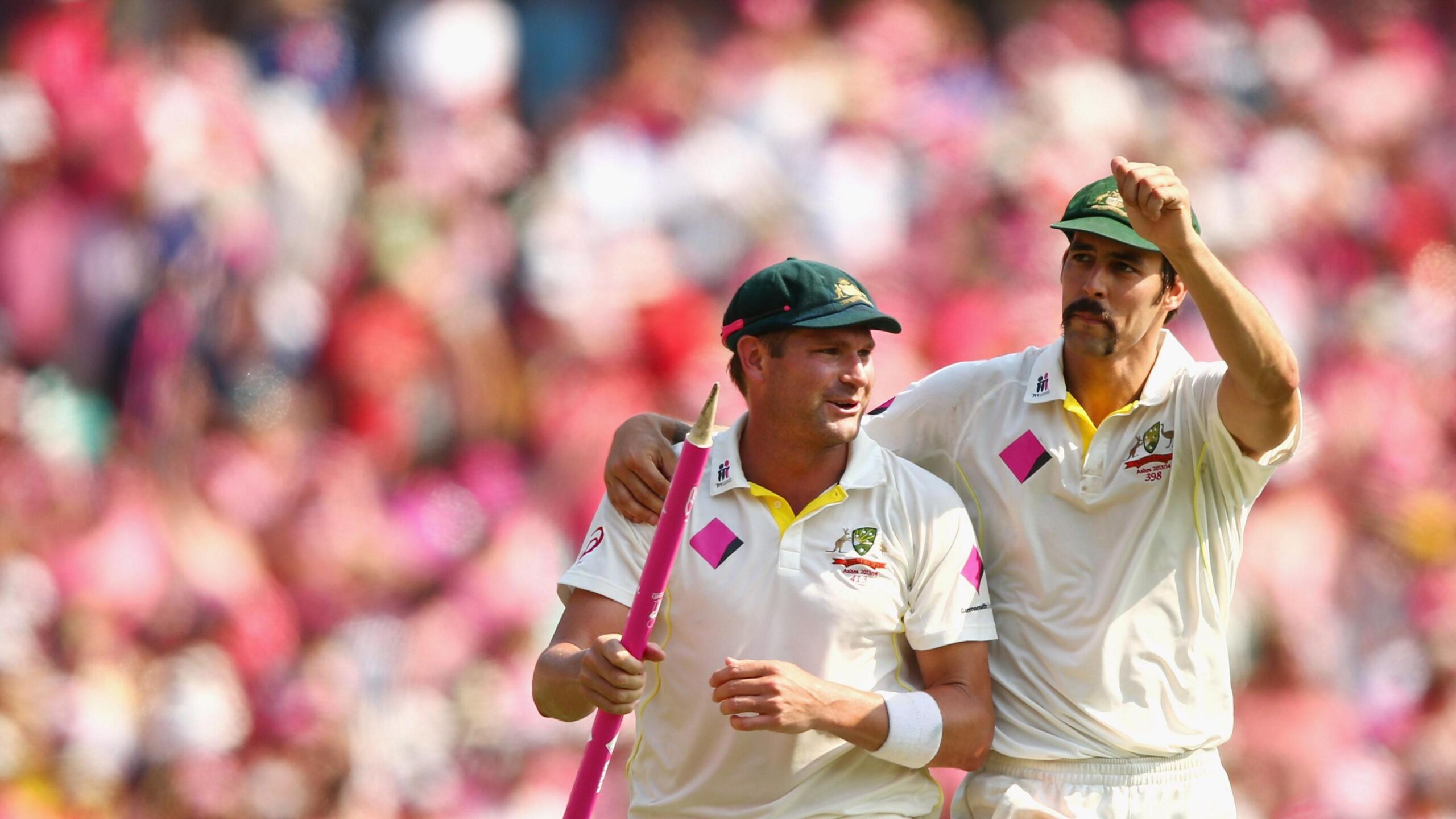
Ryan Harris bowls Alastair Cook with the first ball of the second innings of the Perth Ashes Test in 2013Getty Images

Harris wasn’t done there. Two months later he was bowling Australia to a superb away series victory over a powerful South Africa. In the deciding third Test, Harris could barely walk, yet his seven wickets in the match secured a thrilling win.

He underwent knee surgery immediately and returned for the following home summer to play three Tests against India. Battling to find full fitness, he was included in the Australia squad for the Ashes series in the UK in 2015.

“I was bowling in a warm-up match at Kent and I had a click in my knee that felt different,” says Harris. “I went back out and bowled, and bowled pretty well.

“I had a scan after the game. I’d cracked the top of my tibia.”

Faced with retirement and missing out on one more Ashes dance, Harris was a “blubbering mess”. Despite another crushing injury setback, he was considering more surgery in an attempt to prolong his career.

At the very end, Harris’ old mates and comrades Johnson and Siddle were there for him.

“I sat down with Mitch and Pete and said ‘I reckon I can do it again’,” says Harris.

“I used to have to take so much medication and Mitch said ‘I’ve seen what you have to take to be able to play, you can’t keep doing that because it will rip your stomach apart’. Pete was the same.

“That’s how close we were. We cared deeply for each other. They saw the fluid being taken out of my knee, how painful it was. They saw the scans.

“I had a bit more of a think, spoke to my wife, my brother and my dad, and I had to pull the pin.”

Of Harris’ 27 Test caps, 12 came in Ashes contests. Half of his Test wickets were England batters.

Of bowlers to make their debut since 1900 and take at least 50 Ashes wickets, Harris has the third-best average. Using the same criteria, his strike-rate is only bettered by Johnson.

“From watching Ashes cricket, the dream was to play it,” says Harris.

“Yes, I’d loved to have played more Tests, but I timed it right – when I wasn’t injured it was for an Ashes series.

The Ashes: Australia v England

Listen on Sounds

Related topics

  • Insight: In-depth stories from the world of sport
  • Australia
  • The Ashes
  • Cricket

More on this story

    • 16 August
    BBC Sport microphone and phone

‘Ball of the century? That was my job’ – Ashes ‘rhino’ Harris

Some excellent supporting characters exist in history.

Not sidekicks. That would be disrespectful. The number twos – those who make the stars shine that little bit brighter.

Peter Taylor was present for Brian Clough. Elton John had Bernie Taupin. Anna was in Elsa’s possession.

Mitchell Johnson, the moustachioed menace who destroyed England at the speed of light, had Ryan Harris.

Johnson will always be in charge of the 2013-14 Ashes, which featured England losing 5-0. The left-armer was pure pyrotechnics, battering stumps, pads and helmets, for his 37 wickets. On the other end, Harris, the new ball player, was relentless and rampaging, just like his “Rhino” nickname.

It was Johnson who walked away as an Ashes legend, but Harris who produced ESPN Cricinfo’s ‘ ball of the century’, a physics-defying in-outer to bowl England captain Alastair Cook. Harris was compared to Brett Lee, Glenn McGrath, and Kevin Pietersen as the best Australian seamer he’s ever faced.

There were plenty of reasons why Harris might never have pulled on a baggy green cap.

Harris could have represented England because his father was born in Leicester. An attempt to spend time with Sussex as a local player in 2008 was aborted. A younger Harris who liked “drinking beers” was then fired by South Australia, only to have his state contract as a first reserve when a different player turned down their offer.

With a second chance, Harris realised he could add some pace to his bowling, and a move to Queensland helped fulfil his potential. A troublesome right knee, a hangover from field injuries sustained while playing Aussie football, and more would eventually end his career.

He did not make his Test debut until the age of 31 – just before an Australia side in transition was famously humbled 3-1 on home soil in 2010-11 by Andrew Strauss ‘ team. The last time England has won down under is still here.

“They were just relentless”, Harris tells BBC Sport. I just recall entering changing rooms during breaks and asking, “What must we do to get these blokes out?”

As his team suffered, so too did Harris, breaking his ankle in the fourth Test. Nothing can compare to Johnson’s agony, whose game disintegrated amid a barmy army soundtrack of tidbits. He bowls to the left, he bowls to the right. The rest is known to you.

“For the first time in his career he was challenged and the ball wasn’t coming out anywhere near what we would have liked”, says Harris. He began to doubt himself mentally.

” That happens when there is so much pressure on. He tried to intimidate and bowl quickly, but he couldn’t quite get that.

Harris ‘ next crack at the English, in 2013, was just as problematic for Australia.

Mickey Arthur was replaced as head coach by Darren Lehmann after a chaotic build-up, which included disagreements over homework and David Warner punching Joe Root in a Birmingham bar.

” Boof had a massive meeting about how we all have to be in it together, “says Harris”. Mickey had formulated “I will do this, I will do that,” which we had team values. Boof flipped that. He changed the letter “I” to “We.” It was all about us being together. “

Australia were 2-0 up, but they could have won the series 3-0 before falling to Australia. There was a return series in Australia straight away, and Harris sensed the shift in momentum.

We thought it was much closer than that, he says, but you look at it on paper and it’s one of the worst outcomes.

The other reason for Australian optimism was Johnson. He participated in the one-dayers that followed, not the Test series in the UK. Johnson 2.0 was bowling rockets and unsettling England batters.

We talked a lot about it, Harris says. England knew what they were coming back against.

“We perused the video,” he said. Seeing the way he was, we knew there might be a bit of a chink in their armour and it planted a pretty big seed for us for what to expect on our wickets”.

Michael Clarke, the captain of Australia, was aware of this. “It wouldn’t surprise me in a couple of months ‘ time to see Mitch]Johnson] being man of the series”, Clarke said before the first Test.

After three years without winning, Clarke assembled his pace attack of Johnson, Harris, and Peter Siddle, who had been unable to play Australia’s opener against England.

“Michael Clarke pulled the fast bowlers aside”, says Harris.

You guys will win this for us, he said. We’re going to target Cookie, make sure he’s not getting off to a good start’.

Mitchell followed our every move for each batter until he performed what he did.

In the first Test in Brisbane, it was Harris who sparked England’s first-innings collapse from 82-2 to 136 all out. Johnson took five in the second inning as the visitors were hit hard and unprepared for the aggression they faced.

Facing up to Johnson, England number 11 James Anderson exchanged words with short-leg fielder George Bailey. Clarke intervened and was able to speak on the stump mic while advising Anderson to “get ready” for a broken arm.

” That surprised a few of the players as well, “says Harris”. Jimmy occasionally got under the skin of the majority of the team because he was vocal around the team, not necessarily to the opposition players.

“We wanted to play that way. We had a plan to be aggressive, but we didn’t want to be violent.

” When we heard the words Michael said we all thought ‘ ooohhh, that’s cool’. We were aware of his involvement, but it surprised us a little bit. It was like ‘ right, we’re on here’. “

Harris did not believe Australia were “definitely on top” despite leading English lambs to slaughter at the Gabbatoir and with England’s third tour departure, Jonathan Trott. After all, Australia had only just notched a second Ashes Test win in 11 attempts.

The Johnson juggernaut would not be stopped, was unquestionable evidence in the second Test in Adelaide. A first-innings 7-40, including a burst of 5-16 in five overs, flattened England – including debutant Ben Stokes – once more.

Johnson was carving his terrifying redemption three years after being publicly humiliated, with Harris one of the few people to witness both sides of the story.

” What happened in 2010-11, it hurt him and it did get to him, “says Harris”. He would now claim that anyone who spoke to him would get a kick out of him because he was so fiery and intense.

“He had a big break that made him realise cricket wasn’t the only thing. He had a young daughter, had business interests, and liked cars. He worked out that putting everything into cricket wasn’t healthy for him. He returned feeling refreshed.

” The bowlers in 2013-14, we were really tight, and we still are. We did a lot of talking cricket together, but we didn’t talk about it all the time. When it came to the cricket stuff, we communicated so well. It almost resembled a team within a team. We were so focussed on what we had to do.

Getty Images
    • October 27
    • October 20

In Perth, with the opportunity to win back the Ashes at the earliest opportunity, Australia were dismantling England once more. A home team that had last won the urn more than six years ago was jittery about their obvious superiority despite their obvious superiority.

“I couldn’t sleep, so got up early, and went down to the team room at about 5: 30am thinking I’d get an early coffee”, says Harris.

Because the players were also extremely anxious, there were seven or eight of them.

For Harris, the career-high of an Ashes win would come with the delivery for which he will always be remembered.

England had a notional 504.-innings target after Bailey clobbered 28 from one Anderson over. Cook took strike, Harris had the ball. From the first ball of the innings, the outcome was almost sorcery-like.

Harris presented a seam as upright as a King’s Guard. Landing just before a crack that zig-zagged down the Waca pitch, Cook made his first pitch. From a leg-stump line, the ball appeared to then move in the air in the opposite direction, past Cook’s crooked grope to kiss the top of off stump.

Cook was left with a confused, defeated mindset, with both feet facing the pitch. Harris was off on a celebration run that would have ended in the Swan River, had he not been mobbed by his team-mates.

Harris claims that “my body was a little hurting.” “I was running into bowl and halfway through the voice in my head said ‘ stop’. I abstained. I don’t know why I didn’t.

“The ball came out, and it just felt good,” the statement read. The rest is history. “

The night before returning to the Waca, where he is currently leading his team against Western Australia in the Sheffield Shield, Harris, the head coach of South Australia, is speaking from Perth.

” I came here last year and the guys I coach gave me a bit of stick about it, “he says”. I placed a ball where it appeared to have pitched. They enjoyed that.

“My little boy has seen it with his classmates. He has no clue. What people want to call it, “Ball of the Century.” That was my job and it’s what I was trying to do”.

After being denied entry to the Crown Casino, Harris had to apologize for a drunken tweet sent at Shane Warne’s villa. It was a minuscule problem compared to what England were going through.

In the fourth Test in Melbourne, Graeme Swann retired and the visitors were Johnsoned once more.

Harris saved his best, of the series and his career, for the final rout of a broken England in Sydney. His 9-106 match results included Boyd Rankin’s advantage, which brought the score to 5-1. Johnson and Harris took 59 wickets between them, pretty much bowling out England six times as a partnership.

According to Harris, “It was all about the Mitchell factor, the pace he bowled at, and the way he took wickets.”

“I’m sure there was some sort of fear in ‘ how are we going to play Mitchell Johnson, when he’s bowling that way? ” ” .

Ryan Harris bowls Alastair Cook with the first ball of the second innings of the Perth Ashes Test in 2013Getty Images

Harris didn’t end up there. Two months later he was bowling Australia to a superb away series victory over a powerful South Africa. Harris was unable to walk in the decisive third Test, but his seven wickets secured a thrilling victory.

He underwent knee surgery immediately and returned for the following home summer to play three Tests against India. Battling to return to full fitness, he was a part of the Australian squad for the 2015 Ashes series in the UK.

” I was bowling in a warm-up match at Kent and I had a click in my knee that felt different, “says Harris”. I returned and did a good job of bowling.

“I had a scan after the game. My tibia’s top had been cracked.

Faced with retirement and missing out on one more Ashes dance, Harris was a “blubbering mess”. He was considering more surgery in an effort to advance his career despite yet another devastating injury setback.

At the very end, Harris ‘ old mates and comrades Johnson and Siddle were there for him.

Mitch and Pete sat down with Harris and said, “I reckon I can do it again.”

“I used to have to take so much medication and Mitch said ‘ I’ve seen what you have to take to be able to play, you can’t keep doing that because it will rip your stomach apart’. The same thing happened to Pete.

” That’s how close we were. We shared a deep respect for one another. They saw the fluid being taken out of my knee, how painful it was. They were able to see the scans.

“I had a bit more of a think, spoke to my wife, my brother and my dad, and I had to pull the pin”.

Of Harris’ 27 Test caps, 12 were won in Ashes matches. Half of his Test wickets were England batters.

Harris has the third-best average out of bowlers who have made their debuts since 1900 and have taken at least 50 Ashes wickets. Using the same criteria, his strike-rate is only bettered by Johnson.

The dream was to play Ashes cricket, Harris says.

“Yes, I’d loved to have played more Tests, but I timed it right – when I wasn’t injured it was for an Ashes series.

The Ashes: Australia v England

Listen on Sounds

related subjects

  • Insight: In-depth stories from the world of sport
  • Australia
  • The Ashes
  • Cricket

More on this story

    • 16 August
    BBC Sport microphone and phone

Starbucks sells majority stake in China business as it eyes expansion

After years of losing market share to local rivals in China, Starbucks has announced it will sell the majority stake in its Chinese business to a Hong Kong-based private equity firm for $4 billion.

Boyu Capital will acquire a 60% stake in Starbucks’ Chinese retail operations through a joint venture, according to the announcement made on Monday.

Recommended Stories

list of 4 itemsend of list

According to the Reuters news agency, Alvin Jiang, the grandson of former Chinese President Jiang Zemin, is one of the cofounders of Boyu Capital, which has offices in Shanghai, Beijing, and Singapore.

The US coffee giant will keep its 40% stake in its China operations while maintaining its intellectual property and brand rights, according to the company.

The deal establishes Starbucks’ 26-year history in China, the company stated in a statement.

According to Jason Yu, the managing director of CTR Market Research in Shanghai, it will also provide Starbucks with much-needed financial and logistical support as it tries to expand its business further into China.

Starbucks currently has 8, 000 locations in China, but the company wants to start 20 000 through its joint venture, according to a statement from the company.

According to Yu, “Starbucks was a pioneer in coffee in China, where it was probably the first coffee chain in a lot of cities,” but this is no longer the case because local competition has already outpaced Starbucks in expansion.”

Homegrown Luckin Coffee, which has more than 26, 000 locations worldwide, most of which are in China, is one of its main rivals.

While Luckin has grown to much smaller cities, Starbucks has historically concentrated in first- and second-tier cities like Shanghai, Beijing, and Shenzhen.

Through its loyalty program and in-app discounts, Luckin has also established itself as a provider of customers much less expensive beverages than Starbucks.

According to Yu, a small Americano coffee at Starbucks costs 30 yuan ($4.21), but a similar cup of coffee can be purchased for about 10 yuan ($1.40) at Luckin.

Starbucks has struggled to keep up with consumer preferences and competitive pricing, according to Olivia Plotnick, the founder of Wai Social, a social marketing firm based in Shanghai.

Starbucks has lost its once very competitive edge as a result of domestic players like Luckin and later Cotti Coffee undermining it on price, footprint, and flavor, according to Plotnick, who is credited with this. Plotnick referred to the fierce competition between apps for delivery services, which lower prices like coffee, as a term used in “delivery platform wars.”

As more storefronts are built in regional cities, Yu said, the joint venture between Starbucks and Boyu Capital will not only give the company more money for investment, but also provide assistance with logistics, infrastructure, and managing commercial property.

He claimed that the business is following a well-known blueprint used by other global brands in China.

Yum Brands, the owner of KFC and Pizza Hut, sold a stake in their China business to Primavera Capital, an affiliate of the e-commerce giant Alibaba Group, in 2016, according to Reuters. The China business was later transformed into a single entity.

McDonald’s acquired a majority stake in its businesses in China, Hong Kong, and Macau from the state-backed Chinese conglomerate CITIC and Carlyle Capital in 2017, but it later acquired some of its shares of the business, according to CNBC.

Pawlett following in footsteps of heptathlon heroes

Images courtesy of Getty

After winning her first World Athletics Championships, heptathlete Abigail Pawlett says it is her dream to bring home an Olympic medal.

After a long-awaited test to see if she would top the rankings high enough to fill her spot, Pawlett, 22, made her Tokyo debut in September.

She fell in her first competition event, the hurdles, before recovering and posting a personal best of 1.80m in the high jump, winning in the 200m heat.

Following the long jump on day two, she was forced to withdraw due to a delayed concussion.

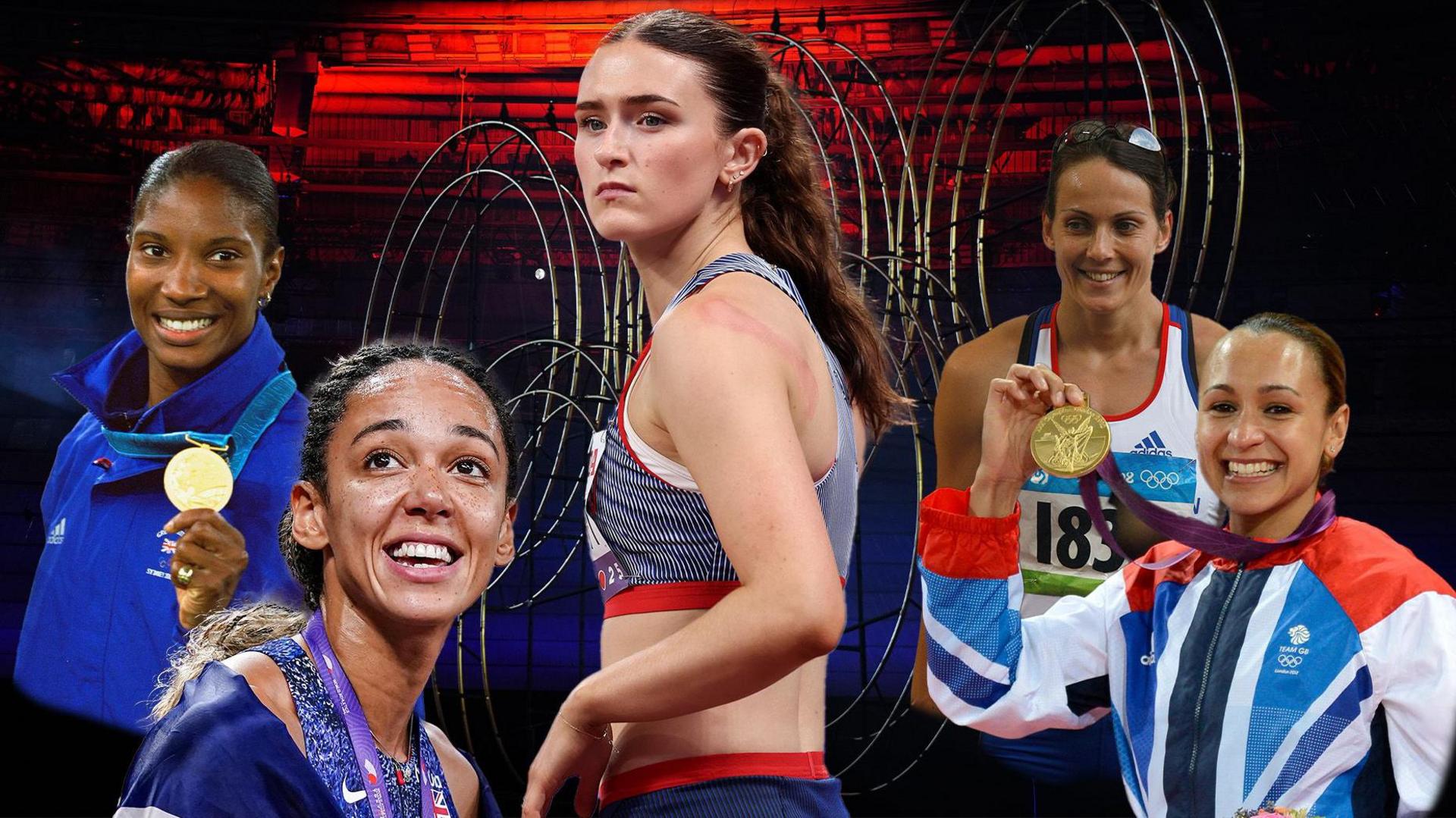
The Welsh athlete believes she can inspire others to do the same with her heptathlon heroes Denise Lewis, Kelly Sotherton, Jessica Ennis-Hill, and Katarina Johnson-Thompson.

“Imagining what might come in the future is exciting,” said Pawlett.

Bittersweet

JavaScript must be enabled in your browser to play this video.

Pawlett’s agonizing debut event fall put her in the spotlight, but it was her response that revealed the potential of her career.

The Welsh athlete claims that it was “get over the psychological block” for setting a new high jump personal best (PB) for the first time in six years.

Pawlett remarked, “It was bittersweet.” After falling on the obstacles, I first felt disbelief.

After the obstacles, Jade O’Dowda and Kat Johnson-Thompson [came over to me and kind of cocooned me from the cameras, which I really appreciated.

The Chester-born athlete added, “My first worry is that I won’t be able to text my parents to say I’m okay because they will be sat around the television.”

“Hopefully the high jump demonstrated that I’m okay; it marks my first personal best since I was 16 years old,” said the athlete.

Pawlett claims she was pleased to leave Tokyo with something to show for her efforts despite her disappointment over having to withdraw from the competition’s final two events.

“For that high jump record, I would have flown to Tokyo.”

Would I have gotten past 1.80 meters if I hadn’t fallen? Would that anger and desire to profit from it have been real? I’m not sure.

“I’ve at least shown myself that I’ve done it because going through six years of PB psychologically drains me.”

The reigning British indoor 60m hurdles champion was encouraged by more.

In the fourth round of the Tokyo competition, Pawlett’s 23.25s in the 200-meter dashed the fastest of any of the 22 heptathlon competitors.

I would have been second overnight if you had substituted in a regular hurdles from me this season, even with a subpar shot put and 200m.

“I know that there is a chance,” he said, “even though I didn’t actually put that score together.”

Johnson-Thompson won a dramatic bronze in Tokyo, but O’Dowda placed eighth overall.

They are competing, in Pawlett’s opinion, with her 26-year-old fellow Briton, who she believes is raising their standards.

She said, “Me and Jade are soaring above each other in the rankings.”

Welsh record holder

(L-R) Silver medalist Abigail Pawlett of Team Great Britain, Gold medalist Saga Vanninen of Team Finland and Bronze medalist Serina Riedel of Team Germany pose for a photo during the medal ceremony for the Women's Heptathlon during Day Four of the 2025 European Athletics U23 ChampionshipsImages courtesy of Getty

Pawlett, who had to compete after graduating from Loughborough University, took silver at the European Athletics U23 Championships in Bergen in July.

She paid the price, and the Welsh record-holder did it for a reason.

“I believe Bergen was the culmination of many years of diligent work and luck,” Bergen said.

I missed Covid, my world juniors, my foot, and a lot of my age-grade material.

“So my chances of winning age group medals were hindered by my injuries and the pandemic.

You never know what might happen, but when I look back at the world juniors, I’m certain that I’d win a medal.

Pawlett rates her Bergen medal as the highlight of 2025 despite being chosen for Tokyo, and it is obvious that she has an Olympic medal to focus on the future.

The ultimate objective of any sport, especially track and field, is to win the Olympics, according to Pawlett.

I’m certain that I’ll be able to win medals in the future. We’ve been using the calculator app, and I’m aware of what I can do and what my coach can do.

The upcoming British star?

Jessica Ennis-Hill competes in the Women's Heptathlon 100m Hurdles at the London 2012 Olympic GamesImages courtesy of Getty

Only at the delayed Tokyo 2020 Olympics has there been a heptathlon podium without a Briton on it since the 1996 Olympics in Atlanta, where Lewis won the medal.

Lewis won back-to-back bronze medals in Beijing (2004) and Athens (2004), while Sotherton won back-to-back bronze medals in Atlanta and Sydney (2008).

Ennis-Hill is renowned for winning gold at Rio de Janeiro in 2016 and silver at London in 2012.

Johnson-Thompson won silver in Paris 2024 after being disqualified in Tokyo in the 200-meter race in 2021.

Without a doubt, the moment gave Pawlett’s desire to compete was one of heptathlon.

“Watching Jess Ennis-Hill compete in the hurdles in London and trying to imitate her was my first Olympic memory.”

It’s obvious that I want to win [Olympic gold] first, and then I want to join that group of British heptathletes.

You look at them and when they did their scores, and I still have a while to go to be so close to them now, at age 22.

related subjects

  • Athletics
  • Wales Sport