Joanna Page broke huge rule for Gavin and Stacey finale – but she has no regrets

Joanna Page is sad and emotional to be leaving the character Stacey Shipman behind after Gavin and Stacey aired its final ever episode last Christmaas

Joanna Page had admitted she broke the strict secrecy rules around Gavin & Stacey’s finale – and let her husband and mum read the scripts before becoming a blubbering wreck on set.

The actress loved playing Stacey Shipman opposite Mat Horne who was Gavin Shipman on and off for 17 years. The Christmas finale scripts were sent on email with the subject ‘Toffee Apple’ so as not to draw attention, but instead of keeping it quiet, Joanna told her beloved mum everything and even asked her to help with learning her lines.

Joanna, 48, said: “This last one the finale, it was James(Corden) who called me out the blue. I just thought, oh my god, it’s happening. And I was excited. Then they said ‘Don’t tell anybody’ and I said, Oh my god, James, of course I won’t, you know, can’t wait. I’m so excited’.

“I put the phone down and called my my mum straight away! ‘Mum we’re doing the finale’. And then told my James, my husband. And then when the script arrived, oh my lord, I just showed it to mum straight away.”

The script actually arrived when she was waiting for a burger at a service station and she read it in the car park sending voice notes to Ruth Jones along the way.

“I managed to read half of it in one service station, then had to drive to another service station to avoid getting a ticket. I voice-noted Ruth all through the second half. I was laughing and I was crying. Ruth heard it all in real time as I was actually experiencing it. She was playing my voice notes to James.”

She added that she “lied to everyone and said that I hadn’t let anyone read it” but thankfully the script secrets did not leak.

Gavin & Stacey: The Finale is the UK’s most-watched scripted show across all broadcasters and streamers since current records began in 2002, with ratings of over 19.3 million.

In her new book Lush, Joanna also admits from day two of filming onwards of the finale she cried every day of filming, making it difficult sometimes to get scenes finished,

She said: “I was crying from the second day of filming. My first scenes were Nessa and Stacey down the slots in Barry Island, riding in the back of Nessa’s rickshaw. We filmed all day. It was a riot. I was excited to be back on-set, huge crowds had come to watch and cheer and I was filming with Ruth, which I loved. I laughed all day long. Then they said, ‘That’s a wrap on Nessa and Stacey in the slots.’ I burst out crying, and I think I cried every day at some point from that moment until the end of the shoot. Ruth was crying, Chris Gernon our director was crying and I was a state.

“There were a few times, before takes, when I’d have to go into the bathroom and pull myself together. This is really embarrassing, I told myself. You’re out of control on-set and you can’t stop crying. It was difficult.”

And the emotional wrap party for the finale was so boozy Joanna had “the worst hangover I’ve ever had in my life” and needed help packing her bags in the hotel. She “was in such a state” she couldn’t face a train home or carrying any bags so splashed out £380 for a taxi home.

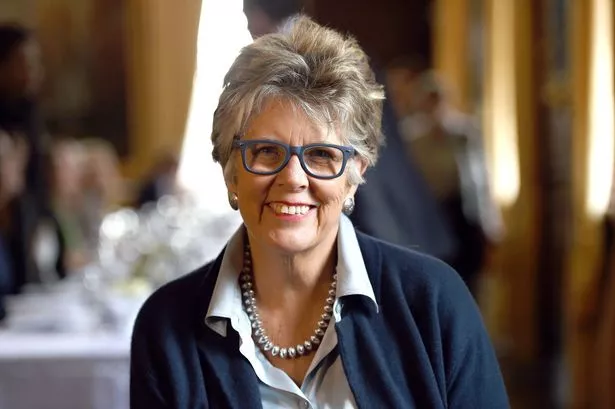
Speaking at the Cheltenham Literature Festival, where she was wearing a pair of Stacey’s earring she took from the prop department along with some clothes, she admitted she would have been devastated if anyone else had got the role of Stacey as she felt it “was her” and there are so few good Welsh parts in TV shows. At this point in life she was close to quitting acting and was working in a shoe shop where her agent sent her the script.

Joanna said: “I got the script and I remember turning over the first page and reading it and going ‘Oh my God’.

“I’ve never read anything like this before in my life. This is my voice. This is me. This is my family’. “Because in RADA, you had Trainspotters Scottish thing. You have everything Northern, and then you have the Irish thing. And if you were Welsh, you were lucky to get one character in a show who was a bit dollally and simple and didn’t really say very much.

“You were lucky if you got that. And suddenly, it’s like this whole world and my family and I remember thinking, if some f**ker gets this who has famous parents or is famous from a reality show then that is it.”

Joanna also spoke about her marriage being tested when she and fellow actor James had to live apart whilst she was in London enjoying the initial G&S success and he was starring in Emmerdale for three years from 2009 to 2012.

She explained: “In the book, I talk about how difficult it was when he went off to of Emmerdale for three years. And of course, when a job comes in, you know, your first thought is you’ve got to go and do it. Because that was before we had children. And so then you’re like, a job comes in, it’s yes, yes, yes. I mean, you know, the life of an actor, it’s tough. And when a job comes in, you’ve got to go and do it.

“And so suddenly we went from being so close, and, you know, having been with each other all the time, to him off living up in Leeds, and I’m all the way down in London, and it was just after really Gavin & Stacey as well.

“So to the outside world, it looks like your life was so wonderful, and we were winning awards. And you know, it was really exciting and we were going to different things and different appearances and stuff, but inside my heart was just breaking.

“I just go back home, and I sit with Daisy our dog, and I just, you know, I didn’t go out. I didn’t want to do anything for a while, it didn’t really work as much as I could have, because I was just very miserable. I was really, really down, and I was very miserable and I found it difficult.”

Now, Joanna is living in Oxfordshire with husband ex-Emmerdale actor James Thornton and their four children, Eva, 12, Kit, 10, Noah, eight, and three-year-old Boe, four guinea pigs and two dogs.

Page says she’s at a different place in her life and hopes to write more books after finishing her memoir. Acting will take more of a back seat whilst she spends time at home with the kids, especially as it is the last year before Boe will head to school.

She said: “I’ve decided that the root of what is next for me is being myself. The whole entertainment world is so different from when I first came out of RADA.

“I can wake up one morning and think, Yes, I’ve got my own platform. I can act, I can present, I can pod. That is the way that I see myself now – it’s exciting. Last year was so busy and hectic, with all the excitement, stress and secrecy of Gavin & Stacey, and then presenting Joanna Page’s Wild Life, that right now, I don’t fancy leaving the kids and going away to a film set for weeks on end. But maybe when they’re all older and in college, I’ll think, You know what? I fancy doing a play now.”

Article continues below

She added: “One day, I’ll belong to a theatre company again. But, for now, I don’t want to play someone else. I want to be me.”

*Lush written by Joanna Page and published by Sphere is out now.

EastEnders star Cheryl Fergison details side effects after shedding 3st on weight loss jab

Actress Cheryl Fergison is best known for playing the role of Heather Trott on EastEnders between 2007 and 2016

EastEnders star Cheryl Fergison has detailed the side effects she’s now going through after shedding three stone using weight loss jabs. The actress is best known for her role on EastEnders as she played Heather Trott between 2007 and 2016.

The 60-year-old has opened up about she was prescribed the jab after being diagnosed as diabetic and “clinically obese”. However, she has now said that she has been left questioning whether using the jabs was worth it as now she’s going through devastating side effects.

Cheryl has said that she has now has hair falling out in clumps which could be down to being prescribed a “big dosage”. She has been using Mounjaro to lose weight but thinks she might stop using it.

READ MORE: ‘I’m a wine connoisseur and this wine advent calendar is the best I’ve found’

READ MORE: Ex-EastEnders star Cheryl Fergison flogging at car boot sale after ‘going broke’READ MORE: EastEnders icon Cheryl Fergison shares health update after suffering severe stroke

Speaking on the Secure the Insecure podcast she said: “I’m on Mounjaro. It doesn’t really agree with me, so I think I’m going to probably come off it. I was on quite a big dosage. The doctors put me on it because I’m diabetic. I was clinically obese, as they would say. They said this was this wonder drug, and I took it and then they upped [the dosage] again.”

Cheryl explained that the jab worked how it was meant to at first and suppressed her appetite which mean she shed the pounds. She found that she used to be able to eat a whole pizza but can now only eat a slice before getting full.

However, she’s experienced several side effects which have put her off. Cheryl said: “The side effects are, I think, worse.

“There are fluids coming out from both ends a lot of the time. I’m sick, I’ve got diarrhoea with it. My hair… I can pull it out in clumps. Luckily, I’ve got a lot of hair. But there’s a lot of stuff I’m not sure about with it. I’m not sure it agrees with me.”

Mounjaro is the brand name for tirzepatide and has become one of the most used weight-loss jabs alongside Ozempic and Wegovy. The medication mimics the naturally occurring GLP-1 hormone which helps lower blood sugar and can increase feelings of fullness.

Cheryl said she had managed to lose almost three stone but her health issues impacted her progress. She was taken to hospital in May of this year after suffering a stroke.

Cheryl has been recovering from her home in Blackpool where she lives with her husband Yassine Al-Jermoni and her son Alex. She has revealed that since her stroke she has put a stone back on due to not being able to exercise as much anymore.

Beforehand she would go swimming and cycling as well as go on walks. However, Cheryl is now using a walking stick and says she is slower than she was. In order to recover, Cheryl said she has “got to listen to my body at the moment”.

Article continues below

Tragic Race Across the World star’s final minutes detailed at inquest into death

Sam Gardiner, who starred in the BBC series alongside his mother Jo, died earlier this year after losing control of his VW Golf car in terrible weather on a busy road

Tragic Race Across the World star Sam Gardiner died when he lost control of his car while driving in “appalling” weather, an inquest into his death has heard.

The 24-year-old suffered a catastrophic head injury when his “high-powered” VW Golf veered off the northbound carriageway near Cheadle earlier this year. He had been driving on the A34 on Monday 26 May when his car left the road and rolled before landing on its side

An inquest at Manchester South Coroners Court has heard how Sam – who graced our screens on the BBC travel series with his mum Jo in 2020 – had been travelling home to celebrate his aunt’s birthday bash after working as a landscape gardener up in Scotland.

In a tribute, Coroner Christopher Morris said: “Sam was truly a remarkable person who lit up the lives of many…He loved his sport, he loved his cars, and he loved being outdoors. “He was one of life’s adventurers,” adding that he was “caring, generous, with a great spirit and a big heart”, reports the Manchester Evening News.

The court heard that witnesses saw Sam’s car “overtaking and undertaking” in heavy rain before it collided with the central reservation and left the road. Detective Constable Simon Venguedasalon, of Greater Manchester Police’s Serious Collision Investigation Unit, told the inquest: “Several witnesses said that Sam was undertaking and overtaking slow-moving vehicles.

“A lot of the witnesses had slowed down due to the lack of visibility and the standing water on the road. His driving was not consistent with the conditions at the time.” DC Venguedasalon revealed that there were defects or potholes on the road, and some of the grids were blocked, contributing to the wet road surface. However, there was no CCTV or dashcam footage of the incident.

He added: “Sam unfortunately wasn’t driving to the conditions of the road. Due to the lack of tread on the tyres he lost control on the carriageway due to speed. He unfortunately left the carriageway and the collision then occurred.”

Police Constable Adam Dixon, a forensic collision investigator at GMP, told the inquest the road surface was “very wet” due to “bad weather” and that the tyres on Sam’s car had insufficient tread depth, which was a likely contributing factor to the crash.

He couldn’t estimate the speed Sam was driving on the 50mph road, but Mr Morris concluded that he was driving at a “significant estimated speed”.

Dr Naisbitt, a consultant in intensive care at Salford Royal Hospital, told the court Sam was placed in an induced coma due to severe head injuries. Doctors concluded that “he had sustained a devastating head injury in the crash and that there was no realistic prospect of any meaningful recovery”.

Tragically, Sam passed away in hospital on May 29. His cause of death was ruled a devastating brain injury due to a road traffic crash. Concluding that Sam had died in a road traffic collision, Mr Morris said he had been “weaving in and out around traffic” in “appalling” weather conditions before he “struck a kerb on the central reservation”.

He further stated that both the ‘insufficient’ tyre tread depth and his manner of driving were significant factors in his loss of control of the vehicle. Sam’s adoptive mum Jo concurred that her son was “generous, big-hearted and caring”, adding that he had a passion for cars. She revealed he had “chopped the exhaust off” his VW Golf R to make it “really noisy”.

Sam appeared alongside his mum Jo in the 2020 series of the BBC show when they journeyed across South America. They were unable to compete in the final leg of the race after they ran out of money.

In a heartfelt tribute following Sam’s death in May, his parents Jo and Andrew expressed their devastation, stating: “Sam left us far too soon, and while words will never fully capture the light, joy and energy he brought into our lives, we hold on to the memories that made him so special.”

Sam’s parents said he was ‘adored by his family’ and described him as ‘loyal, funny and fiercely protective’. They added his time on the BBC show ‘opened Sam’s eyes to the wonder of adventure’. Jo Gardiner told the Manchester Evening News: “Following the inquest, we want to thank all the witnesses who stopped to help Sam and all the emergency services involved.

“Whilst we are heartbroken over the loss of Sam, the generosity of people towards helping others with FASD is inspiring.”

Article continues below

A JustGiving page, set up in his memory by his family to support National FASD (Fetal Alcohol Spectrum Disorder), has already raised over £28,500.

Nicola McLean left bedbound by weight loss jabs after trying to combat vile trolling

Nicola McLean, who has always been open after suffering from anorexia and bulimia since she was 11, says online body-shaming abuse got too much and she took the jabs as a reaction

Former glamour model Nicola McLean has said the fat jabs she had in retaliation to online trolls left her seriously ill.

The mum of two, who appeared on Celebrity Big Brother in 2012 and again in 2017, has been married to former footballer Tom Williams since 2009. The couple have two children, Rocky, 18, and Striker, 14, – but she says she was left too unwell to care for them after being left bedbound.

With more and more people paying for the injections, she has spoken of her experience a few years ago. After being offered them for free by someone on Instagram, she suffered excruciating headaches and was unable to leave her room. She said yes after being hounded by low life social media users who bombarded her with body-shaming remarks.

READ MORE: Katie Price fans shocked after startling video shows dramatic weight lossREAD MORE: ‘I’m a wine connoisseur and this wine advent calendar is the best I’ve found’

Speaking about her experience to draw attention to the issues with the jobs, Nicola detailed what she went through and said: “Every morning I’d inject myself with it, but after about a week of using it, I started to feel really ill. I was violently sick, and Tom was like, ‘That is so odd for you’.

“I have got the strongest stomach you’ll ever know from being bulimic for years,” she told The Sun. “Then I started getting headaches, but I brushed those off. Tom kept saying, ‘It’s this skinny jab, ’ but I would brush him off, too. I was obviously in denial. My weight was more important to me.”

Nicola has been open about the cosmetic procedures she has had, including three boob jobs taking her to a 32GG. Admitting this made it more difficult for her to keep on top of checking her breasts. The 43-year-old discovered a lump there last November and admits she automatically thought the worst.

Nicola candidly says, “I found a lump on my breast while I was moisturising and immediately I broke down in tears and thought, ‘What if it’s cancer?’ “Straight away I thought, ‘I’m going to die,’” continues Nicola, who has suffered with severe anxiety for several years. “Something like this makes my mind go into overdrive. As someone who has anxiety anyway, this was just awful.”

While she informed her husband straight away after finding the lump, Nicola says she couldn’t face telling their sons. “Tom was amazing – he’s so supportive and we talk about everything. He’s the calm one and was telling me, ‘We don’t know what it is yet,’ and being really rational.

“I didn’t tell the kids. I would never tell the kids something like this – I wouldn’t want to worry them. They know I have anxiety, and I’ll tell them when I’m feeling anxious because I think it’s good to talk about it, but I’d never worry them with something like this.”

Thankfully, doctors confirmed that the lump was benign and not cancerous, something Nicola was more than relieved to hear. “I went to the GP, who referred me to the cancer unit. They were great – really quick with everything,” she told the Mirror.

“It was a massive relief. But being referred to a cancer unit is scary in itself. The doctor said if the lump had been larger than 4cm it would have had to be removed, but it wasn’t, thankfully.”

Following the traumatising experience, Nicola says she’s feeling grateful for her health and looking forward to the year ahead. “I feel a good energy this year. I’m feeling really positive and happy at the moment. I think it’s going to be a good year and I’m ready to face everything head on now.”

*For help and support on eating disorders contact Beat Eating Disorders on 0808 801 0677.

Article continues below

Trump’s 100% tariff threat: History of US trade measures against China

China has accused the United States of “double standards” after US President Donald Trump threatened to impose an additional 100 percent tariff on Chinese goods in response to Beijing’s curbs on exports of rare earth minerals.

China says its export control measures announced last week were in response to the US restrictions on its entities and targeting of Beijing’s maritime, logistics and shipbuilding industries.

Recommended Stories

list of 4 itemsend of list

Trump’s tariff threats, which come weeks ahead of the likely meeting between the US president and his Chinese counterpart Xi Jinping, have the potential to reignite a trade war months after Washington lowered the China tariffs from 125 to 30 percent.

The actions by the world’s two largest economies threaten to ignite a new trade war, adding further uncertainty to global trade. So what’s the recent history of US trade measures against China, and will the two countries be able to resolve their differences?

Why did China tighten export controls on rare earths?

On October 9, China expanded export controls to cover 12 out of 17 rare-earth metals and certain refining equipment, effective December 1, after accusing Washington of harming China’s interests and undermining “the atmosphere of bilateral economic and trade talks”.

China also placed restrictions on the export of specialist technological equipment used to refine rare-earth metals on Thursday.

Beijing justified its measures, accusing Washington of imposing a series of trade curbs on Chinese entities despite the two sides being engaged in trade talks, with the last one taking place in Madrid, Spain last month.

Foreign companies now need Beijing’s approval to export products containing Chinese rare earths, and must disclose their intended use. China said the heightened restrictions come as a result of national security interests.

China has a near monopoly over rare earths, critical for the manufacture of technology such as electric cars, smartphones, semiconductors and weapons.

The US is a major consumer of Chinese rare earths, which are crucial for the US defence industry.

At the end of this month, Trump and Xi are expected to meet in South Korea, and experts speculate that Beijing’s move was to gain bargaining advantage in trade negotiations with Washington.

China’s tightening of restrictions on rare earths is “pre-meeting choreography” before Trump’s meeting with Xi, Kristin Vekasi, the Mansfield chair of Japan and Indo-Pacific Affairs at the University of Montana, told Al Jazeera.

How did Trump respond?

On October 10, Trump announced the imposition of a 100 percent tariff on China, effective from November 1.

“Based on the fact that China has taken this unprecedented position … the United States of America will impose a Tariff of 100 percent on China, over and above any Tariff that they are currently paying,” Trump wrote in a post on his Truth Social platform.

He added that this would come into effect on November 1 or before that. Trump added that the US would also impose export controls on “any and all critical software”.

Earlier on October 10, Trump accused China of “trade hostility” and even said he might scrap his meeting with Xi. It is unclear at this point whether the meeting will take place.

“What the United States has is we have a lot of leverage, and my hope, and I know the president’s hope, is that we don’t have to use that leverage,” US Vice President JD Vance told Fox News on Sunday.

How did China respond to that?

China deemed the US retaliation a “double standard”, according to remarks by the Chinese Ministry of Commerce spokesperson on Sunday.

China said that Washington had “overstretched the concept of national security, abused export control measures” and “adopted discriminatory practices against China”.

“We are living in an era of deeper intertwining of security and economic policies. Both the US and China have expanded their conceptions of national security, encompassing a range of economic activities,” Manoj Kewalramani, chairperson of the Indo-Pacific Studies Programme at the Takshashila Institution in Bangalore, India, told Al Jazeera.

“Both have also weaponised economic interdependence with each other and third parties. There are, in other words, no saints in this game.”

Kewalramani said that China started expanding the idea of “national security” much earlier than others, especially with its “comprehensive national security concept” introduced in 2014.

Through this, China began to include many different areas, such as economics, technology, and society, under the term “national security”. This shows that China was ahead of other countries in broadening what counts as a national security issue.

China threatened additional measures if Trump went ahead with his pledge.

“Willful threats of high tariffs are not the right way to get along with China. China’s position on the trade war is consistent: we do not want it, but we are not afraid of it,” the Chinese Commerce Ministry spokesperson said in a statement.

“Should the US persist in its course, China will resolutely take corresponding measures to safeguard its legitimate rights and interests,” the statement said.

What trade measures has the US taken against China in recent history?

2025: Trump unleashes tariff war

A month after taking office for his second term, Trump signed an executive order imposing a 10 percent tariff on all imports from China, citing a trade deficit in favour of China. In this order, he also imposed tariffs on Mexico and Canada. China levied countermeasures, imposing duties on US products in retaliation.

In March, the US president doubled the tariff on all Chinese products to 20 percent as of March 4. China imposed a 15 percent tariff on a range of US farm exports in retaliation; these took effect on March 10.

Trump announced his “reciprocal tariffs,” imposing a 34 percent tariff on Chinese products. China retaliated, also announcing a 34 percent tariff on US products. This was the first time China announced export controls on rare earths.

Hours after the reciprocal tariffs went into effect, Trump paused them for all his tariff targets except China. The US and China continued to hike tit-for-tat levies on each other.

Trump slapped 145 percent tariffs on Chinese imports, prompting China to hit back with 125 percent tariffs. Washington and Beijing later cut tariffs to 30 percent and 10 percent, respectively, in May, then agreed to a 90-day truce in August for trade talks. The truce has been extended twice.

December 2024: The microchip controls are tightened

In December 2024, Trump’s predecessor, former US President Joe Biden, tightened controls on the sale of microchips first introduced on October 2022.

Under the new controls, 140 companies from China, Japan, South Korea and Singapore were added to a list of restricted entities. The US also banned more advanced chip-making equipment to certain countries. Even products manufactured abroad with US technology were restricted.

April 2024: Biden signs the TikTok ban

Biden signed a bill into law that would ban TikTok unless it was sold to a non-Chinese buyer within a year. The US government alleged that TikTok’s Chinese parent company ByteDance was linked to the Chinese government, making the app a threat to national security.

ByteDance sued the US federal government over this bill in May 2024.

In September this year, Trump announced that a deal was finalised to find a new owner of TikTok.

October 2023: Biden introduces more restrictions on chips

In October 2023, Biden restricted US exports of advanced computer chips, especially those made by Nvidia, to China and other countries.

The goal of this measure was to limit China’s access to “advanced semiconductors that could fuel breakthroughs in artificial intelligence and sophisticated computers that are critical to [Chinese] military applications,” Gina Raimondo, who was secretary of the US Department of Commerce during the Biden administration, told reporters.

Prior to this, Biden signed an executive order in August 2023, creating a programme that limits US investments in certain high-tech areas, including semiconductors, quantum computing, and artificial intelligence, in countries deemed to be a security risk, like China.

October 2022: Biden restricts Chinese access to semiconductors

Biden restricted China’s access to US semiconductors in October 2022. The rules further expanded restrictions on chipmaking tools to include industries that support the semiconductor supply chain, blocking both access to American expertise and the essential components used in manufacturing the tools that produce microchips.

Semiconductors are used in the manufacturing of artificial intelligence (AI) technologies. The US government placed these restrictions back then to limit China’s ability to acquire the ability to produce semiconductors and advance in the technological race.

The restrictions made it compulsory for entities within China to apply for licences to acquire American semiconductors. Analysis by the US-based Carnegie Endowment for International Peace described these licences as “hard to get” back then.

Recently, some US lawmakers are calling for even more restrictions, warning that China could quickly reverse-engineer advanced semiconductor technologies on its own, outpace the US in the sector, and gain a military edge.

May 2020: Trump cracks down on Huawei

In May 2020, the US Bureau of Industry and Security intensified rules to stop Huawei, the Chinese tech giant, from using American technology and software to design and make semiconductors in other countries.

The new rules said that semiconductors are designed for Huawei using US technology or equipment, anywhere in the world, would need US government approval before being sent to Huawei.

May 2019: Trump bans Huawei

Trump signed an executive order blocking Chinese telecommunications companies like Huawei from selling equipment in the US. The Shenzhen-based Huawei is the world’s largest provider of 5G networks, according to analysis by the New York City-based think tank the Council on Foreign Relations (CFR).

Under this order, Huawei and 114 related entities were added to a list that requires US companies to get special permission (a licence) before selling certain technologies to them.

The rationale behind this order was the allegation that Huawei threatened US national security, had stolen intellectual property and could commit cyber espionage. Some US lawmakers alleged that the Chinese government was using Huawei to spy on Americans. The US did not publicise any evidence to back these allegations.

Other Western countries had also cooperated with the US.

March 2018: Trump imposes tariffs on China

During his first administration, Trump imposed sweeping 25 percent tariffs on Chinese goods worth as much as $60bn. In June of 2018, Trump announced more tariffs.

China retaliated by imposing tariffs on US products. Beijing deemed Trump’s trade policies “trade bullyism practices”, according to an official white paper, as reported by Xinhua news agency.

In September 2018, Trump issued another round of 10 percent tariffs on Chinese products, which were hiked to 25 percent in May 2019.

During the Obama administration (2009-2017)

In 2011, during US President Barack Obama’s tenure, the US-China trade deficit reached an all-time high of $295.5bn, up from $273.1bn in the previous year.

In March 2012, the US, European Union, and Japan formally complained to China at the World Trade Organization (WTO) about China’s limits on selling rare earth metals to other countries. This move was deemed “rash and unfair” by China.

In its ruling, the world trade body said China’s export restraints were breaching the WTO rules.

In 2014, the US indicted five Chinese nationals with alleged ties to China’s People’s Liberation Army. They were charged with stealing trade technology from American companies.

What’s next for the US-China trade war?

Trump and Xi are expected to meet in South Korea on the sidelines of the Asia-Pacific Economic Cooperation (APEC), which is set to begin on October 31.

But the latest trade dispute has clouded the Xi-Trump meeting.

On Sunday, Trump posted on his Truth Social platform, downplaying the threat: “Don’t worry about China, it will all be fine! Highly respected President Xi just had a bad moment. He doesn’t want Depression for his country, and neither do I. The U.S.A. wants to help China, not hurt it!!!”

In an interview with Fox Business Network on Monday, US Treasury Secretary Scott Bessent said, “President Trump said that the tariffs would not go into effect until November 1. He will be meeting with [Communist] Party Chair Xi in [South] Korea. I believe that meeting will still be on.”

When it comes to which of the two players is more affected by the trade war, Kewalramani said that he thinks “what matters is who is willing to bear greater pain, endure greater cost”.

“This is the crucial question. I would wager that Beijing is probably better placed because Washington has alienated allies and partners with its policies since January. But then, China’s growing export controls are not simply aimed at the US. They impact every country. So Beijing has not also endeared itself to anyone,” Kewalramani said, pointing out how Trump’s tariffs and China’s rare earth restrictions target multiple countries.

“The ones affected the most are countries caught in the midst of great power competition.”

On Sunday, US VP Vance told Fox News about China: “If they respond in a highly aggressive manner, I guarantee you, the president of the United States has far more cards than the People’s Republic of China.”

Kewalramani said that so far, Beijing has been more organised, prepared and strategic than the US in its policies.

ASUU: FG Imposes No-Work-No-Pay Rule On Striking Lecturers

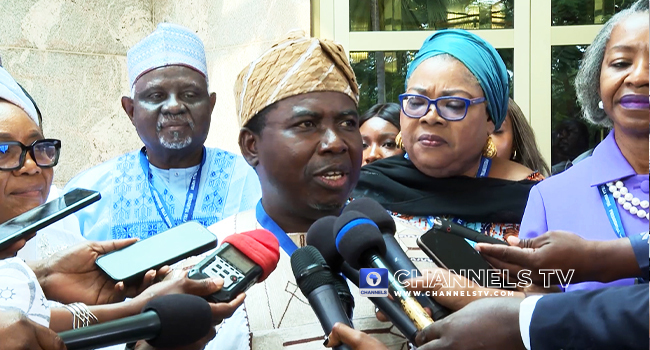
The Federal Government has imposed the no-work, no-pay policy on striking members of the Academic Staff Union of Universities (ASUU).

This was contained in a circular dated October 13 and signed by the Minister of Education, Tunji Alausa.

Alausa expressed the Federal Government’s displeasure with ASUU’s decision to embark on a nationwide strike despite ongoing negotiations and calls for dialogue.

He, therefore, directed vice-chancellors of federal universities to implement the no-work, no-pay policy against ASUU members participating in the ongoing nationwide strike.

“In line with extant provisions of the labour laws, the Federal Government reiterates its position on the enforcement of the ‘no-work, no-pay’ policy in respect of any employee who fails to discharge his or her official duties during the period of strike action,” the letter partly read.

Roll-Call Of Workers

He said academic workers who are members of the Congress of University Academics (CONUA) and the National Association of Medical and Dental Academics (NAMDA), not participating in the strike, were exempted from this directive.

READ ALSO: We’ve Addressed Every Request By ASUU, There’s No Need For Strike — FG

“Ensure that salary payment for the period of work stoppage is withheld from those who fail to perform their duties,” he added.

The minister said the NUC had been instructed to monitor compliance and submit a consolidated report to the ministry within seven days.

ASUU had on Sunday declared a two-week warning strike starting from October 13.

The lecturers have been at loggerheads with the government over the work conditions of lecturers, the 2009 FGN-ASUU agreement, the release of withheld salaries, and sustainable funding for the revitalisation of public universities.